Our verdict
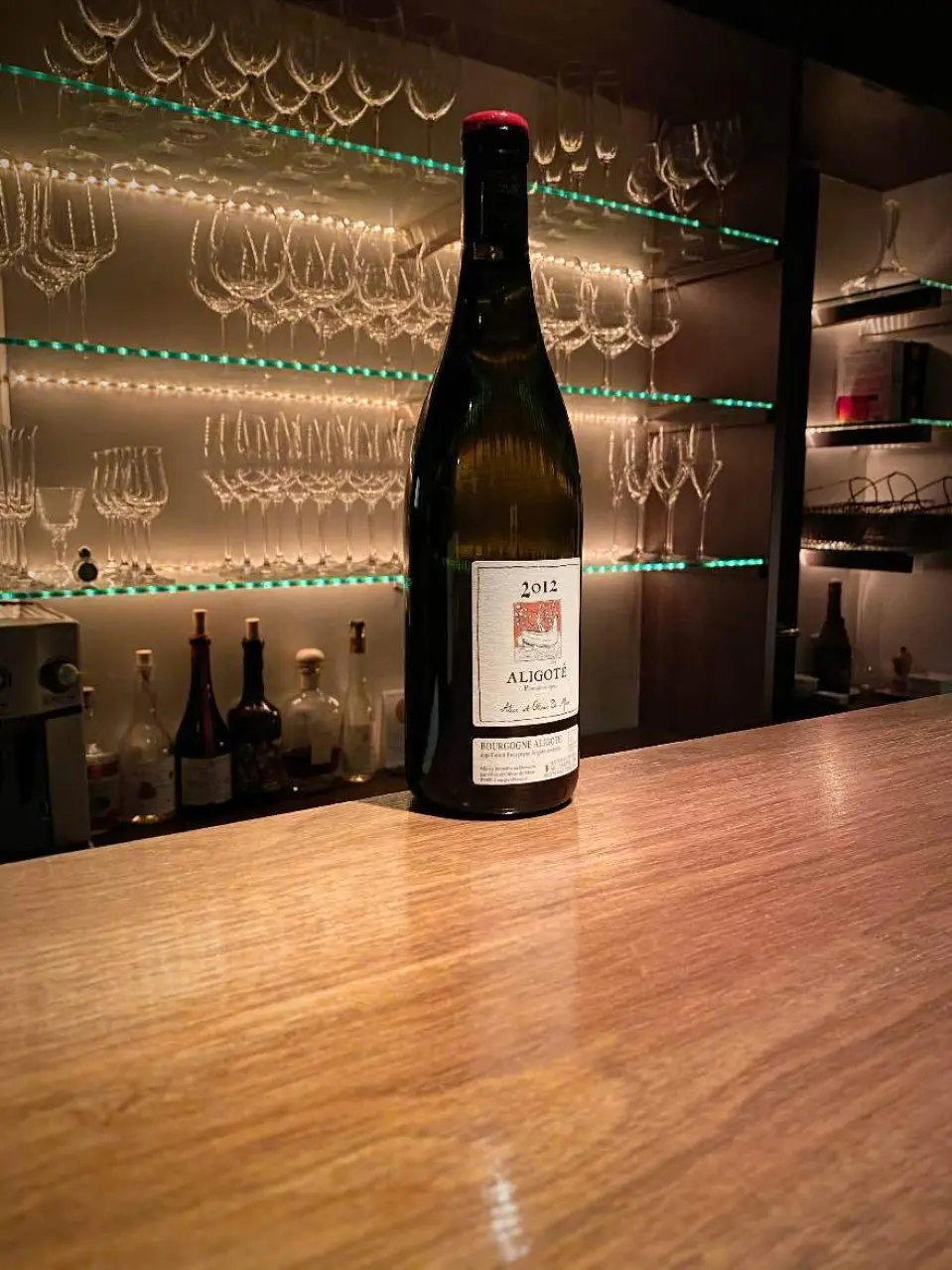
Kosetsu occupies a quiet address in Bunkyo City's Yushima district, positioning itself within Tokyo's densely competitive fine-dining tier. The wine program anchors the experience as a serious curatorial exercise, placing the restaurant in conversation with the city's most studied European-influenced cellars. Advance booking is strongly advised given the neighbourhood's growing reputation among Tokyo's restaurant cognoscenti.

Pearl is the En Primeur Club membership app, where members save venues, book tables and use the concierge.
The menu
What to order
- Tenzaru soba
- Buckwheat noodles
- Mizugoshi soba
Yushima and the Quieter Side of Tokyo's Fine-Dining Circuit
Tokyo's premium restaurant scene concentrates heavily around Ginza, Minami-Aoyama, and Shinjuku, where foot traffic and media attention reinforce one another. Bunkyo City operates on a different rhythm. Yushima, the sub-district where Kosetsu holds its address at 3 Chome-20-2, has historically been a neighbourhood of scholars, shrines, and working professionals rather than destination diners, which is precisely what makes its emergence as a serious dining address worth tracking. When high-calibre restaurants choose Bunkyo over the obvious postcode, it generally signals a deliberate choice to attract guests on merit rather than geography.
That dynamic shapes the experience before you arrive. The journey out to Yushima, a short walk from Yushima Station on the Tokyo Metro Chiyoda Line, already filters the room toward guests who sought the place out specifically, a self-selecting audience that changes the tenor of any dining room. Compare this with the high-density Ginza omakase corridor, where venues like Harutaka operate inside a cluster that draws passing trade alongside devotees, and the contrast in atmosphere becomes legible from the first moment.
The Wine Argument: Curation as the Point
Tokyo's restaurant wine programs have undergone significant structural change over the past decade. Early ambitions tended to mirror European fine-dining conventions directly, deep Burgundy and Bordeaux cellars assembled for prestige rather than pairing logic. What followed, especially among restaurants that opened or substantially evolved their programs after 2015, has been a sharper editorial sensibility: smaller lists, a stronger point of view, and sommelier choices that treat the food program as a constraint rather than an afterthought.
Kosetsu sits within this newer current. Across Tokyo's fine-dining tier, the venues that have attracted sustained critical attention for their wine work, L'Effervescence with its natural-wine orientation, Sézanne with its Anglo-French lens, demonstrate that curation philosophy is now as legible to informed guests as any kitchen credential. The question for Kosetsu is the same question facing any serious wine-led room: does the cellar make an argument, or does it simply enumerate options?
In Tokyo specifically, the sommelier function at restaurants in this tier has evolved beyond pairing mechanics into something closer to authorship. The leading practitioners in the city are building lists that read as positions, on region, on producer, on the relationship between vinification method and Japanese cuisine. That editorial ambition is what separates a meaningful wine program from an expensive one. Crony, which holds two Michelin stars for its innovative Franco-Japanese cooking, has demonstrated how a well-argued wine list can operate as a second language for the kitchen's intent.
Bunkyo in the Context of Tokyo's Restaurant Geography
Understanding Kosetsu requires understanding what Bunkyo is not. It lacks the luxury-retail adjacency of Ginza, the fashion-industry crowd of Aoyama, and the tourist density of Shinjuku. What it offers instead is the kind of self-contained neighbourhood character that supports restaurants with a regular, returning clientele rather than a conveyor of first-time visitors. That structure tends to produce dining rooms where the service evolves with the guest relationship, where wine conversations deepen across multiple visits, and where the room itself becomes a consistent rather than theatrical experience.
This is a pattern visible in other Japanese cities, too. Gion Sasaki in Kyoto operates within a preserved neighbourhood context that shapes the pacing and register of every meal. Akordu in Nara draws meaning from its remove from Osaka's density. Location, in serious Japanese dining, is never incidental. It is part of the argument the restaurant makes about what kind of experience it intends to deliver.
Placing Kosetsu in the Tokyo Competitive Set
Tokyo's fine-dining tier is one of the world's most scrutinised, with Michelin coverage running to hundreds of starred addresses and a domestic critic culture that applies pressure from multiple directions simultaneously. Three-star kaiseki rooms like RyuGin define one ceiling of expectation; innovative two-star formats like Crony define another, more contemporary register.
That is not a weakness. Tokyo has a long tradition of serious restaurants that operate below the Michelin radar for extended periods, either by choice or circumstance, while sustaining a committed audience through word-of-mouth and repeat business. The city's dining intelligence is distributed enough that recognition can travel through channels other than guide citations. Venues in this position often reward the guest who arrives without expectation calibrated to star count.
For international context, the discipline required to build a serious wine program inside a Japanese fine-dining room has parallels at places like Le Bernardin in New York, where the cellar must serve a dominant ingredient logic, or Atomix, also in New York, where Korean tasting-menu structure has demanded its own wine pairing vocabulary. The challenge in Tokyo is sharper, because the cuisine's umami depth, dashi foundations, and textural range ask more of a wine list than most European kitchens do.
Planning Your Visit
Yushima Station on the Chiyoda Line provides the most direct access to the restaurant's address at 3 Chome-20-2 Yushima, Bunkyo City. The neighbourhood is navigable on foot, and the relative quiet of the area means that arrival and departure are considerably less pressured than equivalent evenings in Ginza or Roppongi.
Given the restaurant's positioning in a competitive fine-dining district, contacting the venue directly or monitoring reservations through Tokyo-based concierge services is the most reliable approach. For broader planning across Tokyo's dining and hospitality options, EP Club's complete guides cover the full range: Tokyo restaurants, Tokyo hotels, Tokyo bars, Tokyo wineries, and Tokyo experiences.
For itineraries extending beyond Tokyo, comparable fine-dining addresses worth considering include HAJIME in Osaka, Goh in Fukuoka, 1000 in Yokohama, and 6 in Okinawa.
Peer Comparison: Logistics at a Glance
| Venue | Area | Price Range | Michelin Stars | Booking Lead Time |
|---|---|---|---|---|
| Kosetsu | Yushima, Bunkyo | Not confirmed | Not confirmed | |
| Harutaka | Ginza | ¥¥¥¥ | 3 Stars | Months in advance |
| L'Effervescence | Nishiazabu | ¥¥¥¥ | 3 Stars | Months in advance |
| RyuGin | Roppongi | ¥¥¥¥ | 3 Stars | Months in advance |
| Crony | Tokyo | ¥¥¥¥ | 2 Stars | Several weeks ahead |
Frequently asked questions
What's the must-try dish at Kosetsu?
Specific menu details for Kosetsu are not in the confirmed public record, so naming a single dish with confidence isn't possible here. What the restaurant's Bunkyo positioning and the broader Tokyo fine-dining context suggest is a kitchen operating with seasonal precision, a characteristic shared by the city's most serious addresses regardless of cuisine type. For verified menu information, contacting the venue directly is the appropriate step.
Is Kosetsu reservation-only?
Given the competitive density of Tokyo's fine-dining tier, where three-star rooms like Harutaka and RyuGin book months ahead, walk-in availability at any serious Bunkyo address is unlikely to be reliable. If Kosetsu operates at the level its neighbourhood positioning implies, advance reservation is the prudent assumption. Booking method and availability windows are not confirmed publicly; direct contact is recommended.
What's the standout thing about Kosetsu?
The restaurant's address in Yushima, Bunkyo City, separates it structurally from the Ginza and Roppongi clusters where much of Tokyo's fine-dining attention concentrates. That geographic decision tends to produce a different kind of dining room: a smaller, more focused audience and a stronger reliance on the experience itself rather than postcode prestige. Within a city where cuisine credentials like those at Sézanne set the benchmark for French-influenced wine-led dining, Kosetsu's off-centre location is itself a statement of intent.
Can Kosetsu handle vegetarian requests?
In Tokyo broadly, fine-dining kitchens at this tier generally handle advance dietary requests with more flexibility than the fixed-menu format might suggest, but the operative word is advance. Contacting the venue directly before booking, and providing specific requirements at that point, is the standard approach across the city's serious restaurants. For Tokyo dining guidance more broadly, the EP Club Tokyo restaurants guide covers the full range of options across cuisine types and dietary approaches.
Is Kosetsu worth the price?
What the restaurant's positioning in Bunkyo's Yushima district does suggest is that it operates outside the postcode premium that inflates costs at comparable Ginza addresses. Tokyo's fine-dining tier spans from the ¥¥¥ range occupied by innovative two-star kitchens to the ¥¥¥¥ ceiling where three-star rooms like L'Effervescence sit. Where Kosetsu prices within that spread will determine the value equation, and that calculation is leading made with current pricing confirmed directly with the restaurant.
How does Kosetsu's wine program compare to other serious wine-led restaurants in Tokyo?
Tokyo's most discussed wine programs at the fine-dining level tend to share a common trait: they treat the list as a curatorial document rather than a catalogue. Rooms like L'Effervescence and Crony have built recognition partly on the coherence of their wine arguments. Kosetsu's editorial angle, as a wine-led address in Bunkyo rather than the main luxury corridors, suggests a program assembled for pairing depth rather than cellar display. Specific producer focus and bottle counts are not confirmed publicly; the most accurate picture comes from a direct conversation with the restaurant's sommelier team.
Price and Positioning
Comparable venues nearby, for context on price, style, and recognition.
| Venue | Cuisine | Price | Awards | Notes |
|---|---|---|---|---|
| KosetsuThis venue (the venue you are viewing) | Traditional Japanese Soba & Kaiseki | $10–20 | Not listed | Not listed |
| tonkatsu.jp表参道 | Premium Tonkatsu Specialist | $20–30 | Tabelog 100 #86 | Omotesando, Premium Tonkatsu Specialist |
| いこま寿司 | Traditional Edomae Sushi | $10–20 | Not listed | Setagaya (Umegaoka), Traditional Edomae Sushi |
| Sakanoue Cafe | Bunkyō, Japanese kakigori cafe | $20–30 | Tabelog 100 #73 | Not listed |
| Garak | Udon & Izakaya | $30–50 | Tabelog 100 #93 | Chiyoda, Udon & Izakaya |
| Kajitsuen Liber Tokyo ten | Fruit parlor & café with Japanese-style parfaits | $10–20 | Tabelog 100 #73 | Chiyoda, Fruit parlor & café with Japanese-style parfaits |
Continue exploring
More in Tokyo
Restaurants in Tokyo
All restaurants in Tokyo →



Bars in Tokyo
All bars in Tokyo →



Details
- Cozy
- Classic
- Quiet
- Business Dinner
- Group Dining
- Celebration
- Private Event
- Private Dining
- Hotel Restaurant
- Sake Program
- Local Sourcing
- A La Carte
- Set Menu
- Sake
- Shochu
Current opening hours
- Monday
- 11:30 AM–1:30 PM, 5–9:30 PM
- Tuesday
- 11:30 AM–1:30 PM, 5–9:30 PM
- Wednesday
- 11:30 AM–1:30 PM, 5–9:30 PM
- Thursday
- 11:30 AM–1:30 PM, 5–9:30 PM
- Friday
- 11:30 AM–1:30 PM, 5–9:30 PM
- Saturday
- 11:30 AM–1:30 PM, 5–9:30 PM
- Sunday
- Closed
Hours can change for holidays and private events. Hours as of .
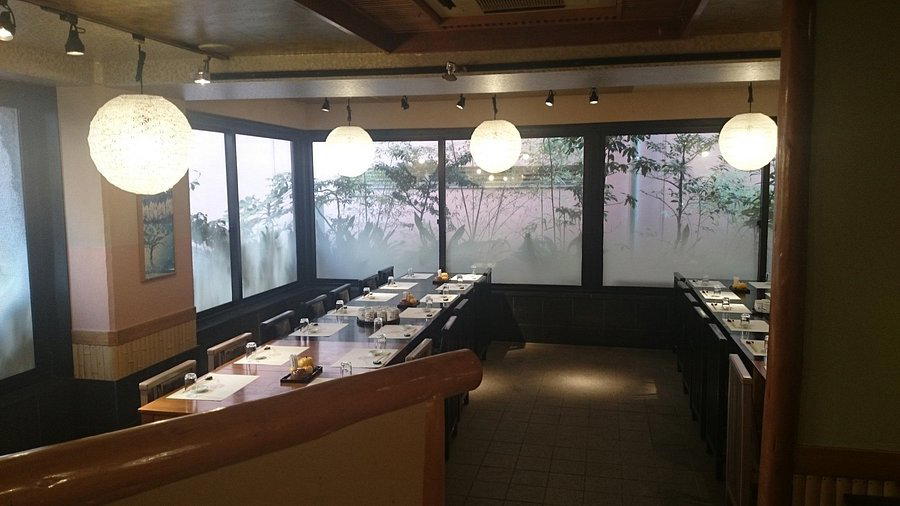
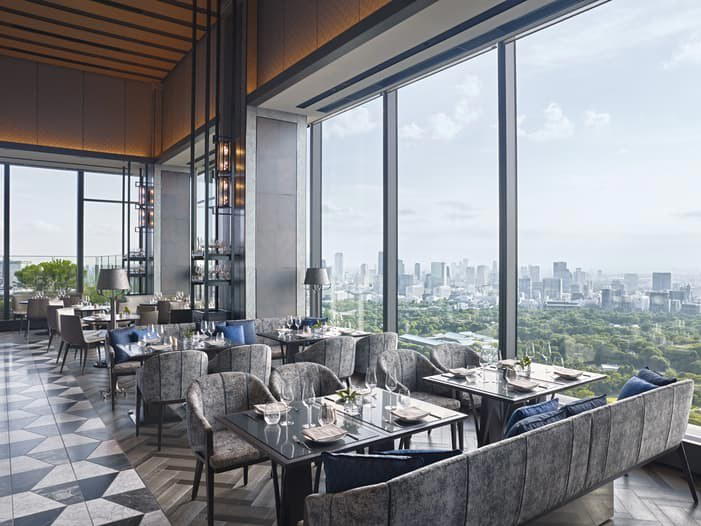
Calm and relaxing atmosphere with spacious seating; basement location with water features along winding staircase adds anticipation and traditional charm.