

Sho holds a Michelin star and an Opinionated About Dining Top Restaurants in Asia ranking, operating as the first international outpost of Tokyo's Den. Chef Fujimoto Shoichi applies traditional Japanese technique to Taiwanese produce in a four-night-a-week format from Cianjhen District, Kaohsiung. Seats are limited and demand is high, plan several weeks ahead.
Pearl is the En Primeur Club membership app — saves, bookings, and concierge access live there. Same editors, same standards.
- Address
- No. 62號, Fuxing 3rd Rd, Cianjhen District, Kaohsiung City, Taiwan 806
- Phone
- +886 7 334 6709
- Website
- sho.com.tw
- Directions
- Get directions
 Saves & bookings on Pearl
A Tokyo Lineage Lands in Kaohsiung
Taiwan's fine-dining scene has developed a particular model over the past decade: Japanese technique applied to local produce, filtered through a chef who has trained or worked abroad and returned to set up something quieter, more deliberate, and harder to book than anything in the major tourism circuits. Sho, a one-star Michelin restaurant in Cianjhen District, Kaohsiung, serving modern Japanese kaiseki with Taiwanese influences, operates four evenings a week plus weekend lunches from a Cianjhen District address on Fuxing 3rd Road. It is the first restaurant outside Japan to carry the direct lineage of Tokyo's Den, among the more discussed Japanese restaurants of the past fifteen years, and it operates accordingly, a single menu, no à la carte, limited sittings, and a format that requires planning before you arrive in the city rather than after.
The international expansion of a restaurant like Den is not a casual decision. Most high-concept Japanese houses, particularly those built around a single chef's vision and a specific interaction between technique and local sourcing, do not translate well to new geographies. The fact that Sho has earned a Michelin star and climbed the Opinionated About Dining Asia rankings from #315 in 2024 to #346 in 2025 suggests that the translation here has been handled with enough discipline to hold the original's integrity while building something specific to southern Taiwan.
What the Menu Is Actually Doing
The menu at Sho is a single set format, which means the kitchen controls the sequence, the pacing, and the proportion of Japanese technique to Taiwanese ingredient. Two signature dishes carry directly from Den in Tokyo: the green salad, built from ten or more local vegetables that have each been treated differently, fried, steamed, ground, or pickled, and kamameshi, the Japanese clay-pot rice preparation, which here incorporates Taiwanese produce including local yam, Brussels sprouts, and sakura shrimp, with the specific combination varying by season and availability.
Salad is worth understanding as a technical statement rather than a course. At this level of Japanese cooking, a dish that looks simple is almost always one labour-intensive thing on the table. Ten-plus vegetables, each processed by a different method before being assembled, represents a kind of restrained showmanship, the complexity is structural, not decorative. That approach transfers directly from Den's original Tokyo philosophy, and its presence on a menu built around Taiwanese produce makes the point about cross-cultural technique more efficiently than any dish built around imported Japanese ingredients could.
Kamameshi as a format is also instructive. The clay-pot rice preparation is a deeply traditional Japanese form, associated with seasonal celebration and slow cooking, and it adapts well to ingredient substitution without losing its identity. Using sakura shrimp, a product strongly associated with Taiwan's eastern and southern coasts, inside that form is the kind of decision that reads as obvious in retrospect but requires confident sourcing relationships and a kitchen that understands both traditions well enough to let them sit together without explanation.
Cianjhen and the Geography of Kaohsiung Dining
Kaohsiung's fine-dining development has generally clustered away from obvious tourist anchors, and Sho's address in Cianjhen District reflects that pattern. The area is industrial and residential in character, without the gallery-and-boutique surroundings that tend to signal premium dining to first-time visitors. That kind of location is not unusual for serious Japanese-influenced restaurants in Taiwan, Akame in Wutai Township operates in considerably more remote territory, but it does mean that Sho functions as a destination in the strict sense: you go specifically for this meal, not because you happened to be walking past.
Kaohsiung's broader restaurant scene includes strong entries at multiple price points and in multiple traditions. GEN represents serious Cantonese cooking at the same price tier, while Haili offers modern cuisine at a step below Sho's price range. A Fung's Harmony Cuisine anchors the Taiwanese end of the spectrum, and Anchovy covers European contemporary. Apis Grill rounds out the city's fine-dining options in the barbecue format. For a full picture of what the city offers across restaurants, hotels, bars, and beyond, the Kaohsiung restaurants guide, hotels guide, bars guide, wineries guide, and experiences guide cover the ground in detail. Within the Japan-meets-Taiwan framework specifically, comparisons extend beyond Kaohsiung: JL Studio in Taichung and logy in Taipei both operate in similar territory, applying rigorous technique to local produce within a tasting-menu format, and both carry Michelin recognition.
The Booking Problem, and How to Approach It
Sho operates Wednesday through Friday evenings, plus Saturday and Sunday for both lunch (noon to 2 PM) and dinner (6:30 PM to 9:45 PM). Monday and Tuesday are dark. That schedule gives the kitchen five service windows per week, and at a Michelin-starred restaurant with a fixed menu format and no walk-in culture, five service windows per week means a seat count that can realistically be counted on two hands per sitting.
The practical consequence is that Sho requires advance planning at a level that many Kaohsiung visitors underestimate. This is not a restaurant you add to a trip at the last minute. Given that it holds a Michelin star and an OAD ranking that improved year-on-year, demand consistently outruns supply. The standard advice for restaurants in this tier, book as far in advance as the reservation window allows, applies here with some force. Weekend lunch sittings tend to attract visiting diners from Taipei and abroad who are combining the meal with other Kaohsiung sightseeing, which can make those slots harder to secure than midweek evenings.
For visitors whose primary interest is Japanese fine dining and who want comparison context from Japan itself, the Tokyo houses most directly aligned in tradition and format include Myojaku and Azabu Kadowaki, while Isshisoden Nakamura in Kyoto represents the kaiseki tradition from which many of these tasting-menu formats descend. Understanding those reference points makes Sho's specific position, Den lineage, Taiwanese ingredients, southern city location, easier to calibrate.
Where Sho Sits in Taiwan's Fine Dining Picture
The broader pattern of Taiwan's fine-dining development is worth noting for context. Outside Taipei, which concentrates most of the island's Michelin-recognised restaurants, a handful of serious houses have built reputations in second and third cities. A Cun Beef Soup in Tainan and Volando Urai Spring Spa and Resort in Wulai District each represent different expressions of dining worth travelling for outside the capital. Sho belongs to a small group of Kaohsiung restaurants making a case that the city's dining scene warrants a dedicated trip rather than a half-day detour from Taipei.
Chef Fujimoto Shoichi's position is structurally interesting: running a Den outpost in a city that does not yet carry the international dining profile of Tokyo or Taipei means operating with less built-in demand but also less competition at the exact reference point Sho occupies.
If you are building a Kaohsiung itinerary around the meal at Sho, plan the rest of the trip around the reservation you secure. The Wednesday-to-Sunday operating window gives reasonable flexibility, but the limited sittings mean the date you want is not guaranteed to be available when you look. At this tier of Japanese-influenced tasting-menu dining in southern Taiwan, Sho holds the clearest position on offer.
What to Eat at Sho
What should I eat at Sho?
Sho serves a single fixed menu, so ordering decisions do not apply in the conventional sense. The kitchen determines the sequence for every table. Two dishes carry directly from Den in Tokyo and anchor the experience: the multi-vegetable green salad, in which ten or more Taiwanese vegetables are each processed by a different technique, frying, steaming, grinding, pickling, before assembly, and kamameshi, a Japanese clay-pot rice preparation made with local Taiwanese ingredients including yam, Brussels sprouts, and sakura shrimp. These two dishes are the clearest expression of what Sho is doing technically: classic Japanese forms filled with southern Taiwanese produce. The rest of the menu varies with season and sourcing. The full menu as served is the appropriate point of reference, and there is no single dish to optimise for outside the two Den signatures already embedded in the format.
Cost and Credentials
Comparable venues nearby, for context on price, style, and recognition.
| Venue | Cuisine | Price | Awards | Notes |
|---|---|---|---|---|
| ShoThis venue — the venue you are viewing | Japanese | $$$$ | Michelin 1 Star | Not listed |
| the FRONT HOUSE | Not listed | $$$$ | Michelin 1 Star | Lingya, Modern French with Taiwanese Influences |
| Haili | Not listed | $$$$ | Michelin 1 Star | Qianjin District, Japanese-French Fusion Fine Dining |
| GEN | Kaohsiung, Modern Chinese Fine Dining | $$$ | Michelin 1 Star | Not listed |
| Marc L³ | Not listed | $$$$ | Michelin Plate | Qianjin District, Modern French with Taiwanese Influences |
| Majesty | Not listed | $$$$ | Michelin Plate | Gushan District, Modern French Molecular Fine Dining |
Recognition history
Dated appearances from independent guides and award organizations, with the underlying list record or original source where available.
Michelin 1 Star
Michelin
Michelin 1 Star
Michelin
Opinionated About Dining Top Restaurants in Asia Ranked #346
Opinionated About Dining
Michelin 1 Star
Michelin
Opinionated About Dining Top Restaurants in Asia Ranked #315
Opinionated About Dining
Continue exploring
More in Kaohsiung
Restaurants in Kaohsiung
Browse all →
Bars in Kaohsiung
Browse all →
At a Glance
- Elegant
- Modern
- Intimate
- Sophisticated
- Minimalist
- Date Night
- Special Occasion
- Celebration
- Chefs Counter
- Open Kitchen
- Sake Program
- Sommelier Led
- Local Sourcing
Current opening hours
- Monday
- Closed
- Tuesday
- Closed
- Wednesday
- 6:30–9:45 PM
- Thursday
- 6:30–9:45 PM
- Friday
- 6:30–9:45 PM
- Saturday
- 12–2 PM, 6:30–9:45 PM
- Sunday
- 12–2 PM, 6:30–9:45 PM
Hours can change for holidays and private events. Last verified .
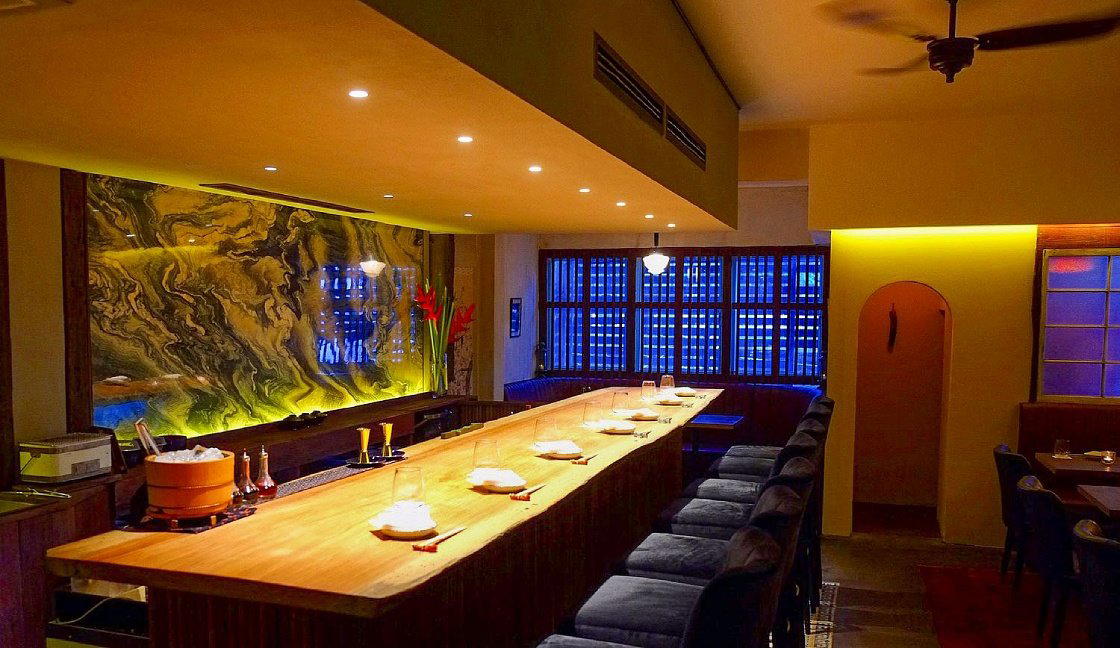
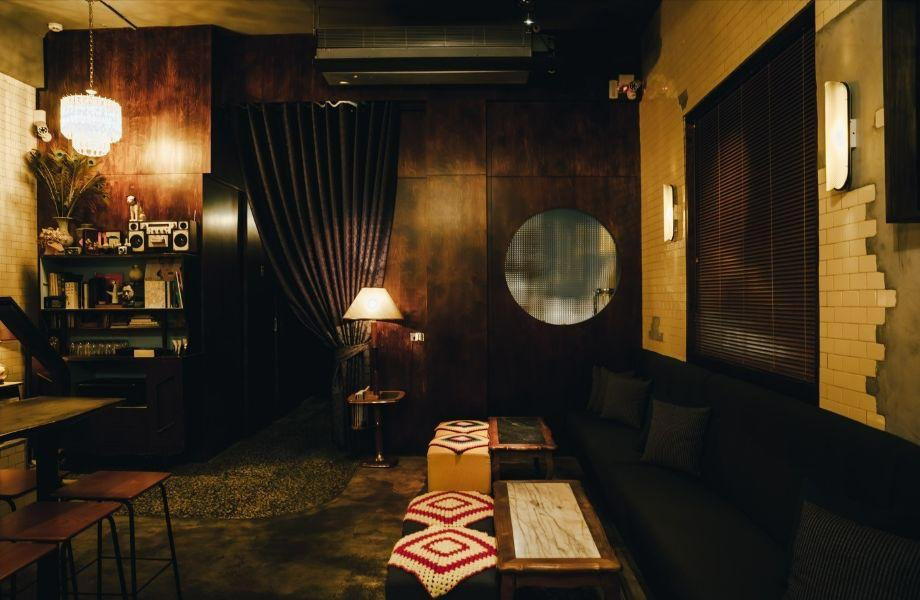
Tranquil, spartan dining room with a cutting-edge open kitchen, providing a serene and focused atmosphere.