Google: 4.5 · 205 reviews


Haili holds a Michelin star in Kaohsiung's dining scene, operating from the second floor of a townhouse near the Hanshin Department Store district. The single set menu follows a Japanese-French framework, drawing on local and Japanese produce with a seasonal structure that always reserves one course for Kaohsiung-specific ingredients and references. Open from Tuesday through Saturday, with evening-only service midweek and extended hours on Friday and Saturday.
 Discover on Pearl
A Second-Floor Counter in the Hanshin District
In Kaohsiung's Qianjin District, the block around the Hanshin Department Store supports a concentration of restaurants that has gradually drawn serious dining investment. Haili sits on the second floor of a townhouse along Chenggong 1st Road, and the approach reflects a particular sensibility that has become more common among Taiwan's starred independents: nothing at street level signals what's above. The exterior is understated to the point of anonymity. Arriving for the first time requires either a reservation confirmation or local knowledge. That arrangement is deliberate at this price tier, where the reservation functions as its own vetting mechanism.
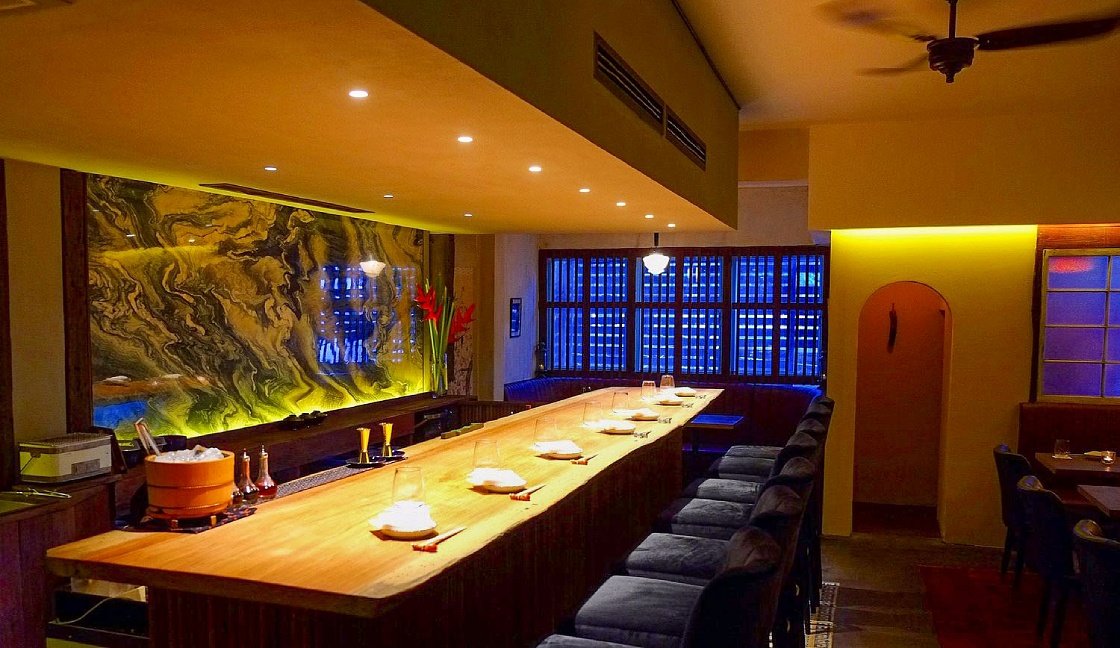
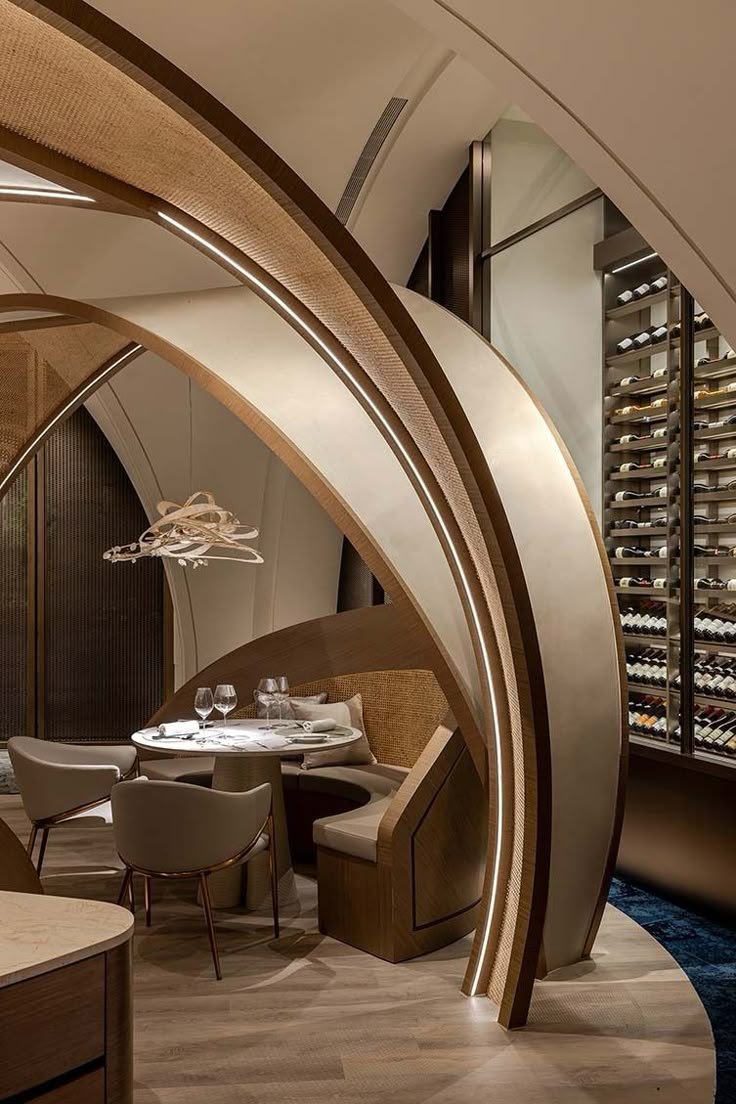
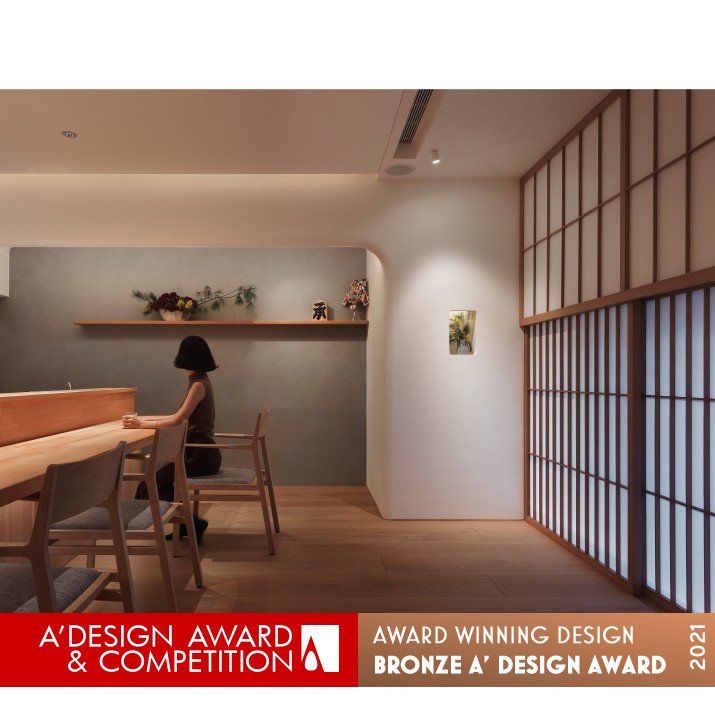
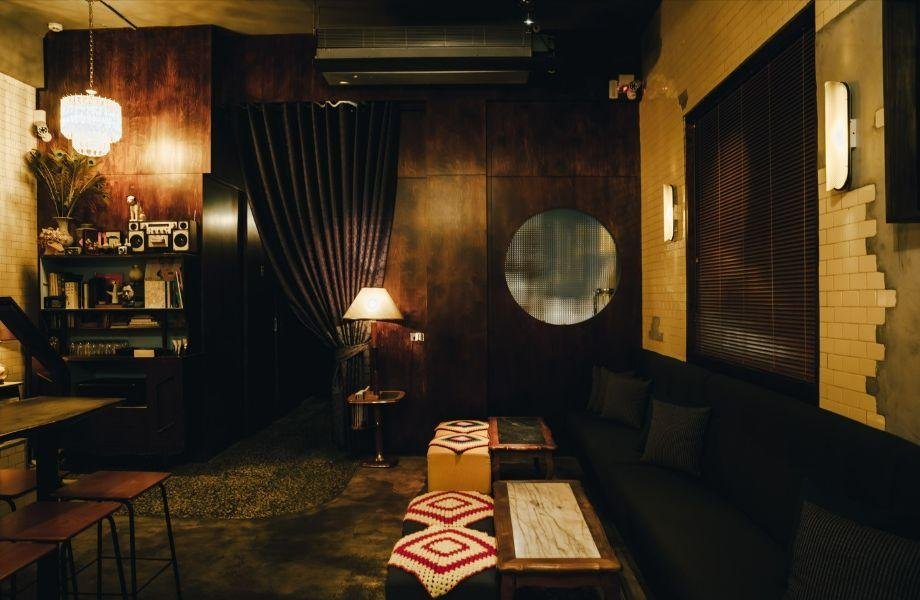
Inside, the room reads as warm and considered rather than formal. Earth tones, an open kitchen, and counter seating define the spatial experience. The counter format is significant: it positions the kitchen as theatre without the performance-anxiety that sometimes accompanies more theatrical tasting-menu formats. At a counter, the meal has pace and directness. This is a common arrangement among Japanese-inflected fine dining in Taiwan, where the counter tradition of the kappo and omakase genres has migrated into French-structured menus. Sho (Japanese), also Michelin-starred and operating at a higher price point in Kaohsiung, uses a comparable counter logic; the difference is in the culinary framework that surrounds it.
How the Menu Is Built
The menu architecture at Haili is the clearest expression of its editorial position in Kaohsiung's dining scene. A single set menu, no carte, no abbreviated option. That format carries specific implications: the kitchen controls sequence and pacing entirely, and the diner's agreement to the menu is effectively an agreement to submit to the chef's argument about what a meal should be. At the $$$ price point, this is a notable commitment to the format without moving into the $$$$ bracket occupied by peers like GEN (Cantonese) and Papillon.
The framework is Japanese-French, a hybrid that has developed genuine depth in Taiwan over the past fifteen years. The approach draws on French structuring principles — the progression of courses, the use of classical sauces and technique — while integrating Japanese precision in ingredient handling and a preference for produce that speaks directly rather than through heavy transformation. Local and Japanese ingredients anchor the sourcing, which is consistent with how the leading Japanese-French tables in Taiwan have positioned themselves: neither as European restaurants with Asian ingredients, nor as Asian restaurants with French flourishes, but as something that has metabolised both traditions enough to have its own logic.
Seasonal rotation is the mechanism that keeps the menu relevant rather than archival. The kitchen rebuilds it each season, which means four distinct menus across a year. That commitment to seasonal change has implications for repeat visitors , Haili is a restaurant that rewards returning, because the experience is substantively different in November than it was in June. More specifically, the menu consistently reserves one course for a reference to Kaohsiung itself: local culture, local ingredient, local context. That structural choice is interesting because it resists the tendency of some fine-dining establishments to operate as placeless prestige exercises. Here, the city is present on the plate, at least once per meal.
This approach has parallels at other Taiwan Michelin tables. logy in Taipei works within a similar framework of Japanese-French synthesis with strong local sourcing, and JL Studio in Taichung has built a Southeast Asian-French hybrid on comparable structural principles. The distinction at Haili is the explicit anchoring of one course per menu to Kaohsiung specifically, which is a more localised commitment than most comparably priced tables maintain.
Where Haili Sits in Kaohsiung's Fine Dining Structure
Kaohsiung's Michelin-recognised restaurants occupy a narrow tier, and Haili's 2024 star places it alongside a small group of tables that are doing substantively different things within that recognition bracket. Cho and GEN operate in Cantonese and regional Chinese frameworks; Sho anchors the Japanese end of the spectrum at a higher price point. Haili's Japanese-French position means it competes against a slightly different dining instinct: the guest choosing Haili is typically not choosing between it and a Cantonese tasting menu, but between it and the broader category of French-structured fine dining in Taiwan's second city.
That competitive context matters because Kaohsiung has historically been underrepresented in Taiwan's fine-dining conversation relative to Taipei. The city's culinary identity has been stronger in informal and traditional registers , the beef soup tradition of nearby Tainan (see A Cun Beef Soup (Baoan Road) in Tainan), the street-food density of its own night markets , than in formal tasting-menu dining. The emergence of Michelin recognition for a small group of Kaohsiung tables, Haili among them, represents a structural shift in how the city's dining is perceived externally, though the informal tier remains both stronger in volume and, in many cases, more culturally specific. A Fung's Harmony Cuisine (Taiwanese) operates in that more grounded register and points toward how differently Kaohsiung's food culture expresses itself outside the tasting-menu format.
For context at the international level, the Japanese-French synthesis that Haili practises has well-documented precedents and comparisons. Frantzén in Stockholm and Maison Lameloise in Chagny both represent the French fine-dining tradition that informs the structural grammar; the specifically Asian-French hybrid as practised in Taiwan draws on different source material but shares a commitment to the single set menu and kitchen authority over sequence. FZN by Björn Frantzén in Dubai shows how the same Scandinavian-French framework travels across cultural contexts , Haili is engaged in a comparable negotiation between inherited French structure and the ingredient and cultural logic of its own geography.
Among Kaohsiung's European-leaning contemporary tables, Anchovy (European Contemporary) occupies a related but distinct position, and together with Haili it suggests that the city's fine-dining development is building out a genuine breadth of European-inflected options rather than concentrating around a single style. The broader picture across Taiwan is completed by tables like Akame in Wutai Township and Volando Urai Spring Spa and Resort in Wulai District, which approach local ingredients from very different angles and illustrate how varied Taiwan's relationship with fine-dining tradition has become.
Planning a Visit
Haili operates Tuesday through Thursday from 5:30 PM to 10 PM, with extended service on Friday and Saturday running from noon to 10 PM. The restaurant is closed Sunday and Monday. The evening-only structure midweek is consistent with the single-set format: the kitchen is structured around one service rhythm rather than splitting attention across lunch and dinner preparation. The Friday and Saturday lunch extension makes those days the natural choice for visitors who want more flexibility or are working around travel schedules into Kaohsiung.
The Google review aggregate sits at 4.5 across 157 reviews, which at a restaurant of this format and price tier reflects a narrower, more deliberate audience than a casual restaurant would accumulate. The 2024 Michelin star is the primary trust signal for first-time visitors deciding between Kaohsiung's formal dining options.
The address on Chenggong 1st Road in Qianjin District places Haili within walking distance of the Hanshin Department Store cluster. For visitors building a broader Kaohsiung itinerary, our full Kaohsiung restaurants guide covers the full range of the city's dining options. Accommodation options are covered in our full Kaohsiung hotels guide, and the city's bar and drinking scene in our full Kaohsiung bars guide. For those interested in wine producers or experiences in the region, our full Kaohsiung wineries guide and our full Kaohsiung experiences guide provide further orientation.
What Should I Eat at Haili?
Q: What should I eat at Haili?
Haili operates on a single set menu with no à la carte option, so the question of what to order resolves itself: the kitchen decides the sequence. The framework is Japanese-French, drawing on local Taiwanese and Japanese produce prepared with classical French structure. The menu changes each season, so the specific dishes served in any given visit reflect what the kitchen is working with at that time of year. One course per menu is always connected to Kaohsiung specifically, making that course the most locally particular element of the meal. The 2024 Michelin star provides external validation of the kitchen's consistency; Chef Kang's background in noted Taiwanese kitchens before establishing Haili as his first independent venture provides the culinary lineage. At the $$$ price point, it sits below the $$$$ bracket of Kaohsiung peers like Sho and GEN, making it the more accessible entry point into Michelin-recognised tasting-menu dining in the city.
How It Stacks Up
A quick peer check to anchor this venue’s price and recognition.
| Venue | Cuisine | Price | Awards | Notes |
|---|---|---|---|---|
| Haili | Modern Cuisine | $$$ | Michelin 1 Star | This venue |
| Sho | Japanese | $$$$ | Michelin 1 Star | Japanese, $$$$ |
| Papillon | French, French Contemporary | $$$$ | French, French Contemporary, $$$$ | |
| GEN | Cantonese | $$$$ | Michelin 1 Star | Cantonese, $$$$ |
| Beef Chief (Zihciang 2nd Road) | Taiwanese | $$ | Taiwanese, $$ | |
| Cheng Tsung Duck Rice | Small eats | $ | Small eats, $ |
Continue exploring
More in Kaohsiung
Restaurants in Kaohsiung
Browse all →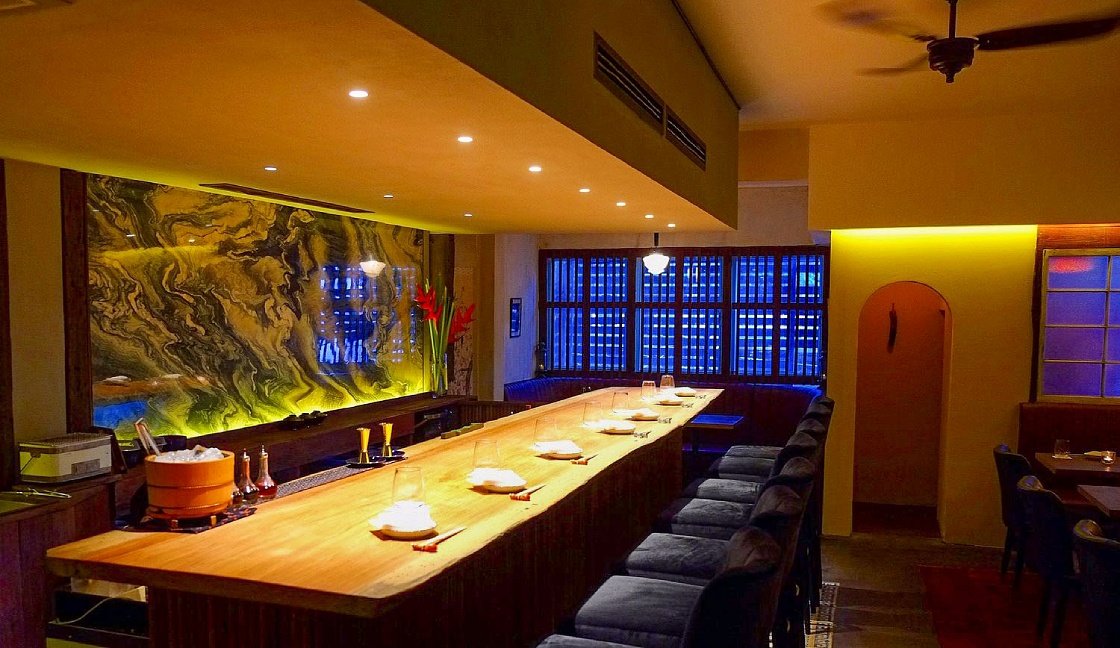
Bars in Kaohsiung
Browse all →

At a Glance
- Elegant
- Cozy
- Modern
- Intimate
- Sophisticated
- Date Night
- Special Occasion
- Open Kitchen
- Chefs Counter
- Sake Program
- Local Sourcing
Earth-toned room with open kitchen exuding warmth, understated elegance, and cozy intimacy.