
Apis Grill has held the Michelin Bib Gourmand in both 2024 and 2025, signalling consistent recognition at Kaohsiung's accessible end of the awards tier. The kitchen works in barbecue, a format with deep American regional roots that arrives here filtered through a Taiwanese street-food sensibility.6 across nearly 500 reviews underlines steady crowd satisfaction at mid-range prices.
Pearl is the En Primeur Club membership app — saves, bookings, and concierge access live there. Same editors, same standards.
- Address
- No. 80號, Baoyang E St, Sanmin District, Kaohsiung City, Taiwan 807
- Phone
- +886 975 079 591
- Website
- inline.app
- Directions
- Get directions
 Saves & bookings on Pearl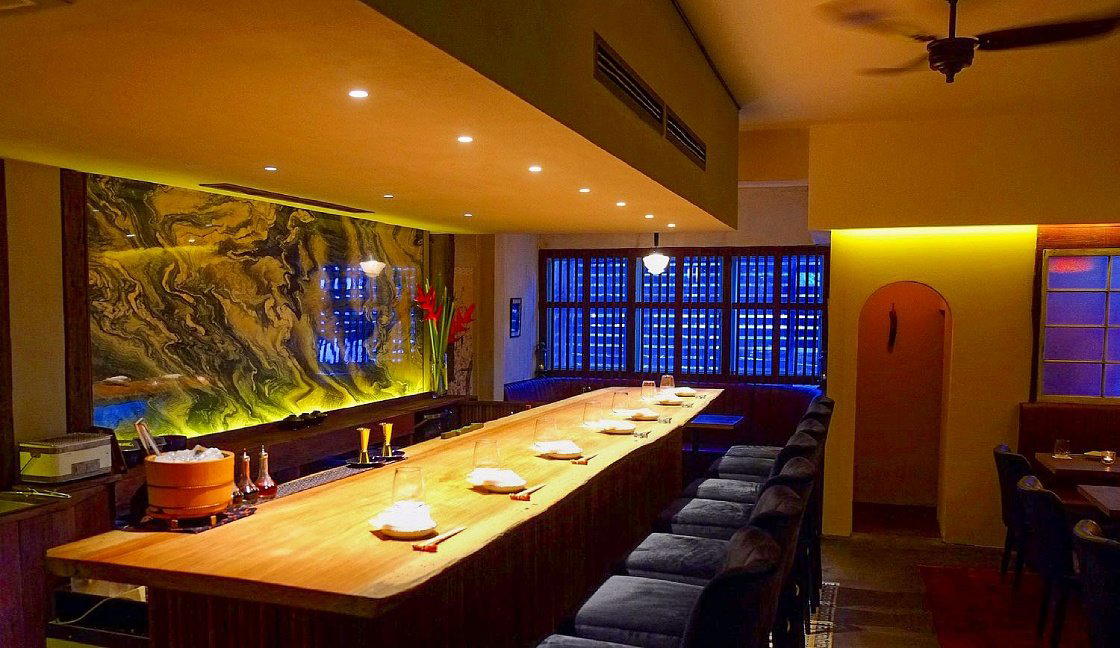
Smoke, Char, and the Geography of Barbecue
American barbecue is not one tradition but four distinct dialects separated by hundreds of miles and decades of argument. Texas prioritises the brisket, cooked low and slow over post oak until the bark cracks and the interior ribbons apart. The Carolinas split between eastern whole-hog and western shoulder, with vinegar cutting through fat where Kansas City and Memphis would lean on sweet molasses rubs and sticky glaze. Each school insists the others are doing something else entirely. What makes Kaohsiung an interesting place to encounter this conversation is that a Taiwanese kitchen operating at the mid-range price tier is not bound by regional loyalty. It can draw on the full vocabulary.
Apis Grill, a Wood-Fired Charcoal Grill in Kaohsiung with Michelin Bib Gourmand recognition in 2024 and 2025, sits in that position. The address puts it away from the central dining corridors around Xinxing and the waterfront development at Pier 2, in a neighbourhood that functions as working Kaohsiung rather than tourist Kaohsiung. Arriving along the street, the visual cues are functional rather than theatrical: the kind of setup that signals confidence in the food rather than investment in the approach.
Bib Gourmand in a Barbecue Context
Michelin's Bib Gourmand designation is, by its own definition, recognition for quality cooking at a price point below starred territory. Apis Grill has carried it in both 2024 and 2025, making consecutive inclusion rather than a one-year anomaly. Within Kaohsiung's Michelin cohort, that places it alongside a small number of recognitions at the mid-range tier. The city's starred venues operate in a different price bracket entirely: GEN (Cantonese) and Sho (Japanese) both carry a single star and price at the $$$$ level, while Haili (Modern Cuisine) holds a star at the $$$ tier. Apis Grill's $$ positioning puts it at a different point in the award-to-price ratio, which is precisely what the Bib Gourmand is designed to identify.
For context on what Michelin attention means for a barbecue-format kitchen, it is worth noting that smoked-meat restaurants in the United States have begun receiving Bib Gourmand and even full star recognition in recent years, a shift from the inspectors' historical preference for white-tablecloth formats. Austin has become the clearest case study: operations like InterStellar BBQ and la Barbecue have each attracted serious critical attention, while CorkScrew BBQ in Spring represents the suburban Texas model. The restaurant entering the Michelin record in Taiwan suggests inspectors are applying the same recalibration to the format in this market.
Barbecue at the Taiwan Table
Taiwan has its own grilling traditions, most visible at night market stalls and in the yakiniku-adjacent formats that arrived via Japanese influence. The combustion-to-protein relationship is not new here. What distinguishes a kitchen operating under an American barbecue framework is the specific commitment to smoke management, resting times, and cut selection that defines the American canon. Those techniques translate across cultures because the underlying chemistry is not regional: collagen breaks down into gelatin at the same temperature in Sanmin District as it does in Lockhart, Texas.
Where Taiwanese kitchens working in this format tend to diverge is in the accompaniments and in the approach to spice. The Memphis school's dry-rub tradition and the Kansas City preference for sauce-forward ribs both arrive at a table that already has a sophisticated relationship with umami and fermented flavour. The interaction between those traditions and local palate preferences is one of the more interesting culinary conversations happening in cities like Kaohsiung, where the international influence runs deep and the appetite for format experimentation is high. For other examples of Kaohsiung kitchens doing interesting things at the intersection of local and imported traditions, Anchovy (European Contemporary) and A Fung's Harmony Cuisine (Taiwanese) each represent different points on that spectrum.
Placing Apis Grill in the Wider Taiwan Scene
Taiwan's Michelin-recognised dining has become increasingly varied in format and geography over the past few years. Tainan's A Cun Beef Soup (Baoan Road) demonstrates that intensely local, single-product formats can earn inspector attention, while Akame in Wutai Township has put fire-cooking from Indigenous Taiwanese traditions onto the international radar. In Taichung, JL Studio operates at the higher end of cross-cultural fusion, and Taipei's logy places Taiwan's ingredient quality inside a technically precise tasting-menu framework. The restaurant does not belong to any of those categories. It occupies the space where a specific imported format, executed with enough discipline to earn consecutive Bib Gourmand recognition, functions as a neighbourhood-anchored mid-range option in a secondary district of Taiwan's second city.
6 across 493 reviews is a useful cross-reference here: it is high enough to suggest consistent execution rather than occasional brilliance, and the volume of reviews indicates a sustained local audience rather than a novelty-driven spike. That combination, repeated Michelin recognition plus steady crowd approval at accessible prices, defines a specific and reliable type of restaurant.
Planning a Visit
The restaurant is at No. 80, Baoyang East Street in Sanmin District, Kaohsiung. The $80 per-person price places it in the mid-range tier, making it accessible without the advance-planning logistics required at Kaohsiung's starred venues.
For reference across the broader Taiwan dining map, the Volando Urai Spring Spa & Resort in Wulai District represents the resort-dining segment of the market, at a significant remove from the restaurant's positioning.
Cuisine and Credentials
Comparable venues nearby, for context on price, style, and recognition.
| Venue | Cuisine | Price | Awards | Notes |
|---|---|---|---|---|
| Apis GrillThis venue — the venue you are viewing | Wood-Fired Charcoal Grill | $$$ | Bib Gourmand | Not listed |
| Lao Ye Mei Shi Guan (Fengshan) | Traditional Taiwanese Smoke & Wok | $$ | Bib Gourmand | Fengshan District |
| Chao Ming | Authentic Taiwanese Home-Style Cooking | $$ | Bib Gourmand | Qianjin District |
| Thai Yuan | Thai Street Noodles | $$ | Bib Gourmand | Lingya District |
| Erge Shih Tang | Taiwanese Home-Style Cooking | $$ | Bib Gourmand | Gushan District |
| Xiantaosu | Modern Taiwanese Vegetarian | $$$ | Michelin Plate | Gushan District |
Recognition history
Dated appearances from independent guides and award organizations, with the underlying list record or original source where available.
Michelin Plate
Michelin
Michelin Bib Gourmand
Michelin
Michelin Bib Gourmand
Michelin
Continue exploring
More in Kaohsiung
Restaurants in Kaohsiung
Browse all →
Bars in Kaohsiung
Browse all →

At a Glance
- Elegant
- Sophisticated
- Modern
- Intimate
- Date Night
- Special Occasion
- Celebration
- Group Dining
- Open Kitchen
- Chefs Counter
- Local Sourcing
Current opening hours
- Monday
- Closed
- Tuesday
- Closed
- Wednesday
- 5:30–9:45 PM
- Thursday
- 5:30–9:45 PM
- Friday
- 5:30–9:45 PM
- Saturday
- 5:30–9:45 PM
- Sunday
- 5:30–9:45 PM
Hours can change for holidays and private events. Last verified .
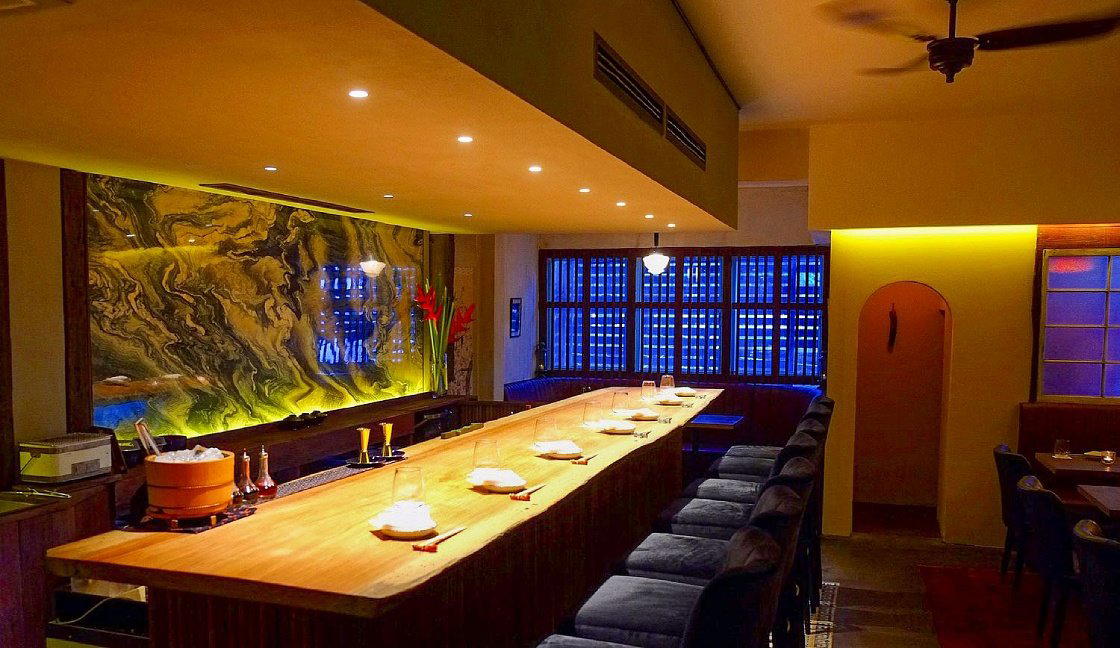
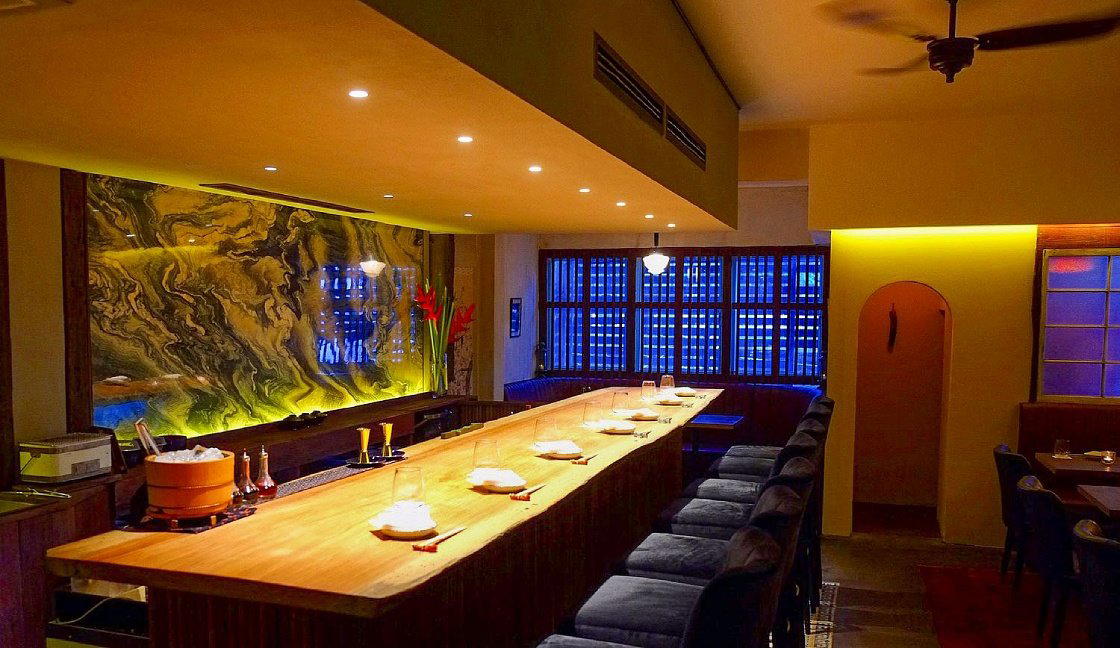
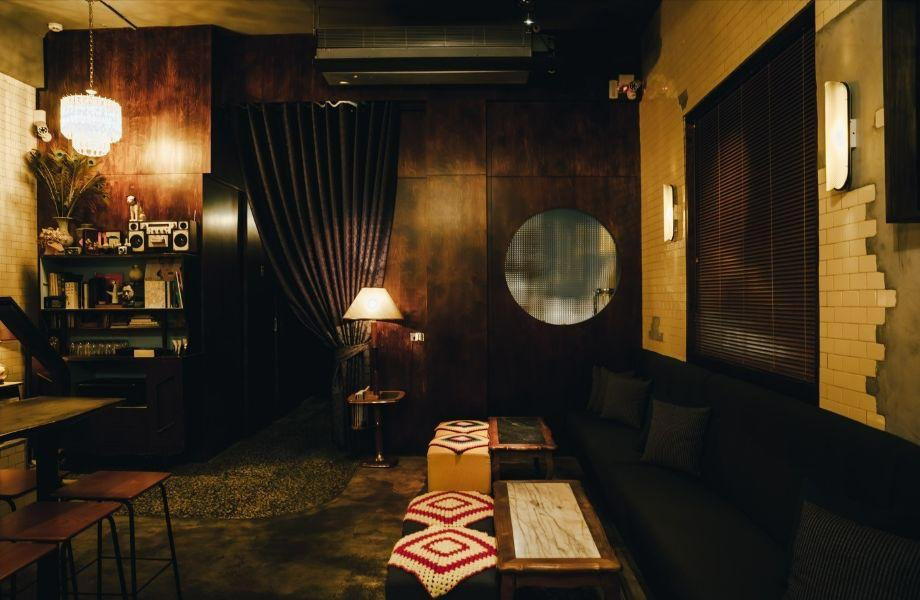
Dimly lit, atmospheric space with a long narrow layout featuring a counter overlooking the grill, wooden tones throughout, and a stylish yet understated design that emphasizes the theatrical open-fire cooking experience.