


1 Michelin Star · Tabelog Bronze #338
Our verdict
Sharikimon Onozawa 車力門おの澤 belongs to Tokyo’s small-counter kaiseki culture, where Kyoto formality is filtered through metropolitan pace and appetite. Recognition from Tabelog Bronze 2026, Tabelog Japanese cuisine TOKYO 100 selections, Michelin 1 Star 2024, and Opinionated About Dining places it among serious Japanese dining rooms without making it feel like a temple to orthodoxy.

Pearl is the En Primeur Club membership app, where members save venues, book tables and use the concierge.
The menu
What to order
- Charcoal-grilled eel
- Torotaku roll
- Karasumi soba
Arakicho changes register after dark. The old entertainment quarter behind Yotsuya-Sanchome has narrow lanes, low façades and a quieter pulse than Ginza, which matters for kaiseki: the meal starts as arterial Tokyo shrinks into a compact pocket of counters and small rooms. Sharikimon Onozawa 車力門おの澤 fits that scale. It is not Kyoto transplanted to Shinjuku; it is Tokyo reading Kyoto’s grammar at city speed, loose enough to let soba, eel and curry share space with soup and sashimi.
That Tokyo-Kyoto divide is the useful lens. Kyoto kaiseki privileges season, craft and ceremony, with form often carrying as much weight as flavour. Tokyo, even at the expensive end, edits harder. The counter brings diner and chef closer, while the city’s appetite for hybrid endings and sharper contrasts lets chefs break sequence without abandoning discipline. Makoto Onozawa’s cooking sits in that argument: classical foundations remain visible, but the meal is no museum piece.
Tokyo kaiseki with Kyoto discipline, then a harder turn
The restaurant’s recognition sets its competitive coordinates. It was a Tabelog Award Bronze winner in 2026 and 2025, selected for Tabelog Japanese cuisine TOKYO 100 in 2025 and 2023, listed by Opinionated About Dining for Japan, and held a Michelin 1 Star in 2024. Those signals matter because Japanese fine dining can be hard to read from abroad: a quiet counter with few seats may operate at a higher level than a louder, more publicised room.
The language is kaiseki, but the structure has Tokyo impatience in the best sense. Soup dishes and sashimi anchor the fundamentals. Broiled unagi appears in both soy-based sweet sauce and unseasoned form, making seasoning the subject rather than an accessory. Rolled sushi with tuna and pickled daikon radish fills the intervals, giving the meal the rhythm of a counter conversation rather than a sealed ceremonial arc. The comfort-led finish of soba and curry is the clearest break from expectation, and the point: Tokyo often treats high craft and appetite as compatible, not opposed.
Against the city’s kaiseki field, the restaurant has a different mood from the more polished Ginza register of Ginza Kojyu, GINZA OKUDA and Ginza Shinohara. It also reads differently beside the codified luxury of Kanda or the inventive Japanese dining of Kohaku. This is not a ranking, but a choice of Tokyo evening: Ginza refinement, polished destination dining, or a Shinjuku counter where orthodoxy is respected without being allowed to fossilise.
Arakicho makes the meal feel less ceremonial
Neighbourhood context does real work. Arakicho is central without the corporate sheen of Marunouchi or the luxury retail charge of Ginza. Its dining culture suits focused rooms: small counters, late-evening movement, regulars who know the lanes, and chefs who need no theatrical dining room to signal status. Here, kaiseki can feel less like a formal appointment and more like an argument about where Japanese cuisine may go next.
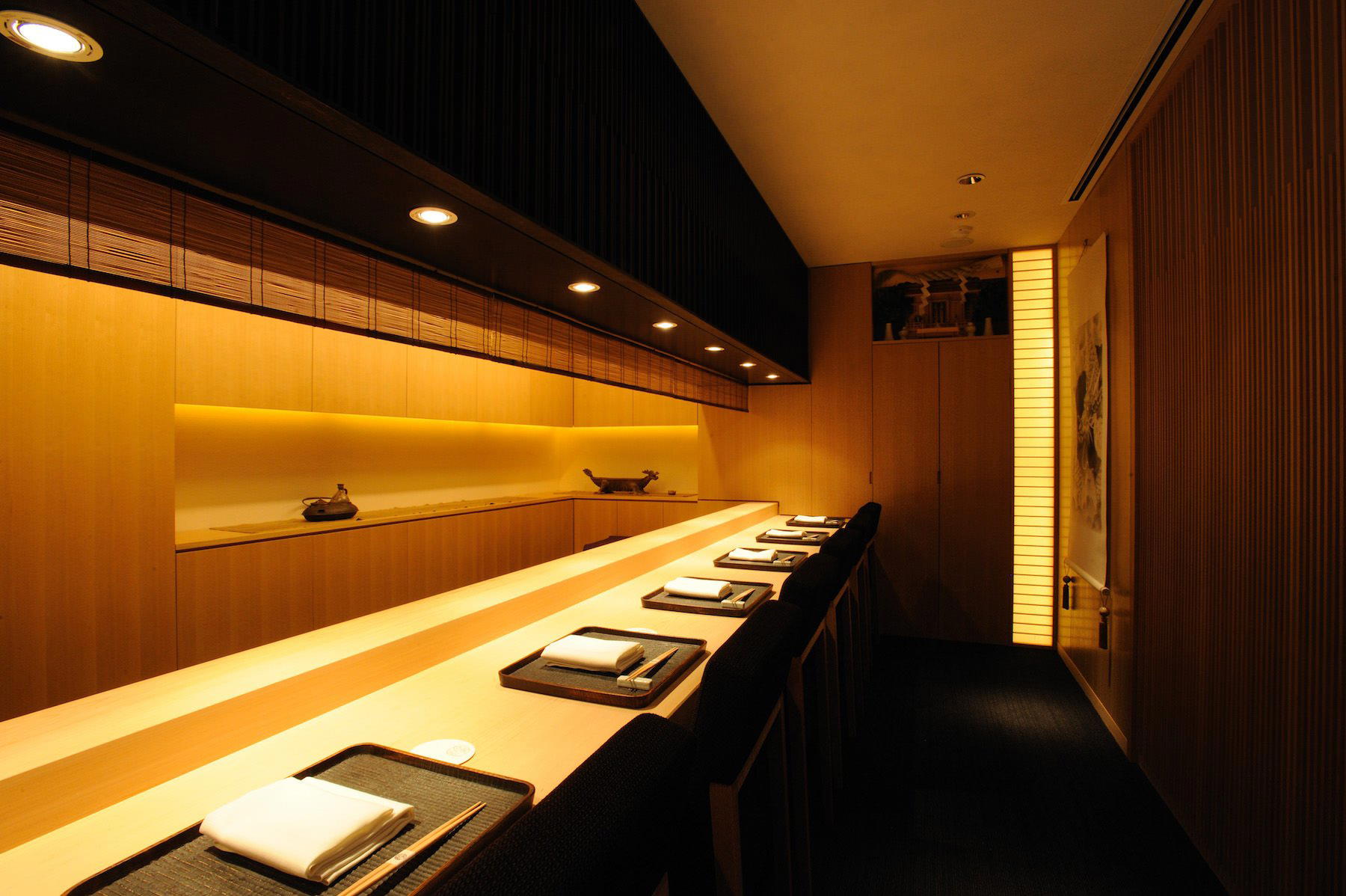
The format sharpens that effect. A 10-seat counter compresses the room’s energy and removes private dining-room choreography. In kaiseki, that scale changes refinement: the diner sees pacing, portioning and temperature management as performance, yet the experience stays closer to Tokyo counter culture than Kyoto ryotei. Private rooms are not part of the proposition, and the non-smoking policy reinforces the serious-dining frame rather than the old after-hours drinking-room mood of some Shinjuku backstreets.
The chef’s role is editorial rather than autobiographical. Makoto Onozawa’s name matters because the cooking has a recognisable line: uphold the basics, then interrupt the sequence with enough wit to keep it awake. Public descriptions point to authentic technique and creative ideas, but the stronger reading is structural. The room reassures with soup and sashimi before unagi, rolled sushi, soba and curry push the evening into a more urban register.
How to place it in a Tokyo itinerary
This restaurant suits travellers who know Tokyo’s Japanese dining scene is not a single hierarchy. Sushi counters, tempura rooms, kappo restaurants and kaiseki counters answer different questions. Sharikimon Onozawa is for diners who want kaiseki form without a solemn mood, and find Tokyo more interesting when it bends inherited structures rather than simply polishing them.
For a broader Japanese dining map, start with Our full Tokyo restaurants guide, then build around neighbourhood and format rather than chasing one category. A stay plan can sit alongside Our full Tokyo hotels guide; after dinner belongs to Our full Tokyo bars guide. Tokyo is not a wine-country city in the usual travel sense, but cellar-minded readers can compare the broader category through Our full Tokyo wineries guide, while culture-led planning belongs with Our full Tokyo experiences guide.
The wider comparison helps. Kyoto remains the reference point for formal kaiseki, with addresses such as Gion Maruyama, Kaiseki, Japanese in Kyoto defining another kind of seasonal classicism. Tokyo’s version is more plural and less deferential, while international Japanese fine dining, including Aburi Hana, Kaiseki, Japanese in Toronto, shows how the form travels outside its native market. For contrast across Japan’s dining spectrum, compare small specialist formats such as -Grilled beef Sukiyaki- KAMAKURA TANUKIAN 鎌倉 たぬき庵 in Kamakura, casual contemporary addresses like.cafe in Osaka and.know in Kumamoto, regional specificity at (Shoku) Vietnam in Kawasaki, curry culture at [Curry Senmon Ten] Maruyama Kyoju. in Sapporo, and Kyoto’s quieter contemporary register at [ki:] in Kyoto.
The editorial case is clear: this is not for diners seeking Kyoto ceremony reproduced with maximum restraint. It is for understanding how Tokyo absorbs kaiseki, speeds up its edges, and ends with the confidence to treat comfort as part of refinement. In a city crowded with serious counters, that stance gives the meal its reason to exist.
Frequently asked questions
What's the pricing like at Sharikimon Onozawa 車力門おの澤?
Pricing at Sharikimon Onozawa 車力門おの澤 is listed as ¥¥¥¥.
How do I find Sharikimon Onozawa 車力門おの澤?
Sharikimon Onozawa 車力門おの澤 is located in Tokyo.
What should I expect cuisine-wise at Sharikimon Onozawa 車力門おの澤?
Sharikimon Onozawa 車力門おの澤 serves Kaiseki, Japanese cuisine.
When can I go to Sharikimon Onozawa 車力門おの澤?
Hours at Sharikimon Onozawa 車力門おの澤: Hours: Monday 5:30–11 pm Tuesday 5:30–11 pm Wednesday 5:30–11 pm Thursday 5:30–11 pm Friday 5:30–11 pm Saturday 5:30–11 pm Sunday Closed.
Where It Fits
Comparable venues nearby, for context on price, style, and recognition.
| Venue | Cuisine | Price | Awards | Notes |
|---|---|---|---|---|
| Sharikimon Onozawa 車力門おの澤This venue (the venue you are viewing) | Modern Japanese Omakase with Soba | $200–300 | 1 Michelin Star · Tabelog Bronze #338 | Not listed |
| Ginza Toyoda | Michelin-Starred Kaiseki | $200–300 | Michelin Plate | Chūō |
| Azabujuban Fukuda | Seasonal Kaiseki | $200–300 | 1 Michelin Star · Tabelog 100 #74 | Minato |
| Tentempura Uchitsu | Michelin-Starred Tempura Omakase | $150–200 | 1 Michelin Star | Shibuya |
| Muroi | Modern Kappo Omakase | $300–500 | 1 Michelin Star · Tabelog Bronze #296 | Minato |
| Nogizaka Shin | Modern Kaiseki with Wine Pairings | $200–300 | 1 Michelin Star · Star Wine List | Minato |
Recognition history
Dated appearances from independent guides and award organizations, with the underlying list record or original source where available.
Michelin 1 Star
Michelin
Opinionated About Dining Top Restaurants in Japan Recommended
Opinionated About Dining
Tabelog Bronze #338
Tabelog
Full recognition history (9 entries)
Opinionated About Dining Top Restaurants in Japan Ranked #316
Opinionated About Dining
Tabelog 100 #68 · No. 68
Tabelog · Tabelog 100 - Japanese cuisine - TOKYO - 2025
Tabelog Bronze
Tabelog
Michelin 1 Star
Michelin
Opinionated About Dining Top Restaurants in Japan Ranked #335
Opinionated About Dining
Opinionated About Dining Top Restaurants in Japan Recommended
Opinionated About Dining
Continue exploring
More in Tokyo
Restaurants in Tokyo
All restaurants in Tokyo →



Bars in Tokyo
All bars in Tokyo →






Details
- Intimate
- Elegant
- Cozy
- Sophisticated
- Special Occasion
- Date Night
- Chefs Counter
- Open Kitchen
- Sake Program
- Local Sourcing
- Omakase
- Counter Dining
- Sake
Current opening hours
- Monday
- 5:30–11 PM
- Tuesday
- 5:30–11 PM
- Wednesday
- 5:30–11 PM
- Thursday
- 5:30–11 PM
- Friday
- 5:30–11 PM
- Saturday
- 5:30–11 PM
- Sunday
- Closed
Hours can change for holidays and private events. Hours as of .
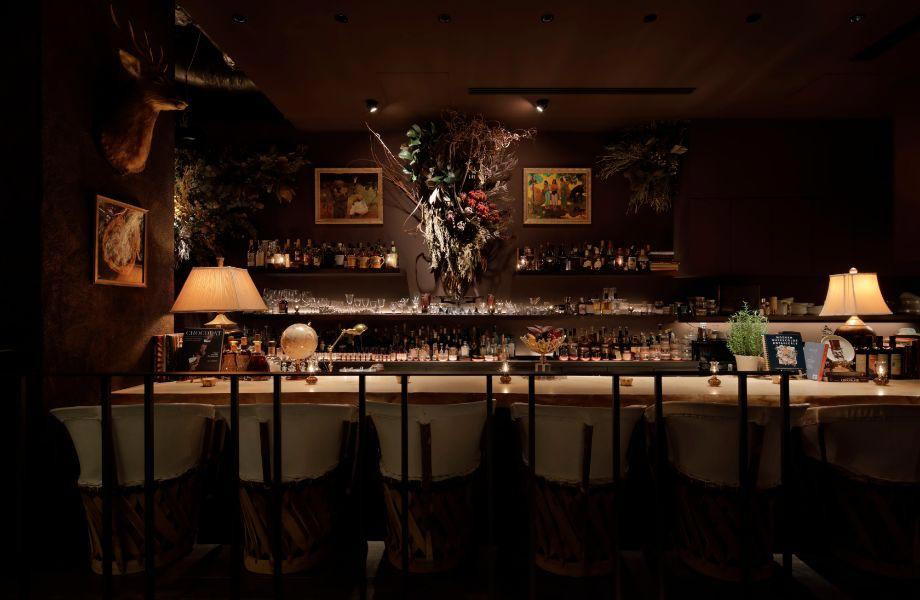
Warm, lively welcome in a stylish, relaxing 10-seat counter space around an open kitchen, with Showa retro influences and beautiful tableware