Michelin Plate
Our verdict
The kitchen prizes ingredient-forward restraint: seasonal wanmono broths built on Rishiri kombu, rotating proteins that track the Japanese calendar, and takikomi-gohan finished in a broad-brimmed pot. Ranked #477 on Opinionated About Dining's 2025 Japan list, it operates on a tight weekly schedule that rewards advance planning.

Pearl is the En Primeur Club membership app, where members save venues, book tables and use the concierge.
The menu
What to order
- Scallop rice pot
- Fruit dessert gelatin
The Room Before the Meal
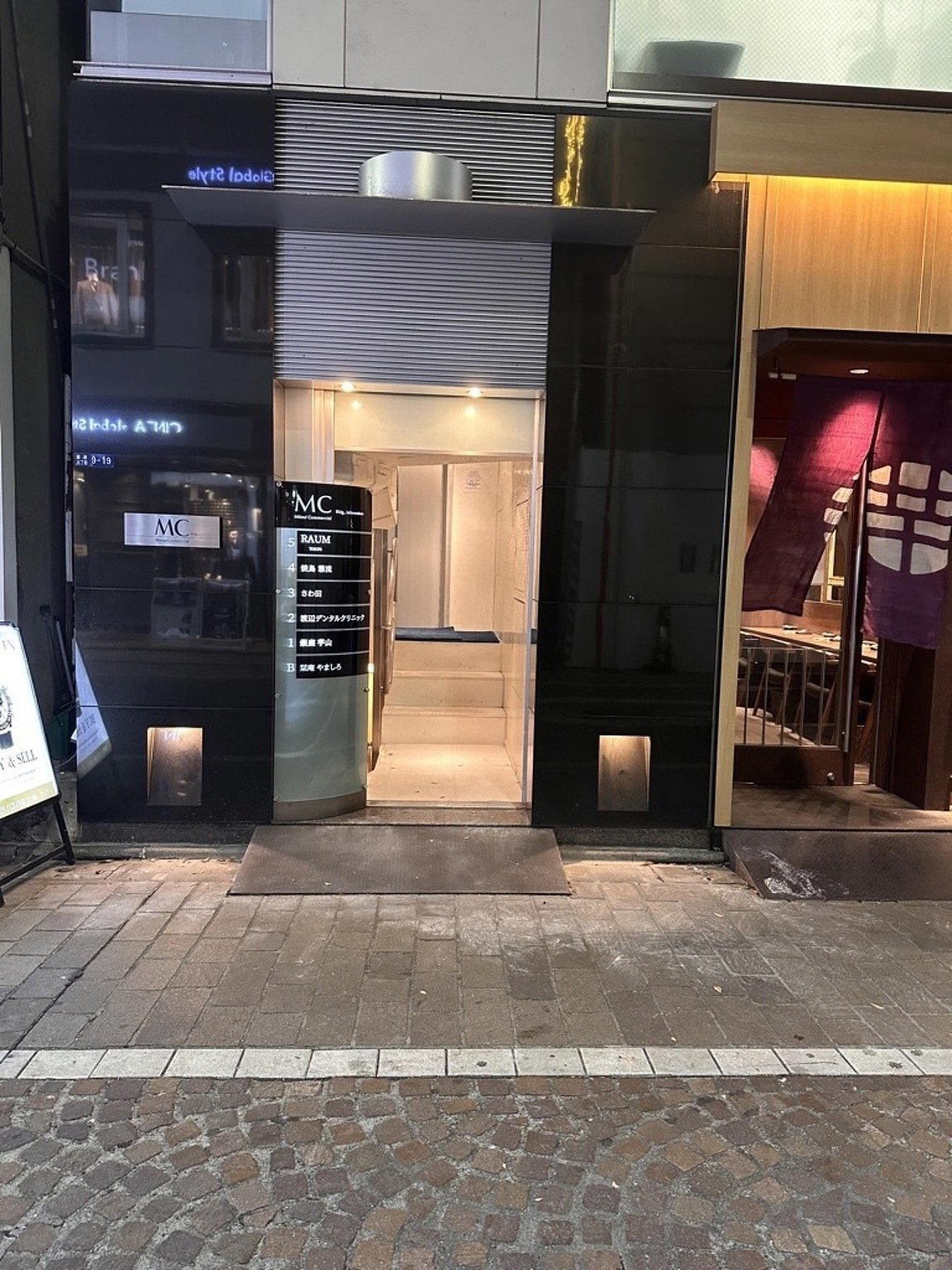
Ginza's 7-chome strip runs quieter than the retail corridors further north, and the La Vialle Ginza Building sits in that relative calm. The second floor is where Ginza Toyoda operates, away from the street-level foot traffic that defines so much of this district. That physical remove from the main drag is not incidental. In Ginza, the restaurants that matter most tend to occupy upper floors and side addresses, accessed by narrow stairwells or small lifts, their entrances deliberately understated. The format signals something to the person who has done the work to find it: you are expected to know why you are here.
This corner of Ginza has developed into one of the city's denser concentrations of serious dining. Ginza Toyoda does not compete with those rooms directly.
A Cuisine That Resists Easy Labels
The combination of Chinese and Japanese cuisine is less unusual in Tokyo than it might appear to visitors from outside Japan. The city has a long tradition of ryōri that moves between these two reference points, and several serious counters operate in the space between kaiseki structure and Chinese technique. What distinguishes Ginza Toyoda within that tradition is the stated priority: the native flavour of each ingredient takes precedence, and the kitchen's role is to amplify rather than transform. That is closer in philosophy to the restraint-led approach of Japanese haute cuisine than to the bolder seasoning conventions of most Chinese regional cooking.
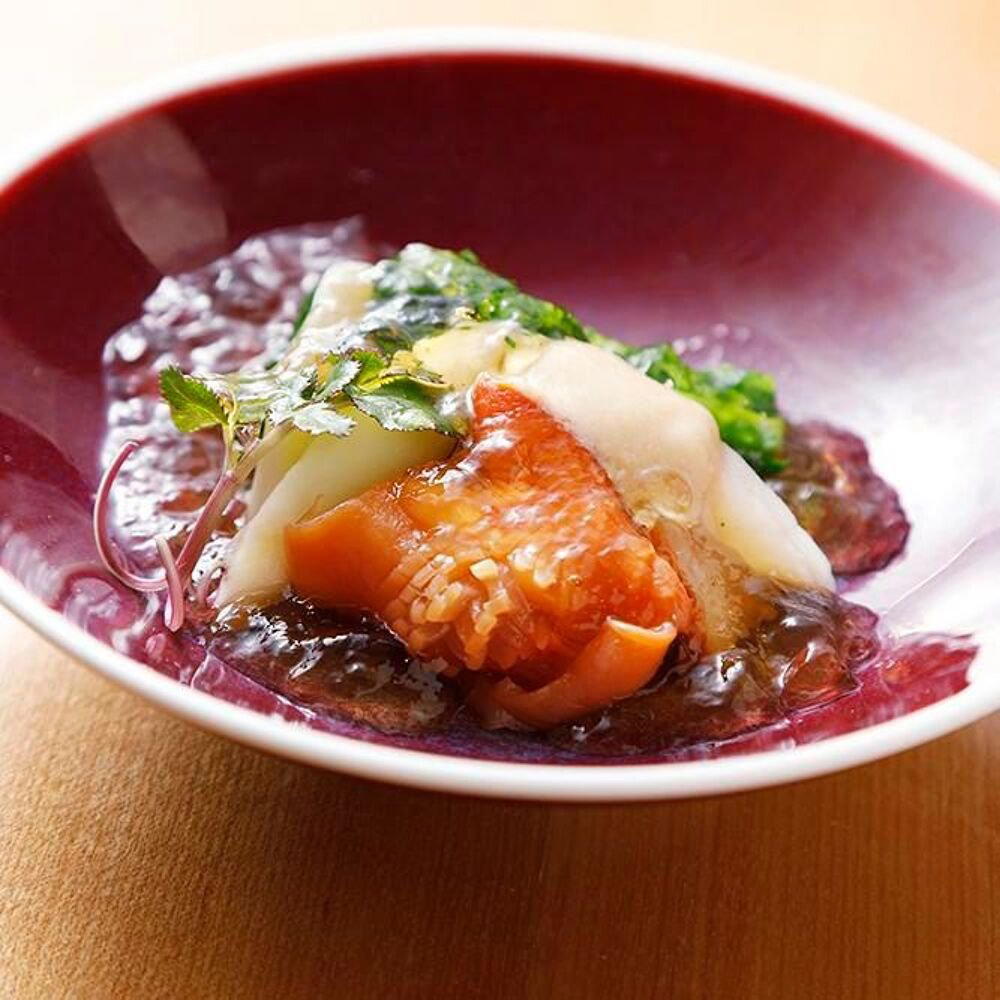
The wanmono course functions as the clearest expression of that philosophy. Wanmono, the lidded bowl course that appears in formal kaiseki, is built here around broth prepared with Rishiri kombu, sourced from Hokkaido and considered among the highest-grade kombu available for dashi. The broth shifts its primary protein with the seasons: fat greenling in spring, hair crab in summer, daggertooth pike conger in autumn, oysters in winter. The seasonal rotation is not a menu gimmick. It is the mechanism by which the kitchen demonstrates that the ingredient, not the technique, carries the dish. Compare this approach to the French-inflected tasting menus at L'Effervescence or Sézanne, where the chef's constructive hand is more visibly the subject. At Ginza Toyoda, the seasonal calendar does much of the editorial work.
Takikomi-gohan, a mixed rice cooked in a broad-brimmed pot, is described in the restaurant's Michelin citation as a point of pride. The ritual of lifting the lid releases seasonal aromas that function as a kind of announcement: the kitchen is marking time through food, not through decor or drama. It is the sort of moment that travels poorly in description but lands precisely in person, which is part of why the room needs to be experienced rather than read about.
Opinionated About Dining, which weights its rankings heavily toward repeat expert visits, listed it as Recommended in 2023 and ranked it #477 on its 2025 Japan list.
At that price point in Tokyo, the expectation is a fixed-format menu with no à la carte optionality, significant sourcing specificity, and a booking process that is not casual. Ginza Toyoda fits that pattern. What separates it from its direct peers is the Chinese-Japanese identity, which gives it a narrower but more defined position in the market. Diners choosing between starred counters in this bracket are typically choosing between culinary traditions as much as between individual kitchens.
For a broader picture of Tokyo's dining tier structure, the full Tokyo restaurants guide maps the city's categories across price and cuisine type. Those planning trips that extend beyond Tokyo can also reference HAJIME in Osaka, Gion Sasaki in Kyoto, akordu in Nara, Goh in Fukuoka, 1000 in Yokohama, and 6 in Okinawa for regional counterparts at comparable seriousness levels.
The Booking Calculus
This is where planning for Ginza Toyoda begins, not with the menu. The weekly operating pattern is specific enough to require attention before any other decision. The restaurant closes on Wednesday and Sunday. Lunch service runs Tuesday, Friday, and Saturday from noon to 3 pm. Dinner runs Monday, Tuesday, Thursday, Friday, and Saturday from 6 pm to 10 pm. That means five dinner sittings and three lunch sittings across six service days per week, with Monday dinner as the only weekday dinner option that has no corresponding lunch. For visitors building a Tokyo itinerary around a fixed arrival and departure schedule, those constraints matter significantly.
Reservations at this level typically go through a Japanese-language phone line, a third-party concierge service, or a platform like Tableall or Omakase that handles foreign-language bookings for Tokyo's harder-to-reach rooms. A hotel concierge at a major Tokyo property is often the most efficient route for non-Japanese-speaking guests.
The comparison table below situates Ginza Toyoda's logistics against a selection of ¥¥¥¥ peers in Tokyo to help with itinerary sequencing.
| Venue | Cuisine | Stars | Price | Closed | Lunch |
|---|---|---|---|---|---|
| Ginza Toyoda | Chinese / Japanese | Michelin 1 | ¥¥¥¥ | Wed, Sun | Tue, Fri, Sat |
| Harutaka | Sushi | Michelin 3 | ¥¥¥¥ | Varies | Selected days |
| RyuGin | Kaiseki | Michelin 3 | ¥¥¥¥ | Varies | No regular lunch |
| Crony | Innovative French | Michelin 2 | ¥¥¥¥ | Varies | Selected days |
| L'Effervescence | French | Michelin 3 | ¥¥¥¥ | Varies | No regular lunch |
For those planning a broader Tokyo visit, the Tokyo hotels guide, bars guide, wineries guide, and experiences guide provide the surrounding context for a full itinerary. Internationally, those calibrating their appetite for this style of restrained ingredient-forward cooking against global reference points might look at Le Bernardin in New York City for a parallel philosophy of ingredient primacy, or Atomix in New York City for a Korean-Japanese boundary-crossing counter that operates in a similar conceptual register.
What Regulars Order
The wanmono and the takikomi-gohan are the two dishes that appear most consistently in descriptions of the kitchen's identity, and they anchor the experience regardless of the season. The wanmono broth changes its seasonal protein, so the spring visit built around fat greenling is a materially different experience from the winter visit centred on oyster, even though the structural logic of the course is identical each time. This is the mechanism that brings regulars back across multiple seasons rather than once. The takikomi-gohan, presented tableside before serving, functions as the meal's closing statement: a dish that requires patience in preparation and rewards it in the eating. Both courses are the evidence for the kitchen's central argument about restraint and ingredient integrity, and both are the reason Michelin's citation reads as a description of philosophy as much as a description of food.
Frequently asked questions
When is Ginza Toyoda open?
Hours at Ginza Toyoda: Hours: Monday 6–10 pm Tuesday 12–3 pm, 6–10 pm Wednesday Closed Thursday 6–10 pm Friday 12–3 pm, 6–10 pm Saturday 12–3 pm, 6–10 pm Sunday Closed.
What style of cooking does Ginza Toyoda do?
What distinctions does Ginza Toyoda have?
Ginza Toyoda has received recognition including: Subtlety of flavour is what this chef prizes: the native flavour of the ingredients must shine through. Exemplifying this principle are the wanmono, with broth prepared using Rishiri kombu for its umami. Delicate broth highlights the flavou….
What do regulars order at Ginza Toyoda?
The wanmono and the takikomi-gohan anchor most accounts of what this kitchen does with singular focus. The wanmono broth is drawn from Rishiri kombu and shifts with the season: fat greenling in spring, hair crab in summer, daggertooth pike conger in autumn, oysters in winter. The takikomi-gohan arrives in a broad-brimmed pot, and lifting the lid is part of the ritual, seasonal aromatics release before the first spoonful. Both dishes reflect what the Michelin inspectors noted in awarding the 2024 star: the kitchen's commitment to letting the native flavour of ingredients carry the work.
What does dinner at Ginza Toyoda typically cost?
Pricing at Ginza Toyoda is listed as ¥¥¥¥.
What part of town is Ginza Toyoda in?
Ginza Toyoda is located at Japan, 〒104-0061 Tokyo, Chuo City, Ginza, 7 Chome−5−4 La Vialle Ginza Bldg, 2階, Tokyo.
Who is the chef or culinary lead at Ginza Toyoda?
The chef associated with Ginza Toyoda is Shogo Omiya.
Price Lens
| Venue | Cuisine | Price | Awards |
|---|---|---|---|
| Ginza ToyodaThis venue (the venue you are viewing) | Michelin-Starred Kaiseki | $200–300 | Michelin Plate |
| Harutaka | Edo-Style Omakase Sushi | $200–300 | 3 Michelin Stars · World's 50 Best #76 |
| RyuGin | Modern Kaiseki | $500+ | 3 Michelin Stars · World's 50 Best #41 |
| L'Effervescence | Modern French with Japanese Influences | $200–300 | 3 Michelin Stars · World's 50 Best #69 |
| HOMMAGE | Modern French with Japanese Influences | $150–200 | 2 Michelin Stars · World's 50 Best #78 |
| MAZ | Innovative Peruvian-Japanese Fusion | $150–200 | 2 Michelin Stars · World's 50 Best #28 |
Recognition history
Dated appearances from independent guides and award organizations, with the underlying list record or original source where available.
Michelin Plate
Michelin
Opinionated About Dining Top Restaurants in Japan Recommended
Opinionated About Dining
Full recognition history (4 entries)
Opinionated About Dining Top Restaurants in Japan Ranked #477
Opinionated About Dining
Opinionated About Dining Top Restaurants in Japan Recommended
Opinionated About Dining