

1 Michelin Star · Tabelog Bronze #296
Our verdict
Kappo Muroi occupies an eight-seat counter in Nishiazabu, where a deliberately sashimi-free course alternates cold and hot preparations with temperature and aroma as the organising principles. Tabelog Bronze Award winner in both 2025 and 2026, with a score of 4.22 and a 2024 Michelin star, it sits in the tier of small-counter Japanese restaurants where the precision of the whole service team matters as much as the cooking.

Pearl is the En Primeur Club membership app — saves, bookings, and concierge access live there. Same editors, same standards.
- Address
- Japan, 〒106-0031 Tokyo, Minato City, Nishiazabu, 2 Chome−16−4 1f
- Phone
- +81 3-6805-1994
- Website
- omakase.in
- Directions
- Get directions
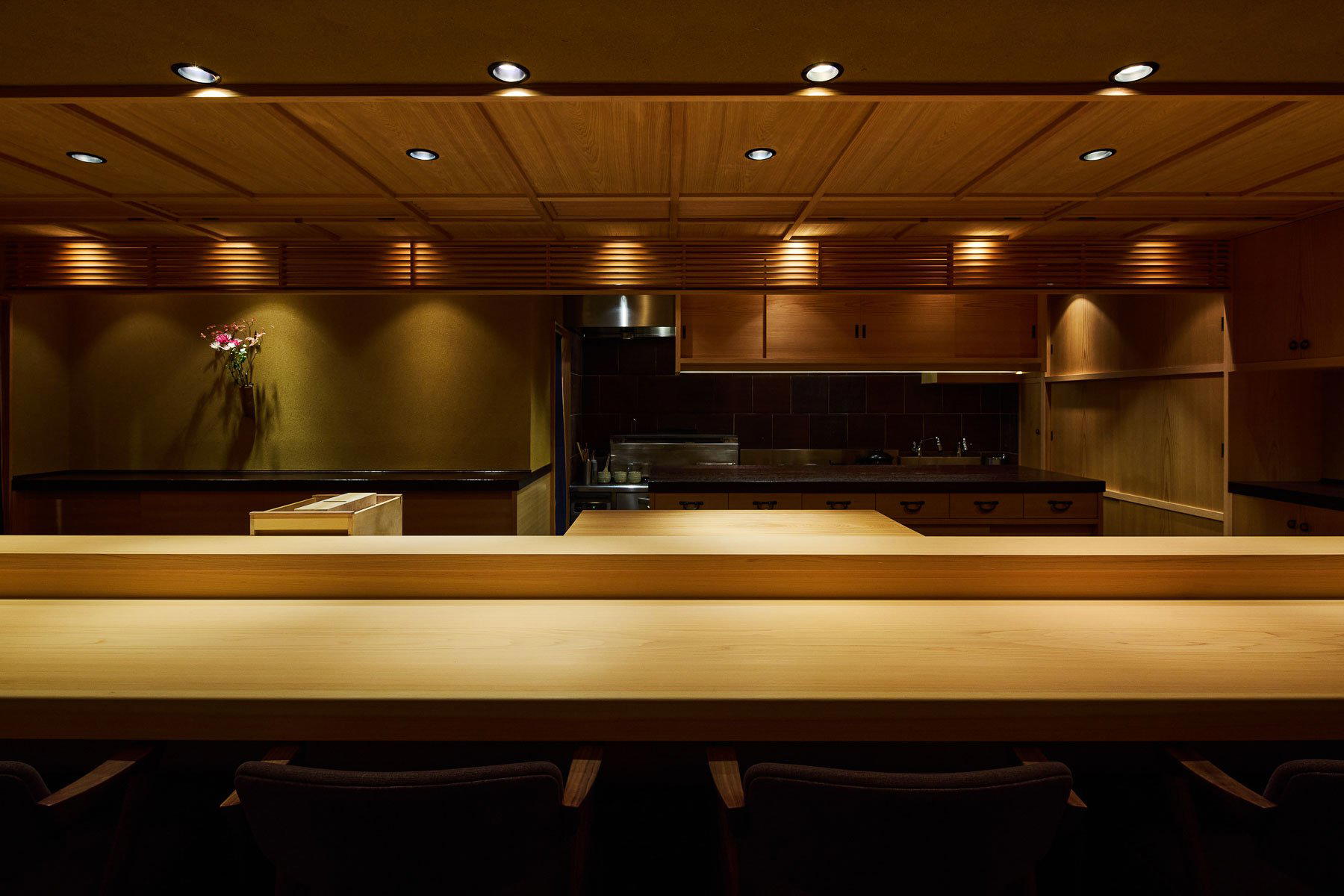
Eight Seats, One Counter, No Sashimi
Tokyo's premium kappo tier operates on a logic that differs from omakase sushi and kaiseki in one important respect: the counter format is inseparable from the service dynamic. At the most decorated kappo counters, the chef cooks in direct sightline of every guest, and the rhythm of the meal depends as much on how the team reads the room as on what arrives from the kitchen. Kappo Muroi, an eight-seat counter in a first-floor space in Nishiazabu, operates inside that logic with particular discipline. The decision to eliminate sashimi entirely is the clearest signal of that position: this is a kitchen that prizes temperature and aroma above the conventions of what a Japanese haute-cuisine course is expected to include.
Where Kappo Muroi Sits in Tokyo's Japanese Cuisine Scene
Tokyo's top-tier Japanese restaurants have split into legible camps over the past decade. Omakase sushi counters like Harutaka concentrate on a single technique applied across a long sequence of nigiri. Kaiseki houses such as RyuGin work within a multi-course seasonal structure inherited from Kyoto. Kappo sits between and around both: less constrained by sushi's single-product logic, less bound by kaiseki's formal procession, and more dependent on the chef's moment-to-moment judgment about what to send next. Within that kappo space, Muroi's score of 4.22 on Tabelog, its consecutive Bronze Awards from the Tabelog Award in 2025 and 2026, its selection for the Tabelog Japanese cuisine TOKYO 100 list in 2025, and its 2024 Michelin star position it in the upper band of the category.
The Lineage Behind the Counter
Kappo Muroi opened on 28 June 2023, carrying forward the lineage of a well-regarded Ginza kappo kitchen. The name is a direct reference to the chef's father, who ran a kappo before him, and the training arc behind the counter reflects the two poles that define serious Japanese cooking: a formative period working with classical Kyoto technique, followed by immersion in more advanced methods at a Tokyo restaurant. That sequence, Kyoto foundation then Tokyo refinement, runs through the DNA of much of the city's premium Japanese cooking. The resulting menu does not read as a biography; it reads as an argument about what the format should do. Rice served at the precise moment of steaming and the careful construction of soup-based dishes signal a kitchen anchored in the classical canon. The deliberate omission of sashimi and the alternation of new and old preparations across the course signal a kitchen that considers that canon a starting point rather than a ceiling. The establishment Tabelog data notes that Kappo Muroi carries on the DNA of a famous kaiseki restaurant in Ginza, aiming for flavors that are both nostalgic and refreshingly new.
Team Dynamic: The Counter as Collaboration
What separates the top tier of Tokyo's small counter restaurants from the level below it is rarely one extraordinary dish. It is the coherence of the whole sequence and the service architecture that frames it. At Kappo Muroi, the counter format means that cooking and hospitality happen in the same room, in real time, without the buffer of a brigade working in a closed kitchen. The drink program reinforces this dynamic: the venue's Tabelog profile specifies a particular focus on nihonshu (sake) alongside wine, with the sake selection given equal emphasis to the food pairings. That pairing-led approach to sake, rather than treating it as a default accompaniment, shapes the meal in the same way that a serious sommelier reshapes the arc of a French tasting menu. The closing gesture, fragrant oolong tea drawing the meal to its end, is a deliberate choreographic choice that extends the service team's authorship into the final moments of the experience. It is also a functional one: oolong's aromatic lift cleans the palate in a way that coffee or simple green tea would not. The temperature and aroma principles that govern the food carry through to what arrives in the glass and the cup.
Perfume and the Scent of Dashi
Few Tokyo restaurants make their sensory priorities explicit in their booking terms, but Kappo Muroi does. Guests are asked not to wear perfume, citing the delicacy of dashi and ingredient aromas. This is not an affectation: at a tight eight-seat counter where the kitchen is open, scent competes directly with what the chef is trying to communicate through temperature and aroma. It is, in practical terms, an extension of the no-sashimi logic, an environment engineered to serve a specific kind of attention.
Planning Your Visit
Kappo Muroi operates Tuesday through Saturday (and public holidays) from 18:00 to 22:00, with the Tabelog listing noting staggered start times across the week of 17:30, 18:00, 18:30, and 20:30, meaning the service schedule varies by evening. Sundays are closed, as are Mondays falling on public holidays. The counter holds eight seats, all facing the kitchen, with no private room and no option for private venue hire. Reservations are accepted, and the venue asks guests to arrive on time as all courses begin simultaneously. The address is Nishiazabu 2-16-4, first floor, approximately a ten-minute walk from Nogizaka Station; coin parking is available nearby, though the area's taxi access from central Tokyo is direct. The listed budget for dinner runs JPY 50,000 to JPY 59,999, with review-based spending patterns suggesting an average closer to JPY 40,000 to JPY 49,999 after beverage choices are factored in. A 10% service charge is added to all bills. Payment by major credit cards (Visa, Mastercard, JCB, AMEX, Diners) is accepted; electronic money and QR code payment are not. The restaurant is non-smoking throughout. Children below middle-school age are not accommodated, and the venue specifies that younger guests must be able to participate in the same adult course. Phone reservations can be made at +81-3-6805-1994. For a broader view of where Kappo Muroi fits within Tokyo's dining options, see our full Tokyo restaurants guide, or explore the city further through our Tokyo hotels guide, Tokyo bars guide, and Tokyo experiences guide. If this style of intimate, precision-driven Japanese cooking interests you beyond Tokyo, comparable approaches are at work at Goh in Fukuoka, akordu in Nara, 1000 in Yokohama, and 6 in Okinawa. For a transatlantic reference point on how a small-counter tasting format can encode a whole culinary philosophy, Atomix in New York City and Le Bernardin offer instructive comparisons in ambition and format discipline. Innovative approaches to the tasting format in Tokyo itself can be found at Crony. For wineries and sake producers relevant to the beverage program at counters like this, our Tokyo wineries guide covers the local context.
Frequently asked questions
When can I go to Muroi?
Hours at Muroi: Mon, Tue, Wed, Thu, Fri, Sat, Public Holiday, Day before public holiday, Day after public holiday 18:00 - 22:00.
What's Muroi's location?
Muroi is located at Japan, 〒106-0031 Tokyo, Minato City, Nishiazabu, 2 Chome−16−4 1f, Tokyo.
What awards or recognition does Muroi have?
Muroi has received recognition including: {"Year":"2026","Award Source":"Tabelog","Award Type":"The Tabelog Award","Award Group":"bronze","Award Group Rank":"297","Restaurant Name":"Azabu Muroi","Score":"4.16","Budget":"Dinner: JPY 60,000 - JPY 79,999; Lunch: -","Budget Dinner":"JP….
What should I order at Muroi?
There is no à la carte option. Kappo Muroi operates as a course-only counter, so the kitchen determines the sequence each evening. The one structural choice guests make is whether to book the counter or the private room, which accommodates up to six.
What makes Muroi worth seeking out?
The credential stack is specific: a 2024 Michelin star, Tabelog Bronze Awards in both 2025 and 2026, and selection for the Tabelog Japanese Cuisine Tokyo Top 100 in 2025. Against a dinner spend of JPY 50,000–59,999 (with reviewed averages landing around JPY 40,000–49,999), that positions Kappo Muroi below the JPY 80,000–100,000 tier of Azabu Muroi while sharing the same lineage from a Ginza kappo kitchen.
How does Muroi handle allergies?
The venue is direct about its policy: any allergy or strong dislike affecting two or more dishes in the course will be treated as a cancellation, and depending on timing, the cancellation fee may apply. Guests are asked to confirm this condition before booking.
Where It Fits
Comparable venues nearby, for context on price, style, and recognition.
| Venue | Cuisine | Price | Awards | Notes |
|---|---|---|---|---|
| MuroiThis venue — the venue you are viewing | Modern Kappo Omakase | $300–500 | 1 Michelin Star · Tabelog Bronze #296 | Not listed |
| Nodaiwa Azabu Iikura Honten | Traditional Kansai-Style Unagi | $50–100 | 1 Michelin Star · Tabelog 100 #95 | Minato |
| Jukuseizushi Yorozu | Aged Sushi Omakase | $200–300 | 1 Michelin Star | Shibuya |
| Sushi Keita | Edomae Omakase Sushi | $150–200 | 1 Michelin Star · Tabelog 100 #28 | Chūō |
| Sugita | Edomae Sushi Omakase | $300–500 | Michelin Bib Gourmand · La Liste Top Restaurants | Minato |
| Akiyama | Seasonal Japanese Kappo | $200–300 | 1 Michelin Star · Tabelog 100 #66 | Minato |
Recognition history
Dated appearances from independent guides and award organizations, with the underlying list record or original source where available.
Michelin 1 Star
Michelin
Tabelog Bronze #296
Tabelog
Full recognition history (6 entries)
Tabelog Bronze #297
Tabelog
Tabelog Bronze
Tabelog
Tabelog 100 #95 · No. 95
Tabelog · Tabelog 100 - Japanese cuisine - TOKYO - 2025
Michelin 1 Star
Michelin














Details
- Elegant
- Sophisticated
- Intimate
- Minimalist
- Special Occasion
- Date Night
- Chefs Counter
- Open Kitchen
- Sake Program
- Omakase
- Counter Dining
- Sake Program
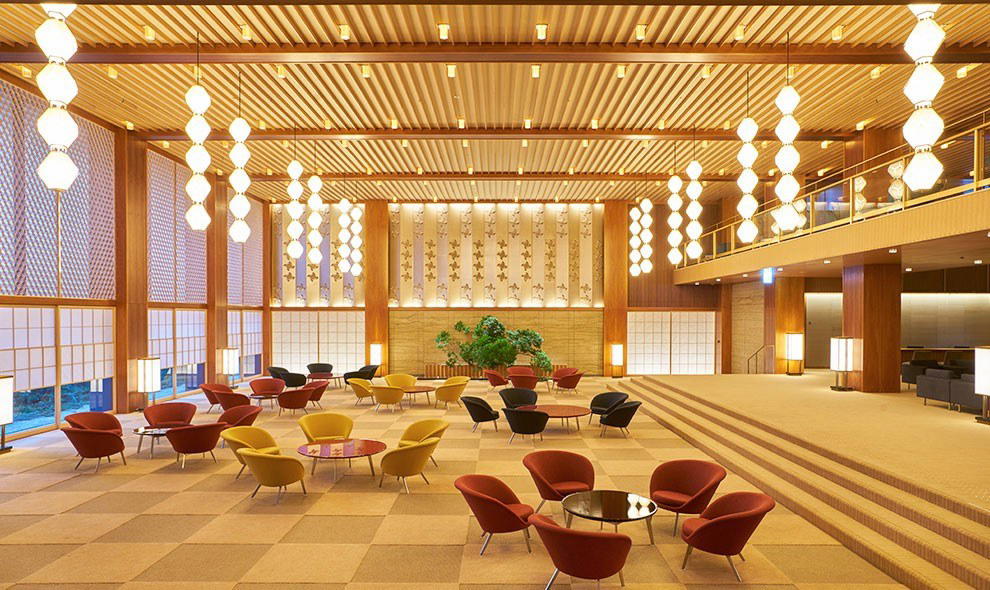
Softly lit wooden interior with hinoki counter for 8 guests, serene and focused atmosphere in quiet residential setting.