
Tabelog 100 #54
Our verdict
Shaoxiao brings Cantonese and creative Chinese cooking into Kyoto’s smaller-format dining circuit, with Tabelog Chinese WEST 100 recognition for 2026 and a room built around 18 seats. The draw is less about ceremony than coordination: counter seating, wine and nihonshu support, breakfast congee, roast-meat identity, and a price tier that sits below Kyoto’s formal special-occasion restaurants.

Pearl is the En Primeur Club membership app, where members save venues, book tables and use the concierge.
The menu
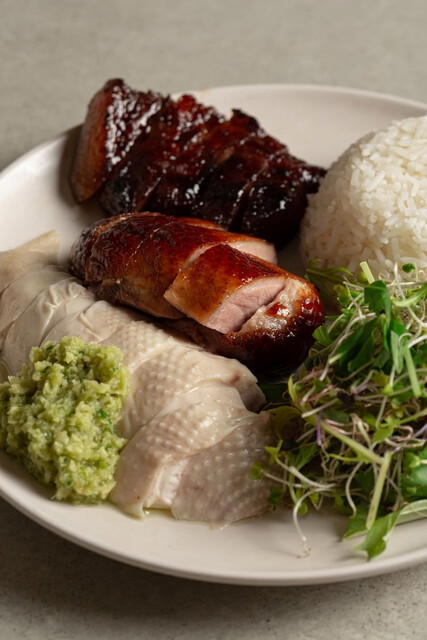
What to order
- Hong Kong-style congee breakfast with 18 side dishes
- Oven-roasted duck
- Cantonese roast meat combo
Approaching Kyoto through its smaller dining culture, the city changes register: major routes and visitor movement give way to compact rooms and restaurants built on repeat attention rather than theatrical frontage. Shaoxiao fits that scale, with a Chinese and Creative cooking brief that reads more like a contemporary neighbourhood restaurant than a hotel dining room.
Kyoto’s Chinese dining culture occupies a different lane from the city’s kaiseki mythology: less tied to postcard expectations, more practical, and often revealing of how locals and repeat visitors eat beyond the headline categories. Here, the appeal is the balance between a focused room, a flexible category, and a price point that keeps the restaurant accessible without reducing it to a quick-stop option. That range only works when kitchen, drinks, and front-of-house timing align; in a small Kyoto restaurant, weak coordination shows quickly.
Small-room Chinese cooking in a city built on restraint
Shaoxiao is best read not as a grand Chinese restaurant, but as part of Kyoto’s quieter move toward compact, specialised dining rooms outside the familiar Japanese fine-dining script. Its 2026 Tabelog Hyakumeiten recognition places it inside a regional Chinese-cuisine conversation rather than the city’s kaiseki hierarchy. A 3.67 Tabelog score adds another signal: this is not a tourist-facing novelty, but a restaurant with sustained diner response in a competitive category.
The cooking category is listed as Chinese and Creative, which matters in Kyoto. The city rewards precision and seasonality, but Chinese restaurants here work harder for attention because visitors often arrive chasing sushi counters, wagashi, tofu, and multi-course Japanese dining. Shaoxiao’s listed category gives it room to sit between familiarity and invention, closer to daily-use urban dining than banquet-room formality.
The price tier is notable. Dinner sits at JPY 4,000 to JPY 4,999, while lunch is JPY 1,000 to JPY 1,999. In Kyoto terms, that places it above many quick snack stops and sweet-house visits, but below older special-occasion dining rooms such as Warajiya, where dinner pricing climbs higher. The comparison is about how Kyoto’s dining budget divides between everyday ritual, heritage dining, and tightly run small restaurants.
For travellers building a Kyoto eating day, that position is useful. Lunch keeps the spend modest, while dinner remains comfortably below the city’s formal tasting-menu economy. Other Kyoto dining rooms show how varied the city’s smaller restaurant field has become, from casual counters to genre-crossing rooms, and Shaoxiao belongs in that practical middle ground: specific enough to seek out, but not so formal that it has to dominate an itinerary.
The experience depends on pacing, not spectacle
The compact-restaurant context gives Shaoxiao its editorial interest. A smaller room exposes service cadence; a conventional meal still depends on timing, temperature, and the rhythm between kitchen and floor. In a city where small restaurants can feel austere or over-managed, this kind of format requires discipline. Lunch and dinner run at different tempos, and the room has to reset without losing its centre.
The Chinese and Creative listing also signals a flexible table. Kyoto’s dining audience is comfortable with cross-category thinking, and a Chinese room that sits outside the city’s most familiar Japanese scripts can be especially useful for diners looking for contrast. The point is not spectacle; it is balance, especially for guests who want a meal that feels contemporary without abandoning the comfort of a clearly defined cuisine category.
For families or mixed groups, the safest reading is practical rather than presumptive: check directly before planning around specific seating needs, age policies, or service restrictions. Small Japanese dining rooms often have limited margin for disruption, and details can change by service. Shaoxiao’s appeal is strongest when diners treat it as a compact Kyoto restaurant and plan with a little flexibility.
Group planning should be handled the same way. Rather than assuming private-room formality or large-party infrastructure, treat Shaoxiao as a focused small restaurant and confirm directly if you need special arrangements. For couples or solo diners, the sharper choice is to keep the meal simple and let the room’s pace, category, and price point define the experience without making it overly formal.
How to place it in a Kyoto itinerary
Shaoxiao works for travellers who have already scheduled the city’s obvious Japanese meals and want a counterpoint still rooted in Kyoto’s smaller-room culture. It fits a day moving through Kyoto rather than a night built only around the city’s most famous dining image. Keep the plan simple: use Kyoto transit, allow time between reservations, and avoid building the whole evening around unsupported assumptions about exact location or access.
Reservations and payment details should be checked directly before visiting, especially for dinner or for groups with tighter timing. The confirmed public listing includes a phone number, +81-75-746-4583, along with the Tabelog-listed budget bands. In a small Kyoto restaurant, direct confirmation is often the cleanest way to avoid over-reading third-party availability or outdated service notes.
Kyoto’s restaurant map rewards this placement. A visitor can eat temple-side sweets, station-area comfort food, a precise modern dinner, and a Chinese meal without leaving the city’s compact dining ecosystem.
Readers comparing Japanese city dining beyond Kyoto should keep the contrasts generic rather than forcing one-to-one matches. Shaoxiao is most useful as a Kyoto reference point for mid-range Chinese and Creative dining: accessible at lunch, still modest at dinner, and recognised through the 2026 Tabelog Hyakumeiten selection. For a wider angle, compare it with other unnamed city restaurants that show how casual formats, compact rooms, and genre-crossing cooking now shape dining across Japan.
Frequently asked questions
Can I bring kids to Shaoxiao?
Check directly with Shaoxiao before visiting with children, as small restaurants may adjust policies by service and timing.
What kind of setting is Shaoxiao?
Shaoxiao is a Kyoto restaurant listed in the Chinese and Creative categories, with a compact, focused dining-room feel rather than a large hotel-restaurant format.
Is Shaoxiao more mid-range or high-end?
Pricing at Shaoxiao is listed as Dinner: JPY 4,000 - JPY 4,999; Lunch: JPY 1,000 - JPY 1,999.
Where exactly is Shaoxiao?
Kyoto.
Do I need a reservation for Shaoxiao?
For dinner or time-sensitive plans, check directly with Shaoxiao. The public listing includes the phone number +81-75-746-4583.
Just the Basics
Comparable venues by cuisine and category.
| Venue | Cuisine | Price | Awards | Notes |
|---|---|---|---|---|
| ShaoxiaoThis venue (the venue you are viewing) | Hong Kong-style Cantonese Roast & Congee | $30–50 | Tabelog 100 #54 | Not listed |
| Okonomiyaki Yoshino | Traditional Okonomiyaki & Teppanyaki | $10–20 | Tabelog 100 #52 | JPY 1,000 - JPY 1,999 |
| Warajiya | Traditional Kyoto eel hotpot & porridge (unagi kaiseki-style) | $50–100 | Tabelog 100 #25 | JPY 6,000 - JPY 7,999 JPY 4,000 - JPY 4,999 |
| Shimizu Ippouen Cafe Kyoto honten | Not listed | Not listed | Tabelog 100 #43 | JPY 1,000 - JPY 1,999 |
| Baiko Do | Not listed | Not listed | Tabelog 100 #74 | JPY 999 |
| Aoikonshin Yamada | Seasonal Kaiseki | $150–200 | Michelin Plate | Japanese |
Recognition history
Dated appearances from independent guides and award organizations, with the underlying list record or original source where available.
Tabelog 100 #54 · No. 54
Tabelog · Tabelog 100 - Chinese cuisine - WEST - 2026
Continue exploring
More in Kyoto
Restaurants in Kyoto
All restaurants in Kyoto →
Bars in Kyoto
All bars in Kyoto →
Hotels in Kyoto
All hotels in Kyoto →
Wineries in Kyoto
Browse all →
Details
- Cozy
- Modern
- Intimate
- Trendy
- Solo
- Casual Hangout
- After Work
- Family
- Date Night
- Standalone
- Design Destination
- Extensive Wine List
- A La Carte
- Counter Dining
- Small Plates
- Wine
- Sake
A small, stylish and relaxed space with counter and table seating, non-smoking throughout, described as a hidden retreat for adults in a quiet residential area with a calm, contemporary feel.