
Awarded a Michelin Bib Gourmand in 2025, Hu Yuan Mei Shi sits on Dongquanmen in Yangzhou's Guangling District, serving Huaiyang cuisine at the ¥ price tier. It occupies the accessible end of a cooking tradition that ranks among China's four classical culinary schools, offering serious technique without the formality of the city's starred houses.
Pearl is the En Primeur Club membership app — saves, bookings, and concierge access live there. Same editors, same standards.
- Address
- 52 Dongquanmen, Guangling District, Yangzhou, Jiangsu, China, 225001
- Phone
- +86 135 1175 1990
- Directions
- Get directions
 Saves & bookings on Pearl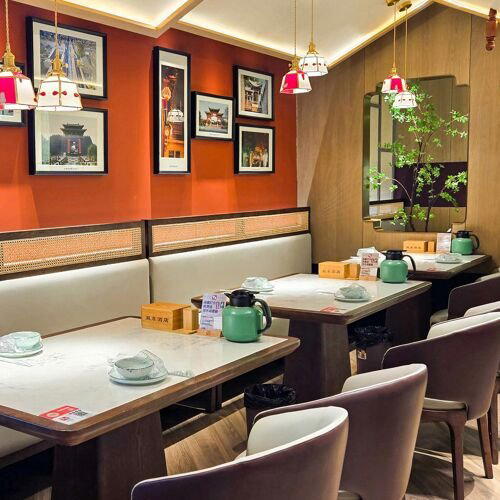
Dongquanmen and the Weight of a Street Address
In Yangzhou, street addresses carry editorial weight that they rarely do elsewhere in China. The old city's canal-side lanes and Ming-Qing merchant quarters have produced more documented culinary tradition per square metre than almost any comparable provincial city, and Dongquanmen, in the Guangling District, sits inside that dense historical core. Restaurants here do not merely serve a region's food; they operate within a living argument about what Huaiyang cuisine is, who it belongs to, and how much formality it requires. Hu Yuan Mei Shi, at number 52, enters that argument from the accessible end of the price spectrum, holding a Michelin Bib Gourmand awarded in 2025 as its primary credential.
The Bib Gourmand designation matters more in a city like Yangzhou than in most. Michelin's inspectors treat it as a signal of consistent quality at a price point where margin pressure usually erodes craft, and in a tradition as technique-sensitive as Huaiyang, that signal carries specific meaning. It suggests that the kitchen is executing the slow braises, the knife work on tofu, and the careful seasoning that define the cuisine at a standard the inspectors found worth documenting, without charging the prices that Yangzhou's higher-tier houses command. For comparison, Shang Palace operates at the ¥¥ tier with a Michelin star, placing Hu Yuan Mei Shi in a different competitive band: less formal, priced lower, but recognised by the same critical apparatus.
What Huaiyang Cooking Actually Demands
Huaiyang cuisine is one of the four classical schools of Chinese gastronomy, alongside Cantonese, Shandong, and Sichuan. Its geographical base runs across Jiangsu province, anchored by the Huai River and the Yangtze delta, and its defining characteristics are restraint and precision rather than the heat or pungency that distinguish other regional traditions. The cooking depends on freshwater produce, seasonal vegetables, and a knife craft so developed that tofu and egg white are treated as serious technical tests. Braising times are long and specific. Stock clarity is a standard, not an aspiration.
In this context, a Bib Gourmand at the ¥ tier is not simply a value signal. It implies that whoever runs the kitchen has internalised enough of this tradition to satisfy inspectors who have spent years calibrating what Huaiyang should taste like in its home territory. Elsewhere in China, restaurants working in this tradition have earned recognition at various price levels: The Huaiyang Garden in Macau and Huaiyang Fu in Beijing's Dongcheng district both carry the cuisine into different markets and price brackets. The interest of Hu Yuan Mei Shi is that it sits in the cuisine's home city, at entry-level pricing, with a formal recognition that most restaurants at this price point in any cuisine never receive.
The Guangling District as Context
Guangling is Yangzhou's old commercial and residential core, the district where the city's Tang and Song dynasty prosperity left its deepest architectural mark. The area around Dongquanmen connects the canal network to the city's older residential quarters, and eating here involves a kind of ambient context that purpose-built restaurant districts in newer Chinese cities cannot replicate. The cooking traditions practised in this part of town have been continuous enough that the ingredients, techniques, and even the particular flavour registers of the cuisine carry local meaning beyond the plate.
For visitors using Yangzhou as a stand-alone destination or as part of a broader Jiangsu itinerary, the Guangling District is where most serious eating happens. Quyuan Plus and Quyuan Teahouse on Changchun Road occupy nearby positions in the neighbourhood's culinary fabric, while Cai Gen Xiang Xiao Guan and Mountain Restaurant offer other angles on the city's cooking. Taken together, these addresses form a working map of how Yangzhou's food culture has stratified across price points and formats, with Hu Yuan Mei Shi anchoring the critically recognised, accessible tier.
Placing Hu Yuan Mei Shi in the Wider Huaiyang Picture
The Huaiyang tradition has spread considerably beyond Jiangsu over the past two decades, appearing in Shanghai, Beijing, and across the diaspora dining circuits of Macau and Hong Kong. 102 House in Shanghai and operations like Xin Rong Ji on Xinyuan South Road in Beijing demonstrate how the cuisine travels, often at higher price points than it commands in its source geography. Xin Rong Ji in Chengdu, Chef Tam's Seasons in Macau, Ru Yuan in Hangzhou, and Imperial Treasure Fine Chinese Cuisine in Guangzhou round out the broader picture of how classical Chinese regional cooking from this tradition is practised and priced across the country.
What distinguishes eating in Yangzhou itself is that the cuisine does not need to explain itself here. Ingredients travel shorter distances, kitchen staff are more likely to have grown up eating the food they cook, and diners arrive with a cultural baseline that frames the meal differently. At the ¥ price point, that combination produces a version of the cuisine that is hard to find outside of its source geography, which is precisely why the Bib Gourmand designation at this address reads as more than a convenience award.
Planning the Visit
Hu Yuan Mei Shi sits at 52 Dongquanmen, Guangling District, a central address within the old city that is walkable from most of Yangzhou's principal heritage sites. The ¥ price tier places it firmly in the category of meals that do not require advance budget planning, but at a recognised Bib Gourmand address in a tourism-active part of the city, arriving without a reservation during peak periods carries obvious risk. Yangzhou draws significant domestic tourism, particularly during spring when the city's gardens are at their most active, and lunch service at popular addresses in Guangling can fill ahead of walk-in hours. Booking ahead where possible, particularly for groups, is the prudent approach. Phone and online booking details are not listed in the current record, so direct contact through local travel resources or the hotel concierge is the practical route. For broader trip planning, our full Yangzhou restaurants guide, Yangzhou hotels guide, Yangzhou bars guide, Yangzhou wineries guide, and Yangzhou experiences guide cover the city's broader options across categories.
How Hu Yuan Mei Shi Yangzhou compares with similar nearby venues.
| Venue | Cuisine | Price | Awards |
|---|---|---|---|
| Hu Yuan Mei Shi | Huaiyang | ¥ | Bib Gourmand |
| Cai Gen Xiang Xiao Guan | Huaiyang | ¥ | Not listed |
| Shuang Dong | Huaiyang | ¥¥ | Not listed |
| Quyuan Plus | Huaiyang | ¥¥ | Not listed |
| Quyuan Teahouse (Changchun Road) | Huaiyang | ¥¥ | Not listed |
| Yi Yuan (Siwangting Road) | Huaiyang | ¥¥ | Not listed |
Recognition history
Dated appearances from independent guides and award organizations, with the underlying list record or original source where available.
Michelin Bib Gourmand
Michelin
Michelin Bib Gourmand
Michelin
Continue exploring
More in Yangzhou
Restaurants in Yangzhou
Browse all →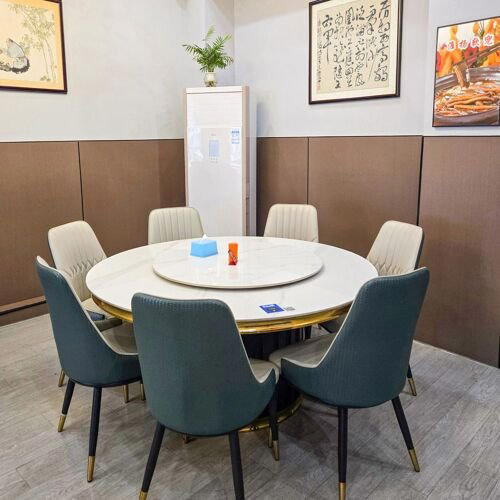
At a Glance
- Cozy
- Classic
- Family
- Group Dining
- Casual Hangout
- Local Sourcing
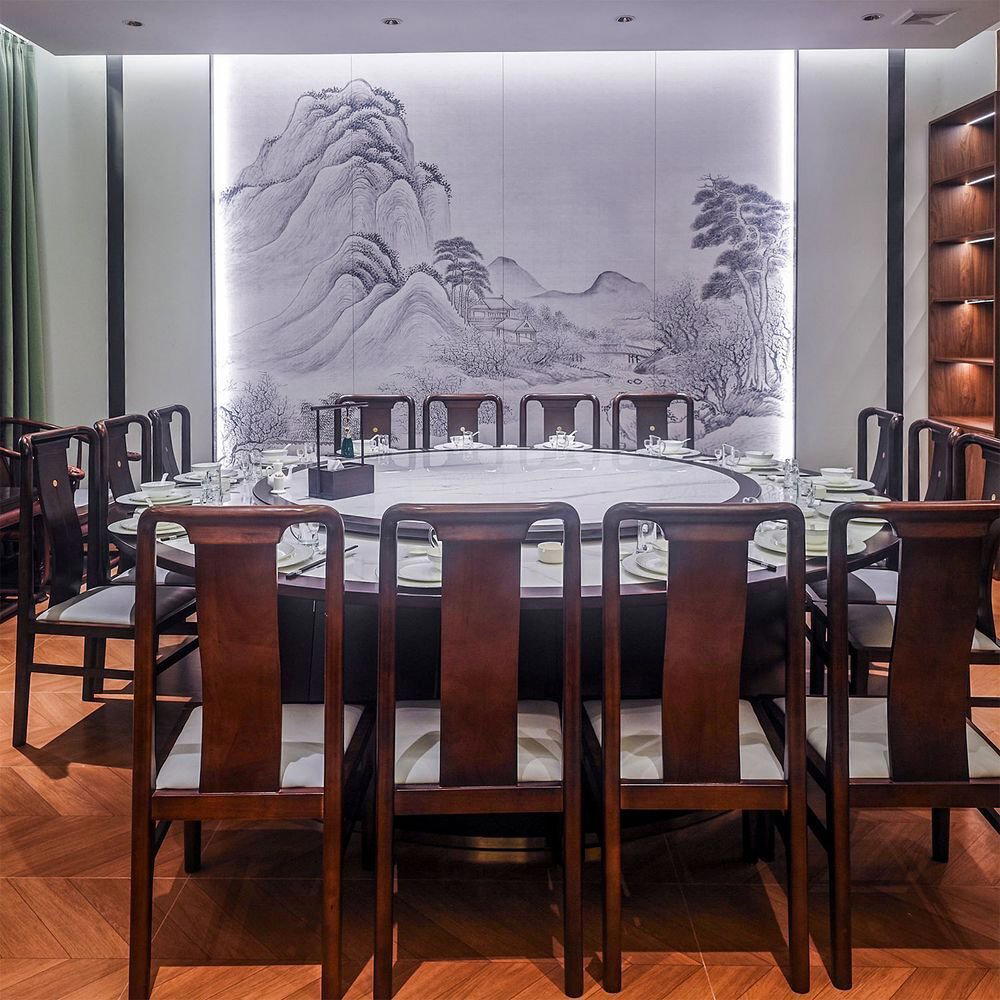
No-frills interiors with plain, comfortable seating and functional tables, creating a relaxing, home-style atmosphere focused on the food.
Know Before You Go
- Getting there
- 52 Dongquanmen, Guangling District, Yangzhou, Jiangsu, China, 225001