Shabu House
Shabu House on Geary Boulevard brings the Japanese hot-pot tradition to San Francisco's Richmond District, where the format's communal cook-at-the-table logic suits the neighbourhood's dense, family-oriented dining culture. The shabu-shabu model sits at an accessible price point relative to the city's high-end Japanese counters, making it a practical entry point into a cuisine that rewards attention to broth, protein quality, and timing.
 Discover on Pearl
Pearl is the En Primeur Club membership app — saves, bookings, and concierge access live there. Same editors, same standards.
- Address
- 5158 Geary Blvd, San Francisco, CA 94118
- Phone
- (415) 406-9647
- Website
- jinpotshabu.com
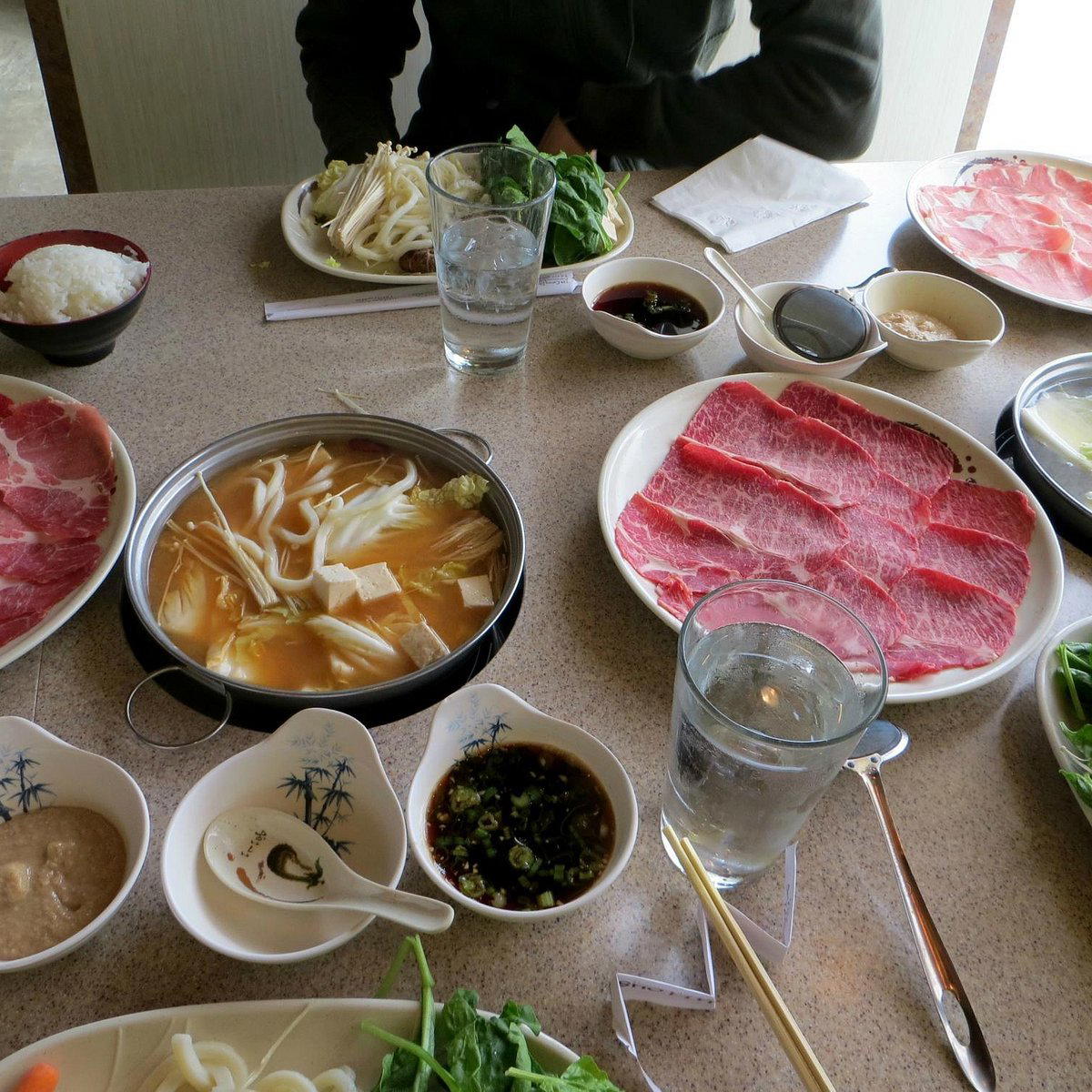
Hot Pot on Geary: Where the Richmond District's Japanese Table Tradition Lives
Geary Boulevard between Arguello and Park Presidio is one of San Francisco's most underread dining corridors. The Richmond District has long operated as the city's second Chinatown, and, by extension, its most concentrated pocket of East and Southeast Asian restaurants outside the tourist circuit. Shabu House at 5158 Geary Blvd sits inside that tradition, representing the Japanese shabu-shabu hot pot format in a neighbourhood where communal table dining is less a trend than a default mode of eating.
The shabu-shabu format itself is worth understanding before you arrive. Originating in Osaka in the mid-twentieth century, the dish takes its name from the Japanese onomatopoeia for swishing thinly sliced meat through simmering broth, a physical act that puts the diner in charge of timing, doneness, and dipping sequence. That cook-at-the-table logic makes it inherently social in a way that few Western formats match. The shared pot, the communal dipping sauces, the negotiation over who takes the last piece of wagyu: these are features, not quirks. Understanding this frames the entire experience before you've looked at the menu.
Planning Your Visit: What the Booking Reality Looks Like
San Francisco's Japanese dining scene has bifurcated sharply over the past decade. At one end sit the high-investment omakase counters in SoMa and the Financial District, venues like Benu and the rarefied progressive tasting-menu rooms such as Lazy Bear and Atelier Crenn, which price against national peers including Alinea in Chicago, Le Bernardin in New York City, and The French Laundry in Napa. At the other end sit neighbourhood-anchored formats, ramen, izakaya, hot pot, that serve a regular local clientele with little interest in reservation theatrics.
Shabu House is a casual, reservation-recommended restaurant, which shapes how you should plan. Shabu House recommends reservations, and weekend evenings are the busiest. If you're visiting with a group larger than four, arriving before the dinner rush, generally before 6:30 p.m. on weekdays, is the most reliable approach. Call ahead when possible.
The planning calculus for shabu-shabu differs from that of a conventional restaurant booking. Because cooking time is in the diner's hands, tables tend to turn more slowly than at a comparable ramen or sushi counter. A group that orders multiple meat tiers and adds udon or glass noodles to the broth at the end, standard practice, can occupy a table for ninety minutes to two hours. Factor this in when deciding between a weeknight visit and a Saturday dinner push.
The Format and What It Demands of You
Shabu-shabu is one of the more interactive formats in Japanese dining, and the Richmond District's version of it tends to be less ceremonial than the high-end Tokyo interpretations that have influenced spots like Quince or Saison in their plating philosophy. Here, the emphasis is on volume, variety, and the quality of the base broth, which typically arrives as a split pot, one side kombu-dashi, one side spiced or miso-inflected, giving the table two cooking environments simultaneously.
The protein selection is where hot-pot restaurants differentiate themselves within the category. Entry-level shabu spots use standard supermarket-grade beef; better operations source USDA Choice or Prime cuts, and a smaller number bring in A5 wagyu at a premium tier. The vegetable and tofu spread, often overlooked by first-timers, does significant work in balancing the meal: mushrooms, napa cabbage, and enoki release their own flavour into the broth over the course of the meal, effectively improving the cooking liquid with each pass.
Dipping sauces, typically a sesame-based goma dare and a ponzu, are the primary seasoning mechanism, and the ratio you use shifts the character of each bite considerably. This is not a passive eating experience.
The Richmond's Dining Context and Where Shabu House Fits
The Inner and Outer Richmond has historically been less visible to the city's restaurant press than the Mission or Hayes Valley, despite sustaining a density of family-run Asian restaurants that rivals any comparable neighbourhood in the American West. That dynamic has begun to shift as younger diners migrate outward from the central corridors, but the Richmond's core identity remains neighbourhood-first: restaurants that serve the people who live within walking distance, and that earn loyalty through consistency rather than press cycles.
Within that context, a shabu-shabu specialist on Geary occupies a reliable position. The format has a dedicated repeat-visit customer base, families marking occasions, groups of friends splitting a pot on a Tuesday, and it competes less with the city's high-end Japanese counters than with other communal-format restaurants in the same zip code. Shabu House represents the neighbourhood category rather than the destination-dining tier anchored by venues like Single Thread Farm in Healdsburg or Providence in Los Angeles at the regional level.
That distinction matters for expectation-setting. This is a room that rewards showing up with the right group, in the right frame of mind, prepared to spend time at the table rather than moving through a sequence of courses on someone else's schedule. It is a room that rewards showing up with the right group, in the right frame of mind, prepared to spend time at the table rather than moving through a sequence of courses on someone else's schedule.
Shabu House in the Broader American Hot-Pot Conversation
The hot-pot format has expanded across American cities over the past decade, moving from purely immigrant-community dining into a broader urban mainstream. San Francisco, with its large Japanese and Chinese-American populations, has sustained the format longer and at greater depth than most comparable cities. The Richmond's version of this story runs parallel to similar corridors in Los Angeles's Little Tokyo, New York's Flushing, and the growing Korean hot-pot scenes tracked by venues like Atomix in New York City. Internationally, the format's lineage connects to Cantonese and Sichuan hot-pot traditions documented at establishments including 8½ Otto e Mezzo Bombana in Hong Kong.
For a city whose dining conversation is often dominated by the tasting-menu rooms receiving Michelin attention, Addison in San Diego, Bacchanalia in Atlanta, and The Inn at Little Washington represent the broader national tier, the persistence of neighbourhood hot-pot operations is a signal of how layered San Francisco's actual eating culture is beneath the award-circuit surface. Blue Hill at Stone Barns in Tarrytown and Emeril's in New Orleans occupy very different market positions, but they share with Shabu House the characteristic of serving a loyal, return-visit clientele rather than a one-time bucket-list crowd.
Planning Snapshot
Shabu House is located at 5158 Geary Blvd, San Francisco, CA 94118, in the Outer Richmond District. Shabu House is open Monday through Thursday from 5 to 9 PM, Friday from 4:30 to 9:30 PM, Saturday from 11:30 AM to 2 PM and 4:30 to 9:30 PM, and Sunday from 11:30 AM to 2 PM and 4:30 to 9 PM. Weekend evenings draw the heaviest traffic; weeknight visits before 6:30 p.m. offer the smoothest entry for groups.
Peers You’d Cross-Shop
Comparable venues nearby, for context on price, style, and recognition.
| Venue | Cuisine | Price | Notes |
|---|---|---|---|
| Shabu HouseThis venue — the venue you are viewing | Japanese Shabu Shabu Hot Pot | $$ | |
| Ebisu Restaurant | Authentic Japanese Sushi | $$ | Inner Sunset |
| The Ramen Bar | Tokyo-Style Japanese Ramen | $$ | Financial District |
| Orenchi Beyond | Authentic Japanese Ramen | $$ | Mission District |
| Katana-Ya | Japanese Ramen and Sushi | $$ | Tenderloin |
| Dragon Horse | Japanese Izakaya & Sushi | $$ | South of Market |
Continue exploring
More in San Francisco
Restaurants in San Francisco
Browse all →
Bars in San Francisco
Browse all →
Hotels in San Francisco
Browse all →
At a Glance
- Lively
- Energetic
- Casual
- Group Dining
- Family
- Casual Hangout
- Celebration
- Standalone
- Sake Program
- Beer Program
Lively and warm atmosphere with a fun, interactive dining experience; tables feature individual hot pots creating an engaging, social environment.