Seosko domaćinstvo Ficović sits in the village of Hodilje near Ston, on Croatia's Pelješac peninsula, where the food tradition is built around what the land and sea produce within walking distance. The setting is a working rural household, and the cooking reflects that directly. For visitors tracing the Dalmatian interior rather than its coastline, this is where that agricultural character becomes a meal.
Pearl is the En Primeur Club membership app — saves, bookings, and concierge access live there. Same editors, same standards.
- Address
- Hodilje 30, 20230, Ston, Croatia
- Phone
- +385953934185
- Website
- restaurantficovic.com
- Directions
- Get directions
 Saves & bookings on Pearl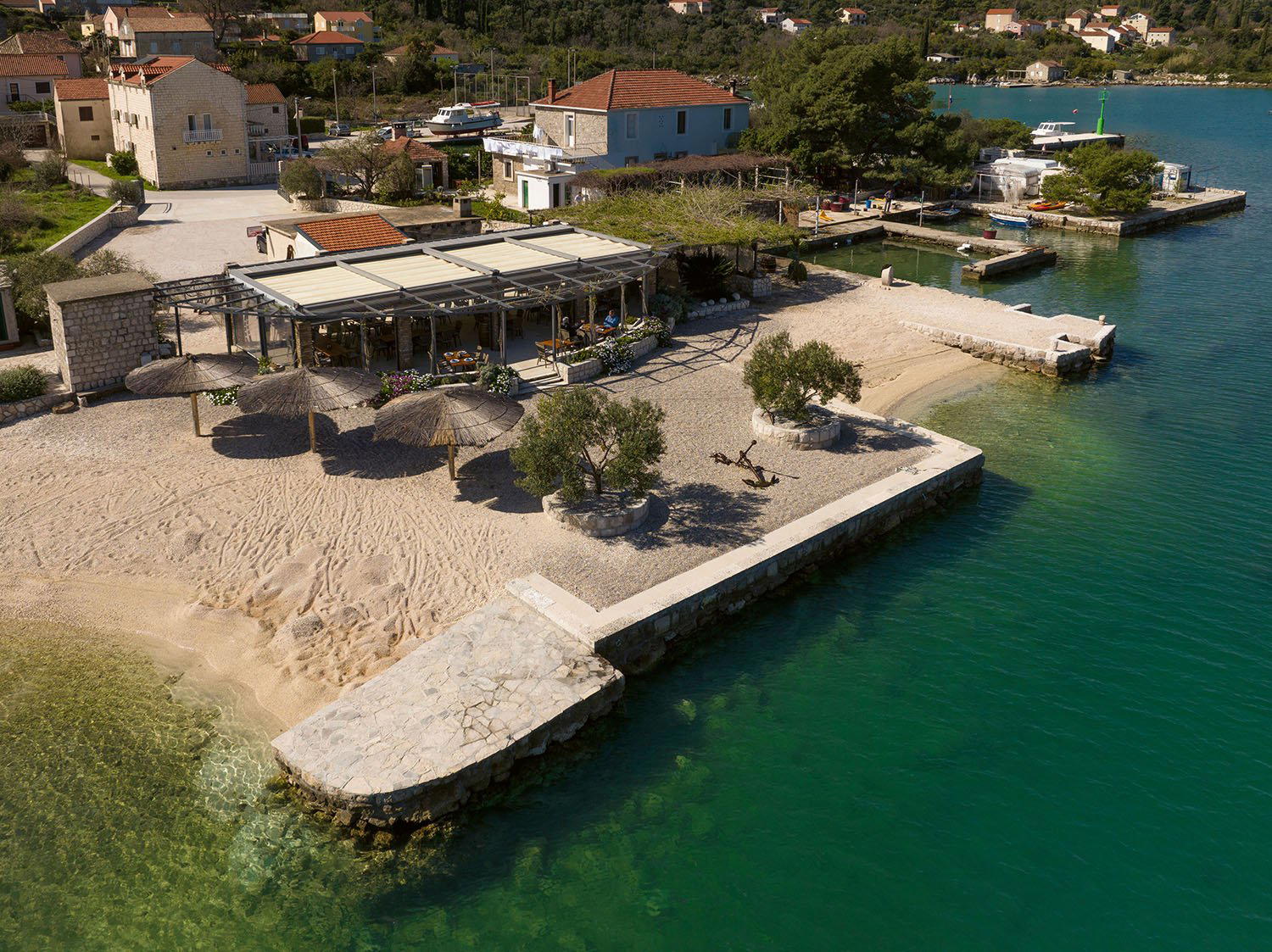
Where Pelješac Feeds Itself
The Pelješac peninsula has two reputations that rarely appear in the same sentence: its oysters and mussels, farmed in the shallow channels of Mali Ston Bay, and its wine, grown from Dingač and Postup grapes on steep south-facing slopes above the Adriatic. Between those two poles sits a quieter agricultural tradition, one rooted in stone-walled villages and smallholder farming that has fed this peninsula through centuries of Venetian, Ottoman, and Austro-Hungarian rule.
The Croatian term seosko domaćinstvo translates roughly as rural household or village estate, and in the context of Dalmatian food culture it signals something specific: a place where the distance between ingredient and plate is measured in metres rather than supply chains. They sit in a different category from the modernist Dalmatian restaurants further along the coast, such as Pelegrini in Sibenik or Restaurant 360 in Dubrovnik, where the frame is Mediterranean contemporary and the price point reflects it. The seosko domaćinstvo format operates on a different register entirely, one where provenance is structural rather than aspirational.
The Sourcing Logic of Dalmatian Rural Cooking
On Pelješac, what goes into the kitchen is shaped by geography before it is shaped by any cook's decision. The peninsula's terrain, narrow and mountainous, limits what can be grown at scale, which means that traditional households here developed a cooking vocabulary built around drought-tolerant vegetables, lamb and goat from the scrubby hillside pastures, cured meats from home-reared pigs, and the sea's contribution from the bay below. Olive groves are common across the peninsula. Figs, capers, and wild herbs grow without cultivation along the limestone paths.
This is the sourcing logic that defines the seosko domaćinstvo model across Dalmatia, and it produces a cuisine that differs meaningfully from the coastal fish restaurant tradition. Slow-cooked lamb under a peka, the cast-iron bell covered in embers that remains the definitive Dalmatian cooking vessel for slow heat, is the kind of preparation these settings do leading. The peka method requires neither a sophisticated kitchen nor imported technique. It requires time, good raw material, and wood. On a rural property with its own animals and its own fuel, those are the easiest three things to supply.
Korak in Jastrebarsko operates in a comparable idiom in the Croatian interior, and BioMania Bistro Bol in Bol on Brač has made ingredient origin central to its identity. The appetite for this kind of sourcing-first dining has grown across Croatia's premium scene, even as it was always the default at village-level operations like this one.
Setting and Atmosphere
Arriving in Hodilje, the scale shifts noticeably from the tourist infrastructure of Ston or the ferry port at Orebić. The village sits inland on the peninsula, modest in size, surrounded by the kind of agricultural land that defines Pelješac away from its wine-growing fame. A rural household here looks like one: stone walls, outdoor seating in a courtyard or under a pergola, the sounds of the working property rather than ambient playlist or coastal bustle.
This physical environment is part of the offering. It is the opposite of the cultivated theatre found at internationally recognised addresses like Agli Amici Rovinj or Boskinac in Novalja, where design and setting are carefully considered elements of the guest experience. At a seosko domaćinstvo, the atmosphere is incidental to the function of the place. That absence of construction is, for many visitors, precisely the point. The meal happens in a working domestic context, and the food carries that context through every element.
Across Dalmatia and the Croatian islands, a small number of rural operations have begun attracting visitors who arrive specifically because they want the agricultural register rather than the polished one. Bodulo in Pag draws on the island's lamb tradition in a comparable spirit. Burin in Crikvenica on the Kvarner coast connects its menu to local producers in a way that shares the same underlying logic.
Planning Your Visit
Hodilje is accessible by car from Ston, which sits approximately five kilometres to the south along the peninsula. Ston itself is reachable from Dubrovnik in roughly an hour by road, making Ficović a realistic option for visitors based on the southern Dalmatian coast who want to spend a day on Pelješac. The peninsula's wine roads and the salt pans of Ston make for a natural combined itinerary.
Reservations are recommended. Visitors who treat the experience as a hosted meal at a working farm rather than a restaurant booking will calibrate their expectations correctly. Pacing here is slow, which is structural rather than a service failure. That slowness is what peka cooking and smallholder hospitality both require.
For those building a broader Croatian dining programme, the contrast between Ficović's register and that of Croatia's more technically ambitious restaurants is instructive. LD Restaurant in Korčula and Nebo by Deni Srdoč in Rijeka represent the modernist end of the Croatian dining conversation. Dubravkin Put in Zagreb and Krug in Split occupy a mid-register between classical and contemporary. Ficović sits outside all of those categories, in a tier that is less about cuisine as a constructed experience and more about the land that happens to feed you. That positioning is, in the context of Croatian gastronomy, increasingly rare and increasingly sought.
Comparable Venues
Comparable venues nearby, for context on price, style, and recognition.
| Venue | Cuisine | Price | Notes |
|---|---|---|---|
| Seosko domaćinstvo FicovićThis venue — the venue you are viewing | Dalmatian Seafood | $$ | Not listed |
| Orsan Gverović | Traditional Dalmatian Seafood | $$ | Zaton Mali |
| Konoba Maestro | Traditional Croatian Seafood | $$ | Hvar Town |
| Trica Gardelin | Traditional Croatian Seafood | $$ | Vrboska |
| Gastro Mare | Modern Dalmatian Seafood | $$$ | Kobaš |
| Bonaca | Traditional Croatian Seafood | $$ | Skradin |
Continue exploring
More in Hodilje
Restaurants in Hodilje
Browse all →
Bars in Hodilje
Browse all →
Hotels in Hodilje
Browse all →

At a Glance
- Rustic
- Cozy
- Scenic
- Family
- Casual Hangout
- Waterfront
- Local Sourcing
- Waterfront
Current opening hours
- Monday
- 11 AM–8 PM
- Tuesday
- 11 AM–8 PM
- Wednesday
- 11 AM–8 PM
- Thursday
- 11 AM–8 PM
- Friday
- 11 AM–8 PM
- Saturday
- 11 AM–8 PM
- Sunday
- 11 AM–8 PM
Hours can change for holidays and private events. Last verified .
Cozy, rustic atmosphere by the sea with a relaxed, authentic Dalmatian feel.