
Seijo Seika belongs to Tokyo’s serious ramen tier: small-counter, rail-line precise, and validated by repeated selection for Tabelog Ramen TOKYO “Tabelog 100” from 2021 through 2025. In Minamikarasuyama, it represents a suburban strand of the city’s ramen culture, where disciplined technique and local daily rhythm matter more than central-city spectacle.
Pearl is the En Primeur Club membership app — saves, bookings, and concierge access live there. Same editors, same standards.
- Address
- 東京都世田谷区南烏山3-1-11 芦花パークヒル 1F
- Website
- tabelog.com
 Saves & bookings on Pearl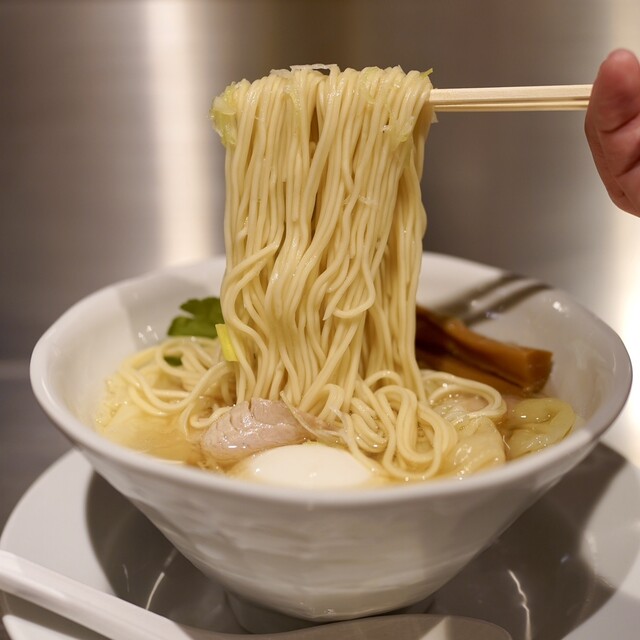
Tokyo ramen often means leaving the hotel-district grid and following a commuter line into a quieter residential pocket. Before the bowl arrives, the scene changes: narrower streets, station routines, and less distance between kitchen and regulars. Seijo Seika fits this everyday Tokyo mode more than luxury restaurant theater: a small counter, a focused category, and a city that treats ramen with the seriousness other capitals reserve for tasting menus.
That matters because Tokyo ramen has split into tribes: destination shops built on queues, retro counters faithful to postwar shoyu and miso idioms, and newer rooms where global technique changes the grammar without turning the bowl into a concept piece. Seijo Seika belongs to the last two at once. Its recognition in the Tabelog Ramen TOKYO “Tabelog 100” selections for 2021, 2022, 2023, 2024, and 2025 is a useful signal in a city where ramen quality is judged shop by shop, not by broad neighborhood reputation.
Ramen treated as a small-counter discipline, not a casual fallback
Tokyo’s ramen culture rewards focus. The city supports specialists who refine a narrow lane instead of expanding into a general Japanese menu, so the strongest counters feel closer to craft workshops than conventional Western restaurants: limited seating, rapid turnover, and kitchen rhythm built around timing rather than table management. Seijo Seika’s six-seat counter format makes ramen the appointment, not background food between appointments.
The global-technique angle in contemporary Tokyo ramen is usually subtle: stock clarity, seasoning control, noodle texture, fat management, and the calibrated relation between aroma and salt, not imported luxury ingredients or theatrical plating. Japanese ramen has always absorbed outside methods, from Chinese wheat noodles to Western ideas of extraction and emulsion, then made them local through tare, dashi logic, and regional taste. In Setagaya, that technical history appears through a neighborhood counter, not a destination dining room.
Price shapes the read. Ramen remains one of Tokyo’s few serious food categories where craft and access share a sentence. The restaurant is listed in the JPY 999 band, with review-based spending at JPY 1,000 to JPY 1,999. That places it outside sushi-counter, kappo-room, and hotel-dining economics, yet local scrutiny can be just as unforgiving. Tokyo rewards repeatable execution, not expensive rooms by default.
Within the city’s casual-specialist field, the comparison is instructive. SOBA-Shiro Kuro and Tohakuan Karibe point to parallel noodle traditions where restraint and texture carry the meal. Gyoza Kan sits in another everyday category dependent on repetition and heat control. Patisserie Yu Sasage shows how even sweets in Tokyo can become hyper-specialized at modest spend. The restaurant’s difference is category pressure: ramen is crowded, opinionated, and fast-moving, so repeated Tabelog 100 selection is less decorative than diagnostic.
Setagaya changes the tempo of the ramen decision
Minamikarasuyama gives the experience a different temperature from Shinjuku, Ginza, or Akasaka. Setagaya’s western wards are full of restaurants serving local life first and destination diners second. For travelers, that matters. Central Tokyo teaches visitors to chase reservations and vertical-building dining. The rail suburbs show that serious eating also happens near stations, around work, school, errands, and last trains.
For a Tokyo food day, the restaurant can sit between formal meals or anchor a west-side itinerary without the planning burden of fine-dining booking. The absence of private-room formality is part of the point. Tokyo’s noodle culture is public, compact, and intensely judged by repeat customers. The format strips away many signals international diners expect and leaves the bowl, queue discipline, and counter pace to carry the argument.
The practical intelligence is simple: this is not a table-service meal to stretch across an evening. The small counter means timing affects the experience, and ramen etiquette favors decisiveness. Diners should know the category, keep the group small, and treat the room as a working counter rather than a lounge. Payment norms also matter in this tier of Tokyo dining, where cash-first habits remain common even as the city’s wider hospitality infrastructure modernizes.
Tokyo travelers often plan by neighborhood clusters. For the wider field, Our full Tokyo restaurants guide helps, while adjacent planning can be balanced with Our full Tokyo hotels guide, Our full Tokyo bars guide, Our full Tokyo wineries guide, and Our full Tokyo experiences guide. Nearby and cross-city dining references show how varied the city’s casual formats can be: 鮪と炭火焼き うお炭 秋葉原店, 12/10 Shinjuku ten, 124. KAGURAZAKA (Yakitori), 2D Cafe, and 3 Chome no Curry Ya San each represents a different kind of Tokyo specificity.
Why the recognition matters in a city crowded with noodle specialists
Tabelog’s Hyakumeiten lists are not Michelin-style starred dining, usefully. They often capture categories where Japanese diners have deep local literacy: ramen, soba, curry, sweets, izakaya cooking. The restaurant’s repeated placement in the ramen Tokyo list from 2021 through 2025 signals consistency in a category where novelty alone rarely sustains attention. The badge does not make the meal grand; it means the shop remains visible in a demanding local conversation.
The chef story is not central here, appropriately. Tokyo ramen culture depends less on dining-room biography than on public evidence of format, repetition, and recognition. When chef names are absent from the public-facing story, the counter becomes the credential: seat count, category discipline, award history, and the way city diners keep filing it among ramen specialists worth tracking.
For travelers comparing Japanese casual dining beyond Tokyo, the principle travels. Regional and international Japanese-adjacent formats can be read through specialization rather than décor: -Grilled beef Sukiyaki- KAMAKURA TANUKIAN 鎌倉 たぬき庵 in Kamakura.cafe in Osaka.know in Kumamoto, (Shoku) Vietnam in Kawasaki, [Curry Senmon Ten] Maruyama Kyoju. in Sapporo, [ki:] in Kyoto, Jōdo Saké Bar in Los Angeles, and Onigiri Time in Pasadena show how narrow formats can carry serious cultural information. The restaurant’s place is clear: a Tokyo ramen counter where small scale, repeated recognition, and neighborhood tempo do the work.
The Quick Read
Comparable venues by cuisine and price in the same metro.
| Venue | Cuisine | Price | Notes |
|---|---|---|---|
| Seijo SeikaThis venue — the venue you are viewing | Setagaya, Modern shio ramen shop | $ | Not listed |
| Takahashi no Saka Manju | Not listed | $ | Suginami, Japanese traditional sweets (saka manju specialty) |
| Ganso Stamina Manten Ramen Suzuki | Mitaka, Stamina-style ramen & soba | $ | Not listed |
| Oniyanma Nakameguro ten | Meguro, Udon noodle bar | $ | Not listed |
| Heckeln | Not listed | $ | Minato, Classic Japanese kissaten & pudding café |
| Maihama | Minato, Japanese Izakaya | $ | Not listed |
Recognition history
Dated appearances from independent guides and award organizations, with the underlying list record or original source where available.
Tabelog 100 #19 · No. 19
Tabelog · Tabelog 100 - Ramen - TOKYO - 2025













At a Glance
- Cozy
- Modern
- Trendy
- Intimate
- Solo
- Casual Hangout
- Late Night
- After Work
- Chefs Counter
- Standalone
Tiny, non-smoking counter-only ramen shop with a stylish yet relaxed feel, bright and clean with a casual buzz from constant lines of ramen fans.