Our verdict
SEA sits in the heart of Midtown West at 151 W 30th Street, positioned within one of New York City's most competitive dining corridors. The restaurant occupies a neighbourhood where ingredient provenance increasingly separates serious kitchens from serviceable ones. For visitors orienting around sourcing-driven dining in Manhattan, SEA offers a reference point worth examining alongside the broader Midtown fine-dining tier.

The menu
What to order
- Crispy pork
- Prawn roll
- Pork noodle soup
- Crab fried rice
Where Midtown West's Sourcing Conversation Lands
New York's fine-dining scene has spent the better part of two decades sorting itself into two broad camps: kitchens that treat ingredient sourcing as a marketing footnote, and those that build their entire operational logic around it. The latter camp, once concentrated in farm-adjacent destinations like Blue Hill at Stone Barns in Tarrytown or Single Thread Farm in Healdsburg, has steadily moved into urban addresses. SEA, at 151 W 30th Street in Midtown West, sits within that urban shift, a neighbourhood corridor where the sourcing question now matters as much as the cooking technique applied to whatever arrives in the kitchen.
Midtown West is not an obvious address for sourcing-forward dining. The district's dining identity has long been anchored by high-volume expense-account restaurants and hotel-attached rooms built for scale rather than provenance. That context makes the minority of kitchens in the area that take ingredient origin seriously more legible by contrast. SEA occupies this address at a moment when the W 30th Street corridor is seeing incremental repositioning, with several independent operators opening alongside the legacy hotel operations that have dominated the neighbourhood for decades.
The Ingredient Sourcing Frame in New York Fine Dining
Across the American fine-dining tier, the sourcing conversation has matured considerably since the early 2000s. What was once a differentiating signal, naming a farm supplier on a menu, specifying a fishing method, identifying a heritage breed, has become closer to baseline expectation at restaurants competing in the upper price brackets. The question now is less whether a kitchen sources with care and more how deeply that sourcing logic penetrates the menu structure, the seasonal calendar, and the supplier relationships that underpin both.
In New York specifically, the most rigorous examples of supply-chain integration tend to cluster at the top of the award tiers. Le Bernardin has built its seafood program around direct supplier relationships that predate the broader sourcing movement. Per Se and Masa each operate at price points where ingredient cost is less a constraint than a differentiator, allowing sourcing decisions that would be structurally impossible at mid-market addresses. Further along the Korean fine-dining axis, a category that has reshaped New York's upper tier meaningfully in recent years, both Atomix and Jungsik New York apply sourcing discipline to ingredients that bridge Korean culinary tradition with New York-area producers.
Across other American markets, the sourcing-first frame has produced some of the most discussed restaurant programs of the past decade. Alinea in Chicago applies it through a modernist lens; The French Laundry in Napa anchors it in classical French technique; Providence in Los Angeles and Addison in San Diego each apply it to regional coastal ingredients with distinct results. Lazy Bear in San Francisco and Emeril's in New Orleans approach the question from different regional and format positions, while Bacchanalia in Atlanta and The Inn at Little Washington in Washington have built long-running reputations on sustained sourcing commitments rather than trend-driven pivots.
SEA in the Midtown West Context
For a restaurant operating at 151 W 30th Street, the neighbourhood imposes specific constraints and advantages. The logistical density of Midtown, proximity to Penn Station, direct subway access across multiple lines, the concentration of hotel accommodation within walking distance, makes the address genuinely convenient for visitors arriving from outside Manhattan. The trade-off is that Midtown real estate economics tend to push kitchens toward volume-dependent models, which compress the space available for sourcing-intensive, lower-margin ingredient decisions.
SEA's position on W 30th Street places it within a short walk of the blocks that have seen the clearest dining development activity in this part of Midtown over recent years. For diners building an itinerary around New York's sourcing-forward kitchens, the address is a workable anchor point when combined with the broader Midtown West dining map. A full orientation to what the city offers across price points and cuisine categories is available through our full New York City restaurants guide.
What Sourcing-Driven Dining Means at This Address
The practical implication of sourcing-led kitchen philosophy, wherever it appears in a city like New York, is that the menu reads differently from a kitchen that sources conventionally. Seasonal adjustment happens on a shorter cycle. Certain proteins or vegetables appear for a window measured in weeks rather than months. The supply relationships that make the approach possible require consistent volume commitments from the restaurant side, which in turn shapes how the kitchen builds its menu architecture across a given season.
For diners who have spent time at sourcing-forward operations elsewhere in the United States or internationally, the signals are recognizable: supplier credits on menus or printed materials, seasonal rotation patterns that track agricultural calendars rather than standard menu refresh cycles, and a tendency toward preparations that treat the ingredient as the primary subject rather than subordinating it to technique. These patterns appear across the American fine-dining tier at very different price points and formality levels, from the tasting-menu format that dominates the Michelin-starred tier to the more accessible formats that have expanded the sourcing conversation to a wider dining public.
Do I need a reservation for SEA?
In Midtown West, the restaurants that take sourcing seriously tend to operate at lower seat counts than their volume-dependent neighbours, which generally means demand outpaces walk-in availability on Thursday through Saturday evenings. New York's upper dining tier, including peers like Le Bernardin and Per Se, books weeks to months in advance. Contacting SEA directly for current reservation policy is the practical step before planning a visit.
How does SEA fit into New York City's broader sourcing-forward dining scene?
New York's sourcing-driven kitchens span a wide range of formats and price points, from Michelin-starred tasting rooms to neighbourhood-level independents. SEA's Midtown West address at 151 W 30th Street places it within a district that is gradually adding more independently operated, ingredient-focused restaurants alongside the area's established hotel dining operations. For diners mapping itineraries across the city's full range of cuisine-focused addresses, the New York City guide provides orientation across neighbourhoods and price tiers.
Price Lens
Comparable venues nearby, for context on price, style, and recognition.
| Venue | Cuisine | Price | Awards | Notes |
|---|---|---|---|---|
| SEAThis venue (the venue you are viewing) | Modern Southeast Asian Fusion | Not listed | Not listed | Not listed |
| Bistrot Ha | French-Vietnamese Bistro | Not listed | Michelin Plate · Grub Street Best Food of 2026 (So Far) | Lower East Side, French-Vietnamese Bistro |
| Penthouse808 | Pacific Rim Asian Fusion | $30–50 | Not listed | Queensbridge-Ravenswood-Dutch Kills, Pacific Rim Asian Fusion |
| Maison Sun | French Vietnamese Tasting Menu | $200–300 | Not listed | Downtown Brooklyn-DUMBO-Boerum Hill, French Vietnamese Tasting Menu |
| Chow Bar | Pan-Asian Fusion | Not listed | Not listed | West Village, Pan-Asian Fusion |
| The Park | Not listed | Not listed | Not listed | Flatiron District, Plant-Based Fine Dining |

Continue exploring
More in New York City
Restaurants in New York City
All restaurants in New York City →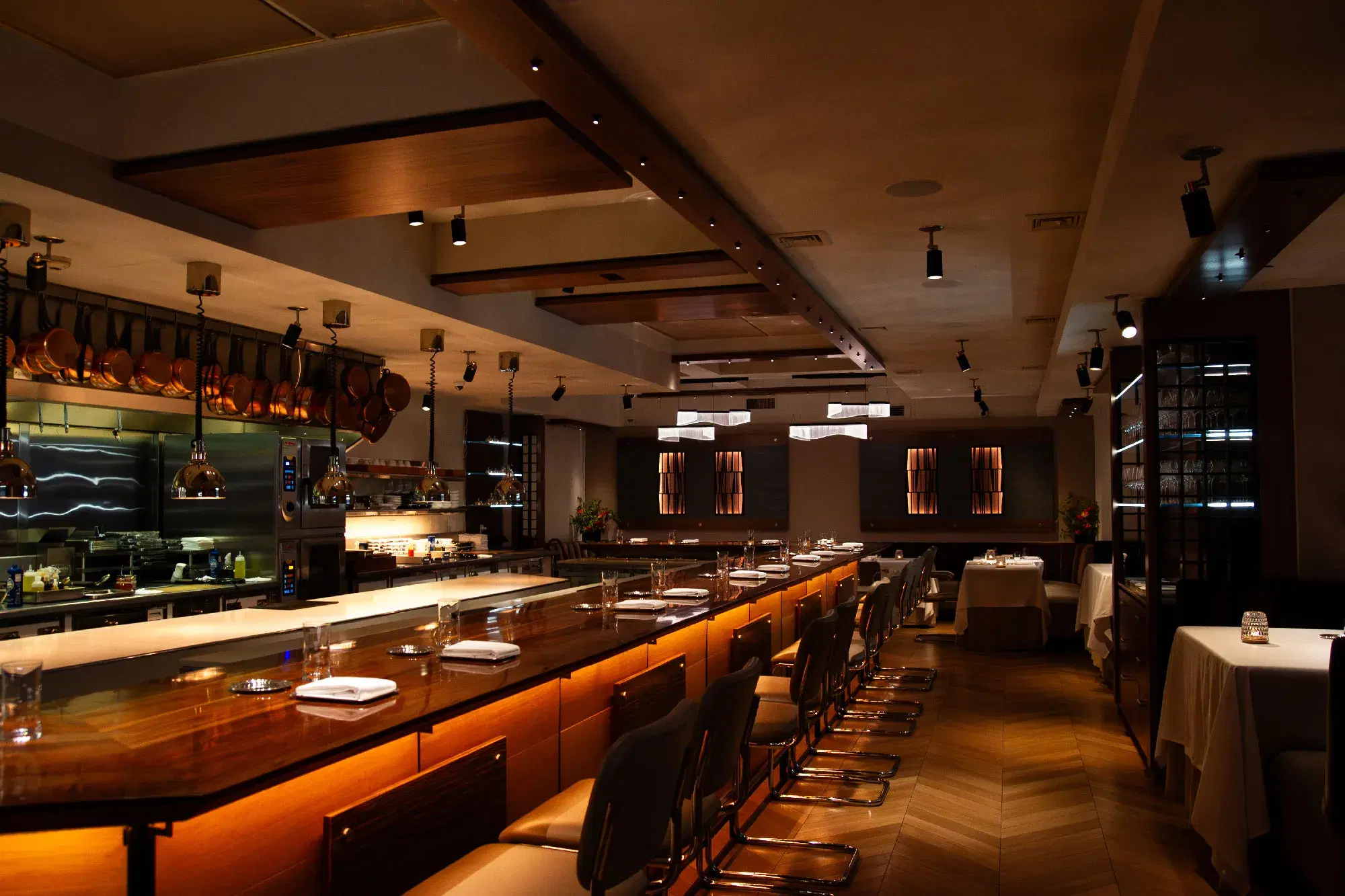
Bars in New York City
All bars in New York City →





Details
- Trendy
- Modern
- Lively
- Sophisticated
- Date Night
- Group Dining
- Special Occasion
- Open Kitchen
- Craft Cocktails
- A La Carte
- Small Plates
- Craft Cocktails
Current opening hours
- Monday
- Closed
- Tuesday
- 4:30–9 PM
- Wednesday
- 4:30–9 PM
- Thursday
- 4:30–9 PM
- Friday
- 4:30–10 PM
- Saturday
- 4:30–10 PM
- Sunday
- Closed
Hours can change for holidays and private events. Hours as of .
Buzzy and approachable bi-level space with high standards of hospitality in a casual setting.