Bistrot Ha


Bistrot Ha brings French-Vietnamese cooking to New York City, positioning itself within a growing tier of hyphenated French kitchens that draw technique from Paris and ingredient logic from Hanoi and Saigon. The format sits closer to a neighborhood bistrot than a formal tasting-menu room, making it one of the more accessible entry points into this particular culinary overlap in a city where the category is still finding its footing.
Pearl is the En Primeur Club membership app — saves, bookings, and concierge access live there. Same editors, same standards.
- Address
- 137 Eldridge St, New York, NY 10002
- Website
- instagram.com
- Directions
- Get directions
 Saves & bookings on Pearl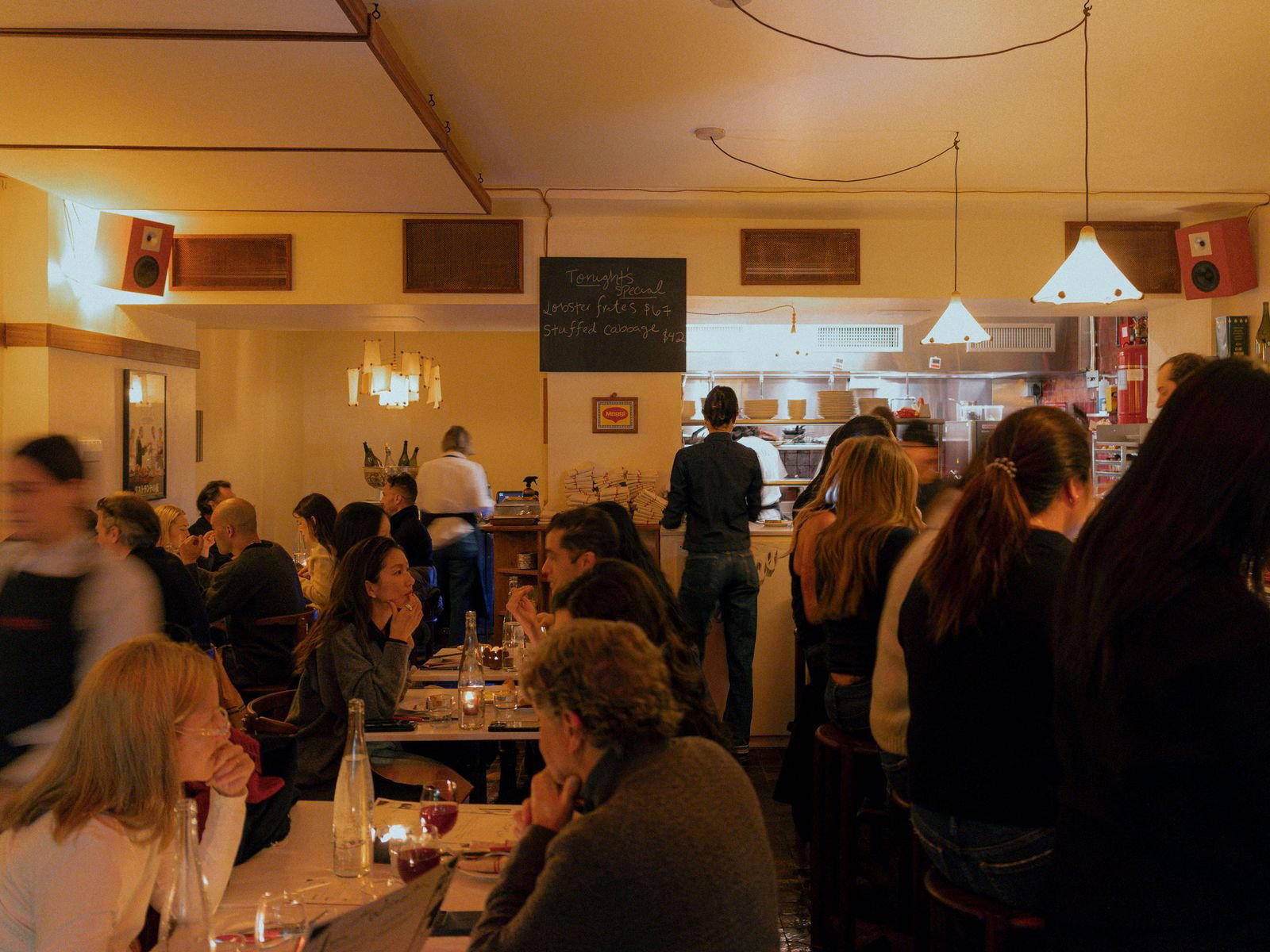
Where Two Dining Traditions Converge
The French-Vietnamese table is not a new invention. It is the direct consequence of nearly a century of colonial contact, a period that left baguettes in Hanoi markets, butter in Hue kitchens, and a mutual fascination with technique that neither side has fully let go of. In New York, that inheritance has taken longer to appear in serious restaurant form than in, say, Paris's 13th arrondissement or the Vietnamese neighborhoods of San Jose and Houston. Bistrot Ha is a French-Vietnamese Bistro at 137 Eldridge St, New York, NY 10002, with.
The name itself signals the register: bistrot, not restaurant gastronomique, not brasserie. That word choice matters in a city where French dining tends to polarize between the four-star formality of rooms like Le Bernardin or Per Se and the studied casualness of natural wine bars. The bistrot register implies something specific: a shorter menu, a more direct relationship between kitchen and guest, and cooking that earns its authority through precision rather than ceremony.
The French-Vietnamese Kitchen in Context
To understand what a French-Vietnamese kitchen is doing, it helps to understand what it is not. It is not fusion in the 1990s sense, where disparate ingredients were assembled for novelty. The overlap between these two culinary systems runs deeper than that. French technique gave Vietnamese cooking a vocabulary for stocks, reductions, and pastry; Vietnamese cooking gave French technique an education in herb brightness, fermented depth, and the kind of acid balance that cuts through butter without replacing it.
In cities where Vietnamese-French restaurants have had time to develop, the format tends to produce dishes where the French hand is felt in construction and the Vietnamese identity arrives in seasoning and aromatics. That dynamic places these kitchens in a different competitive conversation than the Korean-American fine dining wave represented by venues like Atomix or Jungsik New York, where the negotiation between tradition and technique is also central but the culinary source material and its diaspora politics are distinct. French-Vietnamese cooking carries a more complicated historical weight, and the leading practitioners of it tend to treat that weight seriously rather than decoratively.
Coffee as a Lens: What the Vietnamese Café Tradition Reveals
Any serious engagement with Vietnamese food culture eventually arrives at coffee, and what Vietnamese coffee reveals about the cuisine is instructive. The ca phe sua da, iced coffee over sweetened condensed milk, is not a beverage designed around speed or convenience. It is built around contrast: intensely dark, slow-drip robusta against the slow melt of sweetened dairy, bitter against sweet, hot against cold. The patience required to drink it properly mirrors the patience built into Vietnamese cooking more broadly, the long-simmered broths, the fermented condiments, the herb plates that are assembled rather than prepared.
Egg coffee, ca phe trung, extends that logic further. The technique of whipping egg yolk with sugar and condensed milk into a foam that floats on espresso-strength coffee is not an accident of poverty or improvisation. It is a specific textural decision, one that any French patissier would recognize as structurally related to a sabayon. That connection is not incidental. It points to a moment when French technique and Vietnamese resourcefulness genuinely met and produced something that neither tradition would have arrived at alone.
For a kitchen operating at the French-Vietnamese intersection, how it handles coffee and dessert is often more revealing than how it handles the main course. The main course allows a chef to demonstrate technical authority. The coffee and closing courses require them to take a position on the tradition itself.
New York's French-Vietnamese Moment
New York has been slower than other major American cities to develop a critical mass of serious Vietnamese restaurants across price tiers. The city's Vietnamese dining has historically concentrated in specific neighborhoods and in a value-forward format, which means the upper tier of this cuisine has had less room to develop here than in cities with larger, more established Vietnamese-American communities. That context makes a French-Vietnamese bistrot in New York both a natural arrival and a somewhat early one.
The city's appetite for French cooking is not in question. The broader fine dining conversation in New York continues to reward kitchens that bring rigorous French training to non-European ingredient traditions, a pattern visible across the dining tier from the precision of Masa's Japanese minimalism to the cross-cultural ambitions of kitchens elsewhere in the country, from Alinea in Chicago to The French Laundry in Napa, Blue Hill at Stone Barns in Tarrytown, or Providence in Los Angeles. The question for a French-Vietnamese kitchen in New York is not whether the appetite exists. It is whether the format can build the kind of loyal, returning audience that sustains a bistrot, as distinct from the event-dining model that sustains a tasting-menu room.
That distinction matters practically. A bistrot format works well when it becomes a regular destination rather than a special-occasion one. The economics require volume and return visits, not the one-time pilgrimage logic that supports venues like Single Thread Farm in Healdsburg or Addison in San Diego. For Bistrot Ha to work on its own terms, it needs to be the kind of place people return to on a Tuesday, not just plan for a month in advance.
Planning a Visit
Bistrot Ha takes reservations and is best booked in advance. The restaurant is open Tuesday through Saturday from 5:30 to 10:30 PM. For first-time visitors, a mid-week dinner allows the kitchen to work at a pace that better reflects the care the format requires.
The French-Vietnamese bistrot format works well when ordered unhurriedly, with time allowed between courses and particular attention paid to whatever the kitchen is doing with closing savory and sweet. If the menu includes a Vietnamese coffee preparation, that is where the kitchen's position on the tradition will be clearest.
Comparable Venues
Comparable venues nearby, for context on price, style, and recognition.
| Venue | Cuisine | Price | Notes |
|---|---|---|---|
| Bistrot HaThis venue — the venue you are viewing | French-Vietnamese Bistro | $$$$ | Not listed |
| Sen Sakana | Kosher Nikkei (Japanese-Peruvian Fusion) | $$$$ | Midtown-Times Square |
| 28 Nomad | Contemporary Asian Fusion | $$$$ | NoMad |
| Sei Less | Modern Asian Fusion | $$$$ | Midtown-Times Square |
| Lola's | Southern-Asian Fusion | $$$ | Midtown South-Flatiron-Union Square |
| Maison Sun | French Vietnamese Tasting Menu | $$$$ | Downtown Brooklyn-DUMBO-Boerum Hill |
Recognition history
Dated appearances from independent guides and award organizations, with the underlying list record or original source where available.
Grub Street Best Food of 2026 (So Far)
Grub Street
Michelin Plate
Michelin
Continue exploring
More in New York City
Restaurants in New York City
Browse all →
Bars in New York City
Browse all →
Hotels in New York City
Browse all →







At a Glance
- Lively
- Bohemian
- Trendy
- Intimate
- Date Night
- Group Dining
- Casual Hangout
- Open Kitchen
- Sommelier Led
Current opening hours
- Monday
- Closed
- Tuesday
- 5:30–10:30 PM
- Wednesday
- 5:30–10:30 PM
- Thursday
- 5:30–10:30 PM
- Friday
- 5:30–10:30 PM
- Saturday
- 5:30–10:30 PM
- Sunday
- Closed
Hours can change for holidays and private events. Last verified .
Cramped and boisterous with great vibes, evoking a lively New York take on a Parisian bistro.