Schleusenbude occupies a converted lock-keeper's station at Mellingburgredder 1 in Hamburg's northern Alstertal, placing it at a considerable remove from the city's central dining circuit. The setting defines the experience before a single dish arrives: water, woodland, and the particular quiet that comes with a venue built around a working waterway. It draws a crowd willing to make the trip.
Pearl is the En Primeur Club membership app — saves, bookings, and concierge access live there. Same editors, same standards.
- Address
- Mellingburgredder 1, 22395 Hamburg, Germany
- Phone
- +494061139150
- Website
- mellingburgerschleuse.de
- Directions
- Get directions
 Saves & bookings on Pearl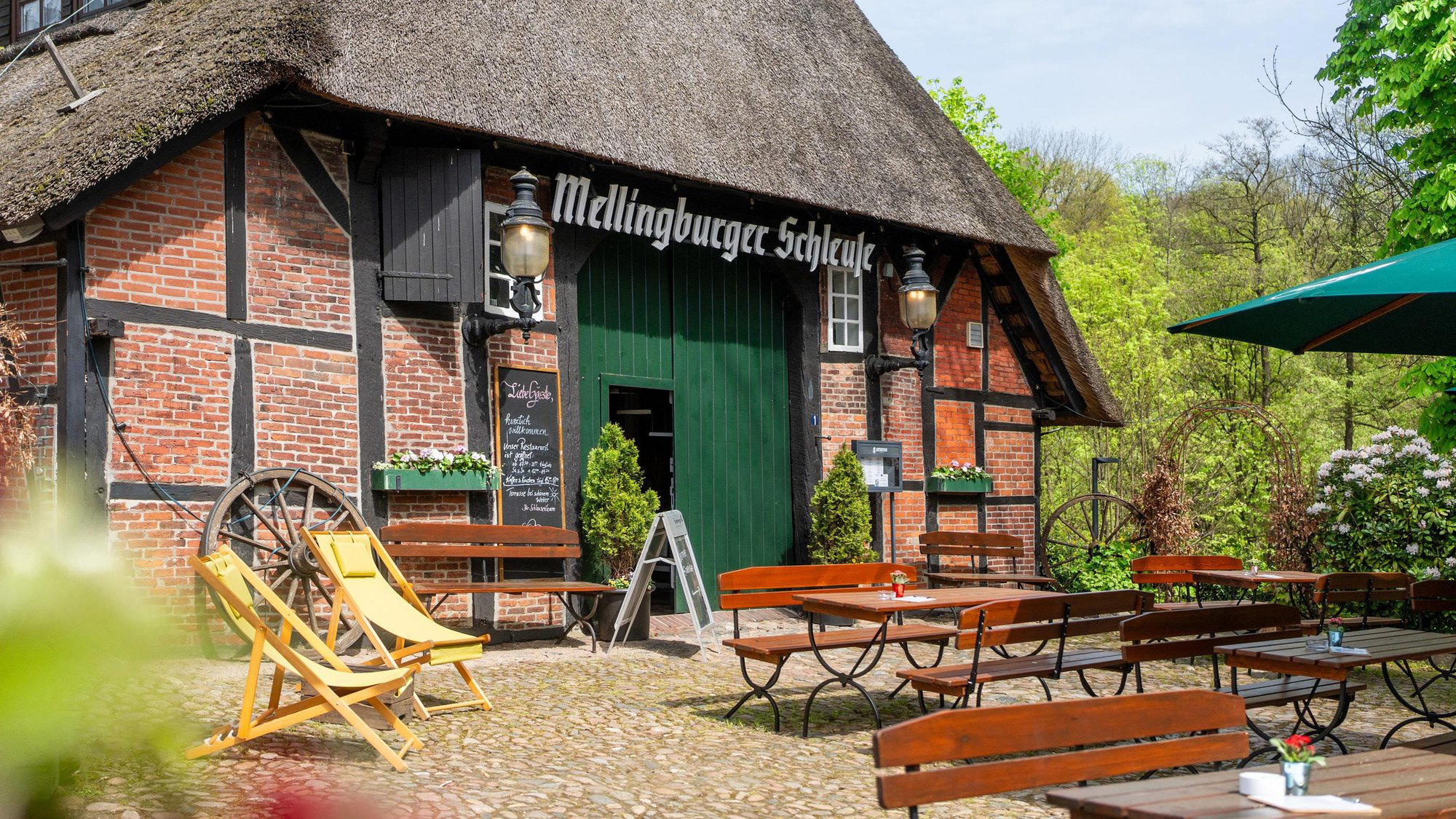
Where the Water Sets the Pace
Hamburg's dining geography has always been shaped by its waterways, but the Alster's northern reaches operate on a different register from the harbour-facing restaurants that dominate the city's dining press. Out at Mellingburgredder 1, where a historic lock once regulated water flow through a wooded stretch of the Alstertal, the built environment does the first work of sequencing a visit. The approach, along tree-lined paths, past still water, functions as a kind of decompression before the meal begins. In a city where the contrast between urban density and green corridor can shift within a few kilometres, Schleusenbude occupies the quieter end of that spectrum.
This positioning matters for how a meal here should be read. Hamburg's upper-tier creative restaurants, Restaurant Haerlin, The Table Kevin Fehling, and 100/200 Kitchen, operate as destination restaurants in the conventional sense. Schleusenbude's address codes differently. The journey out is part of the proposition, and the physical setting primes a slower, more considered mode of eating before any menu decision is made.
The Arc of a Meal at the Lock
The sequence of eating builds across an afternoon or evening. In settings defined by their natural surroundings, the tradition includes lakeside and riverside restaurants across Germany, from Lakeside in Hamburg to rural addresses like ES:SENZ in Grassau, the rhythm of service tends to align with the environment rather than fight it. Courses arrive with the unhurried tempo that a waterside setting seems to demand. There is no structural incentive to rush: the view, the light on the water, the ambient stillness all argue for extension rather than compression.
This is a dining tradition with deep roots in northern Germany's relationship with its lakes and rivers. The leading of these experiences treat the setting not as backdrop but as participant, the way light shifts across a water surface through a long summer evening is its own kind of progression, paralleling the movement from lighter, more acidic early courses toward richer, warmer dishes as the temperature drops. The spatial and environmental conditions for it are clearly in place.
For comparison: Germany's most formally recognised progression restaurants, Schwarzwaldstube in Baiersbronn, Vendôme in Bergisch Gladbach, or Victor's Fine Dining by Christian Bau in Perl, operate in environments where natural setting and architectural enclosure work together to frame each stage of a meal. The Alstertal tradition to which Schleusenbude belongs is less formally credentialed but draws on the same underlying logic: place shapes appetite, and appetite shapes how food is received.
Hamburg's Northern Dining Corridor in Context
Schleusenbude sits in a part of Hamburg that the city's dining guides tend to underweight relative to the Speicherstadt, HafenCity, and inner Alster addresses that generate most of the editorial attention. This is a city whose premium restaurant set includes multiple Michelin-recognised addresses and a creative scene that has drawn international comparison, bianc for its Mediterranean-inflected modern cooking, The Table for its formal tasting format, but the northern Alstertal operates as a semi-separate ecosystem, one where the audience is predominantly local and the criteria for a successful visit skew toward setting and occasion over credential accumulation.
That distinction shapes who makes the journey. A visitor working through Hamburg's Michelin tier will typically route through the inner city; someone who has spent time in the city and knows its geography will eventually reach the Alstertal addresses that operate below the awards radar but above the tourist circuit. Schleusenbude's address at the lock is itself a signal about the kind of dining it supports. For comparable formats elsewhere in Germany, Schanz in Piesport and Waldhotel Sonnora in Dreis demonstrate how destination addresses outside major urban centres can sustain serious dining through the force of place and kitchen quality combined. The dynamic at Schleusenbude is broadly analogous, scaled to a day-trip rather than an overnight.
Planning Your Visit
| Venue | Setting Type | Price Tier | Distance from City Centre |
|---|---|---|---|
| Schleusenbude | Waterside, historic lock | Not confirmed | Northern Alstertal (approx. 15km) |
| Lakeside | Lakeside, hotel-integrated | €€€€ | Outer Alster area |
| The Table Kevin Fehling | Urban, HafenCity | €€€€ | Central (HafenCity) |
| bianc | Urban, inner city | €€€€ | Central |
Accolades, Compared
Comparable venues nearby, for context on price, style, and recognition.
| Venue | Cuisine | Price | Notes |
|---|---|---|---|
| SchleusenbudeThis venue — the venue you are viewing | Welsh Street Food | $$ | Not listed |
| Ristorante Tunici | Croatian Grill & Mediterranean | $$ | Farmsen |
| TRUDE | European Soul Food with Vegetarian Focus | $$ | Barmbek |
| Old Commercial Room | Traditional Hamburg Hanseatic Cuisine | $$ | Neustadt |
| Pizza Bande | Creative Contemporary Pizza | $$ | St. Pauli |
| Astra St. Pauli | German Brewpub | $$ | Altona-Altstadt |
Continue exploring
More in Hamburg
Restaurants in Hamburg
Browse all →
At a Glance
- Rustic
- Cozy
- Scenic
- Casual Hangout
- After Work
- Waterfront
- Terrace
- Waterfront
Current opening hours
- Monday
- Closed
- Tuesday
- Closed
- Wednesday
- 12–5 PM
- Thursday
- 12–5 PM
- Friday
- 12–5 PM
- Saturday
- 12–5 PM
- Sunday
- 12–5 PM
Hours can change for holidays and private events. Last verified .
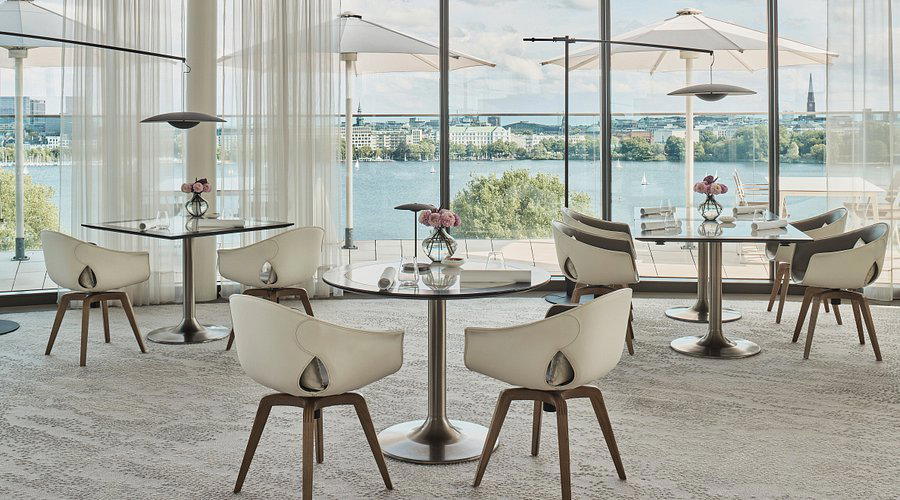
Relaxed countryside atmosphere with green surroundings and views over the Alster from the outdoor terrace.