Our verdict
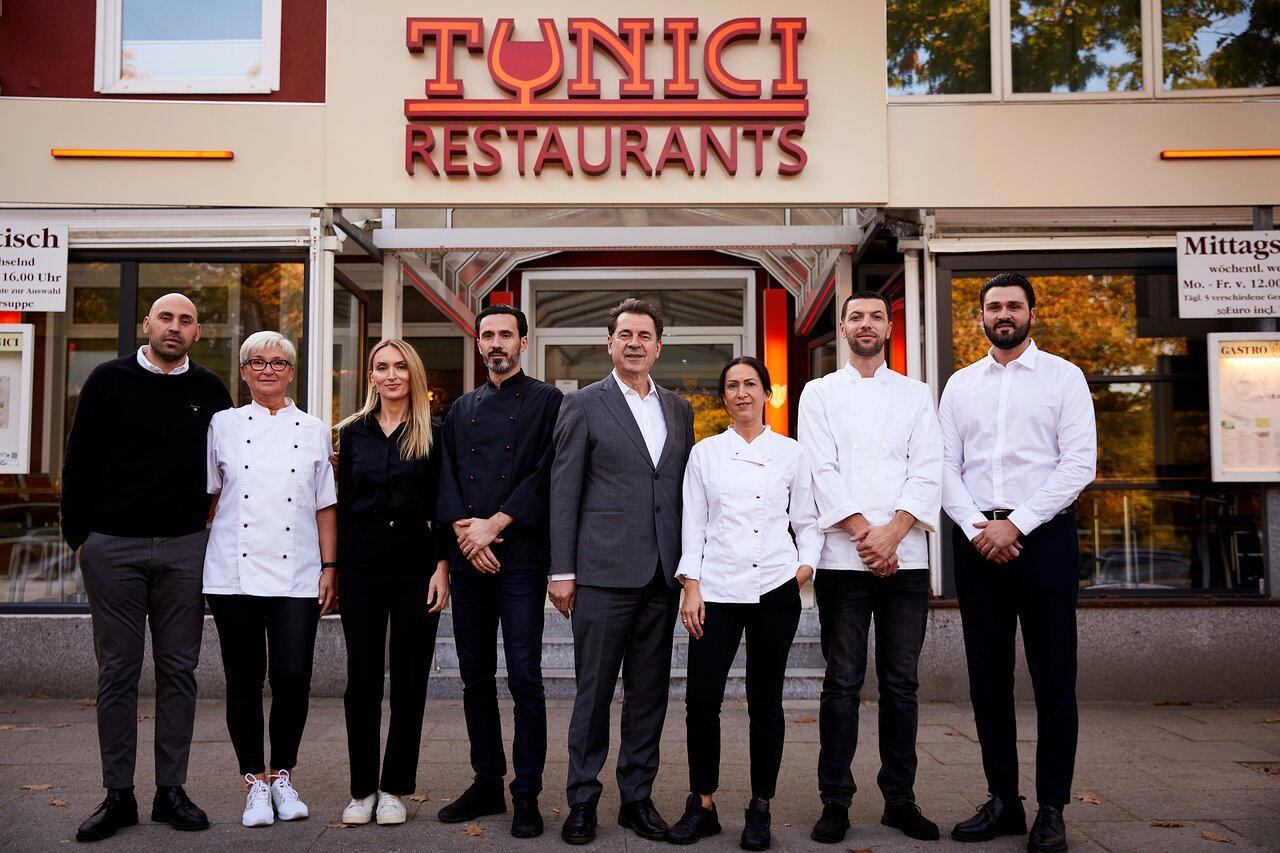
The address places it in a neighbourhood where Italian cooking has historically sustained itself on regulars rather than tourist traffic, making it a useful reference point for understanding how Italian restaurant culture beds into Hamburg's outer residential fabric.

Pearl is the En Primeur Club membership app — saves, bookings, and concierge access live there. Same editors, same standards.
The menu
What to order
- Mixed grills
- Schnitzels
- Cevapcici
- Grilled gilthead
Eastern Hamburg and the Italian Table
Hamburg's Italian restaurant scene divides along a familiar fault line: there are the modern Mediterranean operators clustering around HafenCity and the Altstadt, venues like bianc that position Italian cooking within a broader European fine-dining idiom, and then there are the neighbourhood trattorias and ristorantes that have spent decades serving the same residential catchments. The address is in Rahlstedt, one of Hamburg's eastern residential boroughs, well outside the ring of venues that typically attract visiting food writers or earn places on award shortlists. That geography is not incidental to what a restaurant in this position represents. Dining rooms that survive in residential outer districts tend to do so on the strength of their regulars, which means the menu architecture has to satisfy repeat visits, not just first impressions.
What the Address Tells You About the Menu
Italian restaurants that anchor themselves in residential Hamburg operate under different commercial pressures than their city-centre counterparts. It is, structurally, a destination for people who live nearby or have made a deliberate choice to travel out to it. That distinction shapes everything about how a menu tends to be constructed in this context. Across similar Italian neighbourhood restaurants in German cities, the pattern is consistent: the kitchen leans into the kind of cooking that rewards familiarity, where a regular can return to a pasta they trust or a secondi that has been consistent across seasons. The specials board, if there is one, allows the kitchen to respond to what is available without destabilising the core menu that regulars depend on.
This stands in contrast to the menu logic of Hamburg's higher-profile tasting-counter operations. At The Table Kevin Fehling, the menu is a fixed progression with no à la carte optionality, designed to move diners through a curated sequence. At Restaurant Haerlin, the French-led format similarly structures choice around a tasting framework. Neighbourhood Italian restaurants like Tunici operate with the opposite architecture: the à la carte format, typically across antipasti, primi, secondi, and dolci, is itself the signal of what kind of hospitality the room is offering. Choice is the courtesy extended to the repeat customer. Italian restaurants form one of the largest restaurant subcategories in German cities by count, which means the category is also highly stratified. At the upper end of that stratification, kitchens engage with regional Italian traditions at a level of specificity that would be recognisable in the source regions: Sicilian fish preparations, Piedmontese truffle applications, Roman pasta technique.
For context on how Italian cooking can be positioned at the highest tier in a German city, the 100/200 Kitchen in Hamburg demonstrates one version of that ambition, while nationally, the three-starred operations at Aqua in Wolfsburg and Lakeside and Restaurant Haerlin are not really competitors to Tunici at all.enprimeurclub.com/restaurants/jan-munich-restaurant">JAN in Munich fine-dining tier without overlapping with it.
Planning a Visit
Rahlstedt is accessible by S-Bahn from Hamburg's central stations, with Rahlstedt station serving the area. For visitors staying in central Hamburg or HafenCity, the journey east is a deliberate one rather than a spontaneous detour. Given that the venue operates in a residential catchment, booking ahead for weekend evenings is advisable, as tables in smaller neighbourhood rooms fill through local regulars rather than through reservation platforms with high turnover. Contact and booking details are best confirmed directly, as operational specifics are not publicly consolidated.
Venue Logistics at a Glance
| Venue | Format | Price Tier | Location Type |
|---|---|---|---|
| Ristorante Tunici | Neighbourhood Italian (à la carte) | Not confirmed | Rahlstedt (residential) |
| bianc | Modern Mediterranean | €€€€ | Central Hamburg |
| The Table Kevin Fehling | Creative tasting counter | €€€€ | HafenCity |
| Lakeside | German lakeside dining | €€€€ | Outer Hamburg |
For a broader picture of where Ristorante Tunici fits within Hamburg's full dining range, the EP Club Hamburg restaurants guide covers the city's key venues across price tiers and formats.
Frequently asked questions
What part of town is Ristorante Tunici in?
Ristorante Tunici is located at Rahlstedter Bahnhofstraße 48, 22143 Hamburg, Germany, Hamburg.
How far is Ristorante Tunici from Hamburg city centre, and how do you get there?
Ristorante Tunici is located at Rahlstedter Bahnhofstraße 48 in the Rahlstedt district of eastern Hamburg. Rahlstedt is served by the S-Bahn network, making it reachable from Hamburg Hauptbahnhof without a car. The address places it within a residential quarter rather than a tourist corridor, which shapes both the clientele and the atmosphere you should expect.
What should I eat at Ristorante Tunici?
As an Italian restaurant in Rahlstedt, eastern Hamburg, the kitchen likely reflects the format common to residential Italian tables in German cities: pasta, secondi, and regional antipasti. Visiting directly or calling ahead is the practical way to confirm the current menu.
Is Ristorante Tunici reservation-only?
Neighbourhood restaurants at this address in Rahlstedt tend to operate with some walk-in capacity, but for groups or weekend evenings, contacting the restaurant directly before visiting is advisable.
What's Ristorante Tunici best at?
Ristorante Tunici occupies a specific position in Hamburg's Italian restaurant scene: a residential-neighbourhood operator in Rahlstedt, outside the competitive city-centre cluster around HafenCity and the Altstadt. That positioning typically produces a menu built for repeat local custom rather than one-off destination dining, which often means consistent execution over novelty.
Is Ristorante Tunici good for vegetarians?
Italian cuisine as a category carries a broad range of vegetable-led dishes across pasta, antipasti, and contorni, but whether Ristorante Tunici offers dedicated vegetarian courses requires confirmation directly with the restaurant at Rahlstedter Bahnhofstraße 48.
Is a meal at Ristorante Tunici worth the investment?
No price range, awards, or critic recognition are recorded in the venue data for Ristorante Tunici. Without that information, the value calculation depends on what you are after: if the appeal is a neighbourhood Italian in eastern Hamburg, away from the tourist pricing of central districts, the Rahlstedt location is a structural advantage worth weighing.
Recognition, Side-by-Side
Comparable venues nearby, for context on price, style, and recognition.
| Venue | Cuisine | Price | Notes |
|---|---|---|---|
| Ristorante TuniciThis venue — the venue you are viewing | Croatian Grill & Mediterranean | $20–30 | Not listed |
| Burrico | Mexican Burritos & Bowls | $10–20 | Hamburg-Altstadt |
| Grilly Idol | Modern American Burgers | $10–20 | St. Pauli |
| Chingu | Korean Street Food | $10–20 | Hamburg-Altstadt |
| WilliamsBurger | American Burgers with Balkan Influences | $10–20 | Rotehaus |
| Kimo | Middle Eastern Falafel | $10–20 | Eimsbuttel |
Continue exploring
More in Hamburg
Restaurants in Hamburg
All restaurants in Hamburg →
Bars in Hamburg
All bars in Hamburg →
Hotels in Hamburg
All hotels in Hamburg →
Wineries in Hamburg
Browse all →
Details
- Cozy
- Classic
- Rustic
- Casual Hangout
- Family
- Group Dining
- Standalone
- Beer Program
- A La Carte
- Beer
- Wine
- Vegetarian Friendly
- Vegan Options
Current opening hours
- Monday
- Closed
- Tuesday
- 4:30–10:30 PM
- Wednesday
- 4:30–10:30 PM
- Thursday
- 4:30–10:30 PM
- Friday
- 4:30–10:30 PM
- Saturday
- 4:30–10:30 PM
- Sunday
- 12–9 PM
Hours can change for holidays and private events. Last verified .
Warm and welcoming with a relaxed, neighborhood feel; described as cozy with friendly service atmosphere.