This listing is retired after a June 2026 status audit found the place inactive at its stored address.
- Address
- 17 rue Notre-Dame des Victoires, 75002 Paris
- Phone
- +33 1 45 00 86 40
- Directions
- Get directions
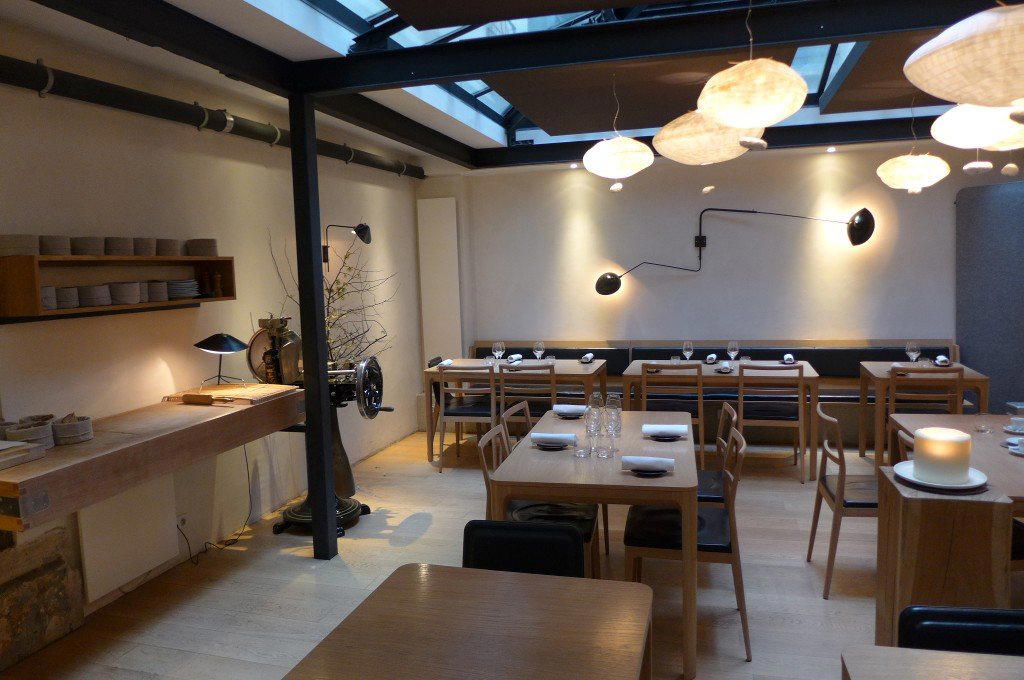
The 2nd Arrondissement and the Rise of the Naturalist Bistro
Paris's 2nd arrondissement spent most of the twentieth century as a working district of press offices and wholesale traders, its restaurants functional rather than aspirational. The transformation that followed, accelerated through the 2000s and consolidated by the early 2010s, brought a different kind of address to streets like rue Notre-Dame des Victoires: smaller rooms, shorter menus, wine lists built around growers rather than négociants, and kitchens that treated the market as the menu's true author. Saturne is a restaurant in Paris's 2nd arrondissement at 17 rue Notre-Dame des Victoires. It did not arrive into an established fine-dining corridor the way a restaurant on rue du Faubourg Saint-Honoré or in the 8th arrondissement might; it helped define a neighbourhood that was still becoming something.
That origin matters because it shapes how the room functions now. The clientele that found Saturne in 2010 or 2011, architects, buyers, journalists, the wine-literate professional class of central Paris, did not migrate to it from grand Parisian dining rooms. They were looking for something the formal tradition did not offer: the kind of meal where the wine list does more argumentative work than the printed menu, and where the kitchen's discipline shows in restraint rather than elaboration. That audience has remained, and its loyalty is the clearest signal of what Saturne actually is: a regulars' restaurant operating at a level most regulars' restaurants never reach.
What the Loyal Clientele Knows
The regulars' perspective at a place like Saturne is built around a specific literacy. France's naturalist wine movement, producers working with minimal sulphur, organic or biodynamic viticulture, and indigenous yeasts, produces wines that require some familiarity to navigate well. Saturne's list has consistently sat at the serious end of that category, not as a novelty program but as a considered argument about how food and wine should interact at the table. For the diner who already knows the difference between a structured Jura Chardonnay and a Burgundian one, or who can read a Loire Cabernet Franc against a lighter Alsatian red, the list functions as a second menu, one that the kitchen is cooking toward rather than alongside.
This is the detail that regular visitors cite most reliably. The cooking, which sits broadly within the naturalist French bistro tradition, seasonal produce, light technique, restraint with fat and sauce, is designed to work with wines that have texture and tension rather than weight and extraction. It is a narrow stylistic position, but a coherent one. Compared to the classical register of L'Ambroisie on Place des Vosges, or the creative ambition of Alléno Paris au Pavillon Ledoyen, Saturne operates on entirely different logic: the goal is alignment between glass and plate, not elaboration for its own sake.
In Paris's broader high-end market, where Le Cinq at the Four Seasons George V and Kei represent the formal, technically demanding end of the spectrum, Saturne occupies a different tier: less ceremony, higher ingredient specificity, and a room where the conversation between regulars and staff has accumulated across years rather than seasons. The Tokyo equivalent would be a kappo-style counter where the chef adapts daily to what arrived that morning; the New York parallel might be a reference-level wine bar that also happens to cook seriously, somewhere between the precision of Le Bernardin and the chef-driven tasting format of Atomix.
Saturne in the French Terroir Conversation
France's most discussed restaurants sit at the poles: the three-star institutional houses, like Arpège with its vegetable garden sourcing, or the regional landmarks such as Troisgros in Ouches, Bras in Laguiole, and the venerable Auberge de l'Ill in Illhaeusern. Further afield, addresses like Mirazur in Menton and Flocons de Sel in Megève have built their reputations on the produce and range of their immediate geography. Saturne's position in this conversation is Parisian rather than regional: its terroir is the market stall, the small grower, the supplier relationship maintained over years.
That is a legitimately Parisian version of the same argument other French restaurants make about place and specificity. The difference is that Paris requires the chef to be the curator rather than the producer, to know which farmer in the Loire Valley is picking now, which Jura producer has held back a cuvée, which seasonal window is two weeks wide and must be used. The discipline that entails is not visible in the formal sense, but regulars recognise it in the consistency of what appears on the plate across seasons.
That ethos connects Saturne to a wider cohort of serious French bistros and wine-forward tables, including houses in other cities such as AM par Alexandre Mazzia in Marseille, Assiette Champenoise in Reims, and Au Crocodile in Strasbourg, each working a different regional accent within French fine cooking. And from a historical depth perspective, names like Paul Bocuse's Auberge du Pont de Collonges and Auberge du Vieux Puits in Fontjoncouse represent a different generational tradition that Saturne's generation neither emulates nor reacts against, it simply operates from a different premise about what a restaurant should be.
Planning Your Visit
The address at 17 rue Notre-Dame des Victoires sits in the Bourse district of the 2nd arrondissement. The neighbourhood has enough other serious addresses that a two-day itinerary built around the area works well.
| Venue | Style | Price Tier | Wine Focus |
|---|---|---|---|
| Saturne | Naturalist bistro, produce-led | €€€ | Naturalist/biodynamic, strong program |
| Arpège | Vegetable-forward, three-star | €€€€ | Organic-leaning, classic cellar |
| Kei | Contemporary French-Japanese | €€€€ | Classic French, formal |
| L'Ambroisie | Classic French, grand tradition | €€€€ | Deep classical cellar |
At a Glance
Comparable venues nearby, for context on price, style, and recognition.
| Venue | Cuisine | Price | Notes |
|---|---|---|---|
| SaturneThis venue — the venue you are viewing | Not listed | $$$ | Not listed |
| Les Fables de La Fontaine | Not listed | $$$ | 7th Arrondissement, Modern French Seafood Fine Dining |
| La Table des Ternes | Ternes, Traditional French Bistro | $$$ | Not listed |
| Auberge Bressane | Not listed | $$$ | 7th arrondissement, Traditional French Bourgeois Bistro |
| Le Congrès Auteuil | Not listed | $$$ | 16th Arrondissement, Classic French Brasserie with Seafood |
| La Table d'Estrées | Not listed | $$$ | 7e arrondissement, Modern French Bistro |
Continue exploring
More in Paris
Restaurants in Paris
Browse all →
Bars in Paris
Browse all →
Hotels in Paris
Browse all →
At a Glance
- Modern
- Elegant
- Minimalist
- Sophisticated
- Intimate
- Date Night
- Business Dinner
- Special Occasion
- Open Kitchen
- Standalone
- Natural Wine
- Sommelier Led
- Farm To Table
- Organic
- Natural Wine
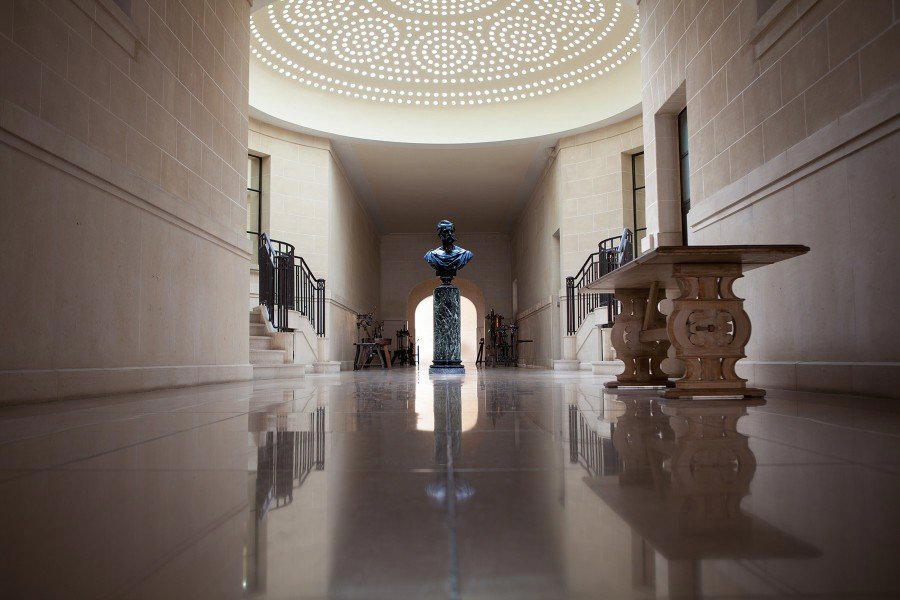
Refined and contemporary with blindingly successful bistrot atmosphere; minimalist aesthetic with polished presentation.