On Rue Saint-Dominique in the 7th arrondissement, Les Fables de La Fontaine occupies a register that separates it from the grander dining rooms of the Left Bank: a focused seafood address where the ritual of the meal matters as much as the plate. The address sits within a neighbourhood defined by embassies, covered markets, and a resident clientele that tends to eat seriously and without theatre.
Pearl is the En Primeur Club membership app — saves, bookings, and concierge access live there. Same editors, same standards.
- Address
- 131 Rue Saint-Dominique, 75007 Paris, France
- Phone
- +33144183755
- Website
- lesfablesdelafontaine.net
- Directions
- Get directions
 Saves & bookings on Pearl
A Street That Sets the Tone
Rue Saint-Dominique runs through one of Paris's most quietly composed neighbourhoods, threading between the Eiffel Tower's shadow to the north and the Musée d'Orsay's reach to the east. The 7th arrondissement is not where Paris goes to be seen, it is where Paris goes to eat without explaining itself. The covered market at La Motte-Picquet, the fromageries and fishmongers scattered between the embassy buildings, the residential pace that returns after the lunchtime rush: all of this conditions what a restaurant on this street can be and what its clientele expects.
Les Fables de La Fontaine is a modern French seafood fine dining restaurant at 131 Rue Saint-Dominique, 75007 Paris, France. The address signals something before you step through the door: this is a neighbourhood restaurant operating at a level above neighbourhood habit, the kind of place that draws regulars from the arrondissement and reservation-holders from across the city without shifting its centre of gravity toward either.
The Rhythm of Dining Here
French fine dining has its own liturgy, and the 7th arrondissement version of that liturgy tends toward the unhurried and the precise. In the broader Paris dining context, where addresses like Alléno Paris au Pavillon Ledoyen and Le Cinq at the Four Seasons Hôtel George V operate at one formal end of the spectrum, and where Kei demonstrates how French technique absorbs outside influence, Les Fables de La Fontaine occupies a different position. It is not a temple of haute cuisine in the architectural sense. It is a room where the pacing of service and the sequencing of courses carry as much weight as the plates themselves.
That pacing matters. French dining ritual at this level runs on the assumption that a meal is a duration, not a transaction. Amuse-bouches establish tempo. Bread arrives with intention. The gap between courses is neither a wait nor a rush, it is, in the older Parisian understanding, part of the experience itself. For visitors arriving from dining cultures where speed reads as efficiency, this can take adjustment. For regulars, it is precisely the point.
Seafood as the Central Argument
The kitchen's focus on seafood places Les Fables de La Fontaine in a specific tradition within French gastronomy, one that values sourcing precision and restraint over elaboration. French seafood cooking at this register differs substantially from the richer, more architectural preparations found at addresses with four-digit tasting menus. The argument here is that the quality of the fish should be discernible in the finished plate, not concealed beneath technique.
This is a discipline shared, in different registers, by some of France's most serious tables. Mirazur in Menton brings Mediterranean proximity and garden produce into its seafood thinking. Le Bernardin in New York, the French seafood house that became a reference point internationally, applies a similar logic of restraint to what arrives from the water. In Paris, that ethos is rarer than it should be, which gives a focused seafood address on the Left Bank a distinct position in the city's dining map.
The connection to La Fontaine in the name is a Parisian reference, the 17th-century poet Jean de La Fontaine, whose fables populated French literary consciousness, spent time in this neighbourhood. The name functions less as a theme and more as a signal of rootedness: this is a place with a sense of where it stands.
Where This Sits in the Paris Conversation
Paris's most discussed dining addresses in recent years have split between the classicist camp, L'Ambroisie on Place des Vosges remains the reference point for that tradition, and the contemporary camp, where chefs reframe French technique through personal lens or international influence. Arpège, also in the 7th, made the vegetable garden its central argument decades before that became fashionable. These are restaurants that shaped critical conversation.
The restaurant operates slightly apart from that conversation, not because it lacks quality, but because the 7th arrondissement's leading restaurants tend to earn their reputations through sustained local fidelity rather than international press cycles. That is a different kind of credibility, and a more durable one. Across France, the restaurants that have held their position longest, Auberge de l'Ill in Illhaeusern, Troisgros, Bras in Laguiole, have done so by being genuinely necessary to their communities, not by chasing categories. The urban equivalent of that model is a restaurant that its neighbourhood cannot imagine losing.
For visitors who have spent time at Assiette Champenoise in Reims or Auberge du Vieux Puits in Fontjoncouse, the sensibility here will feel familiar: precise, product-led, and more interested in what is on the plate than in signalling ambition through format or architecture. Those coming from AM par Alexandre Mazzia in Marseille or Au Crocodile in Strasbourg may find the register quieter, more contained, deliberately so.
Seasonal Timing and When to Go
Paris seafood restaurants shift meaningfully with the calendar. Autumn and winter bring the deepest shellfish season, when Breton oysters and Normandy scallops arrive at the peak of their cold-water density. Spring opens the range toward lighter, faster-cooking fish. Summer in the 7th is complicated by the neighbourhood's residential character, August depletes the local clientele while tourism fills the terrace-facing addresses elsewhere, and serious tables in arrondissements like this one sometimes reduce covers accordingly.
The optimal window for a meal here, as with much of Left Bank Paris, runs from late September through December, when the neighbourhood is fully inhabited, the seasonal produce is at its most expressive, and the pace of service settles into its natural rhythm without the pressure of high-tourist volume. Flocons de Sel in Megève operates on a comparable seasonal logic tied to mountain produce; the principle, that timing your visit to match the kitchen's leading material is as important as the booking itself, applies equally here.
For visitors building a Paris dining itinerary around the 7th arrondissement, the Rue Saint-Dominique address fits well against a broader programme.
Peers You’d Cross-Shop
Comparable venues nearby, for context on price, style, and recognition.
| Venue | Cuisine | Price | Notes |
|---|---|---|---|
| Les Fables de La FontaineThis venue — the venue you are viewing | Modern French Seafood Fine Dining | $$$ | Not listed |
| Café de l'Esplanade | French Brasserie with Asian Fusion | $$$ | 7e Arr. |
| Le V | Mediterranean Fusion French | $$$ | Étoile |
| L'Empire du 8ème | Modern French Mediterranean | $$$ | 8e Arr. – Élysée |
| 99 Haussmann | Modern French Bistronomic | $$$ | 8th arrondissement |
| L'Evasion | Classic French Bistro | $$$ | 8e arrondissement (L'Europe) |
Continue exploring
More in Paris
Restaurants in Paris
Browse all →
Bars in Paris
Browse all →
Hotels in Paris
Browse all →



At a Glance
- Elegant
- Sophisticated
- Intimate
- Classic
- Date Night
- Special Occasion
- Business Dinner
- Open Kitchen
- Street Scene
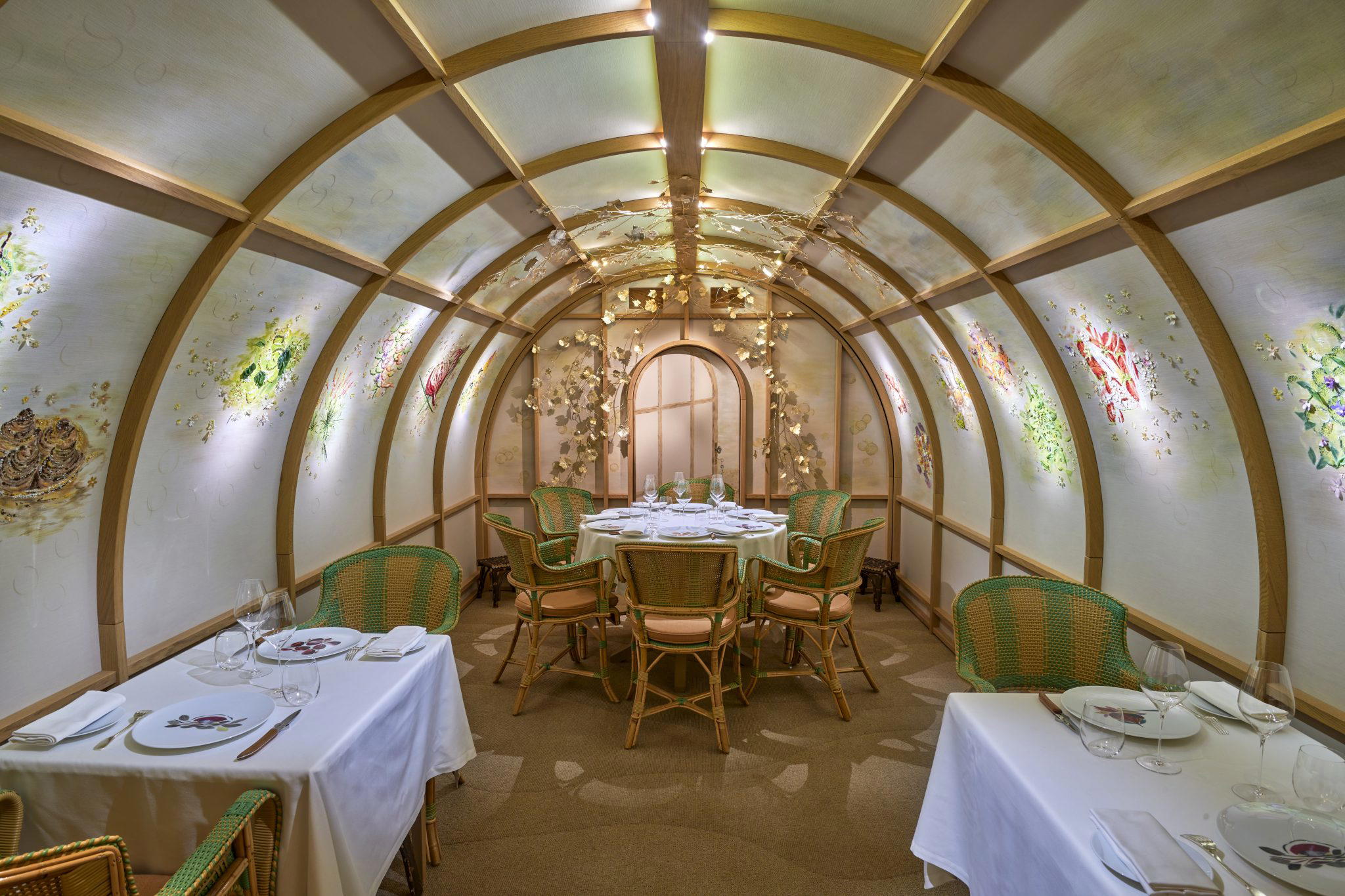
Sophisticated and elegant with creative dish presentations; cozy historic atmosphere evoking classic Parisian dining.