







La Réserve Paris belongs to the discreet palace-hotel tier: 40 keys in a 19th-century Haussmann mansion near Avenue Gabriel, with Jacques Garcia interiors, butler service and a 16-meter indoor pool. Its Michelin Three Keys, La Liste 99.5-point score and World’s 50 Best Hotels #31 ranking place it among Paris’s most credentialed small luxury addresses.
Pearl is the En Primeur Club membership app — saves, bookings, and concierge access live there. Same editors, same standards.
- Address
- 42 Av. Gabriel, 75008 Paris
- Phone
- +33 1 58 36 60 60
- Website
- lareserve-paris.com
- Directions
- Get directions
 Saves & bookings on Pearl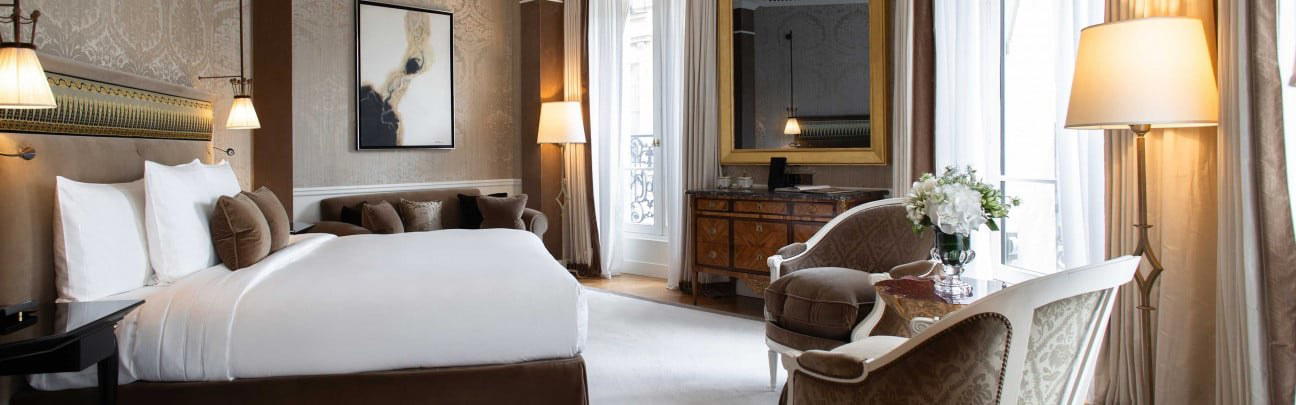
A private-mansion version of Parisian luxury
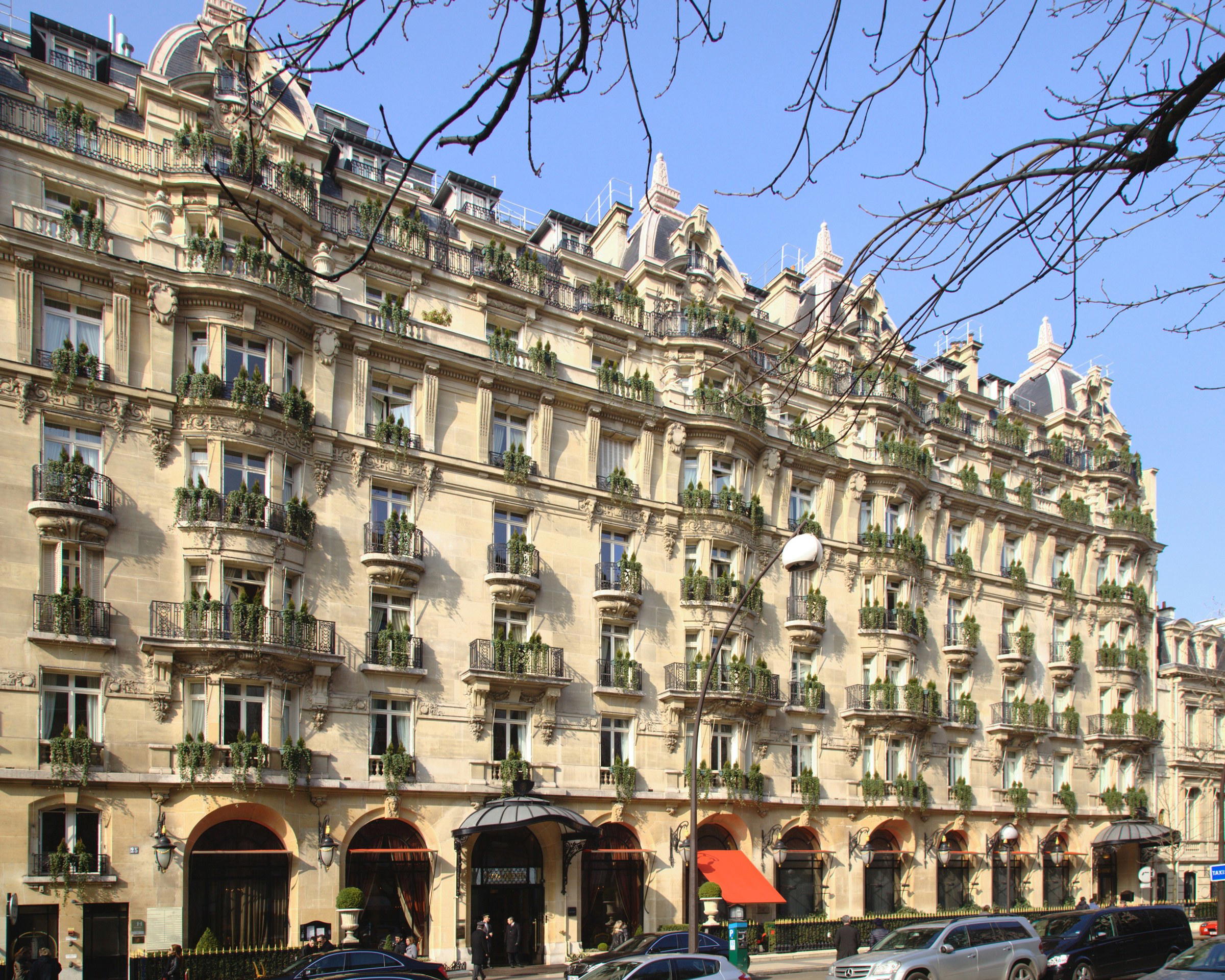
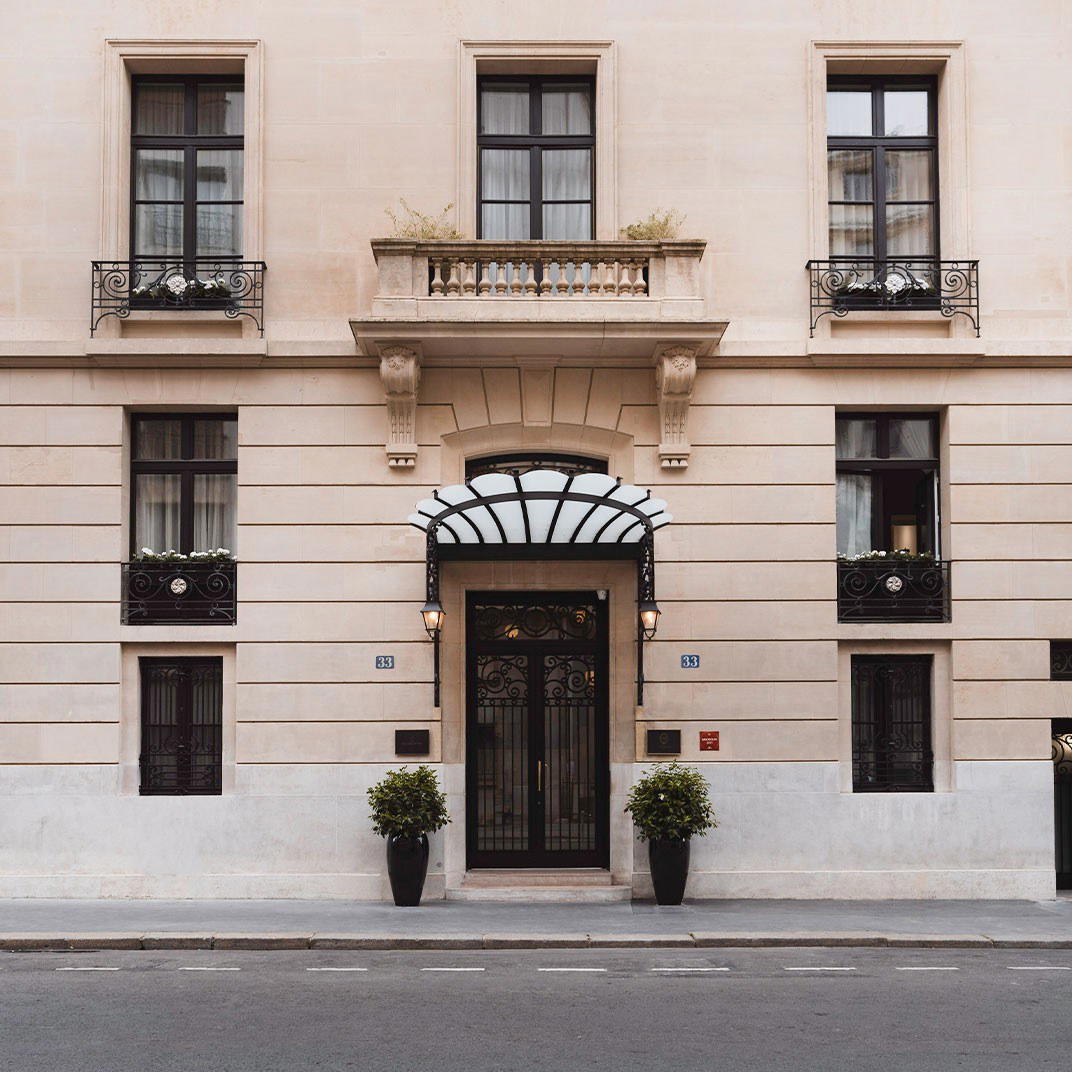
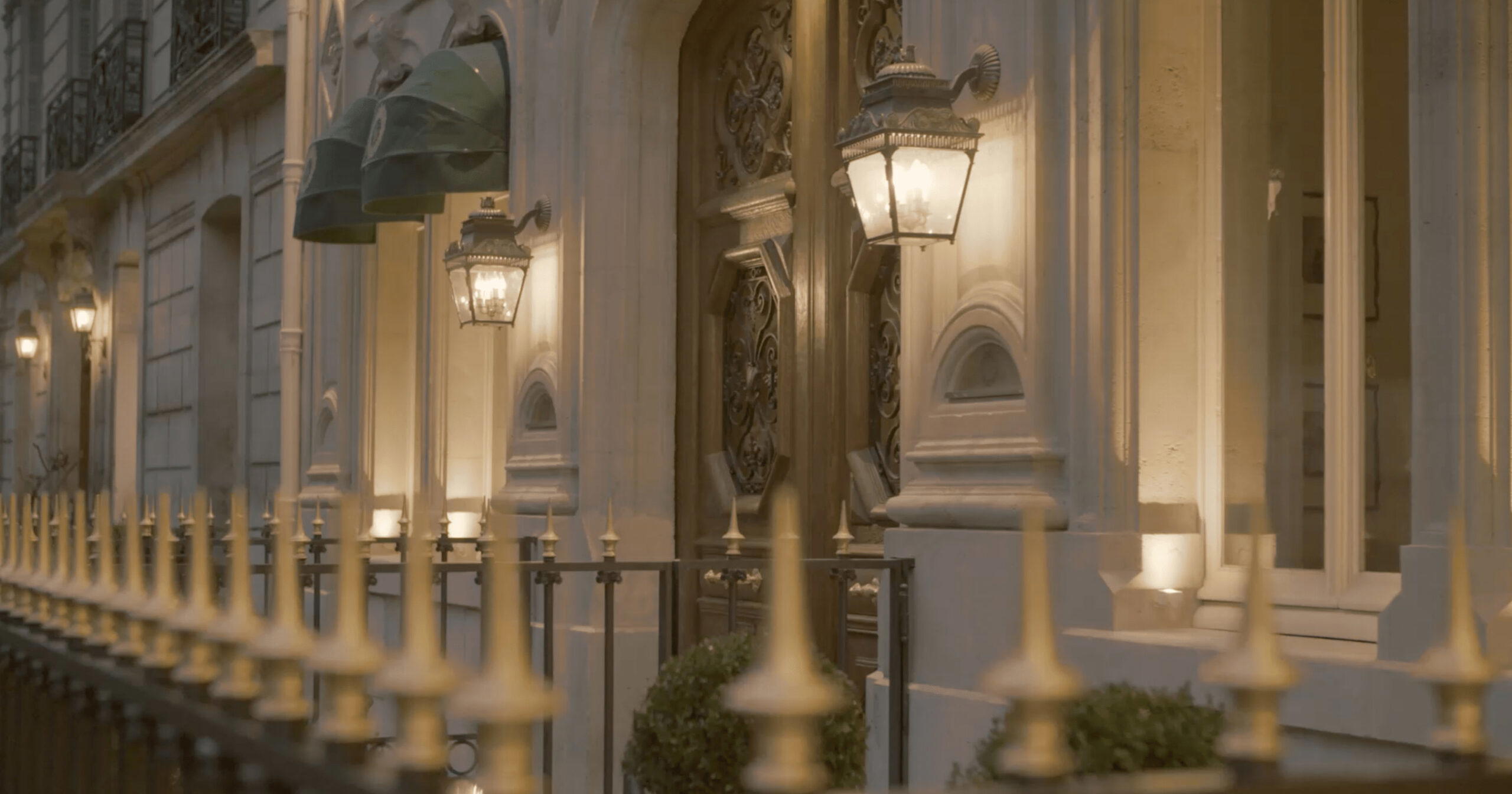
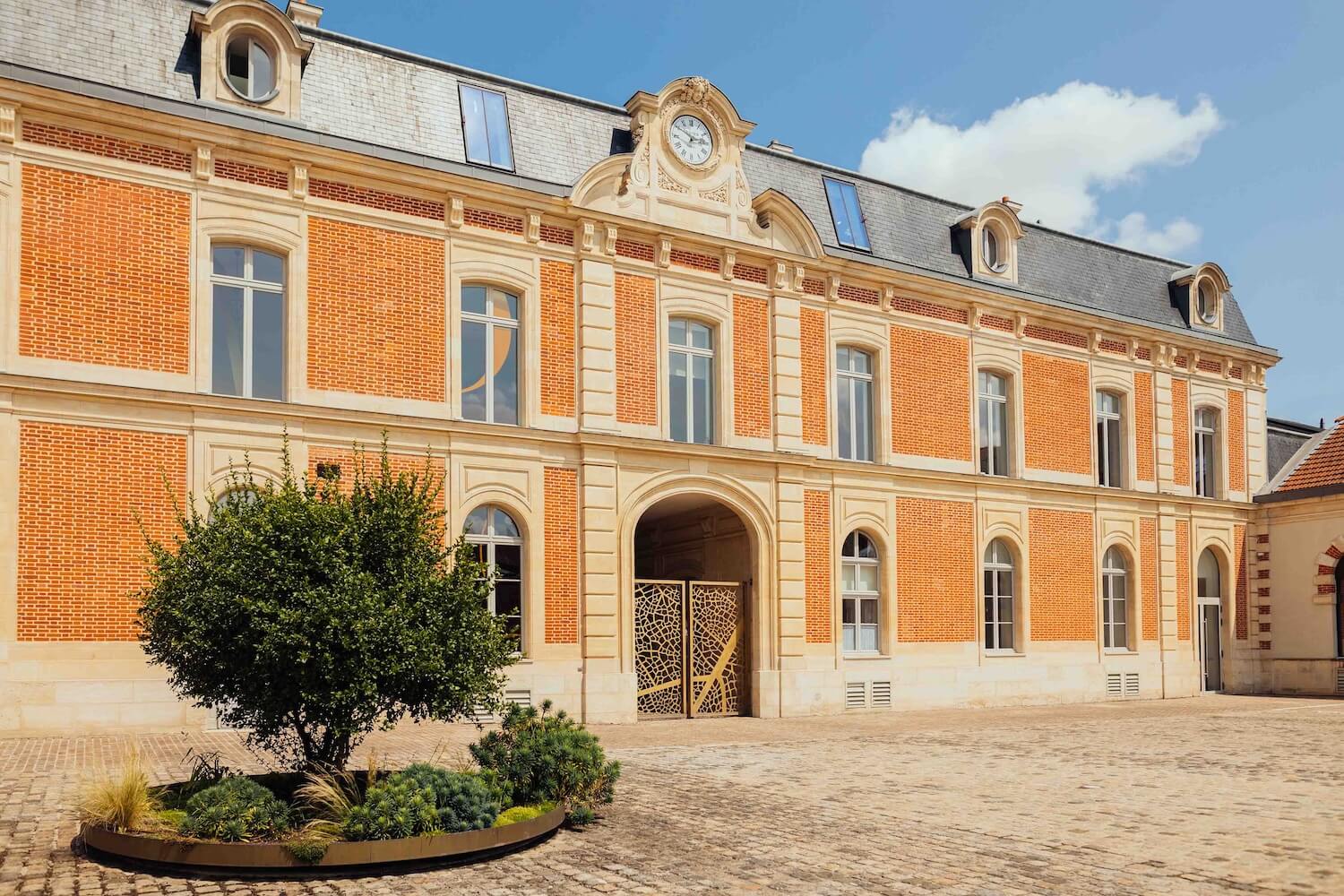
Avenue Gabriel has a particular kind of hush. It is close enough to the Champs-Élysées, Rue du Faubourg Saint-Honoré and Avenue Montaigne to sit inside the city’s luxury triangle, yet the mood is not the theatre of a grand boulevard hotel. The stronger reference is the 19th-century private residence: a Haussmann mansion originally built for the Duc de Morny, Napoléon III’s half brother, converted into a 40-key palace hotel where scale, arrival ritual and decorative density matter more than lobby spectacle.
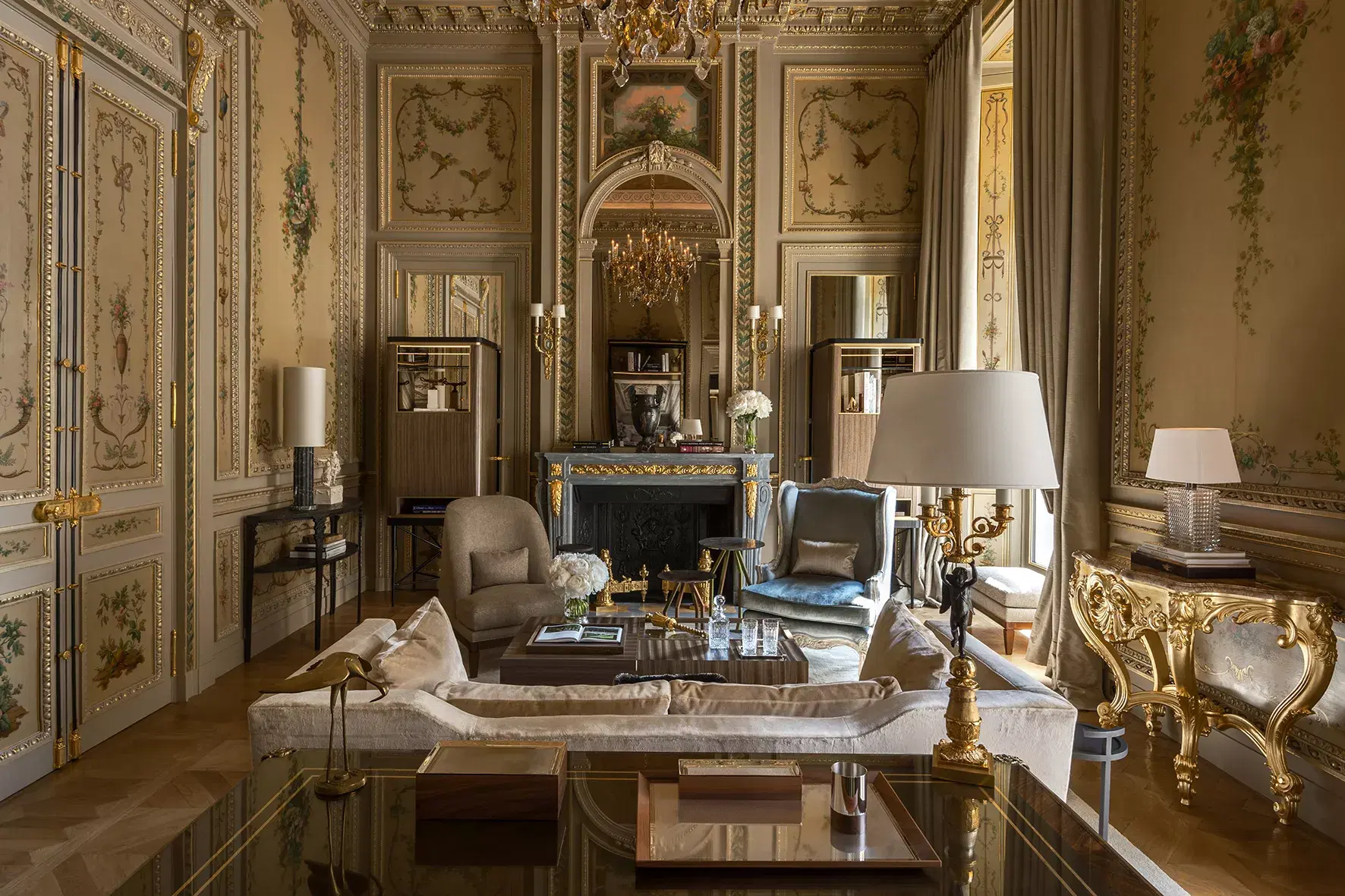
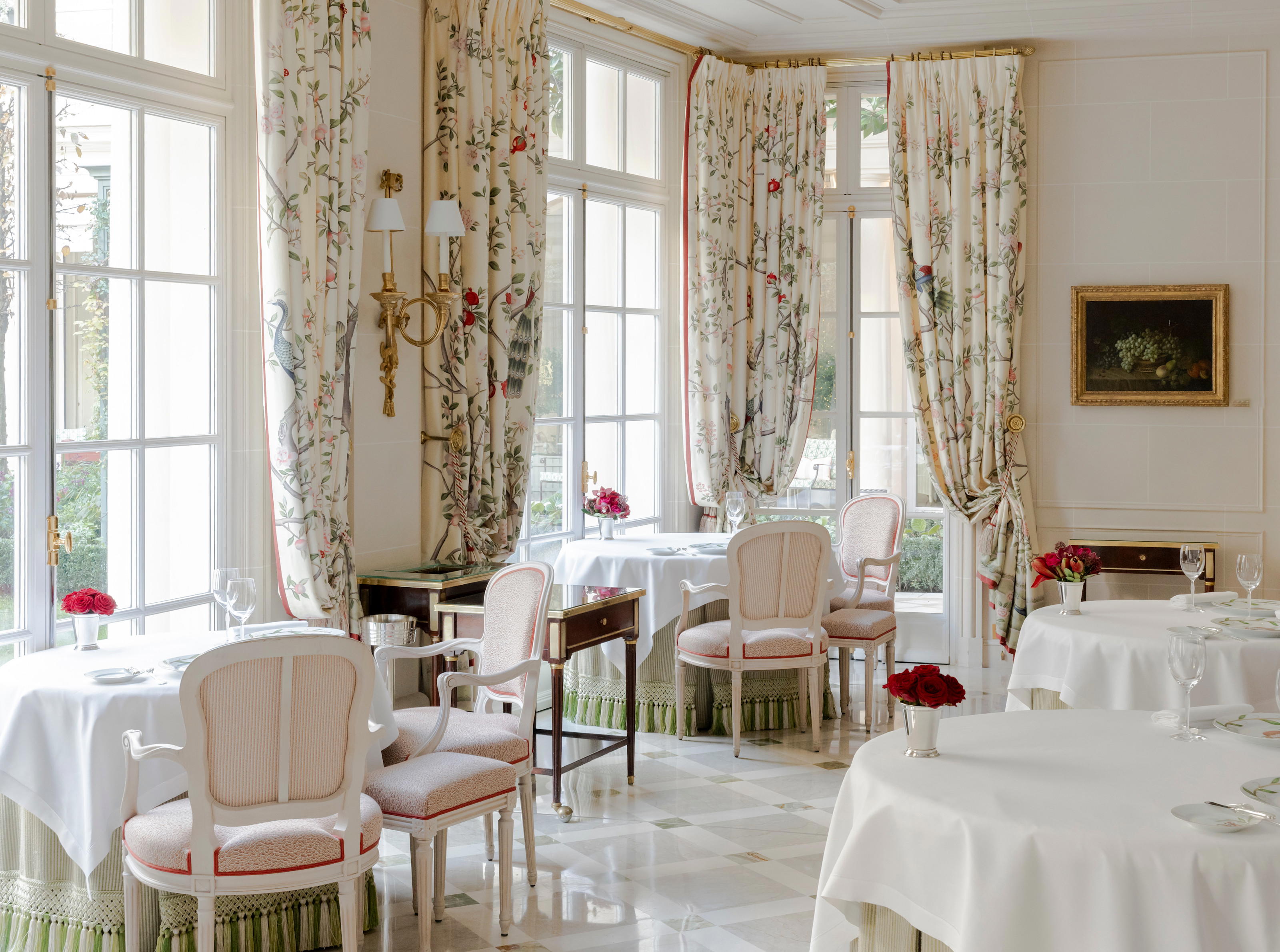
Paris palace hotels tend to divide into two camps. One is civic and ceremonial, with historic public rooms, high-visibility entrances and a sense of being part of the city’s social machinery. The other is domestic in a rarefied way, closer to an address than an institution. La Réserve Paris sits firmly in the second camp. The point is not minimalism or contemporary restraint; the point is an aristocratic apartment vocabulary carried through with discipline: silk-clad walls, ruby and emerald tones, velvet drapery, herringbone oak parquet, marble fireplaces and bathrooms in Carrara and Turquin blue marble.
That design posture explains why the hotel reads differently from nearby palace peers. Hotel Plaza Athénée is tied to Avenue Montaigne glamour, Hôtel de Crillon carries the weight of Place de la Concorde, and Le Bristol Paris has its own long-established Faubourg Saint-Honoré rhythm. La Réserve Paris works at a lower volume: fewer keys, more suite inventory than rooms, and a service model that treats arrival as a private handover rather than a public check-in.
Design as the main argument
Architecture-led luxury in Paris is often discussed through monuments, but the city’s more interesting hotel question is domestic scale. How does a building keep the feeling of an urban mansion after becoming a hotel? Here, the answer is partly numerical. Five floors contain only 40 keys, and the property uses physical keys rather than key cards, a small detail that reinforces the private-house fiction without needing to announce it.
The interiors were designed by Jacques Garcia, and the record notes that 120 artisans from 38 companies spent two years completing the design. Those numbers matter because this sort of decoration fails when it becomes surface treatment. The stronger Parisian examples rely on craft depth: parquet that reads as architectural structure, fabric that controls light, stone that makes bathrooms feel permanent rather than decorative. La Réserve Paris uses the vocabulary of Second Empire domestic luxury, but updates the rooms with concealed technology, including televisions hidden within large mirrors.
The hotel’s awards profile supports the design argument rather than replacing it. It holds Michelin Three Keys, was listed in La Liste Leading Hotels 2026 with 99.5 points, received Gault & Millau Exceptional Hotel recognition in 2025 with 5 points, is a Leading Hotels of the World member for 2025, and appeared at #31 in World’s 50 Best Hotels 2023.
How it compares with Paris palace peers
Paris luxury hotel map is unusually concentrated, which makes comparison useful. Cheval Blanc Paris channels the Right Bank department-store transformation and Seine-facing contemporary polish. Four Seasons George V operates with grand-hotel scale and formal abundance. Le Meurice draws from palace history and rue de Rivoli positioning, while Ritz Paris carries Place Vendôme mythology and its own social gravity. La Réserve Paris is the quieter choice inside that bracket, not less serious, but less interested in public performance.
Location helps. Avenue Gabriel puts the hotel midway between fashion retail, state power and the museum corridor around the Grand Palais. That geography serves travelers who want central access without living on a visible hotel stage. The nearby Élysée gardens and the property’s set-back position create a buffer from the Champs-Élysées axis. In practical terms, this is a Right Bank base for shopping, galleries, meetings and formal dining, but its internal mood is slower than the address suggests.
Closest French comparison outside the capital is not another city hotel but a private-estate mentality. Airelles Château de Versailles - Le Grand Contrôle turns court history into a hotel format outside central Paris. La Réserve Paris keeps the historical reference inside the city and makes it intimate rather than theatrical. That distinction matters for repeat Paris travelers: the choice is less about monument access and more about how much formality one wants to live with between appointments.
The arrival ritual and service tempo
Hotel’s arrival process is one of the clearest indicators of its service philosophy. Guests are asked to provide arrival times so a staff member can greet them outside. The administrative part of the stay is handled before arrival, so there is no conventional reception stop; guests are escorted directly to the room. In a city where palace hotels often use lobby choreography to establish status, this approach removes friction and public waiting from the first minutes.
That service style aligns with the property’s 40-key scale. Butler service and a pillow menu are part of the recorded offering, but the more telling detail is how the hotel limits the sense of hotel machinery. A guest library is reserved for residents and their friends. The inner courtyard brings greenery into the house rather than turning the property outward. Even the room technology is designed to disappear until needed. The effect is not informal; it is controlled privacy.
This is also why the hotel suits a particular Paris stay. Travelers looking for high-energy lobby culture, late-night scene-watching or a broad public restaurant floor may be better served by larger palace hotels. Travelers who want central Paris with fewer thresholds, fewer visible crowds and a private-house register will understand the appeal quickly. The distinction is not taste alone; it is operational design.
Rooms, suites and the domestic scale
The record notes more suites than rooms, which is a meaningful clue in Paris. Space is the city’s hardest luxury, and palace hotels that can sustain apartment-like proportions operate in a different category from compact luxury addresses. Here, the room concept is built around a bygone-era French décor language: gilded mirrors, parquet floors, marble fireplaces and velvet drapes, paired with modern systems kept visually quiet.
Breakfast is included, as are Wi-Fi and access to a private bar stocked with complimentary soft drinks, biscuits and candy bars. Those details are practical, but they also reinforce the residential idea: the hotel tries to reduce small transactional moments that can make a luxury stay feel oddly procedural. The physical key, the hidden television and the room provisions all point in the same direction.
What can be said with confidence is that the property’s upper-category rooms sit inside a 40-key mansion format with more suites than rooms, which is different from a large palace where the highest accommodations form only one tier within a much broader key count.
Dining, wine and the public-private line
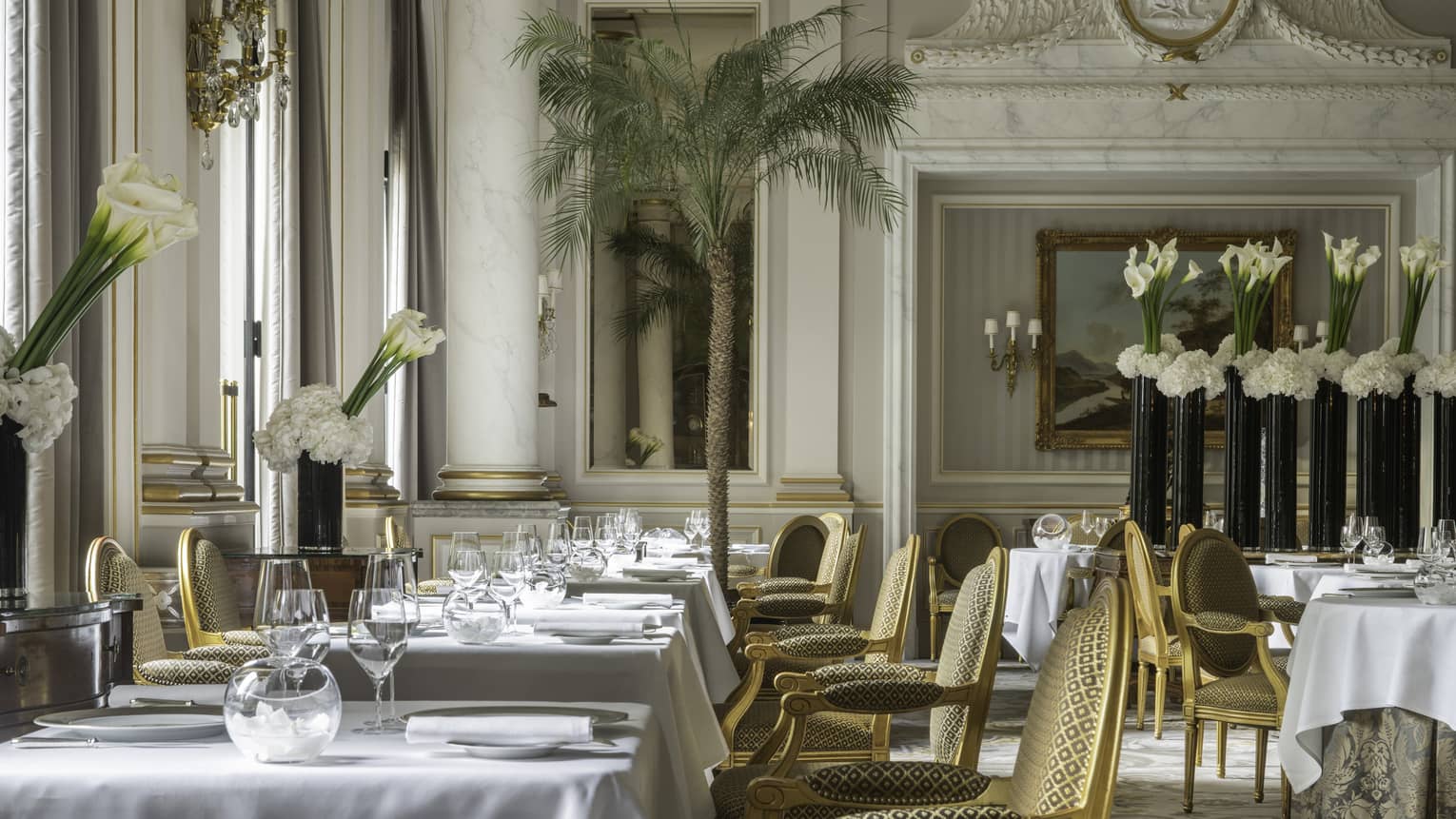
Paris palace hotels have long used restaurants and bars to connect private guests with the wider city. La Réserve Paris follows that pattern, but again at a smaller register. The record cites two-Michelin-starred dining in one section and a three-Michelin-starred restaurant in another, so the safest editorial reading is that Michelin-level dining is central to the hotel’s reputation, while current restaurant distinctions should be verified against the latest Michelin restaurant listing before planning around a specific star count.
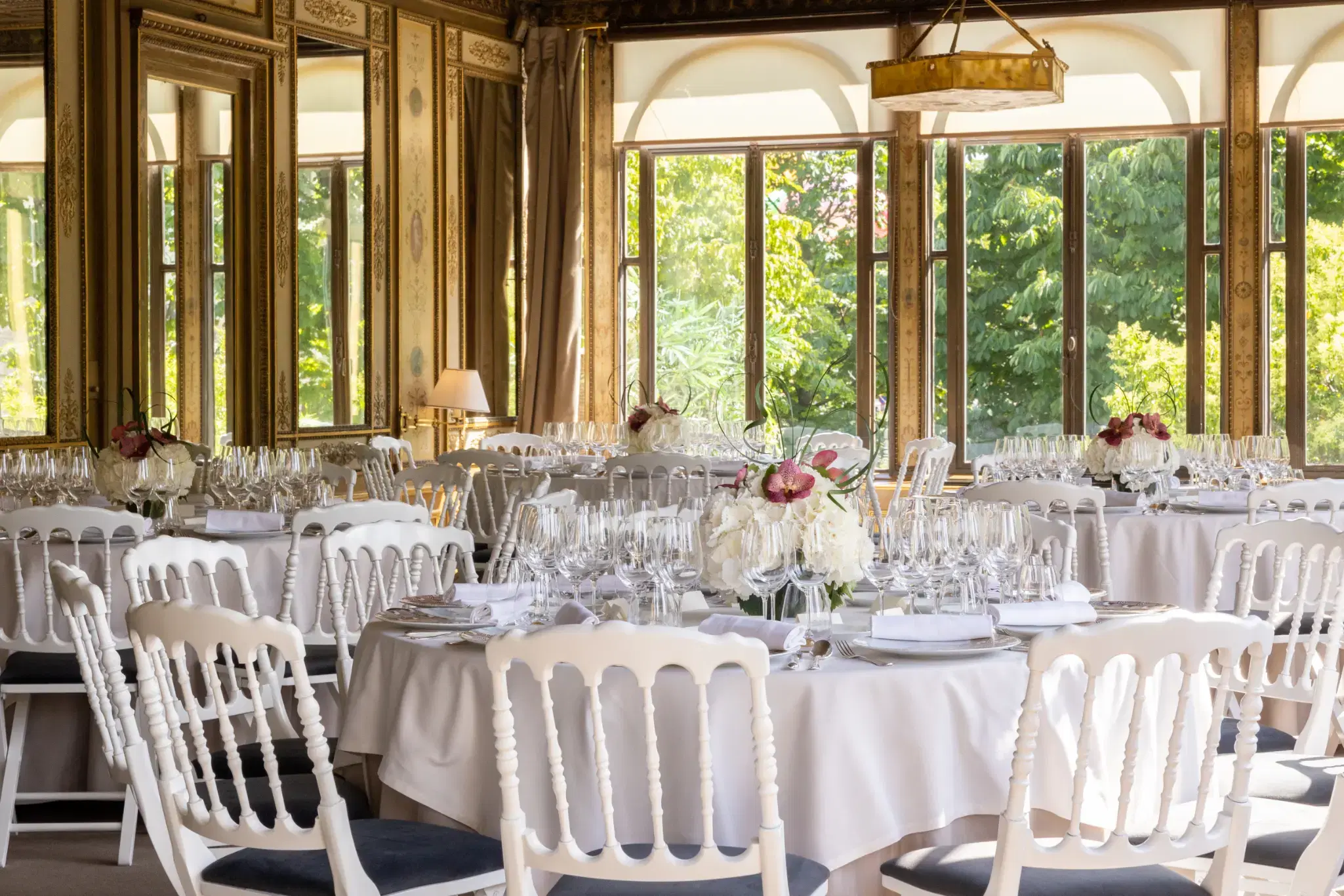
Le Bar is the more precise data point. It is open to the public, despite being designed to feel like a private club, and has onyx columns from Pakistan and a 15-seat bar. The wine list is substantial: 500 white labels and more than 1,000 red labels. In Paris, where hotel bars often trade on address and upholstery, that depth gives the room a more serious cellar identity. It also makes the bar a useful bridge between hotel privacy and the city’s drinking culture.
For broader planning, the hotel sits well for visitors pairing palace stays with Right Bank dining. EP Club’s full Paris restaurants guide covers the city’s restaurant range, while the full Paris bars guide is useful for comparing hotel bars with independent cocktail rooms. Wine-focused travelers can also use the full Paris wineries guide and full Paris experiences guide for context beyond the hotel dining circuit.
Spa, pool and the rarity of indoor space
Indoor leisure space is a serious differentiator in central Paris. The hotel has a 16-meter indoor pool, which the source material identifies as a rarity in the city, plus an intimate spa with three treatment rooms and a steam room. The spa features the Swiss anti-aging beauty brand Nescens, with services listed as personalized body and face treatments, hair styling and manicures.
The significance is not simply that the hotel has a spa. Many Paris luxury hotels do. The stronger point is the combination of small key count and a meaningful pool. A 40-key property with this level of wellness infrastructure offers a different ratio of guest volume to amenity than a much larger hotel. For travelers using Paris as a base between long-haul flights, fashion-week schedules or multi-city itineraries, that ratio can matter more than another public room.
The spa also fits the property’s design language: inward-facing, controlled, private. It does not turn wellness into spectacle. That is consistent with the rest of the house, where the most valuable commodity is not visibility but protected space.
Who should choose it
La Réserve Paris is a strong fit for travelers who want central Right Bank access without a grand-lobby social scene. It suits couples, repeat Paris visitors, luxury shoppers using Avenue Montaigne and Faubourg Saint-Honoré, and guests who value arrival discretion and suite proportions over a larger hotel’s public theatre.
It is less suited to travelers who want a hotel as a public stage. Paris has stronger choices for visible lobby culture, large-scale restaurant energy or the sense of entering a civic monument. The decision here is about privacy, not withdrawal from the city. The address keeps the city close; the building filters it.
For a wider comparison set, EP Club’s full Paris hotels guide places La Réserve Paris alongside the capital’s major palace and boutique luxury addresses. Travelers extending the trip through France might compare the city-mansion model with resort or countryside luxury at Hotel Du Cap-Eden-Roc in Cap d'Antibes, The Maybourne Riviera in Roquebrune-Cap-Martin, Four Seasons Megeve in Megève, La Réserve Ramatuelle - Hôtel, Spa and Villas in Ramatuelle, Villa La Coste in Le Puy-Sainte-Réparade, Hôtel & Spa du Castellet in Le Castellet, Cheval Blanc Courchevel in Courchevel, Baumanière Les Baux-de-Provence in Les Baux and Les Sources de Caudalie in Bordeaux. Internationally, its private-house language has more in common with characterful urban hotels such as The Fifth Avenue Hotel in New York City, Hotel Sacher Wien in Vienna and The Beverly Hills Hotel in Los Angeles than with anonymous luxury towers.
Planning details woven into the stay
The address is 42 Avenue Gabriel, 75008 Paris, France. The practical point that is available is more useful than a generic check-in note: the hotel asks for arrival times so staff can meet guests outside, and the formalities are handled before arrival, allowing a direct escort to the room.
Given the award tier and 40-key scale, availability should be treated as limited during Paris’s demand peaks, including major fashion, art and sporting periods. The hotel’s small inventory also means room-category planning matters more than at larger properties. Guests who care about suite size, courtyard outlook, spa timing or bar seating should settle those details before arrival rather than assuming flexibility on the day.
Booking and Cost Snapshot
A quick peer reference to anchor this venue in its category.
| Venue | Awards |
|---|---|
| La Réserve ParisThis venue — the venue you are viewing | Michelin 3 Key |
| Cheval Blanc Paris | Michelin 3 Key |
| Le Meurice | Michelin 3 Key |
| Shangri-La Paris | Michelin 2 Key |
| The Peninsula Paris | Michelin 2 Key |
| Soho House Paris | Michelin 1 Key |
Recognition history
Dated appearances from independent guides and award organizations, with the underlying list record or original source where available.
Conde Nast Gold List
Conde Nast
Forbes 5-Star
Forbes
La Liste Top Hotels
La Liste
Mr & Mrs Smith Smith Seal of Approval
Mr & Mrs Smith
Virtuoso Luxury Hotel Partner
Virtuoso
World's 50 Best Best Hotels 51-100 #51
World's 50 Best
Forbes 5-Star
Forbes
Gault & Millau Exceptional Hotel
Gault & Millau
Leading Hotels of World Member
Leading Hotels of World
Michelin 3 Keys
Michelin
Michelin 3 Keys
Michelin
World's 50 Best Best Hotels #31
World's 50 Best
Continue exploring
More in Paris
Hotels in Paris
Browse all →
Bars in Paris
Browse all →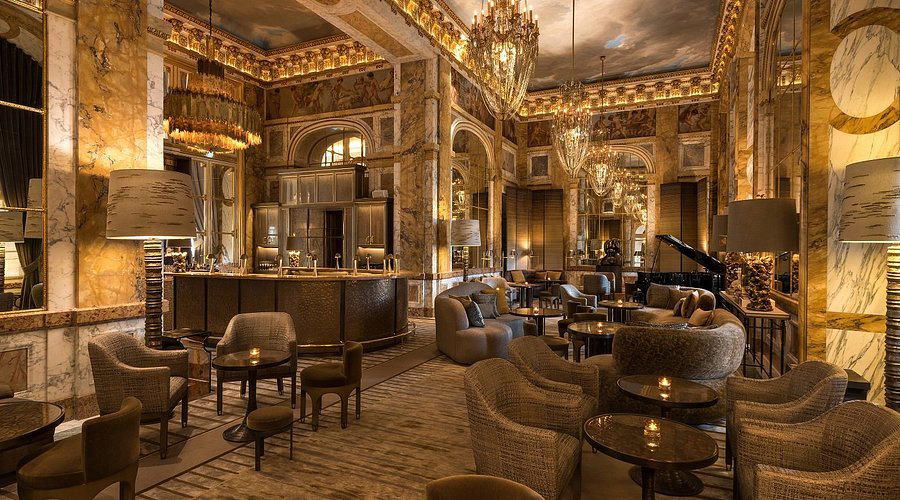
Restaurants in Paris
Browse all →


At a Glance
- Elegant
- Sophisticated
- Ornate
- Intimate
- Classic
- Romantic Getaway
- Honeymoon
- Anniversary
- Historic Building
- Panoramic View
- Terrace
- Wi Fi
- Pool
- Spa
- Fitness Center
- Room Service
- Concierge
- Valet Parking
- Skyline
- Street Scene
- Wi Fi
- Pool
- Spa
- Fitness Center
- Room Service
- Concierge
- Valet Parking
Cozy yet chic atmosphere with warm hospitality, soundproof rooms, lobby fireplace, and a peaceful, intimate residential feel praised in guest reviews.
Know Before You Go
- Getting there
- 42 Av. Gabriel, 75008 Paris