On Avenue de la Motte-Picquet in the 7th arrondissement, Auberge Bressane occupies a specific and increasingly rare position in Paris dining: the regional French table that resists modernisation. The address points toward the Bresse tradition, a cuisine defined by poultry, cream, and a classical confidence that predates the city's current appetite for minimalism. For those tracing the arc of French gastronomy before and after nouvelle cuisine, it remains a purposeful stop.
Pearl is the En Primeur Club membership app — saves, bookings, and concierge access live there. Same editors, same standards.
- Address
- 16 Av. de la Motte-Picquet, 75007 Paris, France
- Phone
- +33147059837
- Website
- auberge-bressane.fr
- Directions
- Get directions
 Saves & bookings on Pearl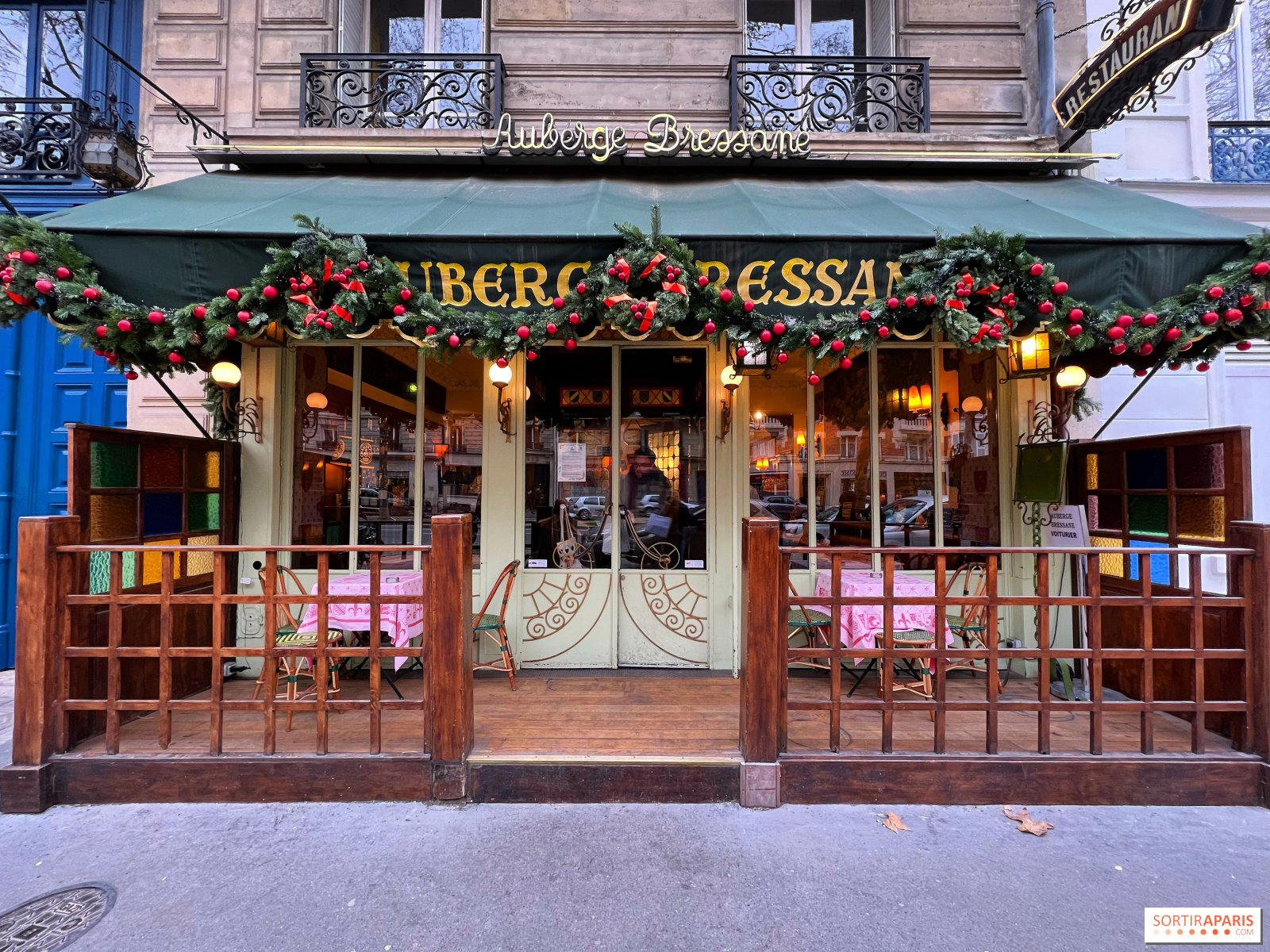
The 7th Arrondissement and the Classical Table
Avenue de la Motte-Picquet runs through the quieter administrative heart of the 7th arrondissement, a neighbourhood where the dominant architectural register is Haussmannian solidity and the dominant dining register has long been bourgeois French. It is the Paris of tablecloths, service formality, and a cuisine that measures itself against the canon rather than against the avant-garde. Auberge Bressane sits in that context: a table aligned with the Bresse tradition, positioned in a district where such alignment feels earned rather than nostalgic.
The broader 7th has become a study in contrasts. Within walking distance of the Champ-de-Mars, a cluster of addresses serves diplomats, civil servants, and international visitors who arrive with an appetite for French cooking in its recognisable, classical form. Auberge Bressane occupies this tier, and its address on the avenue places it between the Eiffel Tower and the Invalides, in territory that reads as institutional Paris.
Bresse as a Culinary Argument
Bresse cooking is a regional tradition with a protected designation at its centre: the poulet de Bresse, the only chicken in France to hold an AOC. That credential matters because it frames the kitchen's sourcing priorities before the menu is even read. The tradition around it is one of classical enrichment: cream reductions, butter mounts, slow braises, and a confidence in fat as the primary carrier of flavour. These are techniques that fell out of fashion in Paris kitchens during the 1990s and have only partially returned.
What makes the Bresse tradition interesting as a critical frame is its resistance to adaptation. Unlike the Lyonnaise canon, which has been productively tension-tested by chefs such as those behind the bouchon revival and the modern bistronomy movement, Bresse cooking tends to hold its form. The richness is structural, not decorative. When that richness is executed with precision, the meal has a narrative coherence, courses build on each other in terms of weight and register, that lighter, more fragmented tasting menus rarely achieve.
For comparison, the regional French tradition has produced some of France's most durable restaurant reputations. Tables like Auberge de l'Ill in Illhaeusern and Georges Blanc in Vonnas have maintained classical frameworks while accumulating Michelin recognition across decades. Les Prés d'Eugénie in Eugénie-les-Bains extended the regional model into spa-adjacent luxury without abandoning its culinary roots. Auberge Bressane operates in Paris on a smaller scale than any of these, but its conceptual alignment is with the same tradition of place-specific cooking.
The Arc of the Meal
Classical French dining in the Bresse mode tends to sequence differently from the contemporary Parisian tasting menu. The progression is less about contrast and surprise and more about accumulation. A meal here would be expected to move from something delicate and cream-forward in the opening stages through to the poultry course, which in Bresse cooking carries the structural weight that fish or beef might elsewhere, before resolving into the cheese plateau and a dessert that is more about texture and temperature than architectural complexity.
That sequencing is a deliberate argument about what a meal should feel like. It is not an oversight or a limitation. The cream-based sauces that appear early and mid-meal are calibrated to intensify without tipping into heaviness, and the quality of the Bresse chicken itself, when sourced correctly, provides enough flavour variation at the table's centrepiece course to carry the meal's emotional weight. This is the same logic at work in the great regional auberges of provincial France, and it translates, in a more compressed urban format, to the 7th arrondissement setting.
Paris has many modernist cooking at the summit tier. Alléno Paris au Pavillon Ledoyen, Arpège, and Kei each represent the city's appetite for formal innovation. L'Ambroisie and Le Cinq at the Four Seasons George V occupy the refined classical tier with significant award infrastructure behind them. The restaurant functions in a different register entirely: not competing for Michelin stars at the three-star level, but serving the reader who wants the classical French meal in a neighbourhood setting, priced and formatted for a long lunch rather than a formal occasion dinner.
The Regional Restaurant in an Urban Context
The auberge format, originally a rural inn with cooking anchored to local produce, has an interesting translation problem when placed in a major city. Provincial auberges like Auberge du Vieux Puits in Fontjoncouse, Bras in Laguiole, or Flocons de Sel in Megève draw part of their authority from physical proximity to their sourcing territory. A Paris address removes that proximity and replaces it with access: the ability to bring Bresse produce to the city's concentrated population of serious diners. Whether that trade works depends on supply chain discipline and kitchen fidelity to the source material.
The transferable element from the rural auberge is not the location but the pace. A meal at the restaurant occupies more time than the bistronomy format, and that time is part of the proposition. The long lunch, conducted without rush, with wine poured and replenished by a team that understands service as a hosting function rather than a transactional one, is a format that Paris supports better in the 7th than in more trend-pressured neighbourhoods to the east.
Internationally, the French classical dining format has found its most receptive audiences abroad at tables like Le Bernardin in New York City, where the discipline of the French tradition is treated as the entire point. Closer to home, Paul Bocuse's Auberge du Pont de Collonges and Troisgros in Ouches define the upper ceiling of what French regional cooking, placed in the right hands, can achieve over the long term.
Planning Your Visit
The restaurant is located at 16 Avenue de la Motte-Picquet, 75007 Paris. The format suits a long weekend lunch more than a quick dinner before theatre.
What It’s Closest To
Comparable venues nearby, for context on price, style, and recognition.
| Venue | Cuisine | Price | Notes |
|---|---|---|---|
| Auberge BressaneThis venue — the venue you are viewing | Traditional French Bourgeois Bistro | $$$ | Not listed |
| Market | French-Asian Fusion | $$$ | 8th Arr. - Élysée |
| L'Evasion | Classic French Bistro | $$$ | 8e arrondissement (L'Europe) |
| Le Flamboire | Traditional French Wood-Fired Grill | $$$ | 9th arrondissement |
| Hugo & Co | Modern French Fusion Bistro | $$$ | Latin Quarter |
| Porte 12 | Modern Neo-Bistro | $$$ | 10e |
Continue exploring
More in Paris
Restaurants in Paris
Browse all →
Bars in Paris
Browse all →
Hotels in Paris
Browse all →
At a Glance
- Classic
- Cozy
- Elegant
- Date Night
- Special Occasion
- Historic Building
- Extensive Wine List
Current opening hours
- Monday
- 12–2:30 PM, 7:30–10:15 PM
- Tuesday
- 12–2:30 PM, 7:30–10:15 PM
- Wednesday
- 12–2:30 PM, 7:30–10:15 PM
- Thursday
- 12–2:30 PM, 7:30–10:15 PM
- Friday
- 12–2:30 PM, 7:30–10:15 PM
- Saturday
- 7:30–10:15 PM
- Sunday
- 12:30–2:30 PM, 7:30–10:15 PM
Hours can change for holidays and private events. Last verified .
Wood-paneled walls, vintage chandeliers, leather booths, old-fashioned posters, coats of arms, and iron chandeliers create a charming, postcard-like traditional French inn setting.