
Gracia belongs to Tokyo’s yoshoku tradition rather than the city’s luxury tasting-menu circuit: a compact Asakusabashi dining bar where Western-derived cooking is filtered through Japanese habits of portion, rice, sauce, and seasonality. Its selection for Tabelog’s Yoshoku EAST 100 in 2025, after earlier selections in 2022 and 2023, places it among the more closely watched addresses in a category often treated too casually by visitors.
Pearl is the En Primeur Club membership app — saves, bookings, and concierge access live there. Same editors, same standards.
- Address
- 2 Chome-27-5 Asakusabashi, Taito City, Tokyo 111-0053, Japan
- Phone
- +81 3-3865-8966
- Website
- gracia.jp
 Saves & bookings on Pearl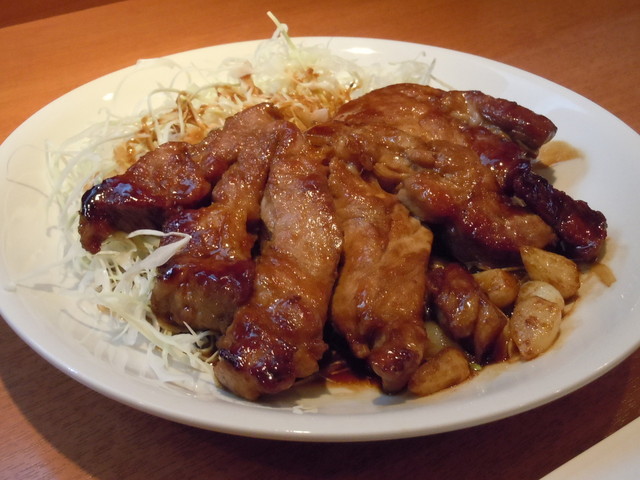
Asakusabashi speaks in a different register from Ginza or Aoyama: old wholesalers, craft suppliers, small offices, and after-work counters, not destination-dining theater. That setting matters for yoshoku, a cuisine built from Western techniques adapted to Japanese appetites, local shopping patterns, and rice on the table. Gracia fits that lineage: small-scale, wine-friendly, and closer to a neighborhood dining bar than a formal European restaurant.
Tokyo visitors often chase sushi counters, tempura rooms, and kaiseki appointments, then leave yoshoku to chance. That is a mistake. Yoshoku is one of the city’s clearest culinary translations, where butter, demi-glace, cutlets, omelets, fried seafood, gratins, and sauté pans entered everyday Japanese restaurant culture. Gracia’s 2025 selection for Tabelog 100 - Yoshoku - EAST is therefore a useful signal. It was also selected in 2022 and 2023, giving the address a record in a field where affection alone does not explain repeat recognition.
Yoshoku in Asakusabashi, with the market logic left intact
At a yoshoku counter, sourcing is less about named farms than how perishable ingredients move through a compact kitchen. This cooking rewards freshness, heat control, and fast turnover: seafood needing a pan rather than a tasting-menu narrative, vegetables working with sauce instead of garnish, and wine sitting naturally beside butter and browned edges. Gracia’s public materials identify it as yoshoku and dining bar, a pairing that defines the format. The food is neither French cuisine nor nostalgic family restaurant fare. It occupies the adult middle ground: Japanese-style Western cooking for people who want a proper meal and a glass, not ceremony.
One listed dinner-only item, Oyster Butter Sauté, says more than a long philosophy. In Tokyo, oysters often appear in specialist bars, kappo settings, fried preparations, or raw-service formats. A butter sauté puts them in yoshoku language: direct heat, fat, seasoning, immediacy. The point is not novelty, but yoshoku’s ability to absorb a seasonal ingredient without turning it into a chef’s manifesto. The category reflects Tokyo’s habit of taking Western technique and making it behave according to Japanese expectations: compact, savory, and easy to share across a counter or small table.
Compared with single-subject specialists, the appeal is broader. Hashimoto sits in Tokyo’s unagi tradition, while Tempura Shimomura belongs to a more formal tempura lane. Gracia works looser: the dining-bar version of yoshoku, where wine, sautéed seafood, and Japanese-Western comfort cooking meet. That helps travelers who have already booked stricter formats and want one meal that reads local without a long explanatory arc.
A small room changes the meal's tempo
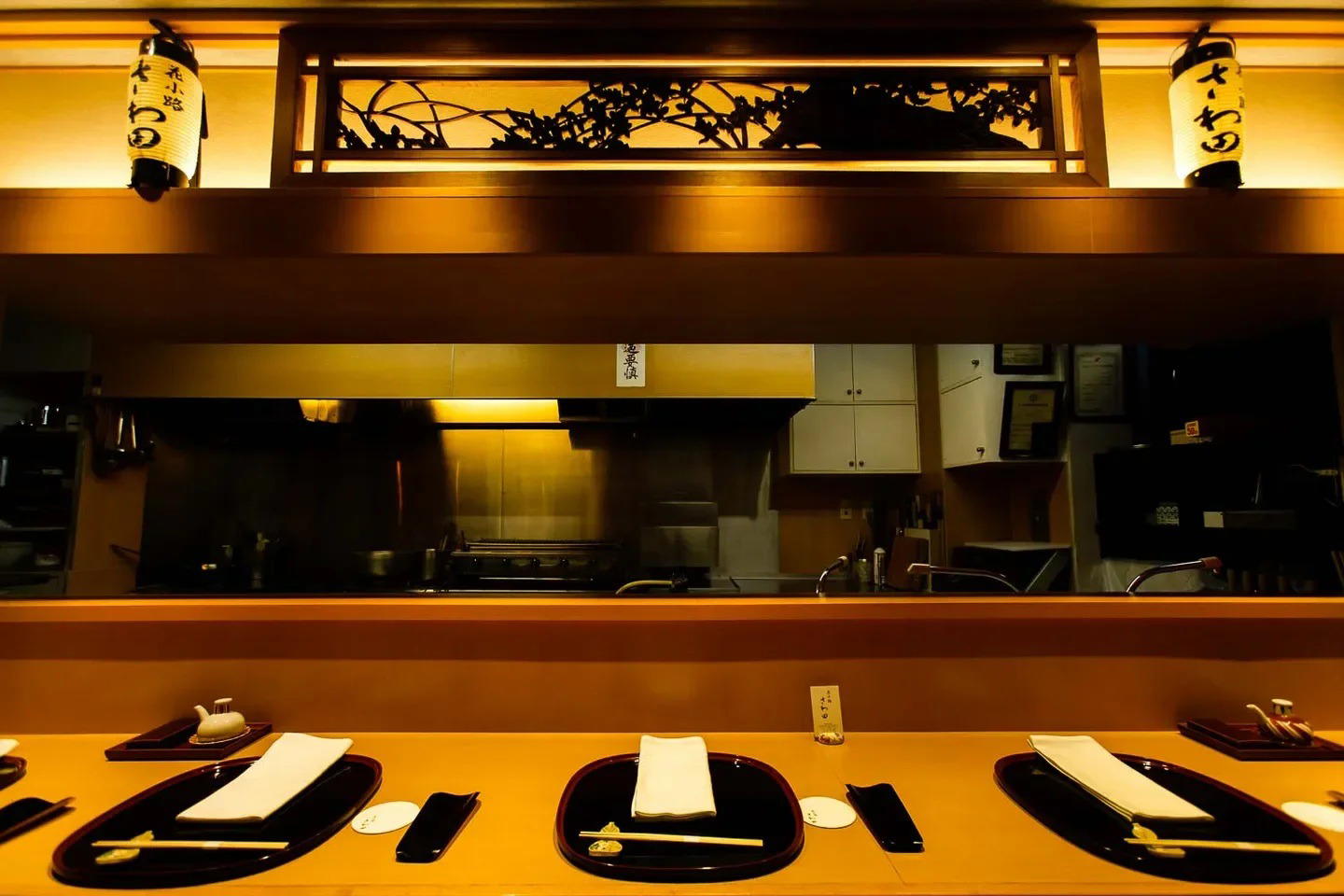
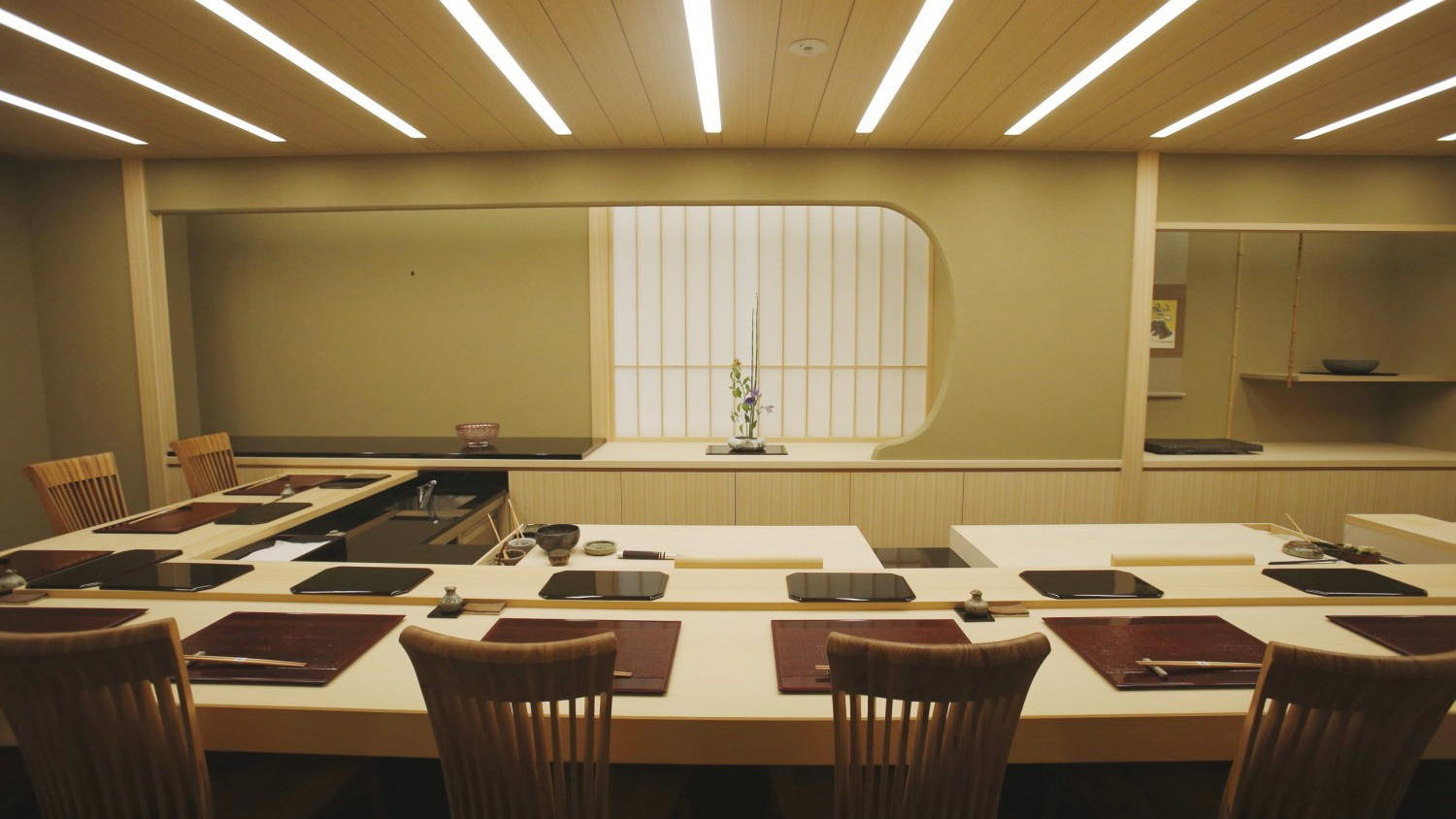
Scale is central. Gracia has 10 seats: counter seating for six and one table for four. That puts it far from a high-volume yoshoku shop and closer to a compact Tokyo room where kitchen pace and guest experience are tightly linked. Counter seating matters because so much yoshoku depends on pan work and timing. It loses force as banquet food; it gains clarity in small batches, served without delay.
The size also defines the occasion. This is not for a large group trying to cover every Tokyo cliché in one sitting. It is a focused meal in an eastern Tokyo neighborhood that rewards diners who like categories with history. Asakusabashi helps: the area does not force luxury performance, letting a small dining bar feel natural, which is harder in districts where every room competes for international attention.
The price band reinforces that reading: lunch is listed at JPY 1,000 - JPY 1,999, dinner at JPY 3,000 - JPY 3,999. Those figures place the restaurant where repeat local use matters. In Tokyo, that can reveal more than a higher price. A compact room at this level must deliver through execution, portion sense, and ingredient handling rather than imported luxury signals. For yoshoku, that is the right pressure.
How Gracia fits into a Tokyo dining itinerary
Gracia is not a substitute for sushi, tempura, or kaiseki. It answers a different question: where does Tokyo’s everyday Western-influenced cooking become serious enough for a dedicated meal? For visitors using Our full Tokyo restaurants guide, it is a counterweight to rigid reservation-driven formats. Nearby and central alternatives can pull a trip elsewhere, from casual seafood at . 鮪と炭火焼き うお炭 秋葉原店 to Shinjuku dining at 12/10 Shinjuku ten, yakitori at 124. KAGURAZAKA (Yakitori), graphic café culture at 2D Cafe, or curry at 3 Chome no Curry Ya San.
The broader lesson is that Tokyo dining is not only a hierarchy of expensive counters. It is also a network of small rooms where imported forms became local habits. Yoshoku sits beside ramen, curry rice, tonkatsu, kissaten cooking, and izakaya food as part of the modern appetite. In that wider Japanese frame, travelers might compare how categories shift outside Tokyo through -Grilled beef Sukiyaki- KAMAKURA TANUKIAN 鎌倉 たぬき庵 in Kamakura.cafe in Osaka.know in Kumamoto, (Shoku) Vietnam in Kawasaki, [Curry Senmon Ten] Maruyama Kyoju. in Sapporo, and [ki:] in Kyoto. Even outside Japan, Japanese drinking and snack formats appear at Jōdo Saké Bar in Los Angeles and Onigiri Time in Pasadena.
For trip planning beyond the table, Tokyo works better when meals follow neighborhood rhythm rather than status alone. Pair an Asakusabashi dinner with a day in the east; forcing it between far-flung luxury appointments weakens the point. The same logic applies across other categories, whether using Our full Tokyo hotels guide, Our full Tokyo bars guide, Our full Tokyo wineries guide, or Our full Tokyo experiences guide. The strongest itinerary is not the highest average spend. It understands why a 10-seat yoshoku dining bar in Asakusabashi can tell a sharper Tokyo story than another polished room chasing the same international cues.
Comparable venues nearby, for context on price, style, and recognition.
| Venue | Cuisine | Price | Notes |
|---|---|---|---|
| GraciaThis venue — the venue you are viewing | Modern Spanish Gastrobar | $$ | Not listed |
| shokudou aca | Casual Spanish Tapas | $$ | Minato |
| Spain Restaurant Ginza Espero | Traditional Spanish restaurant specializing in paella | $$ | Chūō |
| Mon-Rico | Spanish restaurant with Japanese seasonal ingredients | $$ | Minato |
| Bar Porteno | Spanish & South American Wine Bar | $$$ | Sumida |
| EL BUEY | Spanish bar with charcoal-grilled Wagyu | $$$ | Shinjuku |
Recognition history
Dated appearances from independent guides and award organizations, with the underlying list record or original source where available.
Tabelog 100 #12 · No. 12
Tabelog · Tabelog 100 - Spanish cuisine - 2026
Tabelog 100 #22 · No. 22
Tabelog · Tabelog 100 - Yoshoku - EAST - 2025







At a Glance
- Modern
- Casual
- Cozy
- Trendy
- Date Night
- Business Dinner
- Casual Hangout
- Standalone
- Beer Program
- Sake Program
Current opening hours
- Monday
- Closed
- Tuesday
- 11:30 AM–2 PM, 6–9 PM
- Wednesday
- 11:30 AM–2 PM, 6–9 PM
- Thursday
- 11:30 AM–2 PM, 6–9 PM
- Friday
- 11:30 AM–2 PM, 6–9 PM
- Saturday
- 11:30 AM–2 PM, 6–9 PM
- Sunday
- Closed
Hours can change for holidays and private events. Last verified .
Casual, authentic bar-style atmosphere with a compact, tucked-away feel inside the The Restaurant complex.