
Tabelog 100 #75
Our verdict
Osaka’s udon culture runs on specialization rather than spectacle, and Sanuki Teuchi Udon Zenigata fits that lane with hand-made wheat noodles, curry udon, and udon-suki in Toyonaka. Its Tabelog Udon WEST 100 selections in 2020, 2022, and 2024 place it among the region’s recognized noodle rooms while keeping pricing in the everyday JPY 1,000–1,999 bracket.

Pearl is the En Primeur Club membership app, where members save venues, book tables and use the concierge.
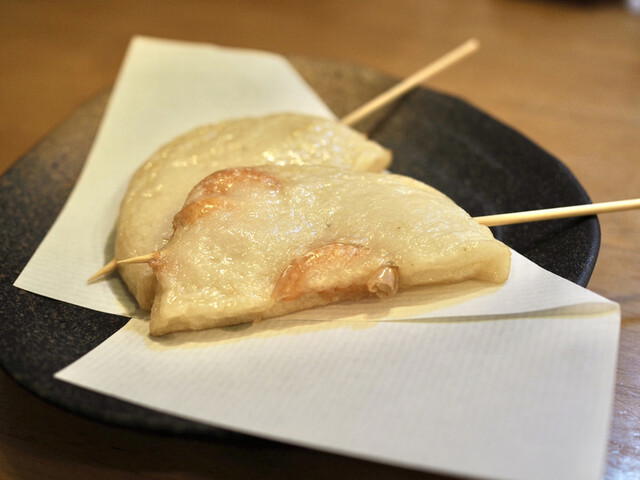
The menu
What to order
- Keema curry udon
- Udon-suki all-you-can-eat course
Approaching a neighborhood udon room in Osaka differs from chasing a high-profile counter seat in the busiest dining corridors. The rhythm is quieter: local routines, family tables, and wheat and broth doing more work than décor. Here, a serious meal is not always expensive; the point is often one craft repeated with discipline.
Sanuki Teuchi Udon Zenigata fits Osaka’s practical category where specialization matters more than ceremony. The focus is udon, curry udon, and udon-suki, placing the kitchen in the Kansai conversation around texture, broth, and communal hot-pot eating rather than chef-driven tasting menus. Its recognition is meaningful: Tabelog recognition in 2024 gives it a credential inside Japan’s noodle culture without luxury pricing.
Udon in a city that respects everyday precision
Osaka’s dining reputation abroad often leans toward takoyaki, okonomiyaki, and late-night drinking food, but its better everyday restaurants show a sharper truth: inexpensive categories can be highly competitive. Udon fits that logic. A bowl in the JPY 1,000–1,999 range can be casual lunch, family dinner, or a benchmark for how a kitchen handles wheat, heat, stock, and timing.
The Sanuki reference points toward a noodle tradition with a firmer, more elastic style, framed here for an Osaka audience that also values warmth and approachability. That separates it from other noodle formats, even when the price overlaps with Osaka peers such as Ramen Tetsushi and Rekka Honten. The choice is less budget than appetite: wheat chew and broth clarity versus a different kind of intensity.
Udon-suki adds another register. Kansai has long treated hot-pot dining as both social structure and dish, and the udon-suki category points to that older rhythm: groups, shared pacing, and a meal beyond the quick-bowl model. This is not a minimalist chef’s counter for hushed observation; it is a noodle house whose appeal rests on repeatable comfort, category focus, and a format that can work for families and friends.
The room works because the format is divided cleanly
Read the operation through roles rather than personality. The kitchen concentrates on the category discipline of udon, curry udon, and udon-suki. The room supports the broader purpose of the place: quicker meals for everyday diners and slower meals for those leaning into the hot-pot side of the menu. That division is teamwork, even without a named chef or sommelier narrative. In a noodle house, coordination between cooking, pacing, and service decides whether the meal feels efficient or strained.
The appeal follows the same local logic, with modest pricing rather than a luxury frame. That matters for readers comparing Osaka restaurants through fine-dining cues. Shunsaiten Tsuchiya sits in another lane, as does Yakiniku Kappa Kajioka. Against those options, Sanuki Teuchi Udon Zenigata is tighter: recognized noodle craft at modest spend, with a clear focus on udon, curry udon, and udon-suki.
The location matters editorially. This is Osaka dining viewed through an everyday specialist rather than through standard visitor shorthand. Restaurants in this mode often serve residents first and destination diners second. For travelers, that clarifies the reward: not theatrical scarcity, but seeing how a recognized specialist operates away from the most heavily trafficked restaurant narratives.
How to place it in an Osaka eating day
This is a strong candidate for noodle-focused lunch or a low-key dinner built around udon rather than a long, multi-stop night. Planning is less about ceremony than about choosing a moment when a modestly priced, recognized noodle specialist fits the day. With Tabelog listing both lunch and dinner budgets at JPY 1,000–1,999, the restaurant works as an accessible anchor rather than a splurge.
Payment, access, and service details should be checked close to the visit rather than treated as fixed editorial claims. The stable planning signal is the category itself: udon, curry udon, and udon-suki in Osaka, backed by 2024 Tabelog recognition and a Tabelog score of 3.67. The core argument remains the contrast between quick udon eating and the slower, more social udon-suki format.
For a broader Osaka plan, use this as the everyday specialist rather than the grand meal. Pair it with broader city research through Our full Osaka restaurants guide, then separate the trip by category: Our full Osaka hotels guide, Our full Osaka bars guide, Our full Osaka wineries guide, and Our full Osaka experiences guide. Nearby or adjacent Osaka research can also include unnamed cafes, bakeries, casual counters, and other everyday dining rooms.
Readers building a wider Japan or Japanese-food itinerary can compare the category logic with other dining formats in Osaka and beyond, without forcing every meal into the same prestige scale. The better comparison is not prestige against prestige, but format against format: noodle house, bakery, street-food institution, bar, or regional specialist, each answering a different travel need.
Frequently asked questions
How much does it cost to eat at Sanuki Teuchi Udon Zenigata?
Pricing at Sanuki Teuchi Udon Zenigata is listed as Dinner: JPY 1,000 - JPY 1,999; Lunch: JPY 1,000 - JPY 1,999.
What's the address for Sanuki Teuchi Udon Zenigata?
Osaka.
How far ahead should I plan for Sanuki Teuchi Udon Zenigata?
The useful planning signal is its role as a recognized noodle specialist: Sanuki Teuchi Udon Zenigata has Tabelog recognition for 2024, so it rewards arriving with a flexible schedule.
What's the defining dish or idea at Sanuki Teuchi Udon Zenigata?
The restaurant’s focus is explicit: udon (wheat noodles), curry udon and udon-suki. That makes this an Osaka address for noodle-first eating rather than a broad, catch-all menu.
Is Sanuki Teuchi Udon Zenigata allergy-friendly?
Anyone avoiding wheat should be cautious, since udon is a wheat-noodle format and the listed categories are built around udon, curry udon and udon-suki.
The Minimal Set
Comparable venues for context, by category and price tier.
| Venue | Cuisine | Price | Awards | Notes |
|---|---|---|---|---|
| Sanuki Teuchi Udon ZenigataThis venue (the venue you are viewing) | Sanuki hand‑made udon and curry udon | $10–20 | Tabelog 100 #75 | Not listed |
| Ramen Tetsushi | Ramen shop | $10–20 | Tabelog 100 #38 | JPY 1,000 - JPY 1,999 JPY 1,000 - JPY 1,999 View spending breakdown |
| Rekka Honten | Spicy Yamagata-style ramen & tsukemen | $10–20 | Tabelog 100 #100 | JPY 1,000 - JPY 1,999 JPY 1,000 - JPY 1,999 View spending breakdown |
| Shunsaiten Tsuchiya | Tempura & Kaiseki | Not listed | 2 Michelin Stars · Tabelog Bronze #482 | Tempura |
| Yakiniku Kappa Kajioka | Traditional Yakiniku (Japanese BBQ) | $50–100 | Tabelog 100 #27 | JPY 8,000 - JPY 9,999 |
Recognition history
Dated appearances from independent guides and award organizations, with the underlying list record or original source where available.
Tabelog 100 #75 · No. 75
Tabelog · Tabelog 100 - Udon - WEST - 2024
Continue exploring
More in Osaka
Restaurants in Osaka
All restaurants in Osaka →




Bars in Osaka
All bars in Osaka →



Hotels in Osaka
All hotels in Osaka →




Wineries in Osaka
Browse all →
Details
- Lively
- Cozy
- Classic
- Solo
- Family
- Casual Hangout
- Group Dining
- After Work
- Private Dining
- Standalone
- A La Carte
- Family Style
- Counter Dining
- Sake
- Shochu
Casual, family‑friendly neighborhood udon shop with a cozy classic interior, counter and tatami seating, and a busy, lively atmosphere at peak lunch and dinner times.