Tabelog 100 #100
Our verdict
Rekka Honten is an 11-seat counter ramen shop in Toyonaka’s Shonai area, selected for Tabelog Ramen OSAKA 100 in 2025 after earlier appearances on the WEST and OSAKA lists. Its appeal sits in Osaka’s everyday noodle culture rather than ceremony: ramen, tsukemen, abura-soba and maze-soba served in a compact, no-reservations format built for focused solo dining.

Pearl is the En Primeur Club membership app — saves, bookings, and concierge access live there. Same editors, same standards.
- Address
- 大阪府豊中市庄内東町2-2-14
- Phone
- +81671634417
- Website
- jun88.co.jp
- Directions
- Get directions
The menu
What to order
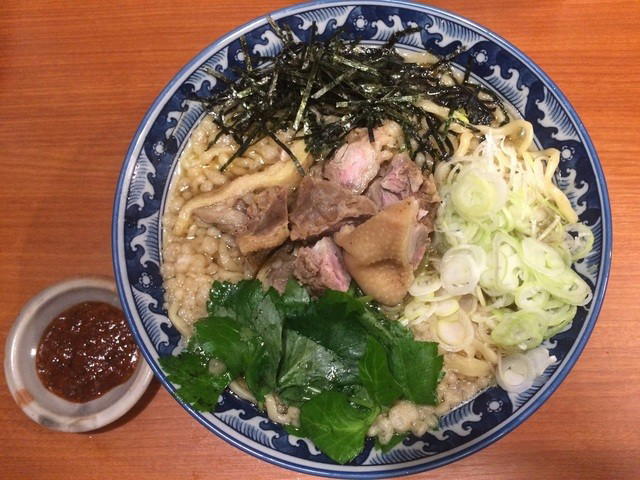
- Rekka ramen (spicy miso seafood broth, 10 spice levels)
- Yamagata cold meat soba
- Yamagata karamiso ramen
- Rekka tsukemen
- Nokon ramen
- Yamagata hippare mixed soba
Osaka is not only hotel lobbies or choreographed tasting menus. Across the city, it keeps a working rhythm: short walks, quick meals, compact counters, and restaurants earning loyalty through repetition, not spectacle. Rekka Honten belongs to that Osaka. The format is direct, and the focus is concentration over ceremony: noodles, broth or sauce, and a service style built around pace.
That matters because Osaka’s serious casual dining culture often hides in operating logic. A ramen shop has little margin for drift. Kitchen, counter staff and turnover must move as one system: clean orders, bowls finished at pace, seats reset without making the meal feel transactional. At this tier, hospitality is not a long tableside speech; it is whether the room keeps rhythm while each diner receives a bowl that feels intentional.
Osaka ramen, read through a small counter rather than a grand room
Ramen in Osaka need not imitate reservation-led dining culture to be serious. The city’s noodle scene sits beside quick counters, casual rooms and late-night specialist cooking, all competing for repeat local attention. Rekka Honten’s listed categories, ramen, tsukemen, abura-soba and maze-soba, place it in the broader modern ramen field rather than a single-style shrine, signalling a shop built around noodle texture and seasoning formats as much as soup.
Recognition gives the counter a firmer editorial position. Its 2025 listing from Tabelog Hyakumeiten, with a published score of 3.68, puts it within a visible Osaka ramen conversation. In a category where openings burn hot and fade quickly, that kind of listed recognition matters more than hype. It suggests enough consistency to be read as part of the city’s serious casual dining map.
Price also separates this meal from Osaka’s premium dining circuit. Rekka Honten sits in a low-cost, high-frequency lane, with a published budget of Dinner: JPY 1,000 - JPY 1,999; Lunch: JPY 1,000 - JPY 1,999. For orientation, EP Club readers may also compare it with allowed Osaka peers such as Ramen Tetsushi, Sanuki Teuchi Udon Zenigata, Sanuki Udon Byakuan, Shunsaiten Tsuchiya and Yakiniku Kappa Kajioka, while keeping the useful distinction in mind: Rekka Honten compresses the meal into a faster, more solitary counter experience.
The team dynamic is visible in timing, not tableside theatre
The assigned drama of many restaurant profiles is the chef’s biography. Here, that misses the point. No named chef needs to dominate the story for the counter to make sense. In compact ramen shops, team dynamic is operational: one person’s timing affects the next diner’s bowl and handoff. The counter becomes a production line only if staff lose pace; when it works, the meal stays personal without slowing down.
This is why counter-style ramen remains such a durable Japanese dining form. It makes craft legible without turning it into performance. Diners read the room through movement, ticket spacing, and the way regulars understand cadence without instruction. Rekka Honten fits that democratic structure: the appeal is direct, with hierarchy set by the bowl rather than the table.
The menu categories change the room’s tempo. Ramen moves differently from tsukemen, and soup-less styles such as abura-soba and maze-soba require the kitchen to manage seasoning and noodle condition with another kind of precision. Without inventing a signature bowl, the safe reading is that breadth is part of the shop’s identity. It gives repeat diners a reason to return within the same compact format, broadening the counter beyond a single broth school.
For travellers building a food day in Osaka, this stop pairs better with city exploration than with a formal sequence of long meals. The wider city stretches from bakeries and cafés to specialist counters and hotel bars; EP Club’s Osaka coverage gives that spread more context through Our full Osaka restaurants guide, Our full Osaka hotels guide, Our full Osaka bars guide, Our full Osaka wineries guide, and Our full Osaka experiences guide. Nearby city eating can mean anything from cafés and bakeries to local snack counters, noodle rooms and casual specialist restaurants.
Where it fits for a serious Osaka food day
The smarter use of Rekka Honten is not as a trophy booking. It is a calibration point for Osaka’s everyday excellence: small format, listed recognition, low-friction dining and a menu covering several ramen-adjacent styles. The style suits solo diners because Japanese ramen culture has long normalized eating alone without social apology. It also works for friends who understand conversation must share space with speed and turnover.
There are practical boundaries. The published budget sits at Dinner: JPY 1,000 - JPY 1,999; Lunch: JPY 1,000 - JPY 1,999, keeping it firmly in an accessible casual range. The public listing also gives the phone number as +81-6-7163-4417. These details are not glamorous, but they define the experience more honestly than inflated language could.
For readers comparing Japanese casual dining across cities, the lesson travels well. A ramen counter in Osaka is closer in spirit to focused specialist addresses than to destination dining rooms: other cities have their own compact counters, snack bars and single-purpose restaurants built around the same question. Different cuisines, same editorial issue: does the format sharpen the meal or merely shrink it?
That question also applies beyond Japan, where Japanese drinking, noodle and snack cultures are often translated into different urban conditions. For a more formal contrast inside Japan, other dining rooms sit in entirely different registers. Rekka Honten’s value is narrower and clearer: it shows how much seriousness Osaka can pack into a counter-style meal that does not ask to be treated as occasion dining.
Frequently asked questions
How much does it cost to eat at Rekka Honten?
Pricing at Rekka Honten is listed as Dinner: JPY 1,000 - JPY 1,999; Lunch: JPY 1,000 - JPY 1,999.
What's the address for Rekka Honten?
Osaka.
What's the best way to book Rekka Honten?
Use the venue’s official channels or contact the shop directly for the latest booking and visiting details. The public listing gives the phone number as +81-6-7163-4417.
What's the signature at Rekka Honten?
The public record lists ramen, tsukemen, abura-soba and maze-soba, rather than a single named signature bowl. Its calling card is a compact Osaka ramen format and the 2025 Tabelog Hyakumeiten recognition. Check the venue's official channels for the latest details.
Reputation First
Comparable venues to calibrate price, style, and recognition.
| Venue | Cuisine | Price | Awards | Notes |
|---|---|---|---|---|
| Rekka HontenThis venue — the venue you are viewing | Spicy Yamagata-style ramen & tsukemen | $10–20 | Tabelog 100 #100 | Not listed |
| Gunjo | Tsukemen and ramen noodle bar | $10–20 | Tabelog 100 #87 | Kita |
| Shiawase Tachinomi Yume Gorilla | Japanese standing bar (tachinomi) with fresh seafood and sake | $10–20 | Tabelog 100 #84 | Kita |
| Ramenya Akagi | Chicken paitan ramen shop | $10–20 | Tabelog 100 #20 | Higashiyodogawa |
| Tachinomi Tekken | Japanese tachinomi (standing izakaya) | $20–30 | Tabelog 100 #69 | Naniwa |
| Yuiitsu Muni no Ramen Senmon Ten Ibukuro Washizukami | Specialty Ramen Shop | $10–20 | Tabelog 100 #61 | Tennōji |
Recognition history
Dated appearances from independent guides and award organizations, with the underlying list record or original source where available.
Tabelog 100 #100 · No. 100
Tabelog · Tabelog 100 - Ramen - OSAKA - 2025