Ikeda
Ikeda on Brook Street occupies a different tier from London's Mayfair European fine dining circuit, bringing a Japanese counter tradition to one of the neighbourhood's oldest luxury corridors. Where nearby three-star rooms lean on Modern European ambition, Ikeda keeps a quieter register, with a physical space and service posture shaped by Japanese hospitality principles. For London's Japanese dining scene, the Brook Street address has long served as a reference point.
Pearl is the En Primeur Club membership app — saves, bookings, and concierge access live there. Same editors, same standards.
- Address
- 30 Brook St, London W1K 5DJ, United Kingdom
- Phone
- +44 20 7629 2730
- Website
- ikedarestaurant.com
- Directions
- Get directions
 Saves & bookings on Pearl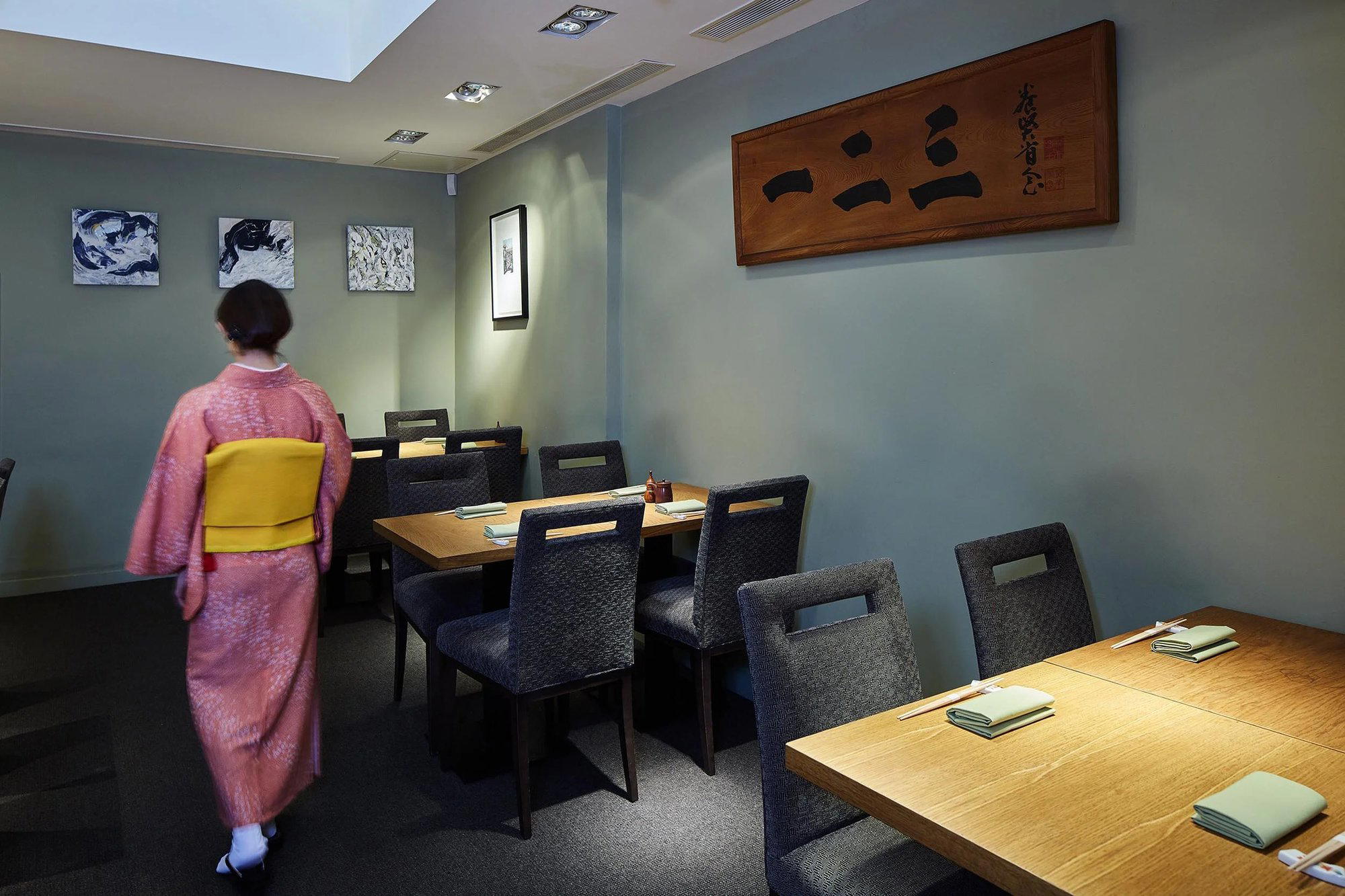
Mayfair's Japanese Counter in Context
Brook Street runs through one of London's most examined dining postcodes. Within a short radius, Sketch, The Lecture Room and Library and Restaurant Gordon Ramsay anchor the Michelin three-star corridor that defines Mayfair's fine dining reputation. That concentration of high-spend European rooms sets a specific tone for the neighbourhood: grand interiors, lengthy tasting formats, and wine lists priced to match. Ikeda, at 30 Brook Street, is a Traditional Japanese restaurant that sits outside that template. Japanese cuisine in London's premium tier has always occupied a distinct structural position, smaller in scale, different in service rhythm, and rooted in a hospitality philosophy that treats restraint as its own form of luxury.
London's Japanese fine dining scene has developed unevenly since the 1970s, when a handful of restaurants began serving a corporate and diplomatic clientele with direct connections to Japan. Early establishments in Mayfair and Knightsbridge were less about culinary trend than about providing an accurate and discreet reference point for Japanese visitors and expatriates. Ikeda belongs to that first wave. Its longevity on a single address, nearly five decades at the same Brook Street location, places it in a category that few London restaurants of any cuisine can claim.
The Space as Argument
In a city where restaurant design has lurched from exposed-brick industrial to maximalist jewel-box dining rooms, Ikeda's physical container makes a different kind of case. Japanese restaurant interiors at the serious end of the spectrum tend toward compression and deliberateness: low sightlines, natural materials, a seating arrangement that directs attention toward the food and the interaction across the counter rather than the room itself. The design logic is not minimalism for its own sake but a functional hierarchy, the space serves the ritual of the meal, not the other way around.
This places Ikeda in a meaningful contrast to its Mayfair neighbours. CORE by Clare Smyth and The Ledbury, both operating at the three-star level in nearby postcodes, use their dining rooms as part of the overall impression, architecture and table spacing calibrated to signal occasion. Ikeda's Brook Street premises have never made that claim. The room is quiet by Mayfair standards, with a formality that reads as Japanese in register rather than European. Where the neighbourhood's other high-end rooms stage drama, this one stages composure.
Counter seating in Japanese fine dining carries specific implications. It is not simply a layout choice but a format that changes the temporal structure of the meal, the relationship between kitchen and guest, and the pacing of service. London's newer omakase counters, many of which operate at eight to twelve seats and require advance booking measured in months, have made the format newly fashionable. Ikeda's version of the counter predates that wave by decades, which means its spatial arrangement was not adopted in response to a trend but as an original operating principle.
Japanese Fine Dining in London's Premium Tier
The growth of serious Japanese dining in London since 2015 has produced a more crowded and more varied field. Specialist omakase rooms have opened in Mayfair, Soho, and the City, many importing Japanese chefs and operating on allocation or membership models. That expansion has also raised the visibility of Japanese cuisine within London's broader fine dining conversation, a conversation that for most of the twentieth century was dominated by French technique and French-trained chefs.
Ikeda's position in that conversation is structural rather than competitive. A restaurant that opened in 1977 and has maintained a single address through nearly fifty years of London's hospitality cycles, the Thatcher-era expense account dining, the 1990s brasserie wave, the early 2000s celebrity chef moment, the post-2010 tasting menu standardisation, is not competing with newer rooms so much as occupying a different temporal register. Institutional continuity remains part of its appeal in a city where restaurant turnover is high.
Japanese cuisine's position in the international fine dining hierarchy has shifted significantly over the same period. Tokyo now holds more Michelin stars than any other city, and Japanese technique has influenced the menus of European rooms including several on Brook Street's own doorstep. Establishments like Le Bernardin in New York City have long incorporated Japanese ingredient sourcing, and Korean-rooted rooms like Atomix have demonstrated how East Asian fine dining can operate at stronger examples from the critical hierarchy. London's Japanese restaurants exist within that broader shift, even when individual rooms predate it.
Planning Your Visit
Ikeda sits at 30 Brook Street, W1K 5DJ, in the core of Mayfair between Bond Street and Davies Street. Reservations are essential. Dress: smart casual. Budget: about $75 per person before drinks. Timing: Mon to Fri, 12 to 1:30 PM and 5:30 to 9 PM; closed Sat and Sun.
For broader London planning, consult our full London restaurants guide, London hotels guide, London bars guide, London wineries guide, and London experiences guide. For fine dining outside the capital, The Fat Duck in Bray, L'Enclume in Cartmel, Moor Hall in Aughton, Gidleigh Park in Chagford, Hand and Flowers in Marlow, and Hide and Fox in Saltwood represent the range of serious rooms available within striking distance of London.
A Lean Comparison
Comparable venues nearby, for context on price, style, and recognition.
| Venue | Cuisine | Price | Notes |
|---|---|---|---|
| IkedaThis venue — the venue you are viewing | Mayfair, Traditional Japanese | $$$$ | Not listed |
| Kurisu Omakase | Brixton, Thai-Colombian Fusion Omakase | $$$$ | Not listed |
| ROKA Aldwych | Not listed | $$$$ | Clare Market, Contemporary Japanese Robatayaki |
| Aqua Kyoto | Not listed | $$$$ | Soho, Contemporary Japanese with Tokyo Ginza Influence |
| Sushi TONARI | Marylebone, Modern Japanese Omakase | $$$ | Not listed |
| Sushi Kyu | Soho, Omakase Sushi | $$$ | Not listed |
Continue exploring
More in London
Restaurants in London
Browse all →
Bars in London
Browse all →
Hotels in London
Browse all →

At a Glance
- Intimate
- Classic
- Cozy
- Elegant
- Date Night
- Business Dinner
- Special Occasion
- Sake Program
Current opening hours
- Monday
- 12–1:30 PM, 5:30–9 PM
- Tuesday
- 12–1:30 PM, 5:30–9 PM
- Wednesday
- 12–1:30 PM, 5:30–9 PM
- Thursday
- 12–1:30 PM, 5:30–9 PM
- Friday
- 12–1:30 PM, 5:30–9 PM
- Saturday
- Closed
- Sunday
- Closed
Hours can change for holidays and private events. Last verified .
Cosy, intimate, and traditional with understated decor, polished service, and a quiet, authentic Japanese atmosphere.