
Tabelog 100 #23
Our verdict
ROI LEGUME Asaka honten places a small Asaka cake shop inside the serious end of eastern Japan’s sweets circuit, with Tabelog 100 Sweets EAST selections in 2020, 2022, and 2023. The appeal is not spectacle but the Japanese patisserie habit of precision, seasonality, and take-out discipline, set against a suburban dining scene where bakeries, ramen shops, and casual counters define daily eating.

Pearl is the En Primeur Club membership app, where members save venues, book tables and use the concierge.
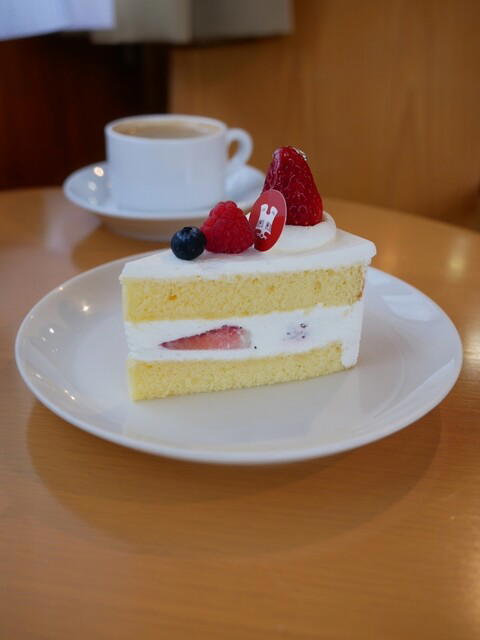
Approaching a cake shop in Asaka is unlike entering a high-theatre destination pâtisserie. The pace feels local, the surrounding city rhythm is practical, and the choice is simple: what travels well, belongs on the table later, and justifies a detour. ROI LEGUME Asaka honten sits in a Japanese sweets culture where small-format cake shops can command serious attention without grand dining-room theatre.
The context is Japan’s dessert map. Major cities get much international attention, but places such as Asaka also support cake shops, bakeries, and confectionery counters competing on freshness, texture, and repeat local custom. Tabelog recognition in 2023 places this Asaka venue in a broader sweets conversation, not merely a neighbourhood category. That matters because Japanese cake culture rewards consistency over novelty: sponge structure, cream handling, fruit condition, and packaging all count when take-out, rather than a long seated meal, dominates.
Asaka's sweets culture is built around everyday precision, not destination dining theatre
Asaka’s restaurant scene is not organized around tasting-menu tourism or late-night cocktail itineraries. It is built from compact bakeries, casual noodle shops, patisseries, and everyday specialists, making sweets more than an afterthought. A good cake shop here competes with other dessert counters and with the convenience and reliability of neighbourhood staples.
That pattern explains why sweets recognition carries weight. A shop in this bracket must satisfy regulars buying for home and dessert-focused travellers using awards lists as a map beyond the most obvious stops. The listed category is cake, but the editorial signal is format. Take-out shifts the burden onto construction and timing: dessert cannot rely on tableside explanation, glassware, lighting, or a plated sequence, and must survive the short journey intact enough to justify the stop.
Ingredient handling sits at the centre, even without a published manifesto. Japanese patisserie treats fruit condition, dairy texture, and controlled sweetness as markers of seriousness. The sweets audience notices excess sugar, tired cream, or pastry that collapses after purchase. In a setting driven by repeat customers as much as visitors, the benchmark is less flamboyance than whether the work holds up across ordinary visits.
Asaka also offers useful price-tier contrast. Nearby casual addresses such as Asaka Bakery Asakadai ten and other local bakeries show bread and sweets as daily purchases rather than formal dining events. Chuka Soba Genroku shows another local pattern: focused, low-friction eating built on one clear specialty. A recognized cake shop is not an outlier, but part of Asaka’s habit of narrow specialization.
The Tabelog 100 signal puts a cake counter into a regional conversation
Tabelog 100 Sweets EAST is not a Michelin-style ceremony and should not be read as one. Its value is highlighting the density of specialist sweets shops, including places outside the usual visitor circuit. ROI LEGUME Asaka honten’s 2023 recognition suggests category relevance in that field. For travellers, that is the useful trust signal.
The listing score, 3.67, also needs Japanese context. Tabelog scores move conservatively, especially outside heavily reviewed central districts. A mid-three score for a sweets specialist can indicate a strong following rather than a mass-market crowd magnet. Read it comparatively: this cake address works in an affordable everyday band, but with recognition beyond a purely local mention.
Here, execution meets the decision. In high-end dining, provenance is narrated course by course; in a cake shop, quality is embedded in fruit selection, cream balance, chocolate work, pastry texture, and controlled sweetness. The public category does not list specific signatures, so read the counter by season and structure rather than chasing a named dessert. In Japan, the better patisserie purchase is often the piece that looks least engineered for social media and most dependent on clean handling of perishables.
Asaka’s broader food circuit frames that choice. A low-key day could pair sweets shopping with casual restaurants rather than a formal itinerary. For a wider map, Our full Asaka restaurants guide gives the city’s dining spread, while Our full Asaka hotels guide, Our full Asaka bars guide, Our full Asaka wineries guide, and Our full Asaka experiences guide place the stop in a broader travel plan. The city’s appeal is cumulative rather than monumental.
How to read the room: counter logic, take-out rhythm, and an Asaka setting
The format is centered on cake. This is not a venue defined by dining-room theatre; the counter defines the experience. A sweets shop with a daily rhythm can feel abundant early and more limited later, especially when local regulars know the cadence better than visitors.
Treat the visit as a practical sweets stop rather than a leisurely meal. The useful move is to check current details directly before going, especially if timing matters or if you are planning around a specific occasion. The appeal is contemporary Japanese convenience rather than destination-restaurant ceremony.
The Asaka setting is part of the point. Japan’s sweets scene is decentralized; bakeries and cake shops often sit within commuter-city routines, shopping patterns, and family habits. A stop here suits travellers already exploring Asaka or building a food day beyond the most obvious routes more than anyone compressing headline restaurants into one night.
Keep the comparison set local and practical. Other Asaka dining broadens the casual city map, while specialist formats elsewhere underline a travel rule: focused venues often explain a place more clearly than a prestige dining room. ROI LEGUME Asaka honten fits that logic by making cake the reason to pause rather than an afterthought after a larger meal.
For ROI LEGUME Asaka honten, the case is concise: a recognized Asaka cake specialist in an affordable category, with a 2023 Tabelog 100 Sweets EAST signal and a format that pressures ingredient quality and construction. The right reader is not chasing ceremony, but wants to understand how Japanese sweets culture treats patisserie as daily life, and why that everyday discipline can be worth planning around.
Frequently asked questions
Is ROI LEGUME Asaka honten a family-friendly restaurant?
It is set up as a cake-focused stop in Asaka. That makes it workable for families, especially for a quick sweets purchase rather than a long sit-down meal.
Is ROI LEGUME Asaka honten formal or casual?
Casual. The venue is listed in the cake category, which points to an easygoing sweets stop rather than a formal dining room.
What's the pricing like at ROI LEGUME Asaka honten?
Pricing at ROI LEGUME Asaka honten is listed as - JPY 999 - JPY 999 View spending breakdown.
What's ROI LEGUME Asaka honten's location?
Asaka.
How hard is it to get a table at ROI LEGUME Asaka honten?
Its Tabelog 100 Sweets EAST 2023 selection signals a cake venue worth planning around, especially at popular times. Check current details directly before going.
Quick Comparison
Comparable venues by cuisine and price in the same metro.
| Venue | Cuisine | Price | Awards | Notes |
|---|---|---|---|---|
| ROI LEGUME Asaka hontenThis venue (the venue you are viewing) | Japanese neighborhood patisserie & cake shop | Not listed | Tabelog 100 #23 | Not listed |
| Asaka Bakery Asakadai ten | Japanese neighborhood bakery and sandwich shop (take‑out only) | $1–10 | Tabelog 100 #87 | Kita Asaka |
| asakanakicchinruburu | Hiroshima okonomiyaki & fish deli kitchen-café | Not listed | Tabelog 100 #35 | Asaka |
| Chuka Soba Genroku | Ramen & Tsukemen Shop | $10–20 | Tabelog 100 #16 | Asakadai |
| Asaka Bakery Honmachi ten | Japanese neighborhood bakery | $1–10 | Tabelog 100 #81 | Asaka |
| Chuka Soba Zuizan | Ramen & Chuka Soba | $1–10 | Tabelog 100 #54 | Asaka |
Recognition history
Dated appearances from independent guides and award organizations, with the underlying list record or original source where available.
Tabelog 100 #23 · No. 23
Tabelog · Tabelog 100 - Sweets - EAST - 2023
Continue exploring
More in Asaka
Restaurants in Asaka
All restaurants in Asaka →


Bars in Asaka
Browse all →
Hotels in Asaka
Browse all →

Wineries in Asaka
Browse all →
Details
- Cozy
- Classic
- Casual Hangout
- Family
- Solo
- After Work
- Standalone
- A La Carte
- Counter Dining
A small house-restaurant style patisserie with about ten non-smoking seats, a calm and quiet atmosphere, and a relaxed residential-neighborhood feel where guests often buy cakes to take home.