
Tabelog 100 #16
Our verdict
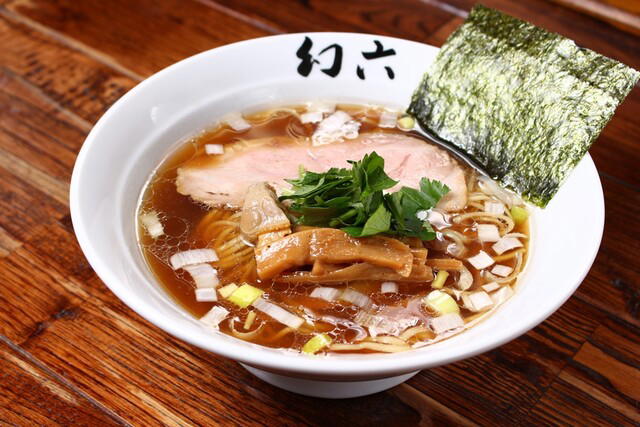
Chuka Soba Genroku puts Asaka’s ramen scene into sharper focus: small-room, station-area cooking with Tabelog Ramen EAST 100 selections in 2024 and 2025, and a price band that keeps it in everyday territory rather than destination-dining theatre. The draw is ingredient structure, with ramen and tsukemen built around layered broths rather than spectacle.

Pearl is the En Primeur Club membership app, where members save venues, book tables and use the concierge.
The menu
What to order
- Chuka soba (shoyu ramen)
- Niboshi shoyu ramen
- Rich niboshi tsukemen
- Rice with grated wasabi in remaining broth
Asaka’s stronger food addresses tend to sit close to commuter movement rather than grand dining streets: bakery counters, noodle shops, patisserie cases, and compact rooms built for regulars as much as visitors. In that setting, Chuka Soba Genroku belongs to the smaller, more demanding end of the city’s casual dining spectrum, where a bowl has to justify attention without the ceremony of a tasting menu or the insulation of a hotel restaurant.
The broader point is not that Saitama ramen needs Tokyo’s permission. The better read is that the suburbs around the Tobu Tojo Line have their own grammar: short walks from stations, narrow formats, low prices, and menus that rely on broth clarity and ingredient layering rather than luxury signals. Genroku’s inclusion in Tabelog’s Ramen EAST 100 in both 2024 and 2025 gives that local argument a public marker, and its 3.74 Tabelog score places it in the serious ramen conversation without turning the meal into a formal event.
Ramen built around layered stock, not decoration
Modern Japanese ramen criticism often starts with soup architecture. Tonkotsu has its density, niboshi brings dried-fish intensity, chicken chintan prizes transparency, and shellfish can shift a bowl from weight to lift. Genroku’s appeal sits in that ingredient-led zone: its Chinese soba is described around a double broth using beef, pork, chicken, and clam umami, with tamari soy sauce shaping the seasoning profile. That matters because the bowl is not being positioned as excess. It is built as balance, with animal depth and marine savor working inside a soy-led frame.
That approach also explains why the shop’s categories extend beyond ramen into tsukemen and izakaya-style territory. Tsukemen, when handled seriously, changes the relationship between noodle and broth: the dipping soup can carry more concentration, while the noodles have to hold texture on their own. In Saitama’s casual price tier, that range gives diners a better test of the kitchen than a single headline bowl would. The ramen side asks for harmony; the dipping-noodle side asks for intensity and control.
The ingredient angle is especially useful in Asaka, where many dining choices operate below the JPY 1,000 line. Udon Dokoro Ohana, Asaka Bakery Asakadai ten, PATISSERIE ORANGE, and ROI LEGUME Asaka honten sit in a lighter everyday bracket, while Genroku’s JPY 1,000 to JPY 1,999 range signals a modest step up rather than a leap. That price difference is small in absolute terms, but in ramen culture it can reflect more work in stock, tare, noodle selection, or finishing components. The decision is not between cheap and expensive; it is between quick fuel and a bowl with more structure.
Seven seats make the format part of the food
Small ramen rooms change how a meal behaves. With seven seats, including counter seating, service pace and kitchen rhythm are inseparable from the experience. This is not a room for long-table grazing or drawn-out courses. It suits solo diners and pairs who understand ramen as a concentrated format: order, eat while the noodles are at their intended texture, and move on. That tempo is part of the tradition, not a compromise.
The counter also reinforces why ingredient sourcing and broth design matter more than décor. In a small shop, there is little room for distraction. The bowl carries the argument. A double broth with meat and clam components, soy seasoning, ramen, and tsukemen gives the kitchen several ways to show depth within a narrow format. Awards recognition helps separate that discipline from the many station-adjacent noodle shops that trade mainly on convenience.
For readers mapping Asaka more broadly, Genroku sits beside a set of neighborhood places that show how compact the city’s dining identity can be. Nearby editorial context includes Asaka Bakery Asakadai ten, Asaka Bakery Honmachi ten, asakanakicchinruburu, Boulangerie Arbre, and Chuka Soba Zuizan. Those links are useful not because they replace the ramen decision, but because they show the city’s scale: bread, noodles, casual kitchens, and specialist counters clustered around daily routines.
How to read Genroku within Asaka's dining map
Asaka does not behave like a trophy-dining district. Its better meals often come through repetition, proximity, and specialization. That makes a Tabelog Ramen EAST 100 listing more meaningful here than it is in a neighborhood already crowded with national names. It marks a local ramen shop as part of a wider eastern Japan ramen selection while keeping the experience grounded in the city’s everyday dining economy.
The comparison also clarifies who should prioritize it. Travelers seeking a long wine list, private-room service, or chef-driven theatrics will find the format too compressed. Diners who care about broth construction, noodle categories, and how a suburban ramen counter earns recognition will understand the appeal quickly. The cooking is framed by ingredients rather than performance, and that is the better reason to go.
For a fuller read on the area, use Our full Asaka restaurants guide alongside the city’s other verticals: Our full Asaka hotels guide, Our full Asaka bars guide, Our full Asaka wineries guide, and Our full Asaka experiences guide. Wider Japan and overseas comparisons can be useful when thinking about format rather than cuisine: -Grilled beef Sukiyaki- KAMAKURA TANUKIAN 鎌倉 たぬき庵 in Kamakura represents a more meal-centered Japanese format. 鮪と炭火焼き うお炭 秋葉原店 in Tokyo points toward seafood and charcoal cooking.cafe in Osaka and.know in Kumamoto sit in different casual registers, (Shoku) Vietnam in Kawasaki frames another kind of noodle-adjacent everyday dining, [Curry Senmon Ten] Maruyama Kyoju. in Sapporo shows how specialization works outside ramen, and Los Angeles addresses such as Jōdo Saké Bar in Los Angeles and Onigiri Time in Pasadena make the contrast clear between Japanese food as urban export and Japanese food as local infrastructure.
Frequently asked questions
Where exactly is Chuka Soba Genroku?
Chuka Soba Genroku is located in Asaka.
What price level is Chuka Soba Genroku?
Pricing at Chuka Soba Genroku is listed as JPY 1,000 - JPY 1,999 JPY 1,000 - JPY 1,999 View spending breakdown.
How far ahead should I plan for Chuka Soba Genroku?
There is no reservation system here, so planning is about timing rather than booking. The seven-seat room and open-until-sold-out service mean Asaka lunch hours can tighten quickly, especially around a Tabelog 100 Ramen EAST 2025 selection.
What's Chuka Soba Genroku best at?
The strongest case is for ramen and tsukemen, especially the double broth built on beef, pork, chicken, and clam umami. The menu also includes niboshi soy sauce ramen, and the counter seating suits a fast solo stop in Asaka.
Snapshot
Nearby venues at a similar price tier for orientation.
| Venue | Cuisine | Price | Awards | Notes |
|---|---|---|---|---|
| Chuka Soba GenrokuThis venue (the venue you are viewing) | Ramen & Tsukemen Shop | $10–20 | Tabelog 100 #16 | Not listed |
| Udon Dokoro Ohana | Udon & Izakaya | $10–20 | Tabelog 100 #23 | Asakadai |
| Asaka Bakery Honmachi ten | Japanese neighborhood bakery | $1–10 | Tabelog 100 #81 | Asaka |
| Asaka Bakery Asakadai ten | Japanese neighborhood bakery and sandwich shop (take‑out only) | $1–10 | Tabelog 100 #87 | Kita Asaka |
| Chuka Soba Zuizan | Ramen & Chuka Soba | $1–10 | Tabelog 100 #54 | Asaka |
| Boulangerie Arbre | Japanese neighborhood bakery & sandwich shop | $1–10 | Tabelog 100 #93 | Asaka |
Recognition history
Dated appearances from independent guides and award organizations, with the underlying list record or original source where available.
Tabelog 100 #16 · No. 16
Tabelog · Tabelog 100 - Ramen - EAST - 2025
Continue exploring
More in Asaka
Restaurants in Asaka
All restaurants in Asaka →



Bars in Asaka
Browse all →







Details
- Cozy
- Intimate
- Solo
- Casual Hangout
- After Work
- Standalone
- A La Carte
- Counter Dining
Compact, counter‑focused ramen-ya with just seven seats, a casual atmosphere and the lively feel of a popular spot where guests often queue for richly aromatic bowls.