
Robin's Teppanyaki holds a 2024 Michelin Plate recognition, placing it among the more credentialed teppanyaki addresses in Taipei's Zhongshan District. The format puts the cooking at the centre of the room, with the iron griddle as both kitchen and theatre. For a price point that matches the city's top fine-dining tier, it earns consistent attention from guests seeking precision over spectacle.
Pearl is the En Primeur Club membership app — saves, bookings, and concierge access live there. Same editors, same standards.
- Address
- 10491, Taiwan, Taipei City, Zhongshan District, Lane 39, Section 2, Zhongshan N Rd, 3號2樓
- Website
- regenttaiwan.com
- Directions
- Get directions
 Saves & bookings on Pearl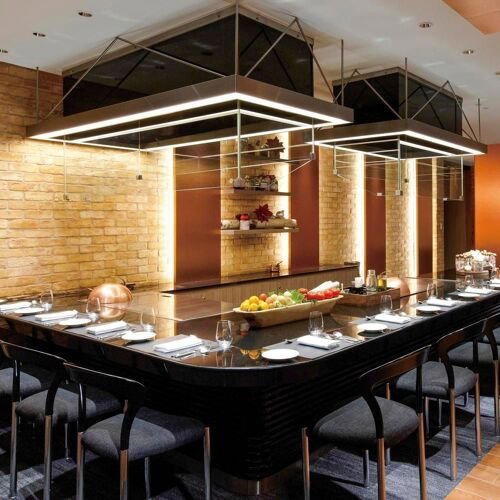
Iron, Heat, and the Zhongshan District Table
Teppanyaki as a dining format has a quieter relationship with sustainability than, say, the farm-to-table movement or the fermentation-led kitchens that have come to define much of Taipei's dining scene. Yet the format carries its own logic of restraint: a single cooking surface, direct heat, minimal batterie, and an inherent discipline around portion sequencing that reduces the layered waste of multi-kitchen operations. At the upper tier of the market, that discipline becomes more deliberate. Ingredients arrive fewer in number but higher in quality, and the act of sourcing is visible in a way it rarely is behind a closed kitchen door.
Robin's Teppanyaki, on the second floor of a lane address off Section 2 of Zhongshan North Road, sits in Zhongshan District within walking distance of hotel dining rooms and Japanese-lineage restaurants. The area sits north of the central MRT corridor, closer to the Shuanglian and Zhongshan station cluster, where Taipei's Japanese-influenced dining has historically been densest. For teppanyaki specifically, that proximity to Japanese restaurant culture is not incidental.
Where Teppanyaki Sits in Taipei's Fine-Dining Tier
Taipei's upper-end restaurant market at the $$$$ price band is spread across a range of formats and traditions. Le Palais anchors the Cantonese end of the spectrum; Taïrroir and logy operate in the Taiwanese-contemporary and Modern European registers respectively. Japanese formats, including tempura, kaiseki, and teppanyaki, form a distinct cluster within that tier, with venues like The Ukai and Zan representing the more formal kaiseki and Japanese fine-dining end.
Teppanyaki at this price point is not the hotel-banquet format that colonised the category through the 1980s and 1990s. The modern premium version strips back the performance elements and reorients the experience around sourcing quality and cooking precision. The teppan, the flat iron griddle, becomes a surface on which ingredient quality is either confirmed or exposed. There is nowhere to hide a poor piece of protein, no sauce work or plating complexity to compensate. That transparency places significant pressure on procurement, which is where the sustainability dimension becomes most consequential for the format.
Robin's 2024 Michelin Plate recognition places it in the inspected and recommended tier, below starred recognition but above the general market. Across the broader teppanyaki category in Asia, that combination of Michelin recognition and sustained public rating is a reasonable proxy for a kitchen that has maintained sourcing and execution standards over time rather than peaking on a single review cycle.
The Format's Environmental Logic
Among the cooking formats operating at the premium end of Taipei's restaurant scene, teppanyaki has a structural efficiency argument that tends to go underexamined. A single teppan surface, one chef or a small team, and a course sequence built around protein and seasonal vegetable progression means that kitchen infrastructure is minimal relative to the output quality. In comparison with multi-station European kitchens or the elaborate prep systems required for kaiseki, the teppanyaki model has a lower energy footprint per cover.
More practically, the format's emphasis on ingredient integrity creates direct incentives for sourcing discipline. When the cooking technique is this transparent, a kitchen that cuts corners on produce quality will show it within the first course. Particularly credible teppanyaki addresses at this tier tend to be those that have developed stable supplier relationships, particularly for beef, seafood, and seasonal vegetables, rather than operating on spot-market procurement. That kind of relationship-based sourcing, common in the higher-end Japanese dining tradition that teppanyaki draws from, aligns naturally with reduced food waste and more predictable seasonal rotation.
This pattern is visible in the broader regional context. At Hibana by Koki in Hanoi and Ishigaki Yoshida in Tokyo, the premium teppanyaki model across Asia consistently prioritises small-supply relationships and seasonal ingredient calendars over menu breadth. JIBUNDOKI in Osaka operates within the same discipline. The format, at this price tier, tends to self-select for that approach because the cooking's transparency demands it.
Reading the Room: What the Zhongshan Address Signals
Lane addresses in Taipei's Zhongshan District function differently from street-level flagship positions. A second-floor lane location typically signals a deliberate choice to price against food quality rather than real estate visibility, a common posture among Japanese-lineage fine-dining operators in the city. The trade-off is reduced walk-in traffic in exchange for lower overheads and a guest profile that has actively sought out the address rather than stumbled onto it. For a format like teppanyaki, where counter seating is the norm and the experience is structured rather than drop-in, that guest profile tends to produce a more engaged room.
Zhongshan North Road's Section 2 corridor and its surrounding lanes have historically housed a high concentration of Japanese restaurants, reflecting the neighbourhood's demographic and architectural history. That context gives teppanyaki venues in this area an immediate comparable set and a customer base that understands the format's conventions and pricing. Robin's position within that neighbourhood is consistent with the area's character rather than anomalous to it.
For wider context on where Robin's sits relative to Taipei's full dining range, see our full Taipei restaurants guide. If you are building a broader trip, our Taipei hotels guide, bars guide, and experiences guide cover the full range. Beyond Taipei, the Taiwan fine-dining circuit extends to JL Studio in Taichung, GEN in Kaohsiung, and further afield to Akame in Wutai Township and A Cun Beef Soup in Tainan. For a different kind of Taipei-region escape, Volando Urai Spring Spa and Resort in Wulai District offers a contrast. The Taipei wineries guide is also available for those extending their trip.
Know Before You Go
- Address: 3F-2, Lane 39, Section 2, Zhongshan North Road, Zhongshan District, Taipei 10491
- Price range: $$$$
- Awards: Michelin Plate (2024) 2 / 5 (628 reviews)
- Cuisine: Teppanyaki
- Booking: Contact details not listed; check current booking channels before travel
- Getting there: Zhongshan or Shuanglian MRT stations are the nearest access points on the Tamsui-Xinyi line
At-a-Glance Comparison
Comparable venues nearby, for context on price, style, and recognition.
| Venue | Cuisine | Price | Awards | Notes |
|---|---|---|---|---|
| Robin's TeppanyakiThis venue — the venue you are viewing | Classic Teppanyaki | $$$$ | Michelin Plate | Not listed |
| Yuu | Modern Japanese Nikukappo with Wagyu Focus | $$$$ | Michelin Plate | Checeng |
| Sushi Touryuumon | Japanese Omakase | $$$$ | Michelin Plate | Checeng |
| Uke | Edomae-style Omakase | $$$$ | Michelin Plate | Xicun |
| Qi 27 (Sushi 27) | Edomae Omakase | $$$$ | Not listed | Quan'an |
| 大腕燒肉 | Michelin-Starred Japanese Yakiniku | $$$$ | Not listed | Zhongshan District |
Recognition history
Dated appearances from independent guides and award organizations, with the underlying list record or original source where available.
Michelin Plate
Michelin
Michelin Plate
Michelin
Continue exploring
More in Taipei
Restaurants in Taipei
Browse all →
Bars in Taipei
Browse all →
Hotels in Taipei
Browse all →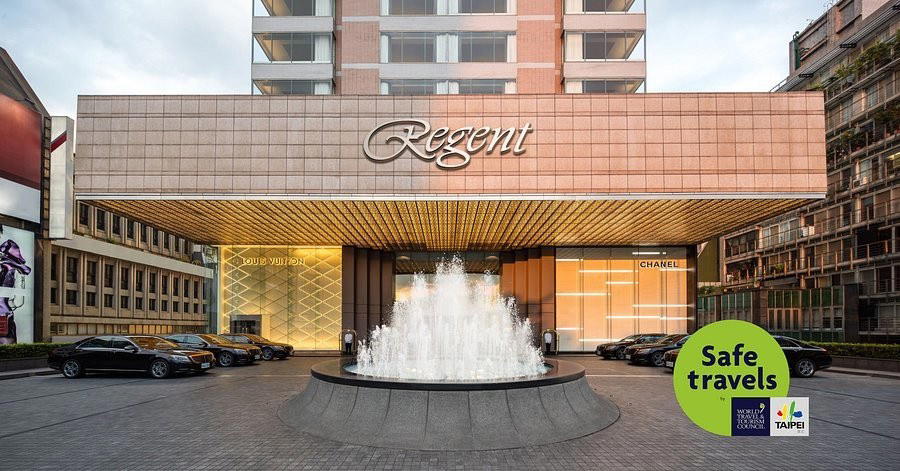
Wineries in Taipei
Browse all →
At a Glance
- Elegant
- Sophisticated
- Intimate
- Special Occasion
- Business Dinner
- Group Dining
- Chefs Counter
- Open Kitchen
- Hotel Restaurant
- Sake Program
- Extensive Wine List
Current opening hours
- Monday
- 12–2:30 PM, 6–10 PM
- Tuesday
- 12–2:30 PM, 6–10 PM
- Wednesday
- 12–2:30 PM, 6–10 PM
- Thursday
- 12–2:30 PM, 6–10 PM
- Friday
- 12–2:30 PM, 6–10 PM
- Saturday
- 12–2:30 PM, 6–10 PM
- Sunday
- 12–2:30 PM, 6–10 PM
Hours can change for holidays and private events. Last verified .
Sophisticated hotel atmosphere with attentive service, live entertainment nearby, and an elegant setting featuring counter seating around the grill.