
A Michelin Plate-recognised teppanyaki counter in Shilin District, Zan sits in Taipei's upper tier of live-fire dining where theatre and technique operate at the same temperature. It occupies the $$$$-bracket alongside the city's most considered Japanese-format tables, making the case that premium teppanyaki in Taipei holds its own against the broader fine-dining field.
Pearl is the En Primeur Club membership app — saves, bookings, and concierge access live there. Same editors, same standards.
- Address
- 111, Taiwan, Taipei City, Shilin District, Section 4, Chengde Rd, 192-1號號B1
- Phone
- +886 2 2880 1880
- Website
- zan-shoto.com
- Directions
- Get directions
 Saves & bookings on Pearl
What Premium Teppanyaki Actually Costs You in Taipei
Taipei's fine-dining tier has consolidated around a familiar price point: the $$$$-bracket now includes everything from French-inflected Taiwanese tasting menus at Taïrroir to haute Cantonese at Le Palais and inventive modern European at logy. Teppanyaki sits inside that same bracket, and Zan, holding a Michelin Plate in 2024, makes the case that live-fire counter dining belongs in that competitive conversation rather than below it. The question worth asking before booking is not whether the format justifies the spend, but whether Zan's particular execution of it does.
The Michelin Plate designation, introduced as a recognition one tier below star status, signals that inspectors found the cooking here worth noting without reservations. In Taipei's dense field of Michelin-tracked addresses, a Plate entry in teppanyaki is not automatic: the format requires a kitchen that performs visibly, where every technical decision plays out in front of the diner. That public accountability tends to concentrate venues at either the competent-and-forgettable end or the technically sharp end. Zan's sustained rating profile points toward the latter.
The Counter as Stage: How Teppanyaki Works at This Level
The teppanyaki format, refined in postwar Japan and later adopted across East and Southeast Asia, organises a meal around a flat iron griddle heated to precise temperatures, with diners seated at a counter that frames the cook as the central figure. At the premium end of the format, represented in Tokyo by counters like Ishigaki Yoshida and in Osaka by JIBUNDOKI, the teppan becomes an instrument for demonstrating control over heat, timing, and rest. Fat renders at the right rate, protein surfaces are seared without overcooking the interior, and vegetables are finished with a precision that a wok or oven cannot match in quite the same way.
Zan operates from a basement-level space on Chengde Road in Shilin District. Basement dining in Taipei carries its own atmosphere: the street noise drops away at the staircase, the light is controlled, and the spatial logic of a counter room works better without competing windows. It is a format that rewards full attention, and the setting at Zan encourages exactly that.
Shilin's dining character has historically been associated with the night market at its northern end, which draws visitors for affordable street food. The $$$$-bracket presence in the district is sparser than in Da'an or Xinyi. For a diner arriving from central Taipei, Zan sits as a deliberate destination rather than a walk-in option.
Placing Zan in Taipei's Teppanyaki Tier
Taipei's teppanyaki field has two clear comparison points: Robin's Teppanyaki and The Ukai. The Ukai, operating as part of the Japanese Ukai group, imports a format honed in Tokyo. Robin's sits at a slightly different register, associated with a hotel context. Zan operates independently at the same price tier, which means it competes on the strength of the cooking and the room rather than on brand affiliation or imported format credibility.
In Taiwan specifically, the format has deep roots as a luxury occasion-dining category, which means local diners come with calibrated expectations about what the price should deliver.
How Zan Compares Logistically
| Venue | Format | Price Range | Michelin Recognition | District |
|---|---|---|---|---|
| Zan | Teppanyaki | $$$$ | Michelin Plate (2024) | Shilin |
| The Ukai | Teppanyaki | $$$$ | Not listed | Central Taipei |
| Robin's Teppanyaki | Teppanyaki | $$$$ | Not listed | Central Taipei |
| logy | Modern European / Asian Contemporary | $$$$ | Michelin Star | Da'an |
| Taïrroir | Taiwanese/French Contemporary | $$$$ | Michelin Star | Central Taipei |
The Value Proposition at the $$$$-Bracket
Spending at the leading price tier in Taipei requires some calibration. The city's fine-dining range is wide: the same $$$$-bracket that covers tasting menus at starred restaurants covers premium counter formats like Zan. The question is what each format delivers per unit of spend. A tasting menu at this level typically runs through ten or more courses with wine pairing options and a long timeline. Teppanyaki at the same tier offers a different contract: fewer courses, shorter duration, but the compensating factor of the counter experience itself, where technique is visible and the interaction with the cook is direct.
For a diner who values watching skill deployed in real time, the teppanyaki format can represent better value than a closed kitchen at the same price point. The ingredient cost at premium teppanyaki is typically high: Wagyu beef grades and fresh seafood sourced to a particular specification drive the per-head cost as much as the labour does. What you are paying for at Zan, as at any serious teppanyaki counter, is the combination of ingredient quality and the technical performance that treats those ingredients correctly.
Planning Your Visit
Zan sits at 192-1 Chengde Road Section 4, Shilin District, basement level. Shilin connects to the rest of Taipei via the MRT red line, with Shilin Station the closest point on the network. The basement entry on Chengde Road is separate from the Shilin Night Market footfall further north, so the approach is quieter than the district's street-level reputation suggests.
Reservations are essential, particularly for weekend evenings. Reservations are essential.
Cuisine-First Comparison
Comparable venues nearby, for context on price, style, and recognition.
| Venue | Cuisine | Price | Awards | Notes |
|---|---|---|---|---|
| ZanThis venue — the venue you are viewing | Japanese Teppanyaki | $$$$ | Michelin Plate | Not listed |
| Robin's Teppanyaki | Classic Teppanyaki | $$$$ | Michelin Plate | Kangle |
| Uosho | Kanto-style Unagi | $$$$ | Michelin Plate | Sanzhong |
| Kiku | Kappo | $$$$ | Michelin Plate | Dunhuang |
| Sushi Touryuumon | Japanese Omakase | $$$$ | Michelin Plate | Checeng |
| The Ukai | Japanese Kappou and Teppanyaki | $$$$ | Michelin Plate | Xicun |
Recognition history
Dated appearances from independent guides and award organizations, with the underlying list record or original source where available.
Michelin Plate
Michelin
Continue exploring
More in Taipei
Restaurants in Taipei
Browse all →
Bars in Taipei
Browse all →
Hotels in Taipei
Browse all →
Wineries in Taipei
Browse all →
At a Glance
- Elegant
- Sophisticated
- Intimate
- Modern
- Special Occasion
- Date Night
- Business Dinner
- Chefs Counter
- Open Kitchen
- Organic
Current opening hours
- Monday
- 11:30 AM–2 PM, 5:30–10 PM
- Tuesday
- 11:30 AM–2 PM, 5:30–10 PM
- Wednesday
- 11:30 AM–2 PM, 5:30–10 PM
- Thursday
- 11:30 AM–2 PM, 5:30–10 PM
- Friday
- 11:30 AM–2 PM, 5:30–10 PM
- Saturday
- 11:30 AM–2 PM, 5:30–10 PM
- Sunday
- 11:30 AM–2 PM, 5:30–10 PM
Hours can change for holidays and private events. Last verified .
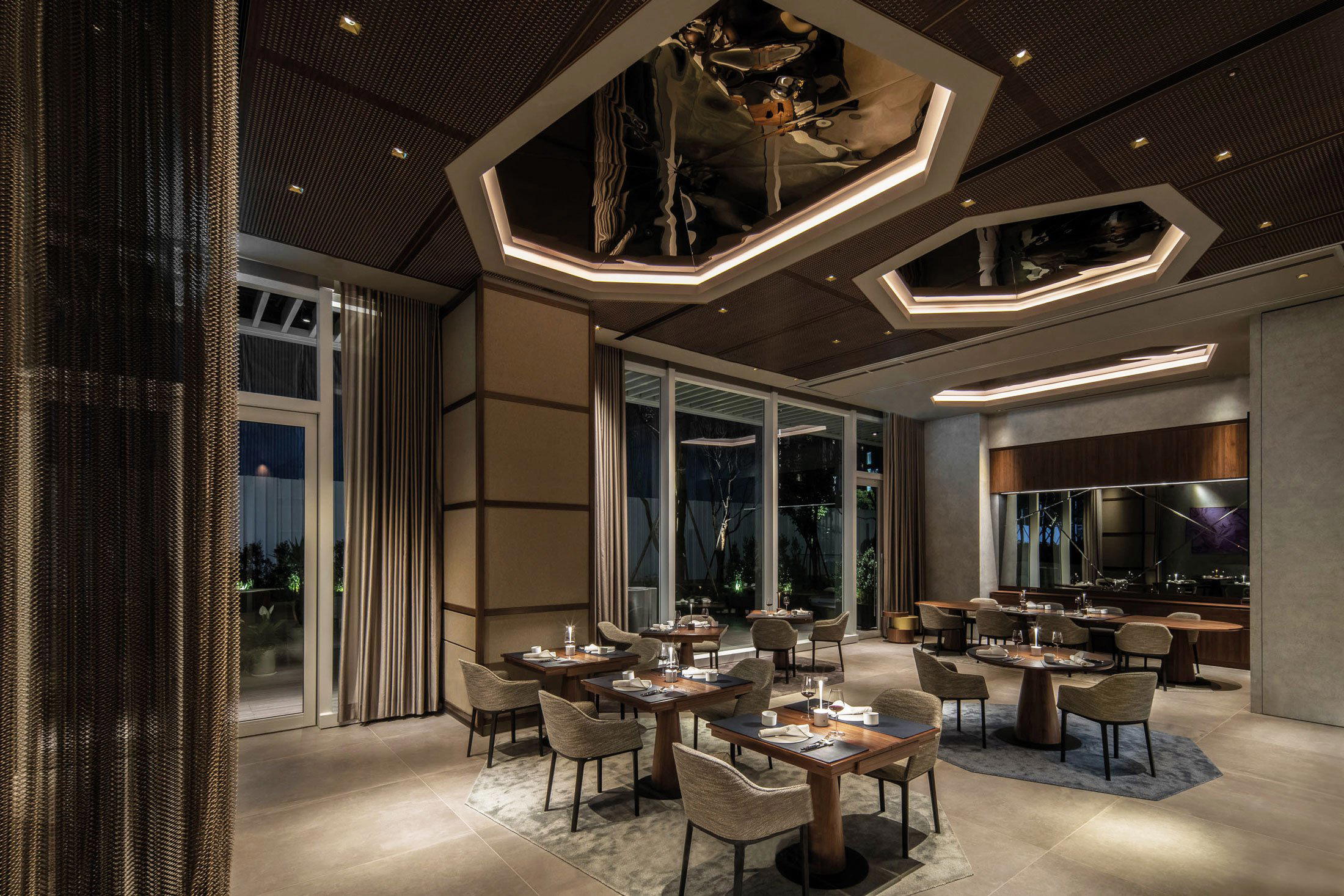
Softly illuminated space blending Italian stained glass, marble counters, Chinese wooden furniture, and natural materials for a cultivated calm and elegant atmosphere.