Roast
Set inside Borough Market's Victorian Floral Hall, Roast has made its name on the sourcing logic that the market below it embodies: traceable British produce, treated with restraint. The result is a dining room where the provenance of what's on the plate is as legible as the address on the door. For anyone eating in London's SE1 in autumn or winter, it belongs on the shortlist.
Pearl is the En Primeur Club membership app — saves, bookings, and concierge access live there. Same editors, same standards.
- Address
- The Floral Hall, Stoney St, London SE1 1TL, United Kingdom
- Phone
- +442033713120
- Website
- roast-restaurant.com
- Directions
- Get directions
 Saves & bookings on Pearl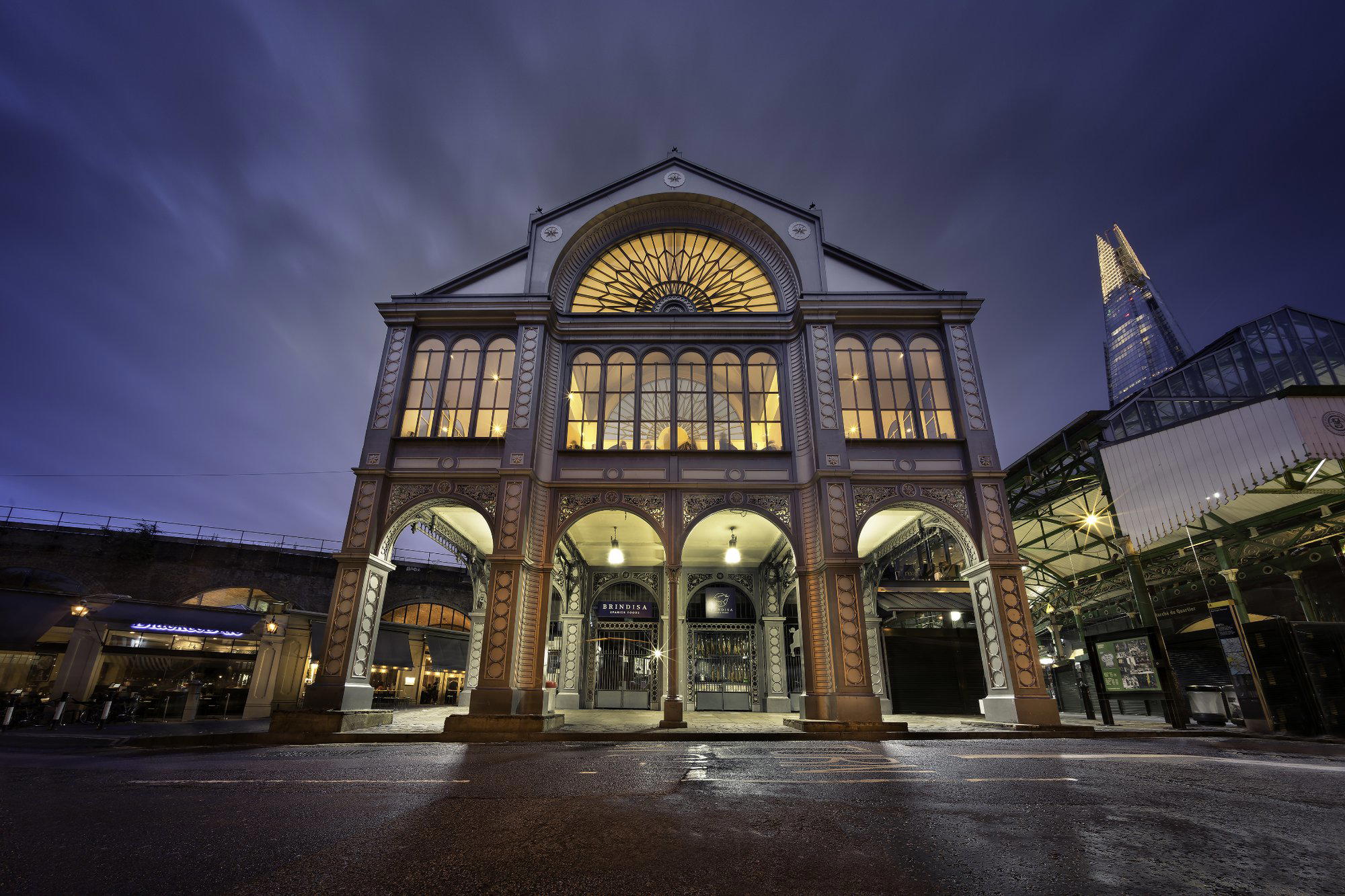
The Market Overhead, the Dining Room Below
Borough Market has long shaped London dining, and the Victorian ironwork of the Floral Hall at Stoney Street carries that history visibly. Dining at Roast means sitting above one of Britain's most consequential food markets, surrounded by the same cast-iron columns and glazed roof that frame the market stalls below. The relationship between building and food supply is not decorative, it is the operating premise. Produce from Borough Market can reach the dining room quickly. That kind of geographical compression between source and service is rare in a major European capital.
Sourcing as Structure, Not Selling Point
Across London's premium British dining tier, provenance rhetoric is common. What separates the venues that mean it from those that deploy it as copy is whether the sourcing logic shapes the menu's actual architecture. The strongest examples build seasonal constraint into the structure: fewer choices, shorter runs, harder substitutions when a named supplier falls short. Roast sits in this category. Its positioning around British produce is not a marketing frame grafted onto a conventional menu; the kitchen's identity is inseparable from what the market beneath it supplies.
This matters particularly in autumn and winter, when British produce reaches some of its most compelling points. Root vegetables, game birds, aged beef, and heritage pork breeds all come into their full argument in the colder months. A dining room anchored to this supply chain has more to say in October than in June, and the menu at Roast tends to reflect that seasonal calibration. For comparison, kitchens operating at the ££££ tier in London's West End, including CORE by Clare Smyth, Restaurant Gordon Ramsay, Sketch, The Lecture Room and Library, and The Ledbury, often source with equal rigour but from supply chains that span international networks. Roast's sourcing radius is pointedly domestic, which narrows the palette and sharpens the identity.
Traditional British Cooking in a Modern Frame
The broader tradition that Roast works within is one of British roasting, braising, and the kind of cooking built around whole animals and seasonal cuts rather than precision-portioned fillets. This tradition sat outside serious critical attention for decades; London's prestige dining scene privileged French technique and later Nuevo Latino or Japanese-influenced formats. The rehabilitation of British cooking as a credible fine-dining proposition is now sufficiently established that it spans a wide range, from Dinner by Heston Blumenthal at the historicist end, with its archive-sourced recipes, to contemporary practitioners operating with minimal intervention on named British breeds and varieties.
Roast occupies a position within this range that leans toward comfort and legibility rather than technical provocation. Dishes are recognisable: roasts, chops, game preparations. What carries them is the quality of the primary ingredient and the directness of the treatment. This is not the British cooking of gesture and reduction; it is the British cooking of confidence in the raw material, which is a different discipline from the one that has collected the critical hardware at London's top tier. For readers comparing across the country's broader offer, venues like L'Enclume in Cartmel, Moor Hall in Aughton, Waterside Inn in Bray, Le Manoir aux Quat'Saisons in Oxford, and Gidleigh Park in Chagford represent the formal upper end of British sourcing traditions; Roast sits at a more accessible register, better placed for a business lunch or a weekend meal than a celebratory tasting sequence.
The Borough Market Context
Arriving via London Bridge station, you approach Roast through the market itself, which is operationally useful to understand. The Floral Hall entrance is on Stoney Street, and the dining room sits at first-floor level, which means the market view is literal, you can see the stalls below through the glass. This geographic specificity is what separates Roast from any other British dining room in London: the address is not incidental; it is the argument.
For context across the wider British restaurant scene, venues like Hand and Flowers in Marlow, hide and fox in Saltwood, Midsummer House in Cambridge, Opheem in Birmingham, and Restaurant Andrew Fairlie in Auchterarder each make sourcing arguments rooted in their own regional supply chains. Roast's version of that argument is unusually literal: the supply chain is visible from the table.
Internationally, the closest parallel in terms of market-adjacent positioning would be venues like Le Bernardin in New York City and Atomix in New York City, which also maintain rigorous sourcing discipline, though through different culinary traditions and at different price registers. What connects them is the conviction that the primary ingredient carries the page; technique exists to serve it rather than to obscure it.
Planning Your Visit
Roast is located at The Floral Hall, Stoney Street, London SE1 1TL. The restaurant is most easily reached via London Bridge station (National Rail and Jubilee and Northern lines). Visiting in autumn or winter aligns leading with the seasonal British produce the kitchen centres on. Booking in advance is advisable, particularly for weekend lunch, when the combined draw of Borough Market and the dining room creates sustained demand.
Comparable Options
Comparable venues nearby, for context on price, style, and recognition.
| Venue | Cuisine | Price | Notes |
|---|---|---|---|
| RoastThis venue — the venue you are viewing | Classic British Roast | $$$ | Not listed |
| The Refinery Citypoint | Modern British Gastropub | $$$ | Barbican |
| Princess of Shoreditch | Modern British Gastropub | $$$ | Shoreditch |
| Sotheby's Cafe | Modern British with Art-Inspired Flair | $$$ | Mayfair |
| Home SW13 | Modern British Bistro | $$$ | Barnes |
| Caxtons | Modern British Grill | $$$ | Westminster |
Continue exploring
More in London
Restaurants in London
Browse all →
Bars in London
Browse all →
Hotels in London
Browse all →


At a Glance
- Classic
- Elegant
- Special Occasion
- Group Dining
- Brunch
- Open Kitchen
- Historic Building
- Extensive Wine List
- Local Sourcing
- Street Scene
Current opening hours
- Monday
- 7:30 AM–10 PM
- Tuesday
- 7:30 AM–10 PM
- Wednesday
- 7:30 AM–10 PM
- Thursday
- 7:30 AM–10 PM
- Friday
- 7:30 AM–10 PM
- Saturday
- 8:30 AM–10 PM
- Sunday
- 11:45 AM–6:30 PM
Hours can change for holidays and private events. Last verified .
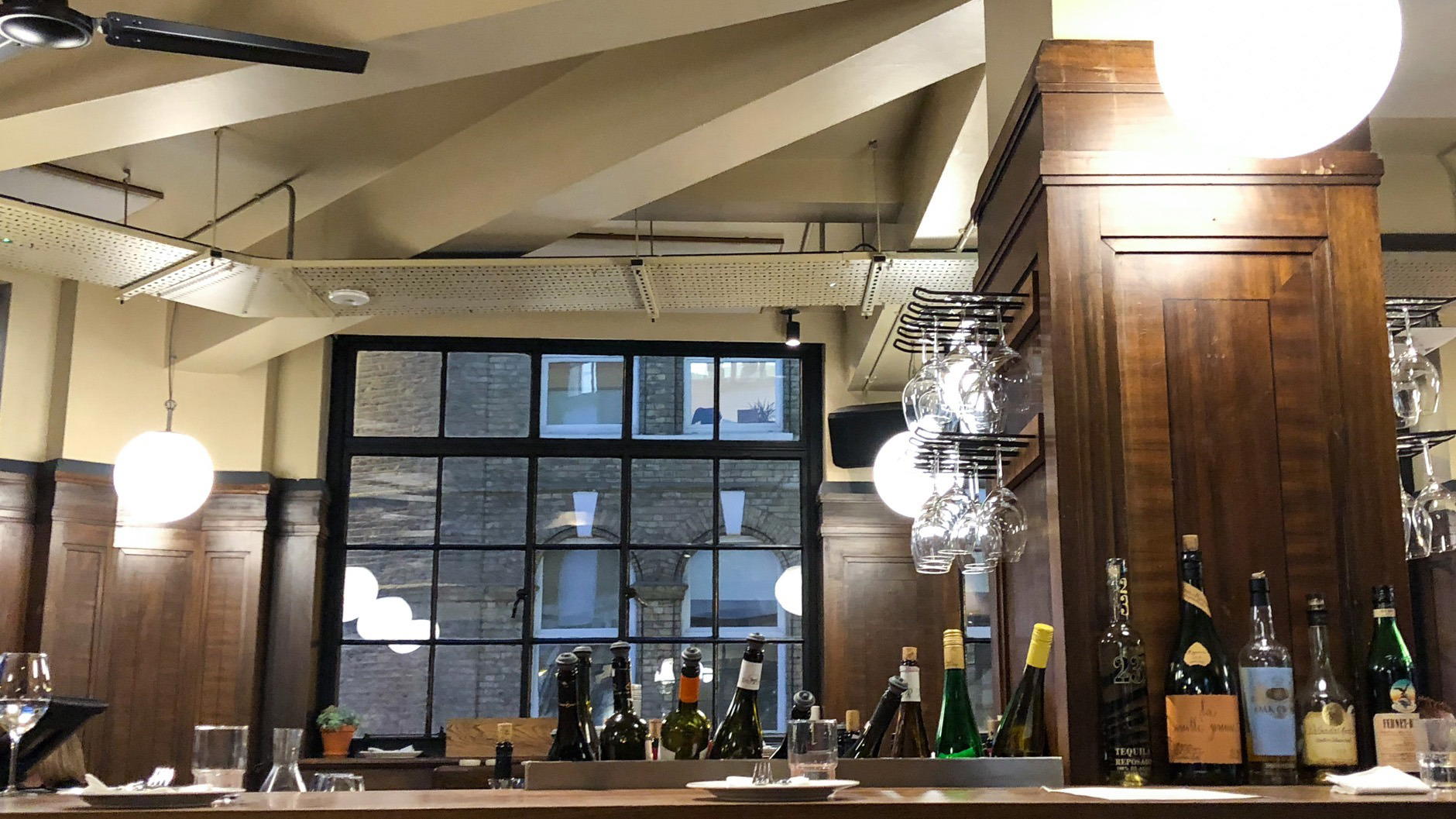
Buzzy and airy with a woody atmosphere overlooking the market.