Il Piastrino


A Michelin-starred restaurant in the Montefeltro hills of Emilia-Romagna, Il Piastrino translates the agricultural traditions of the Marecchia Valley into a precisely structured contemporary Italian menu. Chef Riccardo Agostini's flagship tasting menu, Collina, traces the river's course across twelve hills to the Adriatic, using seasonal, locally sourced ingredients as the connective thread. Ranked #482 in Europe by Opinionated About Dining in 2024, it represents the serious end of Italy's small-town fine dining tier.
Pearl is the En Primeur Club membership app — saves, bookings, and concierge access live there. Same editors, same standards.
- Address
- Via Parco Begni, 47864 Pennabilli RN, Italy
- Phone
- +39 0541 928106
- Website
- piastrino.it
- Directions
- Get directions
 Saves & bookings on Pearl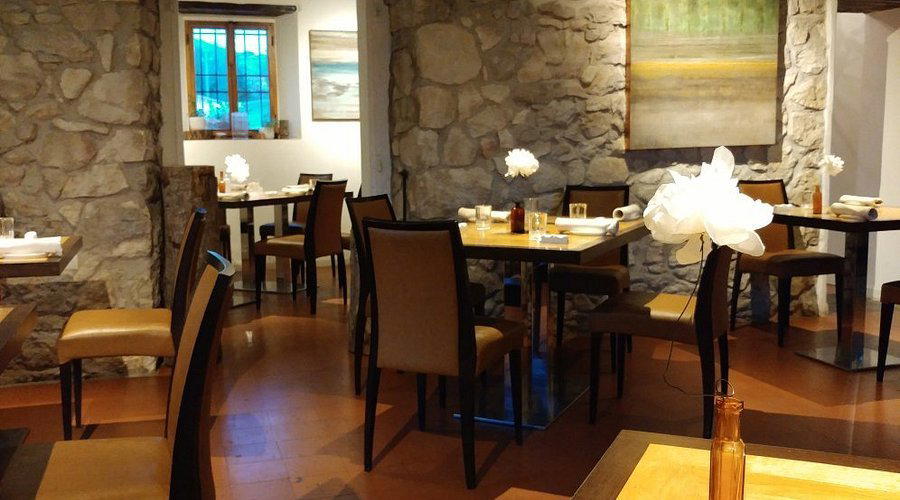
Pennabilli sits at around 600 metres in the Montefeltro, the corrugated upland territory that splits Emilia-Romagna from the Marche. The town is small enough that the drive in from Rimini, roughly 45 kilometres along the Marecchia Valley, feels like a genuine departure from the coastal tourist circuit. That geographic remove is part of the logic of Il Piastrino: this Michelin-starred restaurant in Pennabilli is inseparable from the territory that surrounds it, and its seasonal sourcing makes sense precisely because the producers are, in many cases, within sight of the dining room.
The Montefeltro Table: A Regional Identity Distinct from Its Neighbours
Italian fine dining tends to be discussed through the lens of a handful of metropolitan anchors: the technical ambition of Milan, the product obsession of Modena, the French-influenced cellars of Florence. Emilia-Romagna generates a disproportionate share of the country's culinary conversation, home to institutions like Osteria Francescana in Modena and, further north, Dal Pescatore in Runate. But the Montefeltro, the hilly inland wedge between Rimini and Urbino, operates in a quieter register. Its cooking tradition is rooted in the cucina contadina of the Apennine foothills: cured meats, foraged herbs, river produce, grain-based pastas, and a calendar rigidly organised around what grows or grazes nearby. Il Piastrino works within that tradition rather than against it, which is a meaningful curatorial choice when the temptation at the Michelin level is to import prestige ingredients and drift toward a more pan-Italian or pan-European vocabulary.
The contrast with the Adriatic coast, less than an hour east, is instructive. Senigallia's Uliassi works with the logic of the sea. Il Piastrino works with the logic of the hills. Both represent serious, award-recognised contemporary Italian cooking; the difference is the ingredient grammar each kitchen reaches for first.
The Collina Menu: Landscape as Structure
The restaurant's signature tasting menu, Collina, is organised around the course of the Marecchia River from its source in the Apennines, crossing twelve hills before it reaches the Adriatic at Rimini. That is not decorative geography. The menu uses the river's path as a sourcing framework, drawing on the agricultural and foraging traditions of each zone it passes through. The result is a tasting format with a geographic spine, which gives it a coherence that purely seasonal or purely chef-driven menus sometimes lack.
Italy's contemporary fine dining has largely moved away from the classical French-influenced progression that defined the country's starred restaurants through the 1990s and into the 2000s. At the €€€ price tier, where Il Piastrino sits, the expectation is now for menus that demonstrate both technical control and a legible sense of place. The Collina structure delivers that second quality with unusual specificity. Comparable territory-driven tasting formats elsewhere in Italy, such as Reale in Castel di Sangro, which maps the Abruzzo interior with similar rigour, suggest that this approach has become a credible alternative to the high-concept abstraction that defined the previous decade of Italian fine dining.
Chef Agostini and the Question of Technical Register
Riccardo Agostini's cooking is described, across the Opinionated About Dining record and Michelin's own citation, as technically controlled without tipping into contrivance. That framing matters because it positions the restaurant in a specific sub-tier of Italian contemporary restaurants: those where the kitchen's ambition is expressed through precision and restraint rather than through formal complexity for its own sake. The Michelin one-star awarded in 2024 suggests a consistent level of recognition rather than a moment of peak visibility followed by a slide. The 2025 OAD position is lower, but that ranking is a function of the field expanding around it, not necessarily a signal of declining quality.
At the three-star level, northern Italian restaurants like Le Calandre in Rubano and Enrico Bartolini in Milan, or the Alpine creative register of Atelier Moessmer Norbert Niederkofler in Brunico, operate with larger brigades, larger capital investment, and a different expectation of theatrical service. The restaurant's position at €€€ and one star places it in a more personal format, where the dining room is smaller, the experience closer to a privately managed table than a restaurant operation in the metropolitan sense. That has implications for the type of evening you are booking.
The Room and the Setting
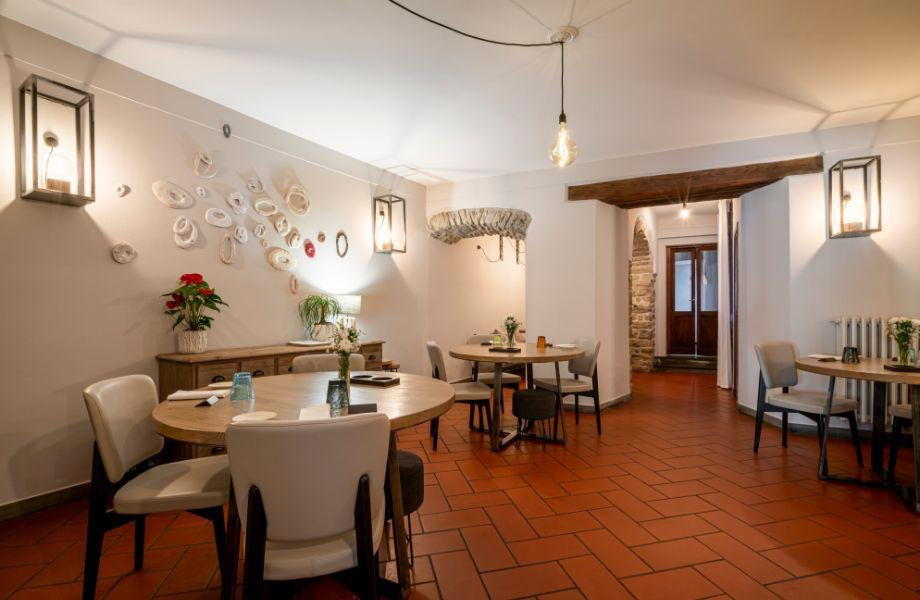
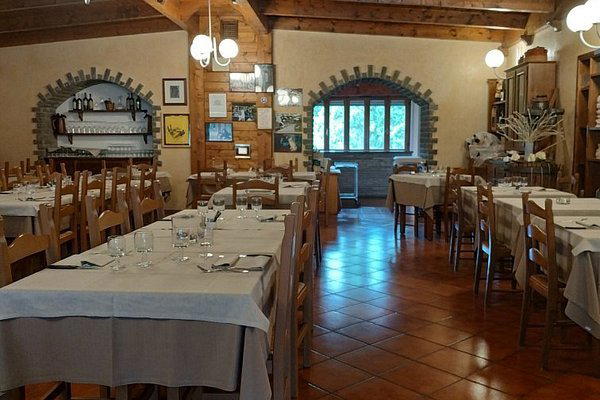
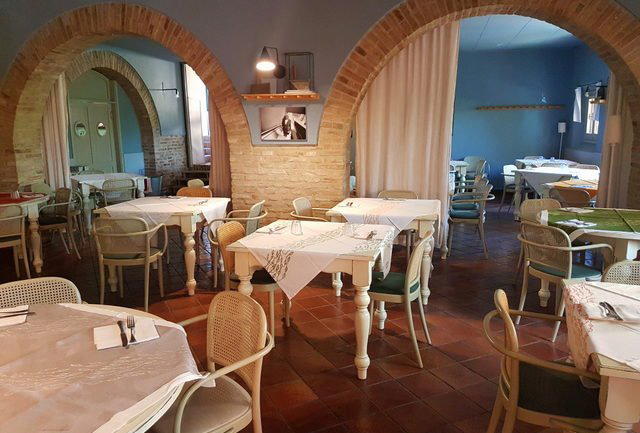
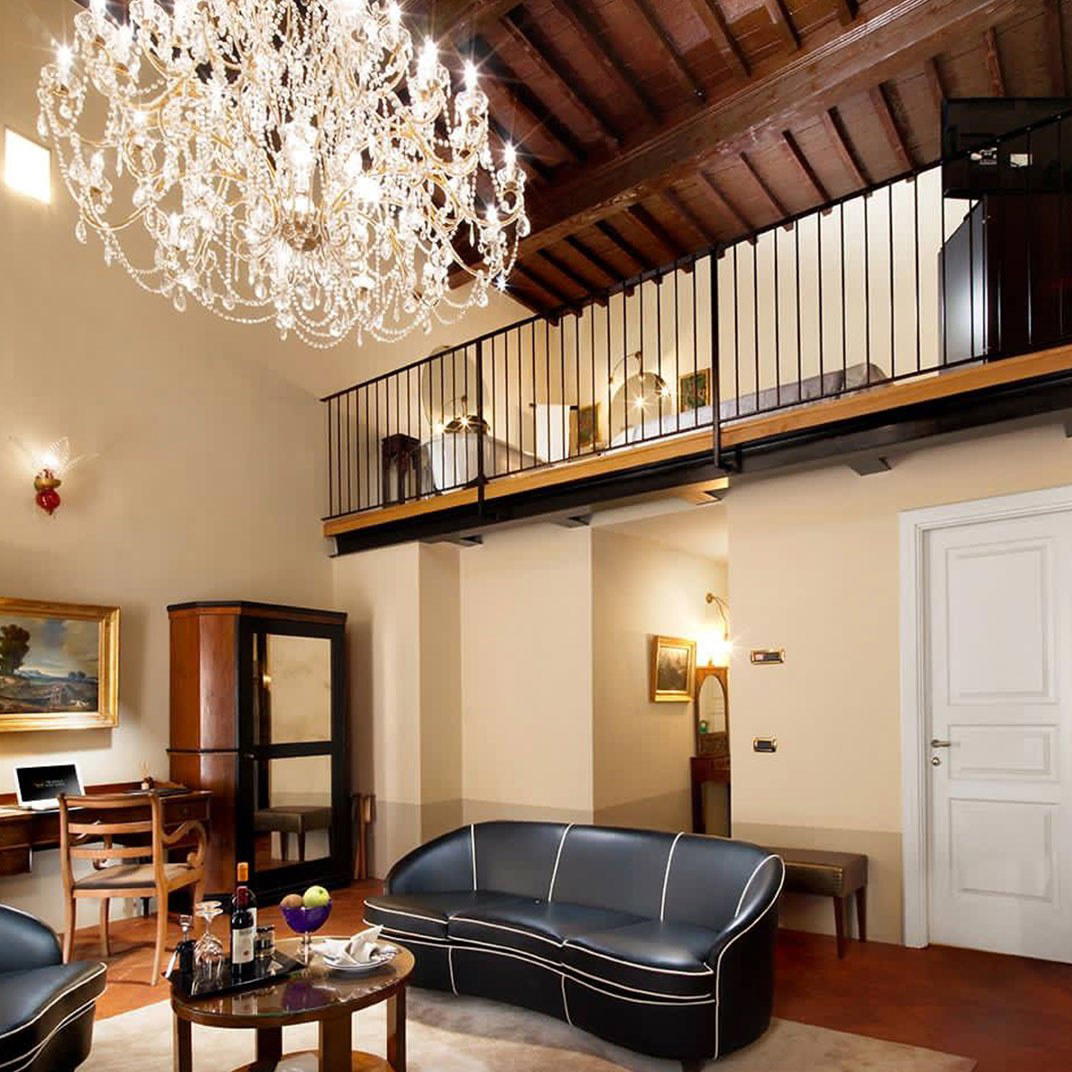
The property reflects the domestic character common to the better small-town Italian restaurants that have accumulated serious recognition over time. Contemporary furnishings sit inside a space that maintains the warmth and material simplicity of the Montefeltro countryside rather than erasing it in favour of a neutral fine-dining aesthetic. This is a design approach that deliberately signals regionality, in the same way that the sourcing does. That figure reflects both the food and a service register that guests clearly find consistent and genuine.
The restaurant is run by Claudia and Riccardo Agostini together, which means the front-of-house and kitchen share an ownership logic rather than operating as separate commercial departments. That structural detail tends to produce a specific type of hospitality: attentive but not performative, knowledgeable but not rehearsed. It is a model common to the Italian one-star tier outside major cities, and it is one of the reasons that small-town restaurants at this level can punch above their formal comparable set on overall experience.
Planning Your Visit
Pennabilli is not a destination you combine with a day in Bologna or a morning in Rimini in any casual sense. The drive is manageable, but the town functions as a deliberate stop rather than an add-on. Given that context, pairing a dinner at the restaurant with an overnight stay makes practical and atmospheric sense. The surrounding Montefeltro also has a wine culture worth exploring separately: the Sangiovese-led production of the Romagna hills is within range, and the regional enotecas offer a different entry point into the territory's drinking culture.
Booking is advisable well in advance given the restaurant's capacity and recognition level. The price range at $70 per person places it meaningfully below the three-star Italian institutions but above the accessible trattoria tier, making it the logical choice for a serious dinner in this part of Emilia-Romagna without committing to the full investment required at restaurants like Enoteca Pinchiorri in Florence or Piazza Duomo in Alba. Quattro Passi in Marina del Cantone and Casa Perbellini 12 Apostoli in Verona represent comparable one-star reference points in different regional registers. In the Milan tier, Ristorante Berton and the restaurant at the Excelsior Hotel Gallia offer the contemporary Italian idiom in a different urban context.
How It Stacks Up
Comparable venues nearby, for context on price, style, and recognition.
| Venue | Cuisine | Price | Awards | Notes |
|---|---|---|---|---|
| Il PiastrinoThis venue — the venue you are viewing | Modern Italian Fine Dining | $$$ | Michelin 1 Star | Not listed |
| Ristorante del Lago | Refined Italian Lake Fish | $$$ | Michelin 1 Star | +Bagno di Romagna |
| Ada | Modern Italian Fine Dining | $$$ | Michelin 1 Star | historic centre |
| Glass Hostaria | Modern Italian Fine Dining | $$$$ | Michelin 1 Star | Trastevere |
| All'Oro | Modern Italian Fine Dining | $$$$ | Michelin 1 Star | Flaminio |
| Al Madrigale | Nuova Cucina Rurale | Nuova Cucina Rurale | $$$$ | Michelin 1 Star | Tivoli |
Recognition history
Dated appearances from independent guides and award organizations, with the underlying list record or original source where available.
Michelin 1 Star
Michelin
Opinionated About Dining Top Restaurants in Europe Recommended
Opinionated About Dining
Michelin 1 Star
Michelin
Opinionated About Dining Top Restaurants in Europe Ranked #635
Opinionated About Dining
Michelin 1 Star
Michelin
Opinionated About Dining Top Restaurants in Europe Ranked #482
Opinionated About Dining
Continue exploring
More in Pennabilli
Restaurants in Pennabilli
Browse all →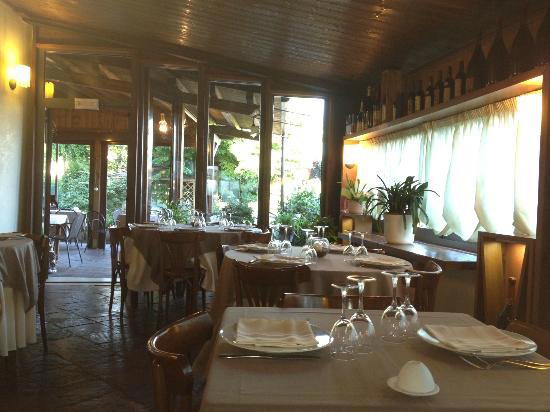
Bars in Pennabilli
Browse all →
Hotels in Pennabilli
Browse all →

At a Glance
- Romantic
- Elegant
- Rustic
- Cozy
- Sophisticated
- Intimate
- Date Night
- Special Occasion
- Garden
- Historic Building
- Extensive Wine List
- Local Sourcing
- Garden
- Mountain
Current opening hours
- Monday
- 12:30–1:30 PM, 7:30–9 PM
- Tuesday
- Closed
- Wednesday
- Closed
- Thursday
- 7:30–9 PM
- Friday
- 12:30–1:30 PM, 7:30–9 PM
- Saturday
- 12:30–1:30 PM, 7:30–9 PM
- Sunday
- 12:30–1:30 PM
Hours can change for holidays and private events. Last verified .
Magnificent contemporary decor harmonizing with warm rustic surroundings, cozy stone rooms with modern touches, fireplace, intimate and romantic atmosphere amid rolling hills.