Rinderwahn occupies a quietly loaded address in Vienna's first district, Weihburggasse 3, where the city's appetite for beef, sourced, aged, and prepared with Austrian seriousness, finds a focused outlet. The name alone signals intent: this is not a general menu. Vienna's inner-city beef tradition runs deep, and Rinderwahn positions itself within that lineage rather than against it.
Pearl is the En Primeur Club membership app — saves, bookings, and concierge access live there. Same editors, same standards.
- Address
- Weihburggasse 3, 1010 Wien, Austria
- Phone
- +434315120996
- Website
- rinderwahn.at
- Directions
- Get directions
 Saves & bookings on Pearl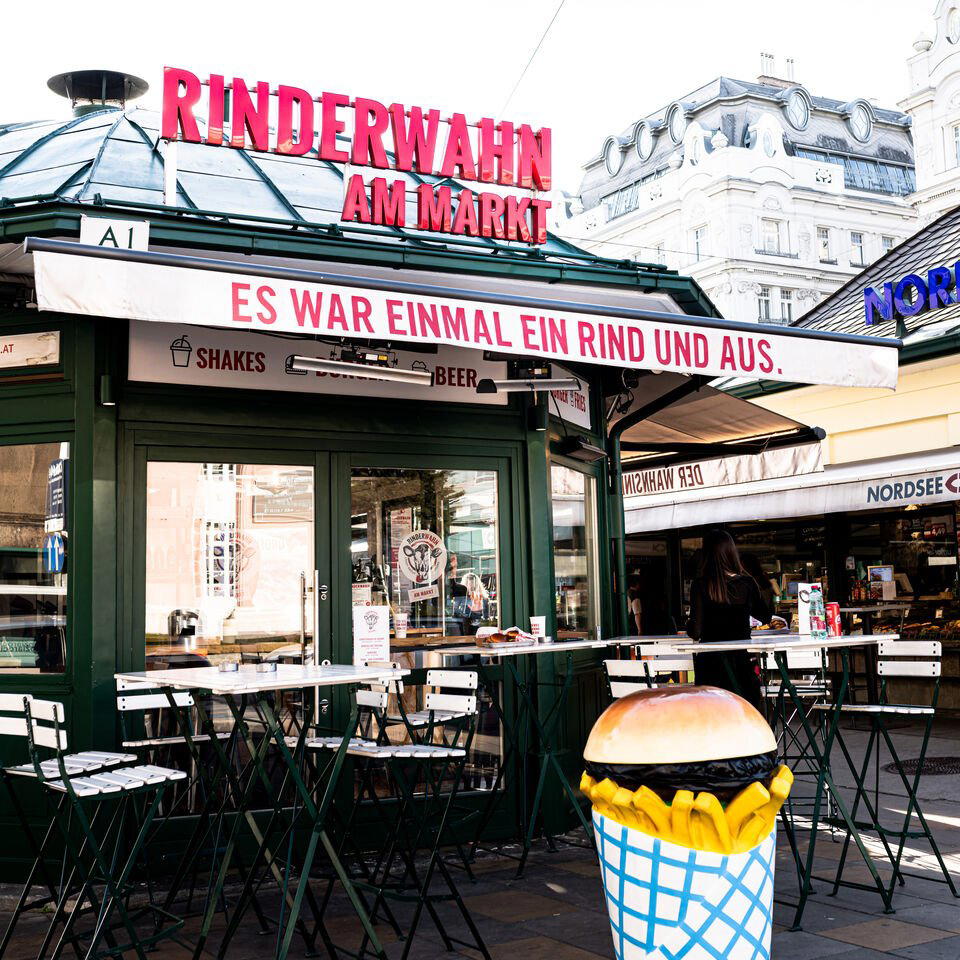
Vienna's First District and the Case for Serious Beef
The first district of Vienna has always demanded a certain confidence from the restaurants that occupy it. At Weihburggasse 3, the address sits within a few minutes' walk of the Stephansdom and the grid of narrow streets that forms the city's oldest dining core, a neighbourhood where the competition is dense, the rents are steep, and longevity tends to filter out the tentative. Rinderwahn arrives in this context with a name that functions almost as a manifesto: translated roughly as "beef madness" or "beef obsession," it signals a kitchen that has chosen discipline over breadth. In a city where the Wiener Schnitzel still commands cultural authority and the Tafelspitz remains a civic institution, a restaurant built around a single protein category is not merely a concept, it is a position.
That position matters more in Vienna than it might in a city without the same culinary memory. Austrian beef culture has deep regional roots: cattle from the Alpine provinces, pasture-raised through short but intense grazing seasons, have supplied urban butchers and restaurant kitchens for centuries. The ingredient chain from mountain farm to first-district plate is one that serious Vienna restaurants have always understood, even when they haven't always made it visible. Rinderwahn's focus implies that sourcing is the argument, that where the beef comes from, how it was raised, and how long it has rested are the points the kitchen is willing to be judged on.
The Sourcing Argument at the Centre of the Menu
Across Austria's premium dining tier, where restaurants like Steirereck im Stadtpark and Mraz & Sohn have built reputations partly on their relationships with regional producers, ingredient provenance has shifted from a supporting note to a central editorial one. A beef-focused restaurant in this environment is, by default, entering a conversation about supply chains: which farms, which breeds, which aging protocols. The name Rinderwahn implies that the kitchen has made a deliberate wager that the ingredient itself, handled with enough precision, is sufficient to anchor a full dining experience.
This is a harder argument to sustain than it might appear. Kitchens that reduce their vocabulary to a single ingredient must compensate with depth: different cuts treated differently, aging durations that create genuine variation in texture and flavour profile, preparation methods that reveal something new rather than simply repeating the same technique on different parts of the animal. The leading beef-focused restaurants internationally, from the dry-aged counter culture that has spread through London and New York to the yakiniku specialists in Tokyo, have demonstrated that the single-ingredient format only works when sourcing is genuinely differentiated and the kitchen has the technical range to express that differentiation across a full menu.
At the tier of Vienna's inner-city restaurant scene, that technical expectation is high. Guests who have eaten at Konstantin Filippou or Amador bring comparative benchmarks. Rinderwahn's focused format places it in a different bracket, more specialist than those multi-course creative houses, closer in philosophy to the Vienna restaurants that have always treated the classical Austrian ingredients with the seriousness they were due, rather than abstracting them into something else.
A City That Has Always Known What It Likes
Vienna's relationship with beef is not fashionable, it is structural. The Tafelspitz, slow-boiled prime boiled beef served with horseradish and chive sauce, appears on menus across every price tier and has done so for well over a century. The Wiener Schnitzel, while technically veal, belongs to the same cultural tradition. What has changed in recent decades is the emergence of a more granular appreciation: not just beef as a category, but breed, feed, region, and aging as variables worth understanding. This shift mirrors what happened earlier in wine, where Austrian consumers moved from brand loyalty to a genuine engagement with terroir and vintage variation.
That cultural context is what makes a name like Rinderwahn legible in Vienna in a way it might not be in other European capitals. The audience exists. The question is whether the kitchen's sourcing choices and preparation give that audience something beyond what a competent steakhouse already delivers. For comparison, consider that Austrian fine dining beyond the capital, at Döllerer in Golling an der Salzach or Obauer in Werfen, has long integrated regional meat sourcing as a non-negotiable part of the culinary identity, not an add-on. The first-district context raises the price of admission but also the expectations.
Where Rinderwahn Sits in the Vienna Dining Tier
Vienna's restaurant scene in the first district stratifies fairly clearly. At the leading, creative multi-course houses with Michelin recognition and correspondingly formal booking windows, restaurants like Doubek, operate with a different tempo and format than a focused beef restaurant. Rinderwahn's concept suggests a more accessible but still deliberate middle tier: specialist rather than tasting-menu, repeat-visit rather than occasion-only. The Vienna inner-city visitor with a specific appetite for serious beef preparation, rather than a broad creative menu, is the guest this format speaks to most directly.
For those building a broader Austrian itinerary, the country's fine dining circuit extends well beyond the capital. Ikarus in Salzburg, Griggeler Stuba in Lech, and Gourmetrestaurant Tannenhof in Sankt Anton am Arlberg each represent the Austrian regional dining tradition at high levels, and the sourcing philosophies visible in those kitchens echo back into what a Vienna beef specialist is implicitly promising. Further afield, Kräuterreich by Vitus Winkler in Sankt Veit im Pongau, Landhaus Bacher in Mautern an der Donau, Schwarzer Adler in Hall in Tirol, Ois in Neufelden, and Restaurant 141 by Joachim Jaud in Mieming collectively demonstrate how Austria's regional kitchens treat primary ingredients with a seriousness that the capital's specialist restaurants must match.
For anyone building a Vienna dining plan, the full Vienna restaurants guide maps the wider scene across format, price, and neighbourhood. International reference points also help calibrate expectations: the precision protein-focused approach visible in a completely different cultural context at Le Bernardin in New York City, or the ingredient-led single-focus tasting format at Atomix, illustrate how far the single-ingredient or single-tradition commitment can travel when the sourcing and technical execution are genuinely at the level the concept demands.
Planning a Visit
Rinderwahn is located at Weihburggasse 3 in the first district, placing it within the dense historic core and walkable from the major landmarks. The restaurant's contact details and booking method are not publicly consolidated at the time of writing; checking directly via current Vienna dining platforms or the venue's own channels is advisable before visiting, particularly if you are building a tight itinerary around multiple first-district reservations. Given the address and the specialist format, it is worth confirming hours and availability a reasonable lead time ahead rather than assuming walk-in access.
A Pricing-First Comparison
Comparable venues nearby, for context on price, style, and recognition.
| Venue | Cuisine | Price | Notes |
|---|---|---|---|
| RinderwahnThis venue — the venue you are viewing | Innere Stadt, Austrian Beef Burgers | $$ | Not listed |
| Teddy's American Diner | Mariahilf, Classic American Diner | $$ | Not listed |
| SMASHBOX 1070 | Mariahilf, American Smashburgers | $$ | Not listed |
| Berliner Babo | Not listed | $$ | Gaudenzdorf, Modern American Street Food with Vegan Options |
| The Burgery | Sudbahnhof, Smash Burgers | $$ | Not listed |
| Dazwischen | Not listed | $$ | Franz Josefs Bahnhof, American Sandwiches & Burgers |
Continue exploring
More in Vienna
Restaurants in Vienna
Browse all →
Bars in Vienna
Browse all →
Hotels in Vienna
Browse all →
At a Glance
- Trendy
- Casual
- Energetic
- Casual Hangout
- After Work
- Standalone
- Local Sourcing
Current opening hours
- Monday
- 12–10:30 PM
- Tuesday
- 12–10:30 PM
- Wednesday
- 12–10:30 PM
- Thursday
- 12–10:30 PM
- Friday
- 12–10:30 PM
- Saturday
- 12–10:30 PM
- Sunday
- 12–10:30 PM
Hours can change for holidays and private events. Last verified .
Casual, energetic burger joint with a modern fast-casual atmosphere and funky aesthetic.