Restaurante Papagena occupies the sixth floor of Madrid's Teatro Real, placing it in a category where opera-house dining and city-view ambience carry as much weight as what arrives on the plate. The setting positions it closer to a destination restaurant tied to cultural occasion than to the competitive fine-dining circuit of Michelin-tracked peers. It draws pre-curtain diners and afternoon visitors seeking the rooftop perspective over the Plaza de Oriente.
Pearl is the En Primeur Club membership app — saves, bookings, and concierge access live there. Same editors, same standards.
- Address
- Teatro Real, C. de Carlos III, s/n, sexta planta, Centro, 28013 Madrid, Spain
- Phone
- +34629707885
- Website
- papagenarestaurante.es
- Directions
- Get directions
 Saves & bookings on Pearl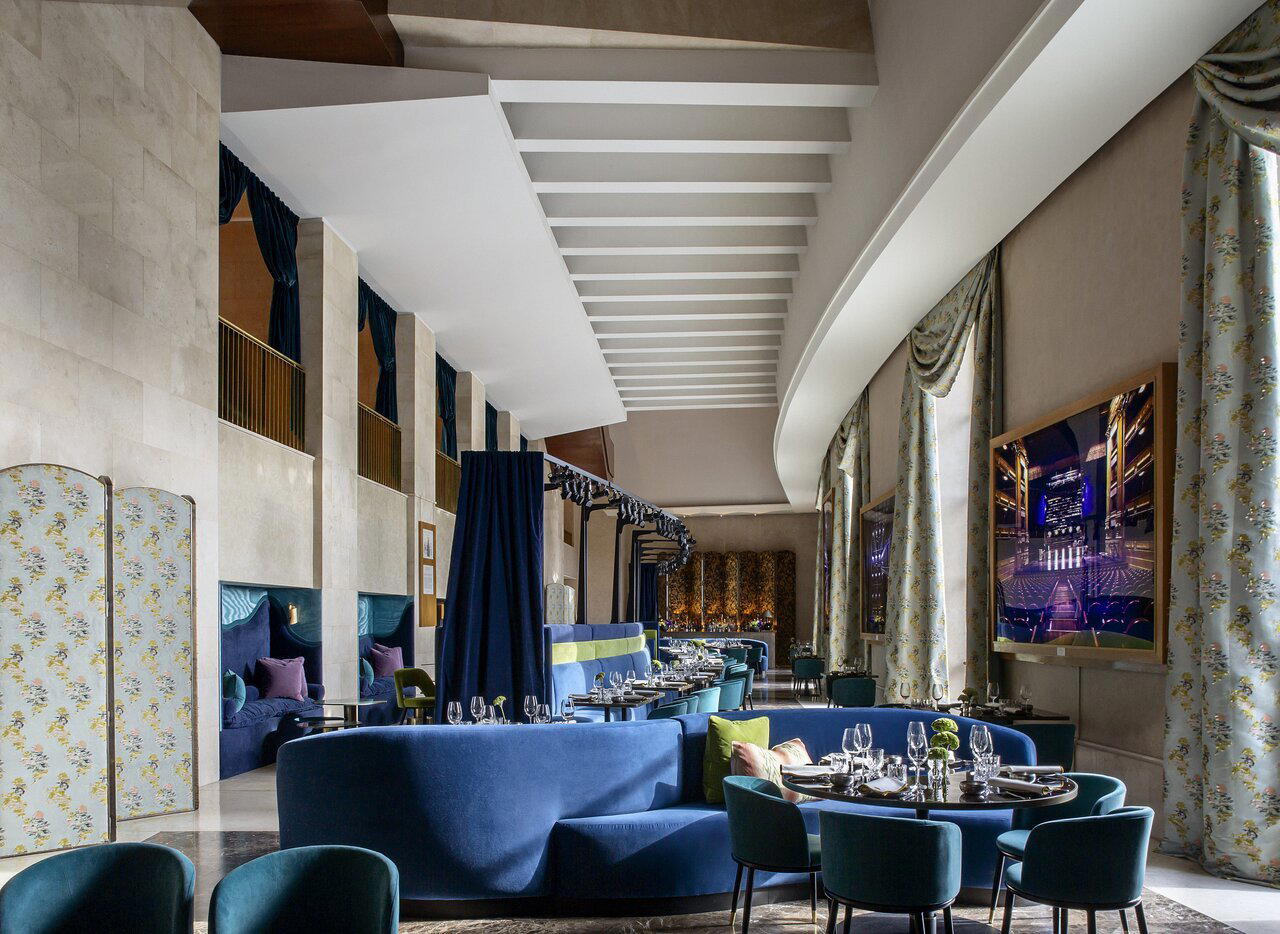
A Stage Above the City: Dining at the Teatro Real
Madrid's premium dining scene has developed two distinct registers over the past decade. One operates as destination gastronomy in its own right, where tables at venues like DiverXO, Coque, and DSTAgE are booked weeks or months ahead on the strength of the kitchen alone. The other operates as occasion dining, where the setting, the cultural programme surrounding it, and the specific window in which you eat all shape the experience as much as any dish. Restaurante Papagena, housed on the sixth floor of the Teatro Real on Calle de Carlos III in the Centro district, belongs firmly to the second register.
That distinction is not a criticism. Occasion dining at a serious cultural institution serves a different reader decision than a tasting-menu sprint through avant-garde technique. The Teatro Real is one of Europe's principal opera houses, and the restaurant's position within it — a sixth-floor space with sightlines over the Plaza de Oriente and the Royal Palace beyond — means the room does considerable work before a single plate arrives. In cities where opera-house dining tends toward the perfunctory, a venue at this address with genuine kitchen ambition represents something worth tracking.
Lunch vs. Dinner: Two Entirely Different Propositions
The lunch-versus-dinner divide at a venue embedded in an opera house is more pronounced than at almost any other format. Evenings at Restaurante Papagena operate in direct relationship to the Teatro Real's performance calendar. Diners arrive with curtain times in mind; the rhythm of service, the pacing of courses, and even the energy of the room are shaped by whether the house is dark or hosting a full production that night. On performance evenings, the restaurant functions as the pre-show or interval punctuation for an already-structured cultural occasion. The experience is intentional and time-bound.
Lunch, by contrast, opens a different proposition entirely. Afternoon service at a sixth-floor venue above the Plaza de Oriente, without the gravitational pull of a curtain call, allows for a slower pace. The city view over one of Madrid's most architecturally coherent squares shifts from backdrop to focal point. This is where the venue arguably makes its strongest case as a standalone dining destination rather than a cultural amenity. Across Spain's broader fine-dining geography, from Arzak in San Sebastián to El Celler de Can Roca in Girona, lunch service often carries better value and more relaxed engagement with the kitchen's output. That same principle applies here, amplified by a setting that rewards time spent looking outward as much as inward at the table.
Location, Setting, and the Teatro Real Context
The Teatro Real itself opened in 1850, was restored in the 1990s after decades of varied use, and now operates as one of Spain's leading lyric theatres, hosting international productions and drawing audiences from across Europe. The building sits at the western edge of central Madrid, facing the Plaza de Oriente, with the Palacio Real visible from upper floors. For a restaurant, this is not incidental geography. The address places Papagena within walking distance of the city's historical core but slightly apart from the dense restaurant corridors of Malasaña, Chueca, and the Salamanca district where much of Madrid's contemporary dining energy concentrates.
That separation matters for how you plan around it. This is not a venue you discover by walking past it; it requires intention. Visitors arriving specifically for the opera or for a daytime visit to the surrounding cultural quarter, the Palacio Real, the Sabatini Gardens, the Almudena Cathedral nearby, will find it sits naturally in their itinerary. Those approaching it as a standalone dinner destination without a performance ticket should weigh whether the journey makes sense against the broader Madrid fine-dining options available that evening, including the concentrated offer of places like Deessa or Paco Roncero.
Where Papagena Sits in Madrid's Wider Dining Map
Madrid's top tier of creative Spanish cooking clusters around venues with sustained international recognition: the three-Michelin-star operation of DiverXO, the progressive tasting formats at Coque and DSTAgE, and the technically ambitious programme at Deessa. Papagena does not compete directly in that tier. By that measure, useful points of comparison exist well beyond Madrid's city limits. Spain's broader fine-dining map includes venues like Aponiente in El Puerto de Santa María, Azurmendi in Larrabetzu, and Quique Dacosta in Dénia, all of which demonstrate how Spanish kitchens have built internationally recognised programmes outside the capital. Within Madrid, the competitive reference points are the city's award-tracked creative venues, against which Papagena's occasion-dining model occupies a distinct and complementary position.
For those mapping a broader Spanish trip that takes in Martin Berasategui in Lasarte-Oria, Mugaritz in Errenteria, Cocina Hermanos Torres in Barcelona, Ricard Camarena in València, or Atrio in Cáceres, Madrid remains the natural hub. Papagena works well as the occasion-dining anchor within that Madrid chapter, particularly when paired with a Teatro Real performance. See our full Madrid restaurants guide for the wider picture across price points and neighbourhoods.
Planning Your Visit
The Teatro Real's performance calendar defines availability more than anything else. Evenings tied to major productions will see the restaurant fill on the back of ticket holders, while non-performance nights and lunch slots offer easier access. For international visitors comparing notes with experiences at venues like Le Bernardin in New York City or Atomix in New York City, where booking discipline and advance planning are standard, the same planning mindset applies here, especially during the autumn and spring opera seasons when the Teatro Real's programme is at its densest. Summer months, when the cultural programme lightens, typically offer more flexibility.
Reservations: Bookings are recommended, particularly around performance evenings and at weekends; the Teatro Real's own website and cultural calendar are the most reliable reference points for planning around the programme. Getting there: The Teatro Real is a short walk from Ópera metro station (Lines 2 and 5), making it direct to reach from most central Madrid locations. Timing: For the most relaxed experience, a weekday lunch outside peak opera season gives the setting its leading conditions and removes the time pressure that performance evenings impose.
Continue exploring
More in Madrid
Restaurants in Madrid
Browse all →
Bars in Madrid
Browse all →
Hotels in Madrid
Browse all →

At a Glance
- Elegant
- Sophisticated
- Romantic
- Cozy
- Date Night
- Special Occasion
- Brunch
- Panoramic View
- Historic Building
- Extensive Wine List
- Skyline
- Street Scene
Current opening hours
- Monday
- 8 PM–12 AM
- Tuesday
- Closed
- Wednesday
- Closed
- Thursday
- 8 PM–12 AM
- Friday
- 8 PM–12 AM
- Saturday
- 1–4:30 PM, 8 PM–12 AM
- Sunday
- 8 PM–12 AM
Hours can change for holidays and private events. Last verified .
Elegant design, refined and sophisticated atmosphere with impressive views.
Know Before You Go
- Getting there
- Teatro Real, C. de Carlos III, s/n, sexta planta, Centro, 28013 Madrid, Spain