Restaurant Savarin occupies a specific address on Strada Gheorghe Donici in Bacău, placing it within a city that has quietly built a more considered dining culture over the past decade. The name itself references Jean Anthelme Brillat-Savarin, the 18th-century French gastronome whose writing tied food production to table quality, a signal worth reading before you arrive.
Pearl is the En Primeur Club membership app — saves, bookings, and concierge access live there. Same editors, same standards.
- Address
- Strada Gheorghe Donici 2bis, Bacău 600226, Romania
- Phone
- +40737282746
- Website
- restaurantsavarin.ro
- Directions
- Get directions
 Saves & bookings on Pearl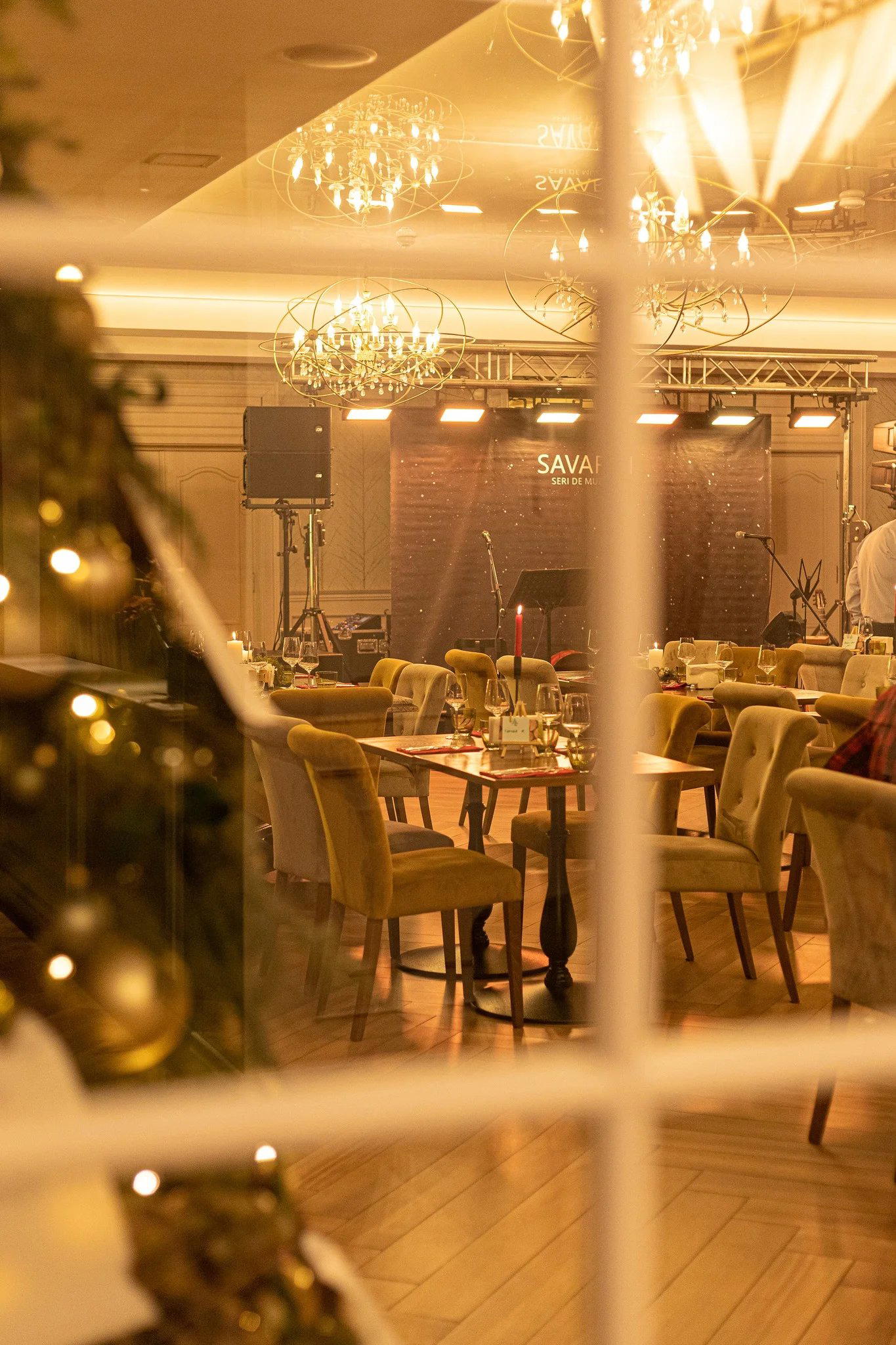
Restaurant Savarin is an International & Modern Romanian restaurant in Bacău, Romania. The city lacks the density of Bucharest's restaurant scene or the tourist infrastructure that has accelerated places like Cluj-Napoca and Sibiu, but that absence has shaped something more deliberate. Restaurants here tend to serve a local clientele with long memories and specific expectations. They do not survive on passing trade. Restaurant Savarin, addressed at Strada Gheorghe Donici 2bis, positions itself within that context, a dining room whose name alone declares an allegiance to considered sourcing and French gastronomic tradition, before a single plate arrives.
What the Name Signals
Brillat-Savarin, the 18th-century French magistrate and writer whose Physiology of Taste remains the foundational text of serious food writing, was the first major European voice to argue that the quality of a meal begins long before the kitchen, that it is determined by where ingredients are grown, raised, or caught, and by the relationships between producer and cook. A restaurant bearing his name, in a secondary Romanian city, is making a claim.
In Moldova, the historical region in which Bacău sits, that question has a particular texture. The Moldovan countryside produces some of Romania's least-exported but most respected agricultural output: valley fruit, woodland mushrooms, river fish from the Siret and Bistrița systems, and livestock raised at a scale that still allows for meaningful traceability. The restaurants in Romanian cities that do this sourcing well tend to build their identity around it quietly.
The Scene on Strada Gheorghe Donici
The address places Savarin in a part of central Bacău that functions as the city's civic core, the kind of street where the built environment expects a certain level of seriousness from its tenants. Romanian dining rooms in this tier, formal by local standards, without necessarily reaching the pricing or theatrical service of capital-city fine dining, tend to operate as social anchors for professional and business communities. They are where the city marks occasions and conducts its longer meals. That role shapes a kitchen's priorities: consistency across service counts more than a single dazzling tasting-menu moment.
Lo Sfizio in Târgu Mureș and Kombinat Gastro-Brewery in Sibiu, both of which demonstrate how secondary Romanian cities have developed restaurant identities that draw on local production rather than importing the aesthetic of Bucharest's more trend-driven venues. The pattern across these cities is consistent: the restaurants with staying power are the ones with supplier relationships, not just design concepts.
Ingredient Sourcing in the Moldovan Context
Romania's northeastern region has not been packaged for export in the way that Transylvania's food culture has. That makes it harder to reference and easier to overlook, but the underlying agricultural quality is not in question. The Siret valley produces freshwater species, carp, perch, pike, that feature in any credible Moldovan kitchen. The Carpathian foothills to the west of Bacău supply game and forest produce through seasons that run from spring morels through autumn wild boar. A restaurant named after Brillat-Savarin, operating in this geography, has access to a sourcing argument that writes itself, provided the kitchen is actually using it.
That conditional matters. Romania has a significant cohort of restaurants that lean on regional identity as a marketing frame without the supplier depth to back it. The stronger precedent, and the more demanding version of the Savarin model, appears in Bucharest, where Bogdania Bistro and the theatrical heritage dining of Caru' cu Bere represent two entirely different approaches to Romanian culinary identity, one rooted in provenance and one in spectacle.
How Savarin Fits the Broader Romanian Dining Moment
Romanian dining has undergone a genuine reappraisal over the past ten years. A generation of cooks trained abroad has returned with technique, but the more durable shift has been in how Romanian ingredients are now discussed and priced, no longer as a compromise or a provincial limitation, but as the point. That shift is visible in places like Eat IT in Oradea and Cofeels in Cluj-Napoca, where the format is casual but the sourcing conversation is present. It appears at a different price point at venues like CARTUF in Iași, which sits in the same northeastern Romanian geography as Bacău.
In Bacău specifically, Sushi Master demonstrates that the city's appetite for international formats is real. But the space for a restaurant that takes regional Romanian produce seriously and applies consistent classical technique remains underserved. Savarin's name positions it there. The broader direction of Romanian fine and semi-fine dining, from the Cartofisserie group's presence in Timișoara, Brașov, and Suceava to individual operators across the country, suggests that particularly durable restaurant identities are being built around specificity of supply and clarity of concept, not imported formats.
Planning Your Visit
Restaurant Savarin is located at Strada Gheorghe Donici 2bis in central Bacău, walkable from the main civic areas of the city. Reservations are recommended. Bacău is accessible by train from Iași (approximately two hours) and by road from Bucharest (around four hours via the A7 corridor). Comparable programming in the city includes the cocktail format at Cocteleria Urban Garden in Florești for an evening before or after dinner.
- fried trout with polenta and green garlic sauce
- mushroom soup
- pork schnitzel
- chicken Kiev
- chicken curry
- spiced pork
At-a-Glance Comparison
Comparable venues nearby, for context on price, style, and recognition.
| Venue | Cuisine | Price | Notes |
|---|---|---|---|
| Restaurant SavarinThis venue — the venue you are viewing | International & Modern Romanian | $$ | Not listed |
| Sushi Master | Japanese Sushi | $$ | Bacau |
| Bogdania Bistro | Balkan Bistro | $$ | Lipscani/Old Town |
| Oddity | :null | $$ | Centru |
| Kunnai | Contemporary Thai Cuisine | $$ | Crângaşi |
| Caru' cu bere | Traditional Romanian | $$ | Old Town |
Continue exploring
More in Bacau
Restaurants in Bacau
Browse all →
At a Glance
- Modern
- Cozy
- Elegant
- Casual Hangout
- Group Dining
- Standalone
- Beer Program
Current opening hours
- Monday
- 12–10 PM
- Tuesday
- 12–10 PM
- Wednesday
- 12–10 PM
- Thursday
- 12–10 PM
- Friday
- 12–10 PM
- Saturday
- 12–10 PM
- Sunday
- 12–10 PM
Hours can change for holidays and private events. Last verified .
Homey decor with enjoyable atmosphere, featuring nice interior design and a welcoming environment for relaxation.