Tabelog 100 #17
Our verdict
A French restaurant in Tokyo's Hiroo-adjacent Ebisu neighbourhood, Restaurant Aladdin has held a place on the Opinionated About Dining recommended list since 2023 under chef Koichi Hashimoto. The address, on a quieter residential stretch of Ebisu 2-chome, signals the kind of neighbourhood French that Tokyo does better than almost anywhere outside France itself.

Pearl is the En Primeur Club membership app, where members save venues, book tables and use the concierge.
French Cooking in the Ebisu Quarter
Tokyo's French restaurant scene has long operated on a different register from its European counterparts. Where Paris produces neighbourhood bistros as a matter of geography and inheritance, Tokyo's version of the neighbourhood French restaurant is a considered act: a chef choosing a residential pocket over a high-visibility address, betting that the food will do the walking. That logic has produced some of the city's most committed cooking, concentrated in the arc of western Shibuya wards that runs through Daikanyama, Hiroo, and Ebisu.
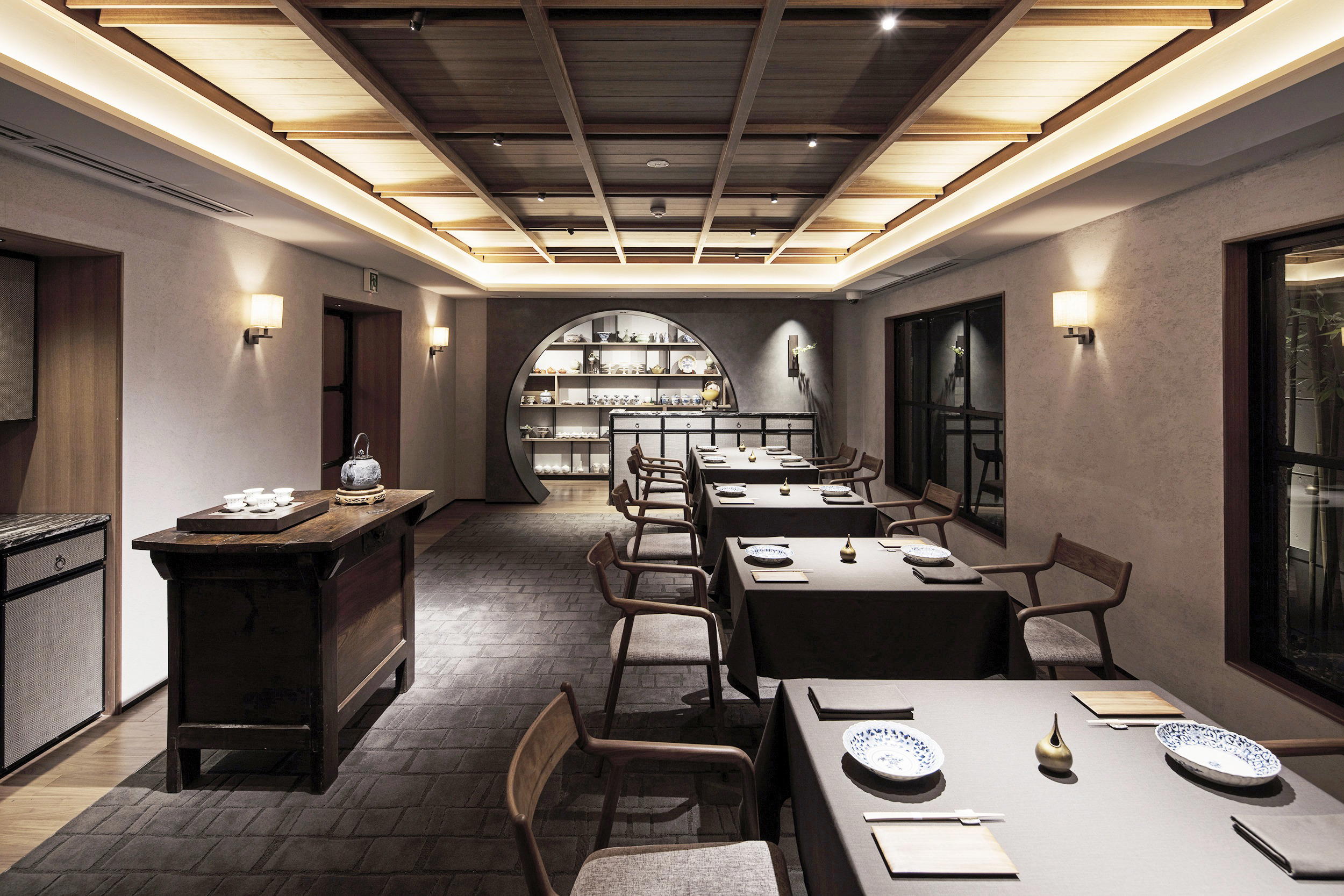
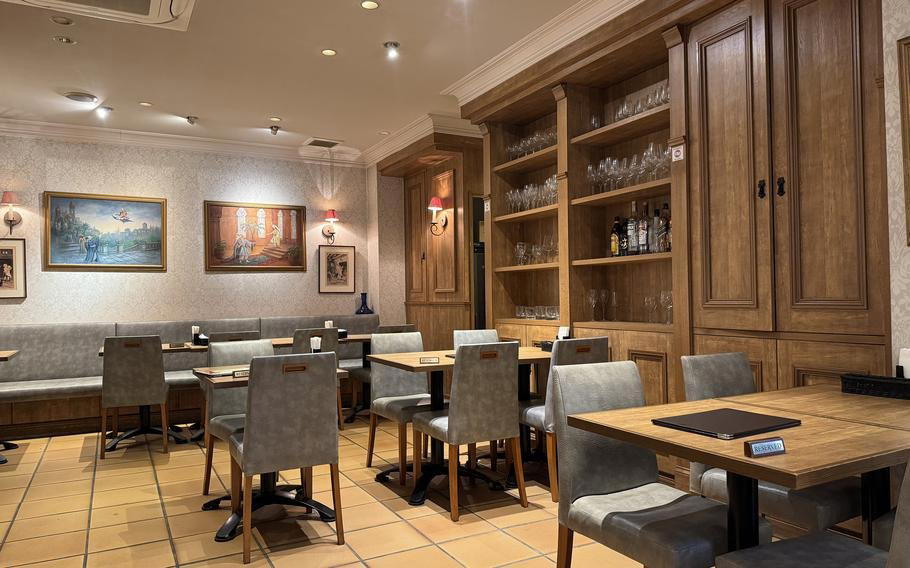
Restaurant Aladdin sits in that arc, on a ground-floor unit in a low-rise building on Ebisu 2-chome. The address is specific in a way that matters. Ebisu 2-chome is not the commercial strip around the station; it is the quieter residential spine that runs south toward Hiroo, where the density drops and the buildings are lower. A restaurant choosing this location is selecting for a particular kind of guest: one who looks up an address, not one who stumbles in from the station concourse. That filter shapes the room before anyone has ordered a thing.
Where Aladdin Sits in Tokyo's French Tier
Tokyo's French restaurants now occupy at least three distinct tiers. At the leading, places like L'Effervescence, Sézanne, and ESqUISSE operate with Michelin stars and international press profiles. Below that, a mid-tier includes technically serious restaurants that are recognised by specialist guides but do not carry the full weight of the Michelin apparatus. Then there is the neighbourhood French, which is not a lesser category but a different one: cooking that answers to a regular clientele rather than to a global dining circuit.
Restaurant Aladdin's 2023 listing on the Opinionated About Dining recommended roster places it in the second tier, with the endorsement of a guide that applies consistent technical standards across countries rather than rewarding novelty or spectacle. OAD's methodology is vote-based and draws from a pool of frequent diners and food professionals, which means a recommendation reflects sustained quality over time rather than a single exceptional meal. For a French restaurant in a residential Tokyo address, that kind of recognition carries specific weight.
The comparison set for Aladdin is not the big-ticket omakase counters or the prestige tasting-menu rooms. It sits closer to Florilège in terms of its position as a serious French address that operates outside the most visible tier, though the cooking styles diverge. Château Restaurant Joël Robuchon in Yebisu Garden Place, a few minutes' walk away, represents the opposite end of the spectrum: a grand-format import name in an architecturally staged setting. Aladdin occupies a sharply different position on that spectrum.
Chef Koichi Hashimoto and the French Tradition in Tokyo
Tokyo has absorbed French technique more systematically than most food cities. The mechanisms include stages in France, Japanese chefs trained in Michelin kitchens, and a domestic culture of precision that translates well to classical French methods. Chef Koichi Hashimoto represents a generation of Tokyo-based chefs for whom French cooking is not an adopted genre but a primary language. The specific details of his training are not on public record in a form that permits confident reporting here, but the OAD listing implies that what he produces at the Ebisu counter reads as technically serious to a demanding specialist audience.
What matters more, editorially, is what this kind of chef in this kind of location signals about the broader Tokyo French scene. The neighbourhood French format in Tokyo tends to produce cooking that is less theatrical than the prestige rooms but no less precise. The absence of a grand-hotel backdrop or a famous-name affiliation often focuses the cooking inward, toward the plate rather than the room.
The Hiroo-Ebisu Corridor as a Dining Address
The block between Ebisu station and Hiroo has accumulated a quiet concentration of serious eating over the past two decades. The neighbourhood demographics, residential, internationally skewed, with disposable income and lower tolerance for tourist-circuit restaurants, have shaped what survives there. French cooking has done well in this corridor precisely because the guest base tends to know what French cooking should taste like.
Ebisu 2-chome specifically sits off the main flow. There is no foot traffic in the conventional sense. Guests arrive by intention. That makes the booking dynamic different from a restaurant on a high street: the room fills with people who chose to be there, which changes the atmosphere in ways that are hard to quantify but easy to feel during a meal.
For broader context on Tokyo's dining geography, the full Tokyo restaurants guide maps the city's major eating corridors. The Tokyo hotels guide covers accommodation options across the relevant neighbourhoods, and the Tokyo bars guide handles pre- and post-dinner drinking. For those planning wider itineraries, the Tokyo experiences guide and Tokyo wineries guide complete the picture.
French Cooking Beyond Tokyo
The French-influenced fine dining tradition extends across Japan in ways that often surprise visitors expecting a purely Japanese menu landscape. HAJIME in Osaka represents the ambitious end of the Osaka French scene, while akordu in Nara applies European technique to a very different provincial context. Gion Sasaki in Kyoto works in Japanese kaiseki rather than French, but the commitment to precision is directly comparable. Further afield, Goh in Fukuoka, 1000 in Yokohama, and 6 in Okinawa show how serious cooking has dispersed beyond the capital.
For those tracing the French fine dining tradition internationally, Hotel de Ville Crissier in Switzerland and Les Amis in Singapore offer useful reference points for how classical French technique travels and adapts.
Planning a Visit
| Detail | Restaurant Aladdin | L'Effervescence | Florilège |
|---|---|---|---|
| Cuisine | French | French | French |
| Neighbourhood | Ebisu 2-chome (residential) | Nishi-Azabu | Minami-Aoyama |
| Guide Recognition | OAD Recommended (2023) | Michelin 2-star | Michelin 2-star |
| Price Tier | Not publicly listed | ¥¥¥¥ | ¥¥¥¥ |
| n/a | n/a |
The address is 2 Chome-22-10 Ebisu, Shibuya, Tokyo, G1F of the Hiroo Riverside G building. Advance booking is advisable given the small footprint implied by a ground-floor unit in a residential building.
Frequently asked questions
Where exactly is Restaurant Aladdin?
Restaurant Aladdin is located at Japan, 〒150-0013 Tokyo, Shibuya, Ebisu, 2 Chome−22−10 広尾リバーサイドG G1F, Tokyo.
What cuisine category does Restaurant Aladdin fall under?
Is Restaurant Aladdin Michelin-listed?
Restaurant Aladdin has received recognition including: Opinionated About Dining Top Restaurants in Japan Recommended (2023).
What's the signature dish at Restaurant Aladdin?
No single dish has been confirmed as the centrepiece of Aladdin's menu through verifiable sources. Chef Koichi Hashimoto works within the classical French tradition, a discipline that typically rotates its focus seasonally rather than anchoring identity to one preparation. The Opinionated About Dining 2023 recommendation points to consistent kitchen execution rather than a single standout plate.
Who is the chef connected to Restaurant Aladdin?
The chef associated with Restaurant Aladdin is Koichi Hashimoto.
Reputation Context
Comparable venues nearby, for context on price, style, and recognition.
| Venue | Cuisine | Price | Awards | Notes |
|---|---|---|---|---|
| Restaurant AladdinThis venue (the venue you are viewing) | Classic French | $50–100 | Tabelog 100 #17 | Not listed |
| La Clairière | French Fine Dining | Not listed | Tabelog Bronze | Minato |
| Naturam | Seasonal French with Japanese Ingredients | $50–100 | We're Smart World 3 Radishes | Setagaya |
| マチュリテ | Modern French Bistro | $50–100 | Not listed | Chūō |
| KINO_ | Innovative French with Hokkaido ingredients | $100–150 | Tabelog 100 #73 | Shibuya |
| ルメルシマン オカモト | Modern French with Hokkaido ingredients | $100–150 | Not listed | Minato |
Recognition history
Dated appearances from independent guides and award organizations, with the underlying list record or original source where available.
Opinionated About Dining Top Restaurants in Japan Recommended
Opinionated About Dining
Tabelog 100 #17 · No. 17
Tabelog · Tabelog 100 - French - TOKYO - 2025
Full recognition history (3 entries)
Opinionated About Dining Top Restaurants in Japan Recommended
Opinionated About Dining