Our verdict
On the cobbled edge of Gdańsk's Fish Market, Restauracja Fellini occupies one of the Old Town's more atmospheric addresses at Targ Rybny 6. The restaurant draws on the northern Polish larder — Baltic coast produce, regional grains, and local seasonal supply — framing Italian-inflected cooking through the lens of where ingredients actually come from. For visitors working through Gdańsk's mid-to-upper dining tier, it earns a considered look.

Pearl is the En Primeur Club membership app — saves, bookings, and concierge access live there. Same editors, same standards.
- Address
- Targ Rybny 6, 80-838 Gdańsk, Poland
- Phone
- +48888010203
- Hours
- Mon–Thu 1–10 PMFri–Sun 12–10 PM
- Website
- restauracjafellini.pl
- Directions
- Get directions
- Booking
- Book on the venue's website
The menu
What to order
- Arancini borowikowe
- Pieczone udo z kaczki
- Scallops with cauliflower puree
The Fish Market Address and What It Signals
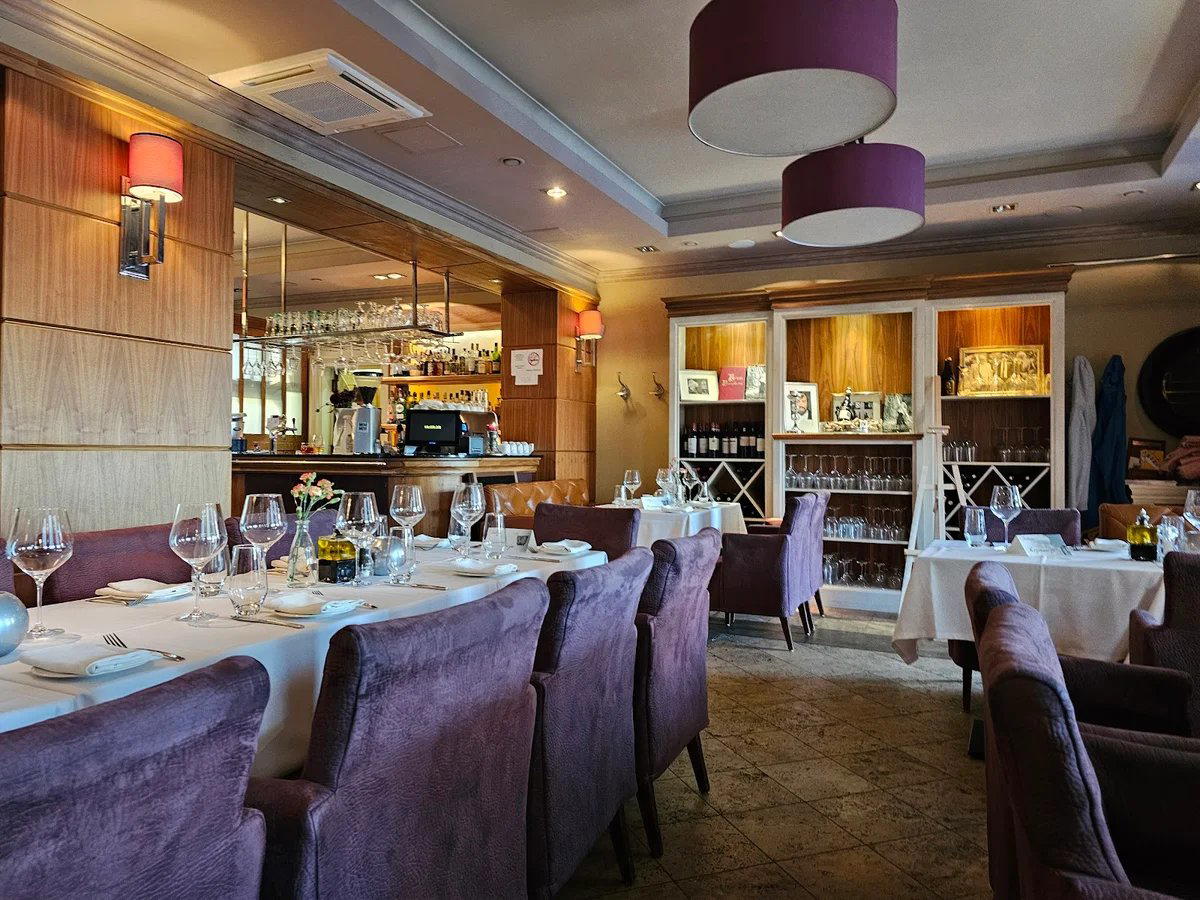
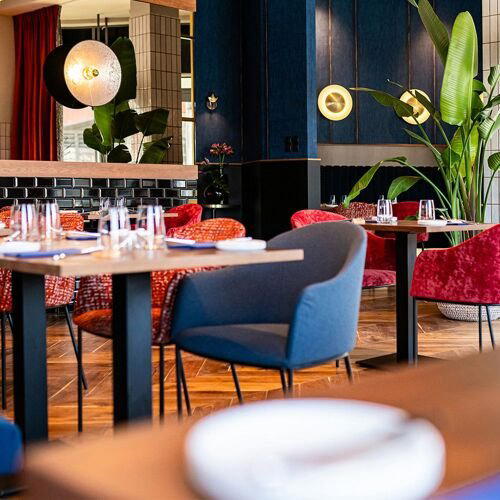
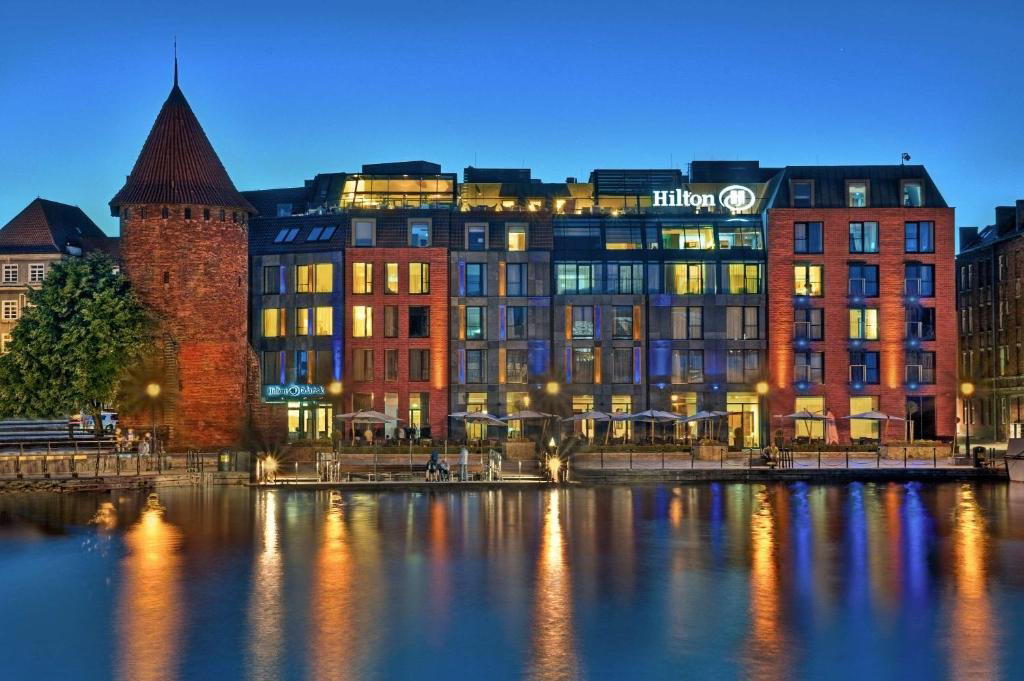
Targ Rybny — the Fish Market — is one of Gdańsk's oldest commercial sites, a square that spent centuries as the point where Baltic catch moved from boat to city. The address still carries that freight. Restaurants that choose it are making a statement about proximity to source material, whether or not they follow through on it. Restauracja Fellini Gdańsk sits at number 6, in a building whose thick brick walls and street-level windows face the kind of Old Town square that fills with tourists in summer and empties to a quieter, more local rhythm from October onward. The physical setting, stone underfoot, amber-lit interiors visible through the glass, the low-key grandeur of a Hanseatic merchant city, frames the meal before a dish arrives.
Gdańsk's dining scene has undergone a sharper transformation than most Polish cities acknowledge. The port city's historic role as a trading hub between northern Europe and the Baltic littoral means its food culture always had more cosmopolitan pressure than, say, a landlocked regional capital. That history now shows up in the ambitions of the restaurants that have settled along the Old Town's main arteries and market squares. The competition is real: Arco by Paco Pérez in Gdańsk operates at the technical best of the city's range, while Canis and Durga push the mid-to-upper register with distinct editorial identities. Fellini positions itself in that mid-to-upper bracket, where Italian-influenced cooking meets northern Polish sourcing.
The Sourcing Argument: Baltic Coast Produce and Why It Matters Here
The most interesting tension in any Italian-named restaurant operating in northern Poland is the sourcing question. Italy's culinary identity rests on hyperlocal ingredient fidelity, the specific olive oil from a particular grove, the pork from one valley. A restaurant called Fellini in Gdańsk cannot import that fidelity wholesale. What it can do, and what the better restaurants in this city do, is apply the same logic to a different larder: Baltic fish landed within a short distance of the kitchen, cold-climate root vegetables and grains from Pomeranian and Kashubian farms, dairy from the region's pastoral belt, and freshwater species from the Vistula delta and the lake districts to the south.
Northern Poland's agricultural identity is less celebrated than Małopolska's or Mazovia's, but it has real specificity. Kashubian strawberries carry protected geographical indication status. The Baltic yields cod, herring, sprats, and pike-perch in quantities that give serious kitchens genuine flexibility. Pomeranian goose has a long regional history. When an Italian-framed menu works with these materials rather than substituting them with imported analogues, it earns the right to its European register. This sourcing discipline is the lens through which Fellini's menu is worth reading, not as a question of authenticity to Italian tradition, but as evidence of how well a kitchen understands its actual geography.
Across Poland's more ambitious restaurants, this regional sourcing conversation has accelerated over the past decade. Bottiglieria 1881 Restaurant in Kraków and Muga in Poznań both operate within a similar framework: European technique applied to Polish regional produce, with the source material doing more narrative work than it once did. Gdańsk's position on the coast gives it a specific advantage in that conversation, the Baltic larder is immediate and distinctive in a way that landlocked sourcing sometimes is not.
Where Fellini Sits in Gdańsk's Dining Tier
Gdańsk's restaurant market stratifies reasonably clearly. At the accessible end, pierogi houses and casual Baltic fish spots serve a tourist-heavy clientele around the Long Market and Motława riverfront. Above that, a cluster of restaurants, including Flisak '76 and Billy's American Restaurant, operate in the mid-range with distinct concepts. Then there is the smaller cohort where Fellini competes: restaurants with more considered menus, a wine list that goes beyond the perfunctory, and a room calibrated for a dinner that lasts two hours rather than forty-five minutes.
In that tier, the Fish Market address is both an asset and a pressure. Guests arriving at Targ Rybny carry expectations shaped by the square's historic weight and current foot traffic. The room needs to hold its own against what the neighbourhood implies. For context on how the wider Polish dining scene is developing beyond Gdańsk, hub.praga in Warsaw and Braseria Pasieka in Rzeszow represent how Polish cities outside the obvious centres are building credible dining identities. Gdańsk is ahead of that curve in some respects, with its port-city cosmopolitanism giving restaurants permission to reach further.
Internationally, the logic of applying classical European technique to local northern produce is familiar from contexts like the Nordic dining movement, or the way Le Bernardin in New York City made seafood sourcing a philosophical foundation rather than a menu detail. The ambition at Fellini's level in Gdańsk is less rarified, but the structural argument is the same: place and produce should be legible in the plate.
Planning Your Visit
Restauracja Fellini Gdańsk sits at Targ Rybny 6 in the Old Town, within walking distance of the Motława waterfront and the main Long Market. The Fish Market square is accessible on foot from the principal tram and bus stops along Wały Jagiellońskie. Gdańsk's summer season runs May through September, when the Old Town is at its most active and table availability at the city's better restaurants tightens; booking ahead is the sensible approach during those months. The shoulder season, October and early November, or March and April, brings quieter rooms and, at Baltic-sourcing restaurants, an interesting shift in what the larder offers. For a broader picture of where Fellini sits among Gdańsk's options, the full Gdansk restaurants guide maps the city's dining range across neighbourhoods and price points. Elsewhere in the city, Billy's American Restaurants Chmielna fills a different brief for visitors wanting a less formal evening.
Frequently asked questions
Is Restauracja Fellini Gdańsk a family-friendly restaurant?
Fellini's position on Targ Rybny — a historic square in Gdańsk's Old Town rather than a nightlife strip — suggests a setting that accommodates mixed-age groups without difficulty. The Italian-named restaurant format typically runs to seated, coursed dining, which suits families comfortable with a sit-down meal. For groups with younger children, confirming capacity and seating arrangements directly with the venue before visiting is advisable.
What's the vibe at Restauracja Fellini Gdańsk?
The address tells much of the story: Targ Rybny 6 places the restaurant on one of Gdańsk's oldest commercial squares, a short walk from the Motława waterfront and the Long Market. That Old Town context, combined with an Italian restaurant concept operating in northern Poland, points toward a room aimed at a mid-to-upper dining tier rather than casual tourism. Expect something quieter and more considered than the high-turnover pierogi spots closer to the main drag.
Why is an Italian restaurant located on Gdańsk's historic Fish Market square?
Targ Rybny — literally the Fish Market — spent centuries as the landing point for Baltic catch entering Gdańsk's trade economy, making it one of the city's most historically seafood-saturated addresses. Siting an Italian restaurant there creates a productive sourcing tension: Italian culinary technique applied to northern Polish coastal produce, at a location where fish has been sold since the medieval period. It is a positioning that distinguishes Fellini from both standard Italian imports and the city's conventional Baltic fish restaurants.
What's the best thing to order at Restauracja Fellini Gdańsk?
The most argued case for visiting Fellini is the sourcing logic: an Italian-named kitchen sitting on the former Fish Market in Gdańsk has direct geographic access to Baltic catch that Italian coastal restaurants simply don't. Dishes that put that Baltic produce through an Italian framework are where the menu's internal argument is strongest. Specific current dishes are best confirmed with the restaurant directly, as menus shift with season and supply.
What part of town is Restauracja Fellini Gdańsk in?
Restauracja Fellini Gdańsk is located at Targ Rybny 6, 80-838 Gdańsk, Poland, Gdansk.
How It Stacks Up
Comparable venues nearby, for context on price, style, and recognition.
| Venue | Cuisine | Price | Notes |
|---|---|---|---|
| Restauracja Fellini GdańskThis venue — the venue you are viewing | Italian | $30–50 | Not listed |
| La Cucina Ristorante | Traditional Italian Trattoria | Not listed | old town |
| Restauracja Pueblo | Authentic Mexican & Tex-Mex | $10–20 | Old Town |
| Hashi Sushi | Traditional Japanese Sushi | $20–30 | Przymorze |
| Motlava Restaurant | Modern Polish | $20–30 | Brabank |
| Canis | Modern Polish Fine Dining | $30–50 | Stare Miasto |
Continue exploring
More in Gdańsk
Restaurants in Gdańsk
Browse all →
Restauracja Fellini Gdańsk
The wine
- Wine program
- Curated wine list
- Extensive wine list
Details
- Romantic
- Elegant
- Cozy
- Intimate
- Date Night
- Business Dinner
- Special Occasion
- Waterfront
- Historic Building
- Extensive Wine List
- Waterfront
- A La Carte
- Wine
- Vegetarian Friendly
- Vegan Options
- Gluten Free Options
Current opening hours
- Monday
- 1–10 PM
- Tuesday
- 1–10 PM
- Wednesday
- 1–10 PM
- Thursday
- 1–10 PM
- Friday
- 12–10 PM
- Saturday
- 12–10 PM
- Sunday
- 12–10 PM
Hours can change for holidays and private events. Last verified .
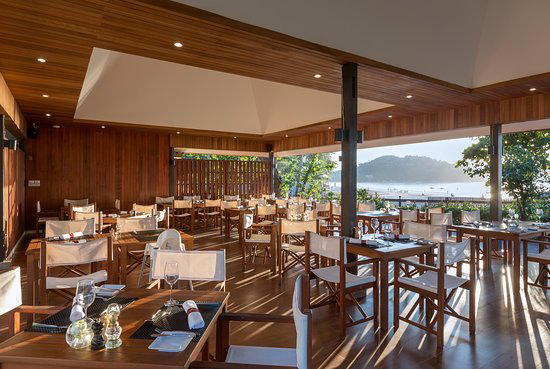
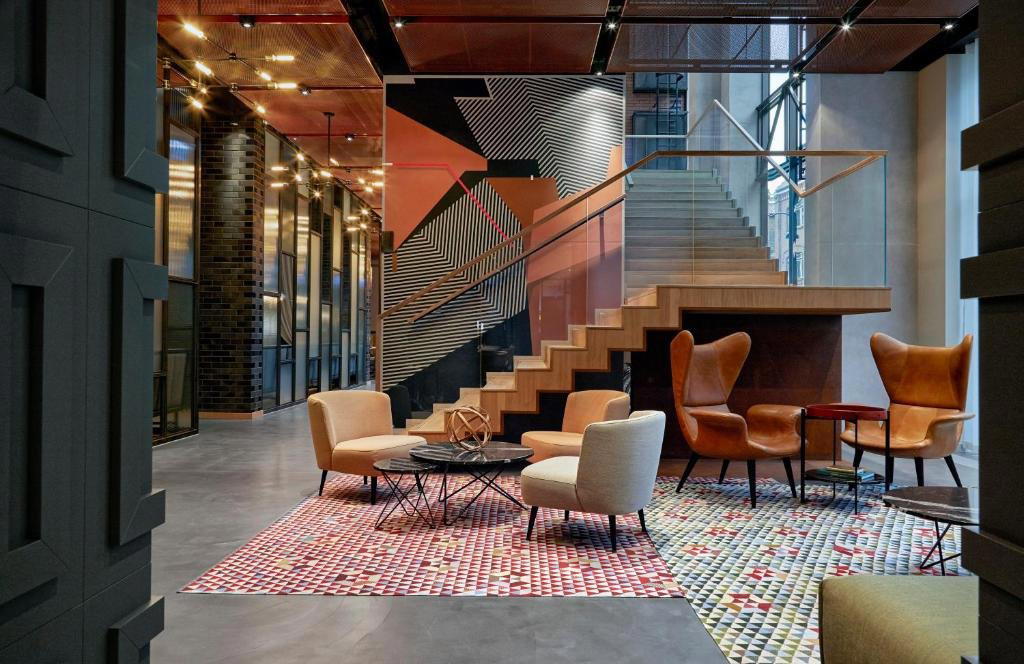
Klimatyczne (atmospheric) space with beautiful river and philharmonic views, creating an elegant and memorable dining experience.