Our verdict
Durga occupies a address on Szeroka Street, one of Gdańsk's most architecturally layered thoroughfares in the historic Main Town. The address places it within walking distance of the Green Gate and the Motława riverfront, positioning it inside the city's densest concentration of dining options. For visitors working through Gdańsk's restaurant scene, Durga represents one address worth cross-referencing against the broader Szeroka corridor.

Pearl is the En Primeur Club membership app, where members save venues, book tables and use the concierge.
The menu
What to order
- Maa Durga Chaat
- Chicken Tikka Masala
- Butter Chicken
Szeroka Street and the Layered Character of Gdańsk's Main Town
Szeroka Street does not announce itself quietly. The address 84/85 sits along one of Gdańsk's most historically compressed corridors, where Hanseatic merchant architecture, post-war reconstruction, and contemporary hospitality coexist within a few hundred metres. The street runs parallel to the Motława waterfront, and in summer the foot traffic between the Green Gate and St. Mary's Church creates a sustained ambient rhythm that defines dining in this part of the city. Restaurants on Szeroka operate against that backdrop, the cobblestone acoustics, the amber light off the restored facades, the particular way the evening cools once the tourist current ebbs after eight. Durga sits inside this environment at number 84/85, which places it in the middle of that commercial and cultural density.
Gdańsk's restaurant scene has changed considerably over the past decade. The city's position as a port and trading hub historically produced a pragmatic, rather than refined, food culture, herring preparations, bread soups, game from the surrounding Pomeranian region. That base has since been layered with contemporary Polish cooking, international formats, and a small but growing tier of ambitious restaurants. The current scene ranges from casual pierogi operations and American-style dining (see Billy's American Restaurant. and Billy's American Restaurants Chmielna) through to more considered Polish-European kitchens like Canis and Flisak '76, with international formats including Hashi Sushi filling gaps in the middle register. Durga's address places it in the geographic heart of that scene, on the street most visitors cross at least once regardless of where they are eating.
The Atmospheric Logic of the Szeroka Corridor
Understanding what it feels like to arrive at Durga requires understanding what Szeroka itself feels like. In high summer, roughly June through August, the street operates at near-capacity visitor volume, the combination of cruise arrivals via the nearby port, domestic tourism from Warsaw and Kraków, and the European city-break circuit makes the Main Town one of the busiest heritage zones in the Baltic region. By September, that pressure eases, and the street reverts to something closer to its residential and local-dining character. That seasonal shift is consequential for any restaurant on this corridor: summer service here means managing volume and pace; autumn and winter service is a different proposition entirely, slower and more neighbourhood-facing.
The architectural context at 84/85 is itself part of the experience. The Gdańsk Main Town was substantially destroyed in 1945 and rebuilt in the decades following, with facades restored to their Hanseatic appearance but interiors rebuilt from postwar materials. What looks like a 17th-century merchant house is often a 1950s structure wearing a historical exterior. This affects the spatial logic inside many of these buildings, ceiling heights, room proportions, and acoustic qualities that differ from what the exterior implies. Restaurants in this zone tend to work with that reality rather than against it.
For comparison across the Polish dining tier, the gap between Gdańsk's leading addresses and the Michelin-recognised kitchens in Kraków and Warsaw is still measurable. Bottiglieria 1881 Restaurant in Kraków and Muga in Poznań represent a formal recognition tier that Gdańsk has not yet matched at scale, though venues like Arco by Paco Pérez in Gdańsk are pushing in that direction. Durga occupies a different register, an address on the city's primary tourist artery rather than a destination requiring specific effort to reach.
Sensory Context: What the Street Gives You Before You Sit Down
The approach to any restaurant on Szeroka is partly determined by the time of day. At midday the street is loud, tour groups, street food vendors near the fountain, the particular acoustics of cobblestone amplifying foot traffic. By early evening, as the main tourist wave recedes, the street quiets to a level where outdoor seating becomes viable for conversation. Late evening, particularly in autumn when the amber street lighting catches the restored facades, the corridor has a quality that is specific to Baltic port cities: a certain maritime heaviness in the air, a muted colour palette, and a stillness that contrasts sharply with the daytime intensity.
This is the atmospheric frame within which Durga operates. The city's food scene in this zone ranges from venues designed primarily for tourist throughput to those with genuine local repeat custom. The distinction matters because it shapes everything from menu format to pacing to how staff read a table. Restaurants on Szeroka that have survived beyond their first few years tend to have resolved that question clearly, positioning either for the visiting diner or the returning local rather than attempting both simultaneously.
For reference across the broader Polish and European dining context, the sensory discipline required to operate a serious kitchen in a high-traffic tourist zone is considerable. Le Bernardin in New York City and Lazy Bear in San Francisco represent formats where environment and pacing are engineered with precision, the contrast with the variable conditions of a heritage tourist street like Szeroka illustrates the structural challenge facing any ambitious restaurant in this location.
Elsewhere in the Tri-City area and the wider Pomeranian region, the dining options diversify quickly once you move off the Main Town grid. Bar Przystań in Sopot and Luneta & Lorneta Bistro Club in Ciekocinko represent the coastal register that defines much of this region's eating character, while Giewont in Kościelisko points toward the mountain tradition further south. The contrast between those contexts and the compressed urban density of Szeroka is worth holding in mind when calibrating expectations for any restaurant in Gdańsk's Main Town.
Planning Your Visit
Durga is located at Szeroka 84/85, 80-835 Gdańsk, in the Main Town district. The address is walkable from the Green Gate, the Long Market, and the Motława waterfront within five to ten minutes on foot. Gdańsk's Main Town is compact enough that the street functions as a natural pass-through for anyone staying in the city centre. For the widest range of table availability, visiting outside the peak summer window (July and August) gives more flexibility and a markedly different street atmosphere. Current booking details, hours, and pricing are best confirmed directly, as the venue's operational specifics were not available at time of publication. Our full Gdansk restaurants guide covers the broader scene with updated practical information across price tiers and neighbourhoods.
For visitors cross-referencing the wider Polish restaurant scene, Ariel in Krakow, hub.praga in Warsaw, and OK Wine Bar in Wrocław offer useful points of comparison across different city contexts. For sushi specifically within the region, Nare Sushi in Skórzewo represents the format outside the city centre.
Frequently asked questions
What's the vibe at Durga?
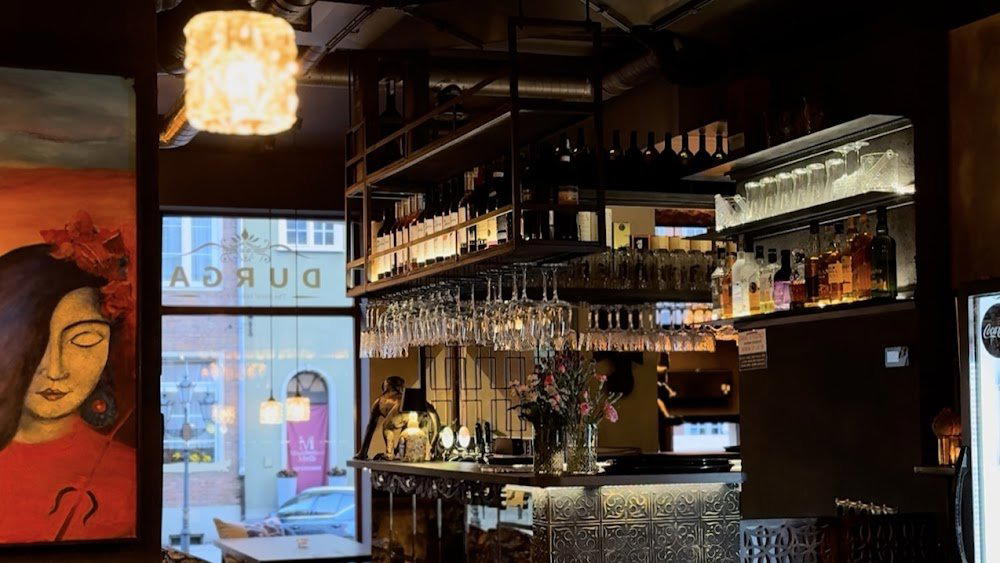
Durga occupies address 84/85 on Szeroka Street, one of Gdańsk's most compressed and historically layered corridors in the Main Town district. The street itself sets the tone, Hanseatic architecture, high pedestrian traffic in summer, and a quieter register in the shoulder months. Expect a setting shaped as much by the neighbourhood's character as by the interior.
What's Durga's location?
Durga is located at Szeroka 84/85, 80-835 Gdańsk, Poland, Gdansk.
Where exactly is Durga located in Gdańsk, and what's nearby?
Durga is at Szeroka 84/85, 80-835 Gdańsk, in the Main Town district. The address is walkable from the Green Gate, the Long Market (Długi Targ), and the Motława riverfront, the core of Gdańsk's historic centre. That positioning makes it a practical stop whether you're arriving from the waterfront or moving through the Old Town on foot.
What's the signature dish at Durga?
For the most accurate picture of what's on the plate, checking directly with the restaurant before visiting is the practical approach, particularly given that Gdańsk's dining scene draws on both Baltic and Central European culinary traditions.
Is Durga reservation-only?
Given its position on Szeroka Street, a high-footfall corridor in Gdańsk's Main Town that peaks between June and August, contacting the venue in advance during summer months is advisable.
City Peers
Comparable venues nearby, for context on price, style, and recognition.
| Venue | Cuisine | Price | Awards | Notes |
|---|---|---|---|---|
| DurgaThis venue (the venue you are viewing) | Authentic Royal Indian Fine Dining | $30–50 | Not listed | Not listed |
| Canis | Modern Polish Fine Dining | $30–50 | Not listed | Stare Miasto |
| MONTOWNIA FOOD HALL | International Food Hall | $10–20 | Not listed | Main City |
| Tygle | Modern Polish | $50–100 | Michelin Plate | Wyspa Spichrzów |
| La Cucina Ristorante | Traditional Italian Trattoria | Not listed | Not listed | old town |
| Sztuczka | Modern Polish | Not listed | Michelin Plate | Stara Stocznia |
Continue exploring
More in Gdańsk
Restaurants in Gdańsk
All restaurants in Gdańsk →
Details
- Elegant
- Cozy
- Sophisticated
- Date Night
- Special Occasion
- Group Dining
- Open Kitchen
- Craft Cocktails
- A La Carte
- Family Style
- Vegetarian Friendly
- Vegan Options
- Gluten Free Options
Current opening hours
- Monday
- 12–10:30 PM
- Tuesday
- 12–10:30 PM
- Wednesday
- 12–10:30 PM
- Thursday
- 12–10:30 PM
- Friday
- 12–11 PM
- Saturday
- 12–11 PM
- Sunday
- 12–11 PM
Hours can change for holidays and private events. Hours as of .
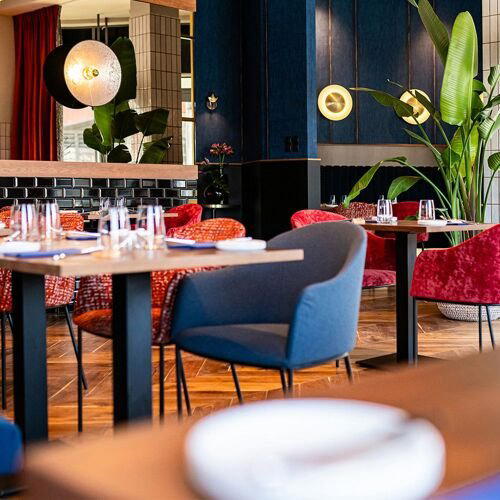
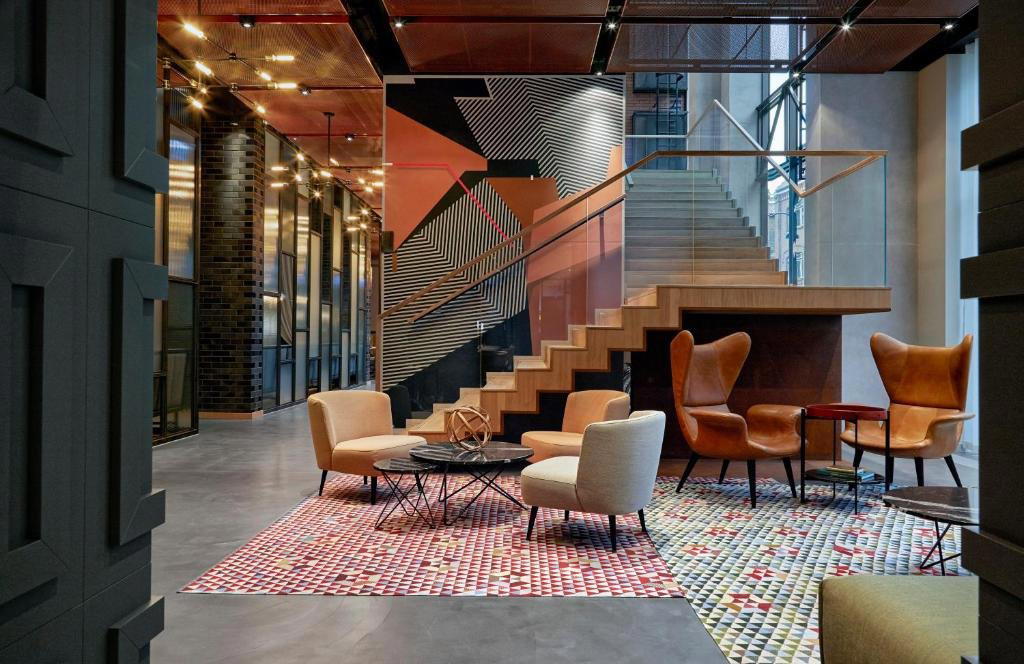
Elegant interiors with warm hospitality, lovely ambience, nice interior, and magnificent style as noted in guest reviews.