Our verdict
On Chlebnicka Street in Gdańsk's medieval core, Flisak '76 takes its name from the rafters, the flisacy, who once moved timber and grain along the Vistula. The address places it among the city's most historically charged dining streets, where the restaurant operates as both a neighbourhood anchor and a reference point for Polish culinary tradition in the Tricity region.

Pearl is the En Primeur Club membership app, where members save venues, book tables and use the concierge.
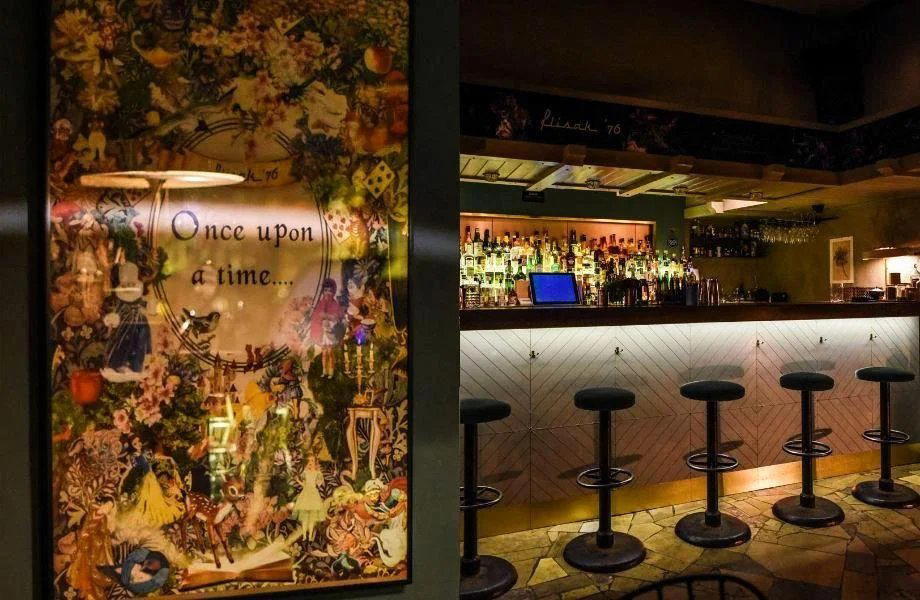
Chlebnicka Street and What It Carries
Gdańsk's Chlebnicka Street runs through the heart of the Main Town, parallel to the Long Market and close enough to the Motława riverfront that the maritime weight of the city's history is never far away. The buildings here are reconstructed Hanseatic facades, their brick and stepped gables rebuilt after the wartime destruction that erased most of the old city. To sit at a table in this neighbourhood is to eat inside a carefully restored idea of Gdańsk, a city that was German before it was Polish, then Soviet-adjacent, then abruptly, consequentially itself again. That layered civic identity is the cultural backdrop against which restaurants like Flisak '76 operate.
The name is a deliberate historical anchor. The flisacy were the river rafters who navigated timber and grain down the Vistula toward Gdańsk's port, a trade that sustained the city's wealth through the sixteenth and seventeenth centuries. Naming a restaurant after them, and marking that name with a year, plants the venue firmly in a local tradition of remembering how Gdańsk made its living before the amber-and-tourist economy replaced the cargo economy. That kind of referential naming is common across Poland's more considered dining rooms, where connecting to pre-partition or pre-communist economic life is a way of asserting cultural continuity.
Where Gdańsk Dining Sits Right Now
The Tricity area, Gdańsk, Gdynia, and Sopot, has developed one of the more interesting provincial dining scenes in Poland over the past decade. It is not Warsaw, where restaurants like hub.praga in Warsaw operate inside a capital-city ecosystem of press attention and international visitors. And it is not Kraków, where Bottiglieria 1881 Restaurant in Kraków anchors a fine-dining scene with Michelin recognition and deep wine programming. Gdańsk sits in a different register: a port city with strong civic pride, a rebuilt historic centre that draws significant domestic tourism, and a restaurant community that has been gradually professionalising without the external validation that Warsaw and Kraków receive.
Within the city, the range is genuine. Canis and Arco by Paco Pérez in Gdańsk operate at the more technically ambitious end of the spectrum, while Billy's American Restaurant. and Billy's American Restaurants Chmielna serve the city's appetite for casual American formats. Hashi Sushi and Durga show the international range that has expanded across the city in step with rising domestic incomes and broader culinary awareness. Flisak '76 reads, from its name and address, as something more rooted in Polish culinary tradition than any of those alternatives.
The Cultural Logic of Polish Tavern Dining
Polish restaurant culture has long operated around a specific format: the tavern or karczma tradition, in which hearty regional cooking, shared tables, and a sense of hospitality rooted in abundance rather than minimalism define the experience. This is not the same as fine dining, and it is not meant to be. The karczma format prizes generosity, bread arriving without being ordered, portions calibrated for appetite rather than aesthetics, cooking that references regional geography and seasonal availability rather than global technique.
That tradition has undergone considerable pressure over the past two decades, as Polish urban diners have been exposed to the full spectrum of contemporary European and Asian cooking. The result, in cities like Gdańsk, is a kind of fork in the road: restaurants that pivot sharply toward international formats and those that stay grounded in Polish tradition while updating their execution. The best of the latter category produce something worth seeking out precisely because they are operating against a trend, not with it. Across Poland, from Giewont in Kościelisko to Muga in Poznań and Kwestia Czasu in Białystok, the more interesting regional rooms share a willingness to treat Polish culinary heritage as a serious subject rather than a nostalgic prop.
Flisak '76's position on Chlebnicka, in a part of the city that draws both domestic visitors and the kind of European traveller who arrives with some historical knowledge of Gdańsk, suggests it is calibrated for that audience. The 1976 in the name marks a specific moment in Polish history, the late communist period, when the social tensions that would eventually produce Solidarność were already building in Gdańsk's shipyards.
Cooking the Pomeranian Coast
Pomeranian cuisine, the regional cooking of Gdańsk and the surrounding area, draws from both the sea and the agricultural interior. Baltic fish, particularly herring, smoked eel, and cod, have been staples of the local table for centuries, traded through the port and consumed across the social hierarchy. Alongside fish, the cooking of this region reflects Central European patterns: rye bread, root vegetables, game from the interior forests, dairy from local farms, and a pickling and preservation tradition that developed out of necessity and became a defining flavour profile.
The interplay between Germanic and Polish culinary traditions in this region is historically pronounced. Gdańsk spent centuries as a predominantly German-speaking city, and the cooking that developed here absorbed influences from both directions before the postwar population transfer reset the city's cultural composition almost entirely. Contemporary Pomeranian cooking sits at that intersection, even when individual restaurants do not make that history explicit. For visitors whose exposure to Polish food has been limited to Warsaw or Kraków, the coastal register feels distinct: saltier, more maritime, more austere in certain registers and more generous in others.
Planning a Visit
Flisak '76 is located at Chlebnicka 9/10 in Gdańsk's Main Town, within comfortable walking distance of the Long Market and the Green Gate. The neighbourhood concentrates several of the city's dining options within a compact area, making it practical to combine with broader exploration of the historic centre. For visitors building a broader picture of Polish dining across the country, the EP Club coverage spans from Górnik in Krakow and Cudne Manowce in Olsztyn to Hattori Hanzo in Czestochowa and Włoska Restauracja Bellanuna in Rzeszow, providing useful reference points for understanding regional variation. For a complete picture of dining options across the city, see our full Gdansk restaurants guide.
Visitors should contact the restaurant directly or check current listings before finalising plans. The Chlebnicka address is central and accessible on foot from the main tourist areas; the neighbourhood is active across lunch and dinner services, and demand in the summer months, when Gdańsk draws its largest visitor volumes, can be significant.
Frequently asked questions
Where exactly is Flisak '76?
Flisak '76 is located at Chlebnicka 9/10, 80-830 Gdańsk, Poland, Gdansk.
Is Flisak '76 a good option for traditional Polish food near Gdańsk's Old Town?
Located at Chlebnicka 9/10 in the Main Town, Flisak '76 operates within the karczma tradition that frames much of Gdańsk's established dining culture. The address puts it within walking distance of the city's most visited historical sites, making it a practical choice for visitors seeking regional Pomeranian cooking rather than international cuisine. The '76 in the name suggests a founding date that would place it among the longer-running restaurants in the neighbourhood.
What should I eat at Flisak '76?
Flisak '76 sits within the Pomeranian cooking tradition, which means the menu draws from both Baltic seafood and the agricultural interior of the region. Expect preparations built around local fish alongside hearty meat dishes rooted in the karczma format.
Can I walk in to Flisak '76?
The restaurant is in Gdańsk's Main Town at Chlebnicka 9/10, a street that draws consistent foot traffic from tourists and locals moving between the Long Market and the Motława riverfront. Walk-in availability at tavern-format venues in this corridor varies considerably by day and season. Contacting the venue ahead of time is advisable, particularly during Gdańsk's summer peak.
Price Lens
Comparable venues nearby, for context on price, style, and recognition.
| Venue | Cuisine | Price | Awards | Notes |
|---|---|---|---|---|
| Flisak '76This venue (the venue you are viewing) | Themed Cocktail Bar | $10–20 | Not listed | Not listed |
| Hashi Sushi | Traditional Japanese Sushi | $20–30 | Not listed | Przymorze, Traditional Japanese Sushi |
| Tawerna Pod Łososiem | Traditional Polish & Seafood | $10–20 | Not listed | Sobieszewska Island, Traditional Polish & Seafood |
| Villa Eva | Polish Fine Dining | $30–50 | Michelin Plate · Star Wine List | Wrzeszcz, Modern Polish Fine Dining |
| Pierogarnia Mandu Gdańsk Oliwa | Polish Pierogi House | $10–20 | Not listed | Oliwa, Polish Pierogi House |
| Sztuczka | Modern Polish | Not listed | Michelin Plate | Stara Stocznia, Modern Polish |
Continue exploring
More in Gdańsk
Restaurants in Gdańsk
All restaurants in Gdańsk →
Details
- Trendy
- Cozy
- Whimsical
- Intimate
- Date Night
- Casual Hangout
- Open Kitchen
- Craft Cocktails
- Small Plates
- Cocktails
Current opening hours
- Monday
- 6 PM–1 AM
- Tuesday
- 6 PM–1 AM
- Wednesday
- 6 PM–1 AM
- Thursday
- 6 PM–1 AM
- Friday
- 6 PM–2 AM
- Saturday
- 6 PM–2 AM
- Sunday
- 6 PM–1 AM
Hours can change for holidays and private events. Hours as of .