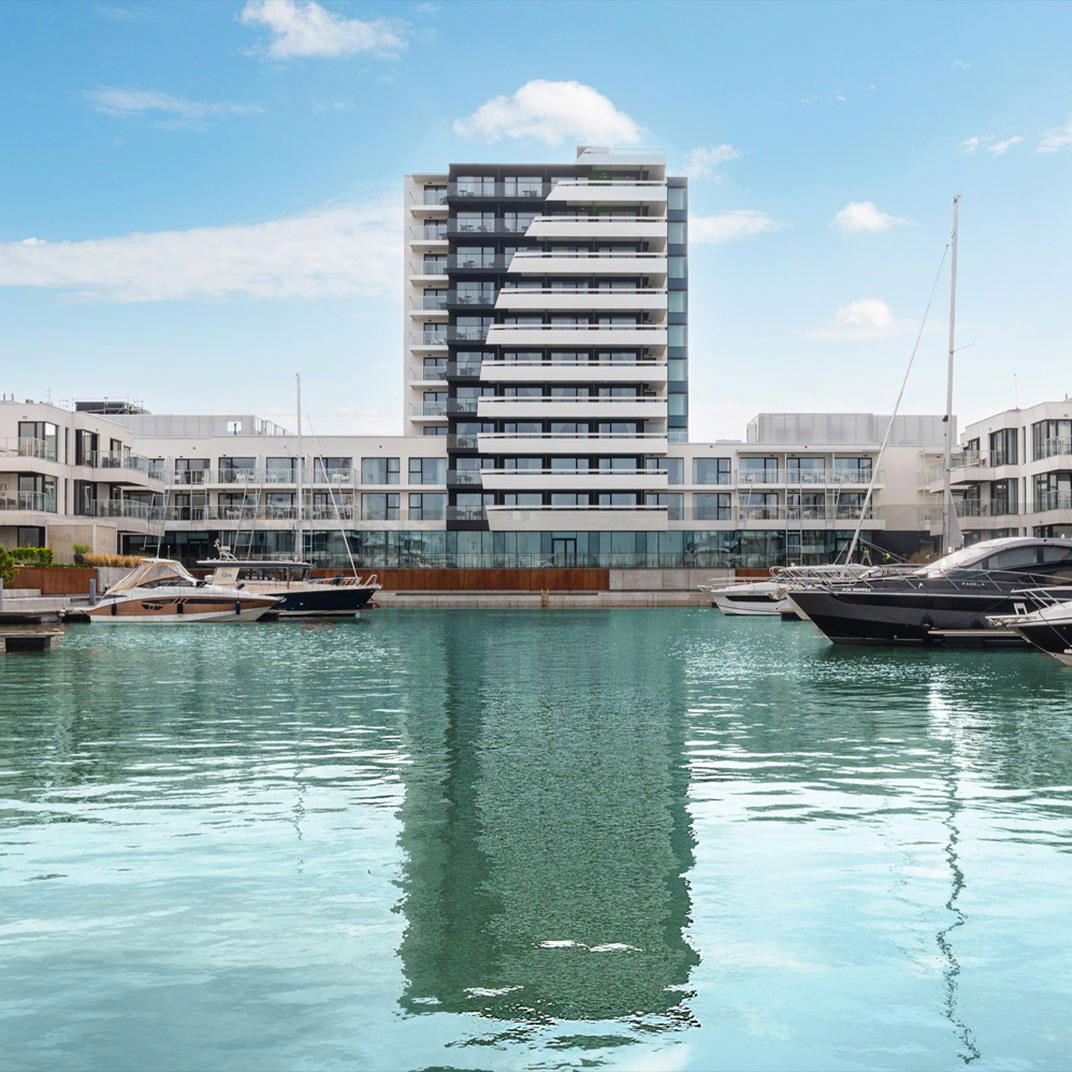
Positioned at Targ Rybny 1, directly beside the Motława River in Gdańsk's Old Town, Hilton Gdańsk occupies a site where the city's Hanseatic trading history and its post-war reconstruction architecture meet. The property places guests within walking distance of the Długi Targ and the historic Crane Gate, making it a practical base for the city's most concentrated stretch of medieval and rebuilt heritage.
Pearl is the En Primeur Club membership app — saves, bookings, and concierge access live there. Same editors, same standards.
- Address
- Targ Rybny 1, 80-838 Gdańsk, Poland
- Phone
- +48 58 778 71 00
- Website
- hilton.com
- Directions
- Get directions
 Saves & bookings on Pearl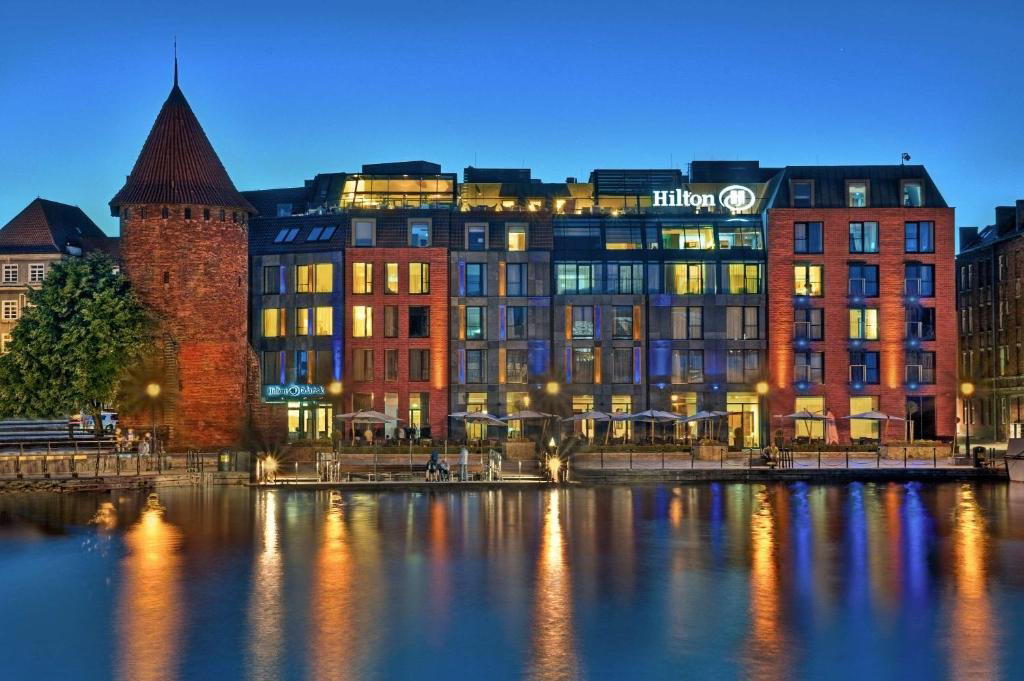
Where the Motława Meets the Modern Grid
Hilton Gdansk is a 5-star hotel in Gdańsk, Poland, with rooms from about $154 per night. The city's celebrated Long Market and Crane Gate are, in structural terms, post-war reconstructions of a Hanseatic original, painstakingly reassembled from rubble after 1945, then layered over subsequent decades with fragments of genuinely old fabric and Soviet-era additions that now sit uneasily alongside the restored Gothic brick. Hilton Gdańsk, at Targ Rybny 1, occupies a position inside this conversation: a contemporary hotel format set immediately on the Motława River, at an address that was once the fish market at the edge of the merchant city. The tension between that heritage and the building's modern footprint is not incidental. It is the defining characteristic of staying here.
Hotels along the Motława occupy one of Polish tourism's more contested corridors. Gdańsk has attracted significant investment since the early 2000s, and the riverfront has been progressively developed to serve both leisure visitors and the conference market the city draws from its position as a Baltic port and industrial centre. The Hilton fits within the larger, internationally branded segment of that market, alongside properties that prioritise consistent service delivery and amenity breadth over design distinctiveness. That places it in a different competitive tier from design-led independents like PURO Hotel Gdańsk or the smaller boutique properties grouped near the Długi Targ, and closer to the segment occupied by other full-service hotels targeting business travellers and group bookings.
The Physical Address and What It Implies
Targ Rybny, the Fish Market, sits at the southern edge of the Old Town's most visited corridor. The address places the hotel within a short walk of the Żuraw, the medieval crane that served as Gdańsk's most recognisable maritime symbol and now anchors the National Maritime Museum's riverfront campus. The Długi Targ, with its Neptune Fountain and the former Artus Court, is reachable on foot in under ten minutes. That proximity matters for visitors whose primary interest is in the city's Hanseatic and Royal Road heritage. For those arriving by train, Gdańsk Główny station is roughly two kilometres to the west, manageable by taxi or tram.
The riverfront position also means that the Motława is visible from certain room orientations, a detail that carries real weight in a city where the water has historically been the organising logic of commerce and civic life. Rooms facing the river offer a view across to Granary Island, where the redevelopment of Ołowianka into a mixed cultural and residential district has changed the character of what was, until recently, an industrial opposite bank. The National Philharmonic of the Baltic, the glass-fronted concert hall that opened on Ołowianka in 2007, is visible from this vantage point, an architectural counterpoint to the brick warehouses that remain. That juxtaposition is, in miniature, a summary of contemporary Gdańsk: a city actively deciding what it wants its built environment to say.
Design Register and Architectural Context
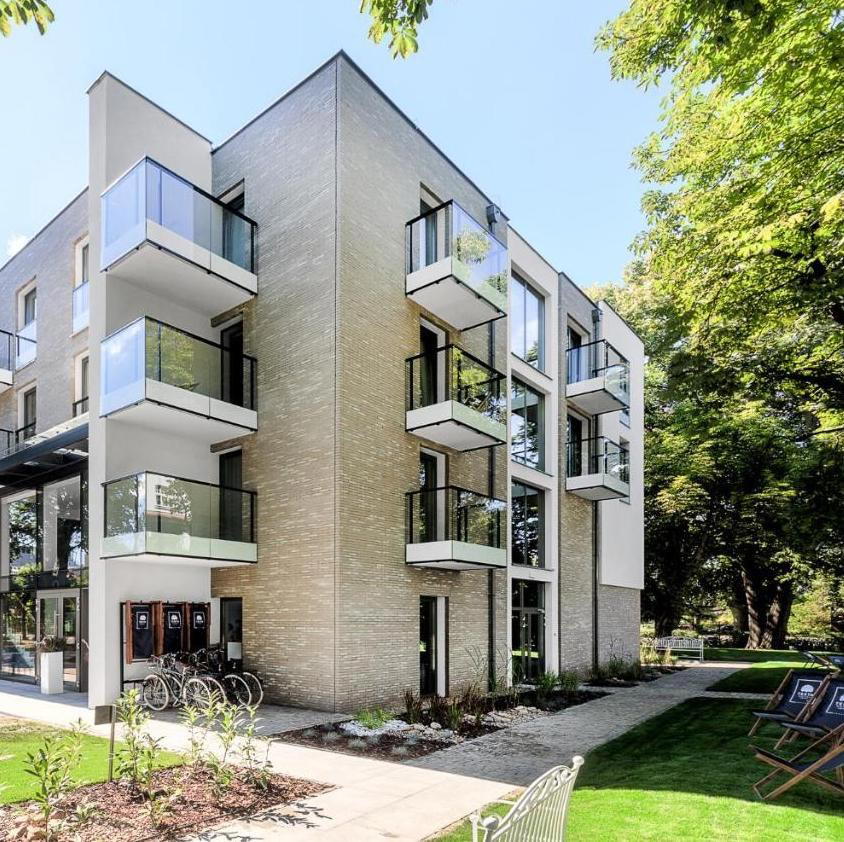
Contemporary hotel construction in Polish cities has tended toward one of two approaches: glass-and-steel corporate boxes that assert modernity without reference to context, or heritage conversions that adapt existing fabric, palaces, tenements, granaries, into hospitality use. Gdańsk's granary island and surrounding zones have seen both. The Hilton's position at Targ Rybny represents the former approach in a setting that might have supported the latter, a choice that has informed critical responses to the building from those who follow the city's architectural development. This is not unusual in the branded hotel segment; international flags operate within standardised design frameworks that prioritise brand consistency over site-specific response.
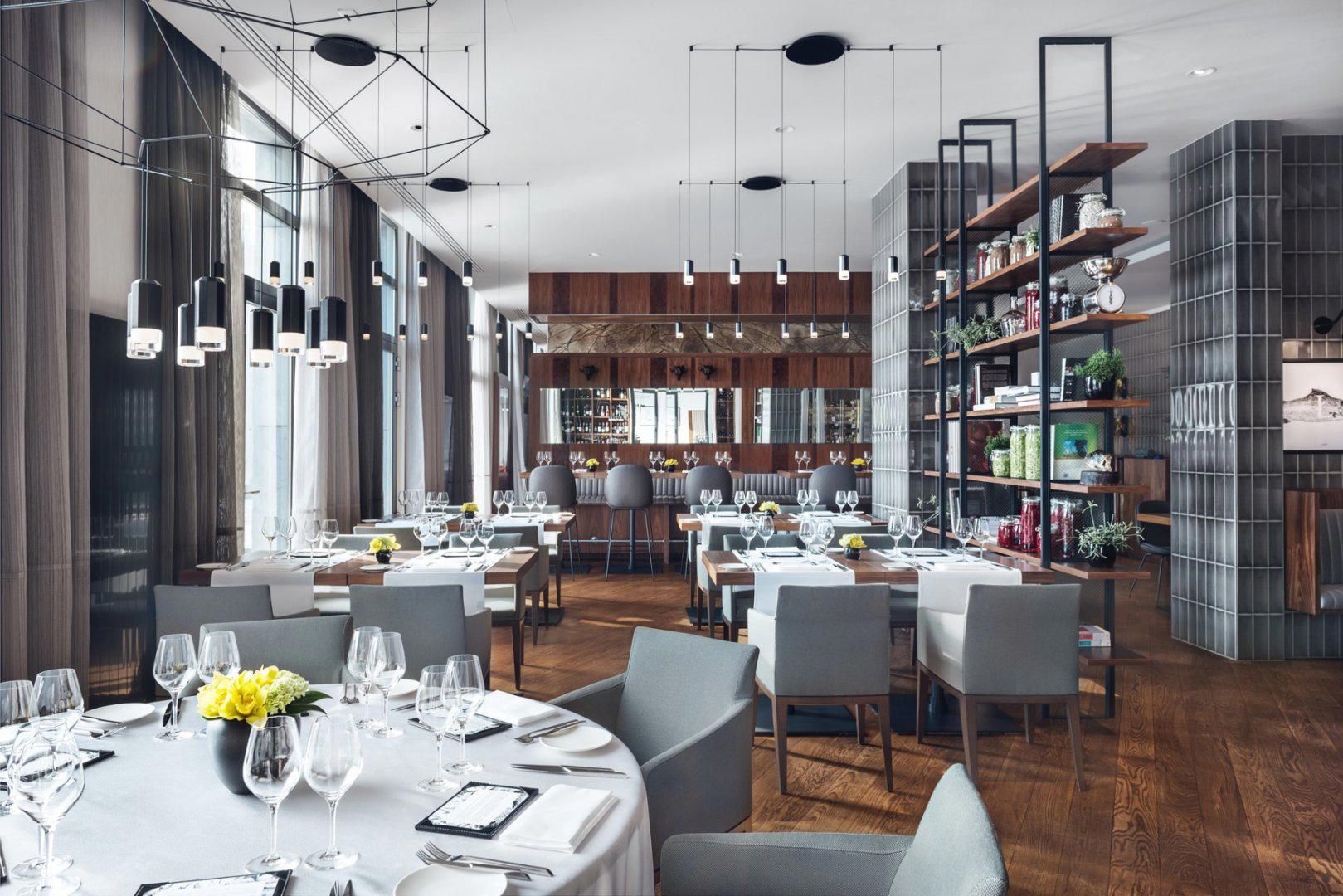
What that means in practice is a property whose interior language aligns with the broader Hilton mid-to-upper tier specification: consistent materials, reliable amenity layout, meeting room infrastructure that supports the conference business the Tricity region generates. For travellers whose preference runs to properties that engage more directly with local material culture and place-specific design, alternatives in the same city include Hotel Number One, which occupies a different position in the local market. Across Poland more broadly, the conversion model is leading represented by properties like Hotel Stary in Kraków, a fourteenth-century tenement redeveloped into a hotel that wears its fabric openly, or Copernicus Toruń Hotel, housed in a Gothic building in Toruń's UNESCO-listed old town. Those references help calibrate where the Hilton sits on the spectrum between international standardisation and locally rooted hospitality.
Gdańsk's Broader Hotel Scene
The Tricity area, Gdańsk, Sopot, and Gdynia, has developed a layered accommodation offer that ranges from the grand seaside hotel tradition of Sopot (where pre-war resort architecture still frames the pier approach) to the contemporary design hotels gathering in Gdynia's modernist grid. Quadrille in Gdynia sits within that city's more architecturally coherent interwar framework. Within Gdańsk itself, the competition has intensified as the Old Town became an increasingly popular short-break destination for both domestic and international visitors following low-cost air links to the Lech Wałęsa Airport. The Hilton operates in this context as a volume-capable property with the infrastructure, event space, food and beverage operations, parking, loyalty programme integration, that independent properties in the Old Town corridor typically cannot match.
For visitors planning itineraries across the Polish Baltic coast, the hotel's location serves as a reasonable anchor. Day trips to Malbork, where the Teutonic Knights' castle holds its position as one of the largest Gothic brick structures in Europe, are approximately 45 minutes by direct rail from Gdańsk Główny. Sopot, with its pier and early twentieth-century resort character, is under 20 minutes by commuter rail. Those logistics make the Gdańsk Old Town location a functional base for a wider region, not just the city itself.
For planning comparison across the region's hotel tier, EP Club covers properties including Bachleda Residence Zakopane in the Tatra mountains, H15 Boutique Hotel in Warsaw, and Hotel Altus Palace in Wrocław, each of which represents a different register of the Polish premium market.
Planning Your Stay
The hotel's address at Targ Rybny 1 puts it at the edge of the Old Town pedestrian zone, which has implications for arrival by car. The summer months, July and August in particular, see heavy tourist traffic along the Motława riverfront, and the Długi Targ becomes congested by mid-morning on fair-weather weekends. Visitors arriving during the Dominikański Fair, Gdańsk's annual outdoor market held in August and dating to the thirteenth century, will find the surrounding streets at their busiest. Outside the peak summer window, the shoulder months of May, June, and September offer the riverfront at a more navigable pace, with the amber-coloured light of Baltic autumn making the brick facades along the Motława particularly photogenic in the late afternoon.
For international travellers contextualising Poland within a broader European itinerary, Aman Venice, Badrutt's Palace Hotel in St. Moritz, and Castello di Reschio in Lisciano Niccone, which together represent the European end of the luxury conversion and heritage property spectrum that Gdańsk's own development trajectory is, in its way, moving toward.
At-a-Glance Comparison
Comparable venues nearby, for context on price, style, and recognition.
| Venue | Cuisine | Price | Awards | Notes |
|---|---|---|---|---|
| Hilton GdanskThis venue — the venue you are viewing | Contemporary design blending modern architecture with medieval Gdansk historic context | $$$ | 5-Star | Not listed |
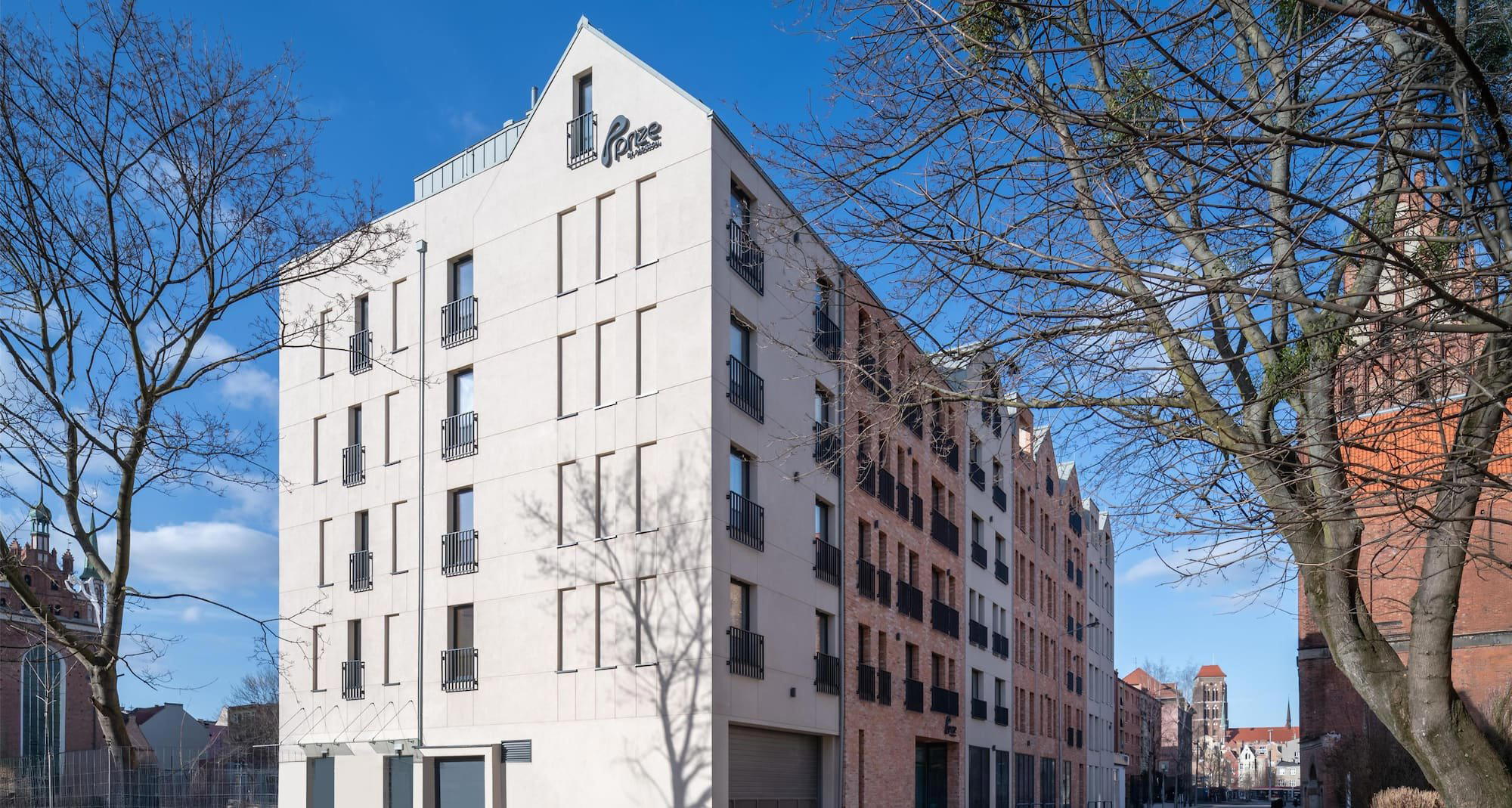
| Prize by Radisson, Gdańsk | Midscale, city-center lifestyle hotel focused on value, comfort, and stylish common areas. | $$ | 3-Star | Gdansk City Center |
| PURO Hotel Gdansk | contemporary urban design hotel | $$$ | 4-Star | Stare Miasto |
| Hotel Number One | Modern urban hotel with designer interiors on historic Granary Island. | $$ | 3-Star | Granary Island |
| Szczawnica Park Resort & Spa | Chalet-style mountain resort with three distinct properties blending modern design with regional character and spa heritage traditions. | $$$ | 5-Star | Pieniny Mountains |
| Galery69 | Boutique design lodge on the lake shore | $$$ | 4-Star | Stawiguda |
At a Glance
- Modern
- Elegant
- Sophisticated
- Business Trip
- Weekend Escape
- Waterfront
- Rooftop Pool
- Historic Building
- Panoramic View
- Wi Fi
- Pool
- Spa
- Fitness Center
- Room Service
- Concierge
- Business Center
- EV Charging
- Waterfront
- Street Scene
- Wi Fi
- Pool
- Spa
- Fitness Center
- Room Service
- Concierge
- Business Center
- EV Charging
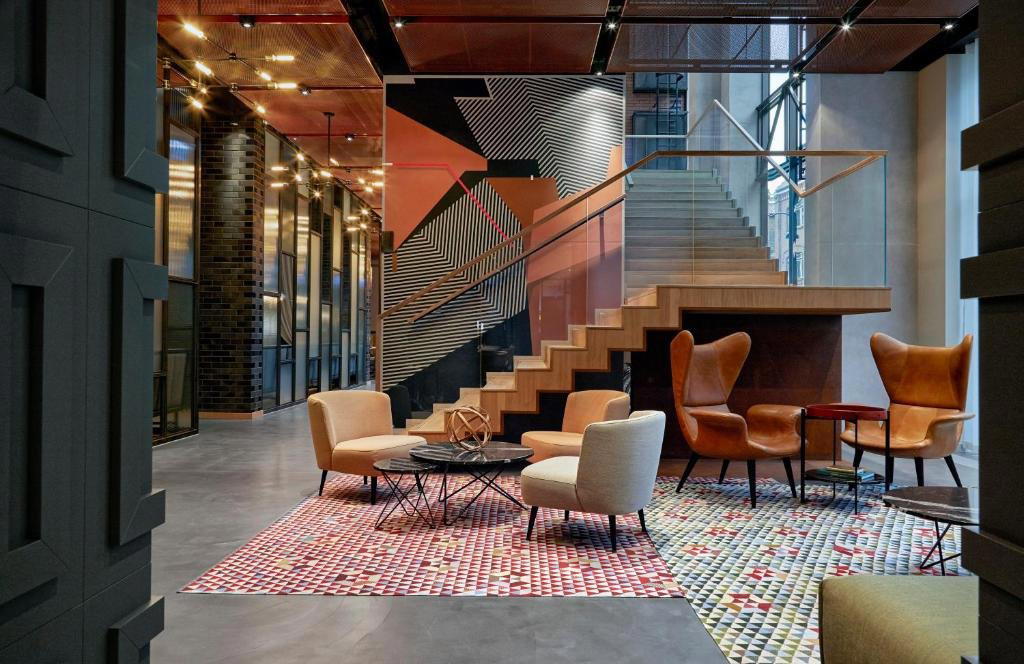
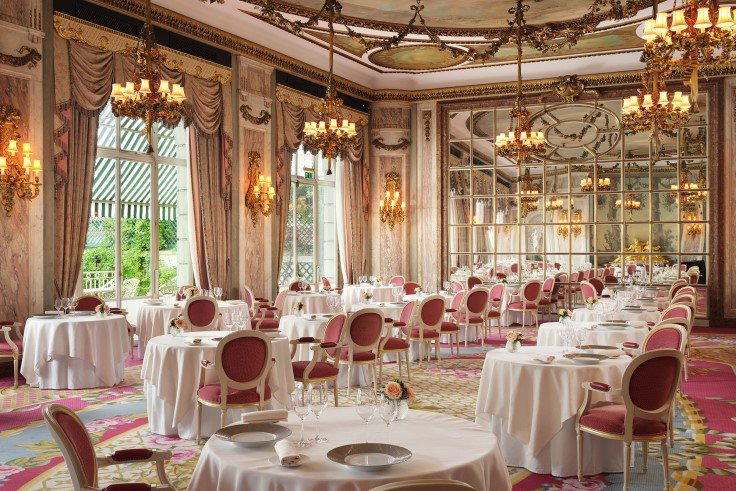
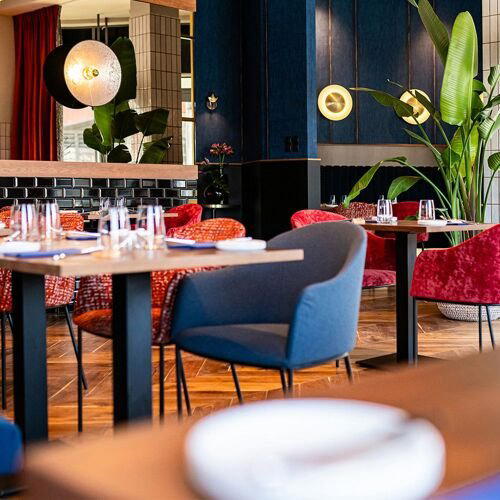
Modern decor with flowing carpets, atrium featuring hundreds of glass butterflies, and contemporary lighting blending historic charm with luxury.