Prize by Radisson, Gdańsk sits at Żabi Kruk 4, close to the historic core yet set slightly away from the heavier waterfront hotel circuit. For travelers reading the city through architecture and access, it makes sense as a contemporary Gdańsk base: practical, urban, and better understood against the city’s mix of rebuilt heritage, riverside redevelopment, and compact Old Town movement.

Pearl is the En Primeur Club membership app, where members save venues, book tables and use the concierge.
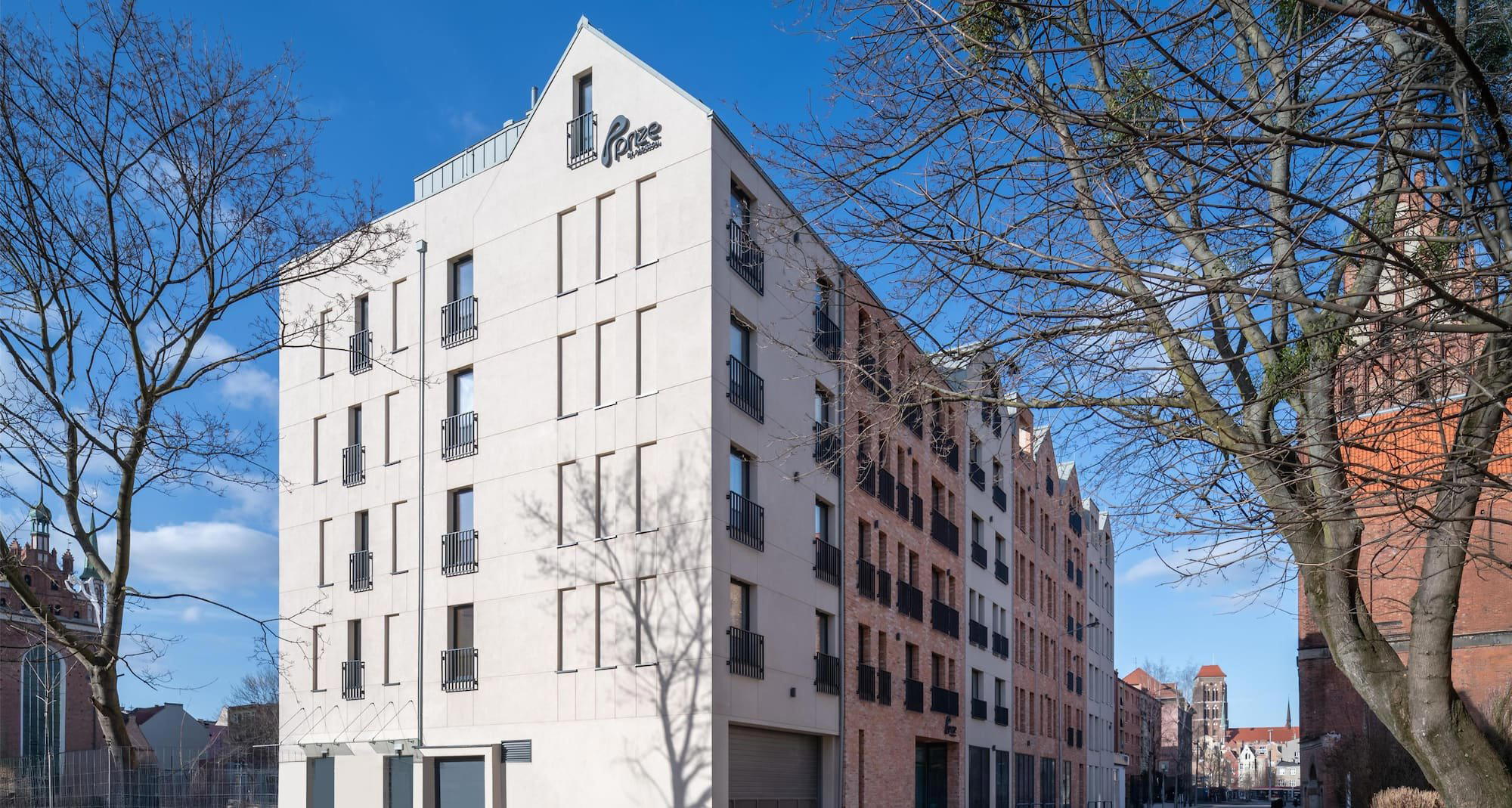
First impression: a city hotel on the edge of Gdańsk's historic theatre
Approaching Żabi Kruk, the mood changes from postcard Gdańsk to working-city Gdańsk. The grand gables, brick façades, church towers, and riverside promenades that define the visitor image of the city sit close by, but the immediate setting feels less staged. That distinction matters. Gdańsk is not a city where every strong hotel address needs to face the Motława or perform medieval romance from the lobby. A hotel on Żabi Kruk belongs to a different urban reading: close enough to use the historic centre on foot, far enough to escape the thickest tourist choreography around the Long Market and waterfront cranes.
Prize by Radisson, Gdańsk fits that contemporary city-hotel category rather than the heritage-palace bracket. The useful comparison is not with restored aristocratic addresses in Kraków or Warsaw, but with the newer generation of Polish urban hotels that treat design as a system: efficient rooms, repeatable planning, clean circulation, and a lobby that works for short stays as much as weekend breaks. In Gdańsk, where the built environment is already dense with history, that restraint can be an asset. The hotel does not need to compete with the city’s reconstructed Hanseatic stage set; its value lies in giving travelers a calmer base at Żabi Kruk 4, within the orbit of the old centre without insisting on spectacle.
Architecture as the real Gdańsk question
Hotel design in Gdańsk carries unusual pressure because the city itself is a design argument. Much of the historic core was rebuilt after wartime destruction, which means the Old Town and Main Town are not frozen medieval survivals but carefully reconstructed urban memory. That makes the contrast between heritage-style hotels and contemporary properties sharper than in many European city-break destinations. Some addresses lean into brick, timber, and historic references; others accept that the modern city also needs practical, compact places to sleep, work, and move.
This is where the design reading of Prize by Radisson, Gdańsk becomes more interesting than a checklist of amenities. Yet those facts still place the property in a specific urban pattern. Żabi Kruk sits near the southern side of the central visitor zone, an address that supports walking access to the old centre while avoiding the sense of sleeping directly inside a sightseeing corridor. For travelers who care about architecture, that border position is often more revealing than a front-row waterfront view.
Gdańsk’s hotel scene has split into several recognizable camps. Waterfront properties trade on river proximity and visual drama. Old Town hotels sell immediate historic atmosphere. Larger brand hotels provide predictable services for conferences and short business stays. Smaller design-led properties focus on mood, materials, and local references. Prize by Radisson, Gdańsk belongs closer to the pragmatic design-hotel tier, a category that depends less on grand narratives and more on whether the building helps a traveler use the city efficiently. In a compact historic destination, that is not a minor point.
The room-to-city relationship
The stronger way to judge a central Gdańsk hotel is not by asking whether it imitates the city outside. It is by asking how it handles the transition between private rest and public movement. The old centre rewards early and late walks, especially when group traffic thins around the Long Market and the riverside. A hotel just off the core can make those movements easier: breakfast without being swallowed by the main square, a return after dinner without a taxi, and a morning route that begins in ordinary streets before reaching the more theatrical façades.
That kind of stay suits travelers who want Gdańsk as a lived city rather than a museum set. The address gives access to the city’s central grammar: reconstructed merchant houses, Gothic church massing, amber shops, river crossings, and the newer hospitality layer that has grown around them. The safer and more useful point is comparative: this is a hotel to consider when the priority is central positioning and contemporary format, not when the primary aim is a grand historic property with documented awards or a destination restaurant attached.
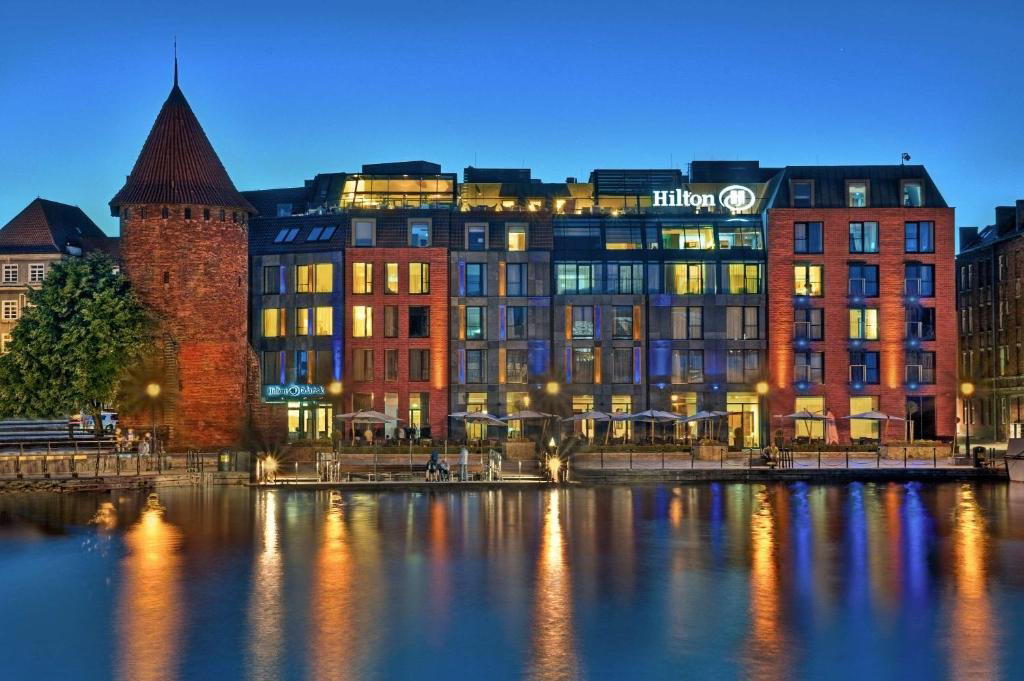
For a broader view of the city’s accommodation field, Our full Gdańsk hotels guide is the better planning companion. Travelers comparing centrality and brand familiarity may also look at Hilton Gdansk, while those weighing newer local design language against practical access can compare PURO Hotel Gdansk and Hotel Number One. The point is not that these properties answer the same brief. It is that Gdańsk now has enough hotel variety for travelers to choose by urban rhythm rather than simply by map pin.
How Gdańsk's design hotels differ from Poland's grander addresses
Polish hotel culture is unusually broad for travelers who move beyond one city. Gdańsk’s central hotels are shaped by port history, reconstruction, and tourism pressure. Kraków’s old-centre hotels often work through ceremonial architecture and a heavier sense of academic-city tradition; Hotel H15 Francuski Old Town in Kraków sits in that conversation. Warsaw’s heritage hotels are often read through political history, embassies, and postwar rebuilding, a framework that makes Mamaison Hotel Le Regina Warsaw in Warsaw a useful counterpoint. Wrocław introduces another register, where Hotel Altus Palace in Wrocław places palace architecture inside a different urban fabric.
Against those, a contemporary Gdańsk address near the historic core has a narrower but cleaner role. It does not need to stage aristocratic continuity or mountain romance. It needs to manage a short-stay city rhythm: arrive, drop bags, walk, return, repeat. That is why architecture here should be judged through circulation, clarity, and restraint. The city outside already supplies brick drama, religious scale, maritime memory, and reconstructed civic theatre. The hotel’s task is not to outshout that setting.
Travelers building a wider Poland itinerary can see how the country’s hotel identities shift by terrain and city. Lakeside and resort formats appear in places such as Heron Live Hotel in Sienna and Galery69 in Warmian Masurian. Historic or estate-led stays come into view at Pałac Ciekocinko Hotel Resort & Wellness in Ciekocinko and Zamek Łeba in Łeba. Urban modernity has another expression at PURO Poznań in Poznań, PURO Łódź Centrum in Łódź, and Copernicus Toruń Hotel in Torun. Reading these together makes Gdańsk’s compact, architecture-conscious city-hotel segment easier to understand.
Eating, drinking, and the city around the address
The hotel record does not provide a verified cuisine type, restaurant name, chef, bar program, or opening hours, so any claim about an in-house dining identity would be careless. That absence is useful information in itself. Travelers who plan Gdańsk around food should treat the hotel as a base and build meals around the city, where the dining culture reflects Baltic fish traditions, Polish comfort cooking, amber-trade tourism, and a newer wave of casual European formats. The strongest stays in Gdańsk often pair a practical central hotel with meals chosen by neighborhood and timing rather than by lobby convenience.
For restaurant planning, Our full Gdańsk restaurants guide should sit alongside the hotel choice. For late evenings, Our full Gdańsk bars guide helps separate central tourist drinking from more serious cocktail or wine-led rooms. Gdańsk is not a wine-region city in the classical sense, but travelers tracing cellar culture or regional drinking references can start with Our full Gdańsk wineries guide. Those who want the city beyond meals and beds can use Our full Gdańsk experiences guide to structure museum time, port history, and neighborhood movement.
This division of labor matters. In heritage-heavy cities, hotels often promise to contain the whole trip: sleep, dine, drink, photograph, repeat. Gdańsk rewards a different model. The city is walkable enough that a centrally placed hotel can be quieter and more functional while the serious cultural weight happens outside the door. That is the sensible expectation for this address unless additional verified venue data proves otherwise.
Who this stay makes sense for
Prize by Radisson, Gdańsk makes sense for travelers who value a central Gdańsk location, contemporary hotel logic, and a base near the historic core without requiring documented luxury signals. That means the decision should be made through location and category rather than prestige. In practical terms, the address at Żabi Kruk 4 is the trust signal: it places the stay in Gdańsk’s central visitor zone, close to the city’s architectural and cultural centre while slightly offset from the busiest waterfront and Long Market routes.
It is less suitable for travelers whose hotel choice depends on verified fine-dining credentials, named architects, spa infrastructure, published room inventory, or award history. The sharper reader decision is this: choose this kind of property when the hotel is a clean urban instrument for using Gdańsk, not the main reason for the trip.
For travelers comparing international hotel cultures, the contrast with grand European hospitality is instructive. Hôtel de Paris Monte-Carlo in Monte Carlo, Badrutt's Palace Hotel in St. Moritz, and The Fifth Avenue Hotel in New York City operate in a different symbolic register, where the building itself becomes part of the destination’s mythology. Gdańsk’s more pragmatic central hotels ask a quieter question: how much hotel theatre does a traveler need when the city outside already carries the drama?
Planning notes for a Gdańsk stay
The confirmed planning detail is the address: Żabi Kruk 4, 80-822 Gdańsk, Poland. As a matter of city strategy, the address is better read as central-south access to the historic core than as a waterfront resort position. That makes it practical for short leisure stays, rail-connected weekends, and trips where the day is built around walking rather than transfers.
Seasonality also changes the value of this kind of address. Summer brings heavier foot traffic to the old centre and riverside, so being slightly away from the densest pedestrian flow can feel sensible. In colder months, proximity still matters because Gdańsk’s cultural life, museums, restaurants, and bars remain concentrated around the central districts. A hotel near the historic core reduces friction in both cases, though it should not be confused with a heritage mansion or destination spa without verified evidence.
Travelers extending beyond Gdańsk can use the address as part of a wider northern or cross-country route. Coastal and countryside comparisons include Grano Hotel Solmarina & Apartments - SPA & Wellness in Wiślinka, Cisowy Zakątek in Sasino, and resort-leaning stays outside the city. For an industrial-urban counterpoint in southern Poland, Hotel Monopol Katowice, Likus Hotels in Katowice shows how a different city produces a different hotel mood. Mountain travelers can compare the domestic design vocabulary at Villa Nova in Zakopane.
Reputation & Price
Comparable venues nearby, for context on price, style, and recognition.
| Venue | Price | Awards | Notes |
|---|---|---|---|
| Prize by Radisson, GdańskThis venue (the venue you are viewing) | $1–100 | Not listed | Not listed |
| Hotel Number One | Not listed | Not listed | Granary Island, Modern urban hotel with designer interiors on historic Granary Island. |
| Hilton Gdansk | $100–200 | Not listed | Old Town, Contemporary design blending modern architecture with medieval Gdansk historic context |
| PURO Hotel Gdansk | Not listed | Michelin Selected | Stare Miasto, contemporary urban design hotel |
| Moxy Warsaw Praga | $100–200 | Michelin Selected | Praga, Post-industrial design harmoniously blended with contemporary buildings in a historic vodka factory. |
| Grano Hotel Solmarina & Apartments - SPA & Wellness | Not listed | Michelin Selected | Wiślinka, Modern waterfront condohotel with direct marina access. |
Continue exploring
More in Gdańsk
Details
- Modern
- Quiet
- Minimalist
- Trendy
- Business Trip
- Weekend Escape
- Group Retreat
- Design Destination
- Terrace
- Wi Fi
- Restaurant
- Bar
- Parking
- Room Service
- Luggage Storage
- Laundry Service
- Pet Friendly
- Elevator
- Street Scene
- Wheelchair Accessible
- Elevator
- Accessible Restroom
- Accessible Parking
- Step Free Entrance
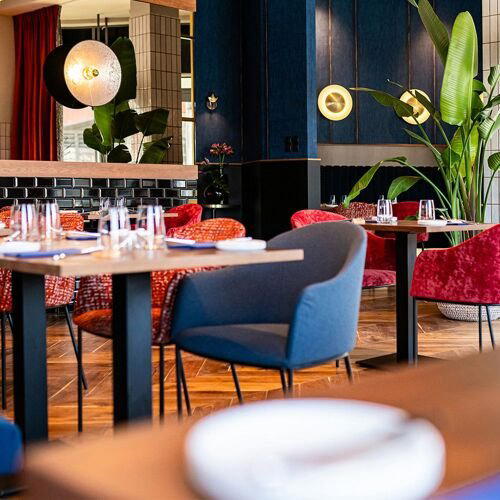
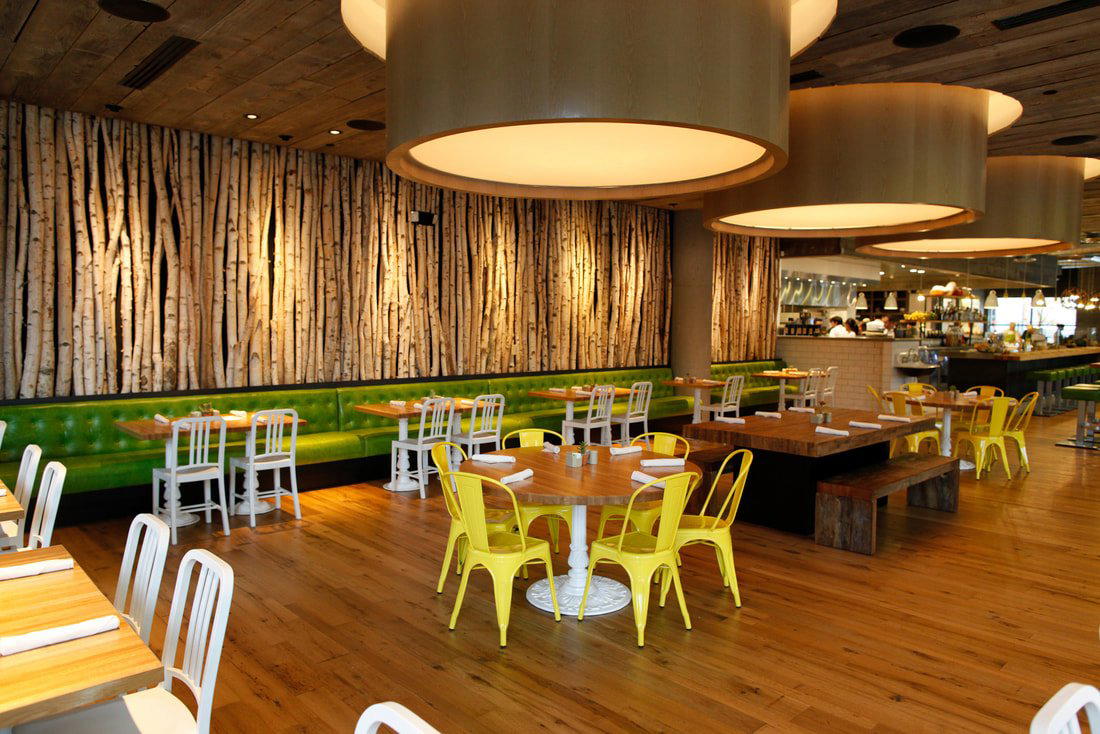
Laid-back, informal, and contemporary, with a lively social hub that blends the lobby, restaurant, and bar into one open space; reviews and press describe it as bold, high-design, and uncluttered.