Our verdict
La Cucina Ristorante occupies a corner address in Gdańsk's historic Długie Pobrzeże quarter, where Italian culinary tradition meets the Baltic city's own seafood-rich larder. The restaurant draws on sourcing logic that connects local Polish produce with Italian technique, positioning it within Gdańsk's growing tier of European-accented dining rooms. For visitors moving through the city's Old Town corridor, it represents a calibrated alternative to the area's more tourist-facing options.
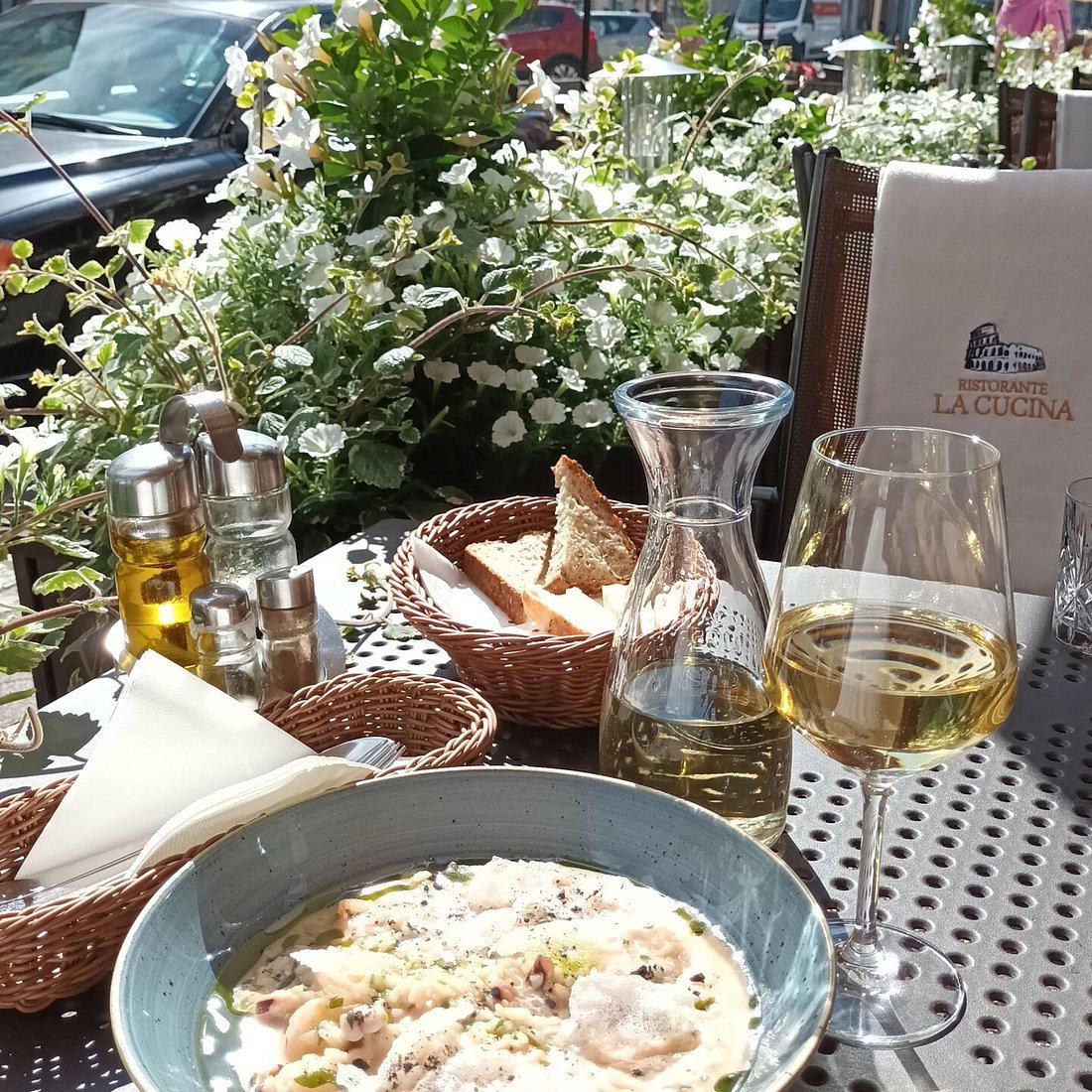
The menu
What to order
- Pizza Diavola
- Spaghetti Carbonara
That positioning matters in Gdańsk. The city's restaurant scene has moved steadily over the past decade from a post-communist baseline of heavy, pork-forward Polish cooking toward a more European-influenced range. Venues like Canis have pushed the creative-Nordic end of that shift, while places like Durga and Flisak '76 hold different positions in the local dining spread. La Cucina sits in the Italian-European niche, a category that in a port city like Gdańsk carries particular logic: the Gulf of Gdańsk provides cold-water fish and shellfish that translate well into Italian coastal preparations, and the surrounding Pomorskie region supplies seasonal produce that can anchor an ingredient-led menu. The argument is not about authenticity tourism, flying in San Marzano tomatoes and calling it a day, but about structural compatibility. Italian cooking at its most serious is a discipline of restraint: good olive oil, good acid, protein treated simply, and vegetables allowed to declare themselves. That logic applies equally well to a Baltic plaice as to a Sicilian branzino, and to a Mazovian courgette as to one grown outside Rome. The tier below tends to import everything and charge accordingly for the signal value. The more interesting tier uses Italian technique as a frame and fills that frame with what the local and regional food system actually produces well. In the Baltic context, that means cold-water fish species, forest mushrooms in autumn, root vegetables through winter, and the early soft-herb season that arrives later here than in southern Europe but arrives with its own intensity. Bottiglieria 1881 Restaurant in Kraków has built a Michelin-recognised program around exactly this kind of European technique applied to Polish sourcing. Muga in Poznań takes a similar approach from a Spanish-influenced perspective. La Cucina's Italian framing places it in a comparable conversation, albeit at a city-specific scale appropriate to Gdańsk's market.
Where La Cucina Fits in the Gdańsk Dining Spread
Gdańsk's dining room options for visitors with specific culinary priorities break into a few coherent clusters. For American comfort food in a relaxed environment, Billy's American Restaurant and its second location, Billy's American Restaurants Chmielna, serve that segment clearly. For technically ambitious cooking with international reference points, Arco by Paco Pérez in Gdańsk occupies the upper bracket. La Cucina sits between those poles, in the space occupied by restaurants that prioritise a specific culinary tradition executed with care over either casual accessibility or avant-garde ambition.
That middle position is not a weakness in a city of Gdańsk's size and visitor profile. The city draws significant numbers of European travellers, many of whom eat Italian food regularly at home and will read quickly whether a kitchen is applying the tradition seriously or performing a version of it. A restaurant that handles pasta correctly, sources fish with some attention, and builds a wine list with regional Italian logic rather than generic European filler earns loyalty in that visitor segment.
The Trójmiasto area, which encompasses Gdańsk, Gdynia, and Sopot, also supports a secondary dining circuit worth noting. Bar Przystań in Sopot, for instance, occupies a waterfront position with its own distinct seafood orientation. Visitors covering the full coastal strip across multiple days have reason to consider the full range of options, which our full Gdansk restaurants guide maps in detail. Mary's Church and the Long Market. The neighbourhood is most accessible on foot from the Old Town core; parking in this part of Gdańsk requires prior planning, and the surrounding streets are primarily pedestrianised during peak tourist hours. For visitors arriving by public transport, the Gdańsk Główny rail station sits roughly fifteen minutes on foot to the west.
For broader context on the Polish fine-dining tier as a reference point, Ariel in Krakow and hub.praga in Warsaw offer useful comparison points for how European-cuisine restaurants position themselves in Polish cities. Further afield, OK Wine Bar in Wrocław illustrates how the wine-led European dining format has developed in Polish regional cities generally.
For those extending their travels beyond Gdańsk, the mountain restaurant Giewont in Kościelisko and the coastal Luneta & Lorneta Bistro Club in Ciekocinko represent the range of the Polish dining circuit beyond the major cities.enprimeurclub.com/restaurants/nare-sushi-skrzewo-restaurant">Nare Sushi in Skórzewo is worth noting as a point of comparison for how Japanese cuisine has taken root in the region. International reference points for European seafood-led fine dining include Le Bernardin in New York City and the chef-driven tasting format of Lazy Bear in San Francisco, both of which demonstrate the depth that committed ingredient sourcing can achieve at the upper end of the market.
Frequently asked questions
Where exactly is La Cucina Ristorante?
La Cucina Ristorante is located at Róg ul. Szeroka / Tandeta, Tandeta 1, 80-835 Gdańsk, Poland, Gdansk.
How does La Cucina Ristorante compare to other Italian restaurants in Gdańsk's Old Town?
Italian restaurants in Gdańsk's historic centre are relatively sparse compared to the city's Polish and seafood-focused offer, which gives La Cucina a clear category position at the Szeroka and Tandeta corner. For visitors prioritising Italian cuisine within walking distance of St. Mary's Church and the Main Town, La Cucina is one of the few dedicated options in that immediate radius.
What's the must-try dish at La Cucina Ristorante?
Specific menu details for La Cucina are not published in a format we can verify, so naming a single dish would be speculative. What the kitchen's position in Gdańsk's Old Town does suggest is a focus on Italian cooking adapted to Baltic market access. Ask staff directly at the Tandeta 1 address for current recommendations, that kind of on-the-ground guidance will be more reliable than any list written at a distance.
Is La Cucina Ristorante reservation-only?
La Cucina occupies a corner site at Szeroka and Tandeta in one of Gdańsk's most foot-trafficked historic zones, which means walk-in demand fluctuates sharply with tourist season. Booking ahead is the sensible approach for Friday and Saturday evenings or during summer peak. Contact details are best confirmed directly on arrival or through local concierge services.
What has La Cucina Ristorante built its reputation on?
La Cucina has positioned itself as an Italian option in a city where the dining offer tilts heavily toward Polish and Baltic cooking. Its address at the intersection of Szeroka and Tandeta places it inside Gdańsk's historic core, giving it consistent visibility among visitors to the Main Town. The case for Italian cuisine in this context rests on sourcing discipline and kitchen consistency rather than geographic convenience, neither of which is a given this far from the Italian supply chain.
Is La Cucina Ristorante allergy-friendly?
Italian cooking in general carries common allergen considerations, gluten in pasta, dairy in sauces, but how the kitchen at Tandeta 1 handles specific requests requires direct confirmation before you arrive, particularly for serious intolerances.
Quick Comparison
| Venue | Cuisine | Price |
|---|---|---|
| La Cucina RistoranteThis venue (the venue you are viewing) | Traditional Italian Trattoria | Not listed |
| Pierogarnia Mandu Gdańsk Oliwa | Polish Pierogi House | $10–20 |
| Billy's American Restaurants Chmielna | American Grill | $20–30 |
| Billy's American Restaurant. | American Grill & BBQ | $20–30 |
| Canis | Modern Polish Fine Dining | $30–50 |
| Durga | Authentic Royal Indian Fine Dining | $30–50 |
Continue exploring
More in Gdańsk
Restaurants in Gdańsk
All restaurants in Gdańsk →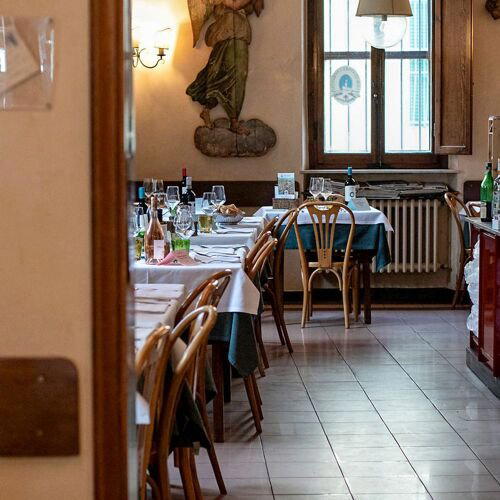
Details
- Cozy
- Intimate
- Date Night
- Casual Hangout
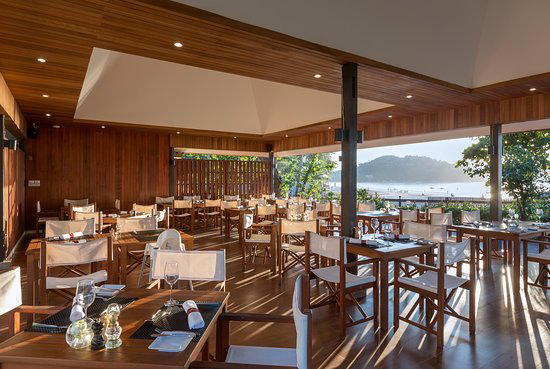
- Terrace
- Extensive Wine List
- A La Carte
- Gluten Free Options
- Vegetarian Friendly
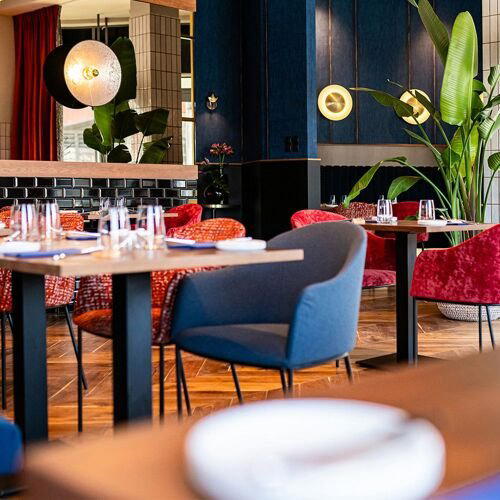
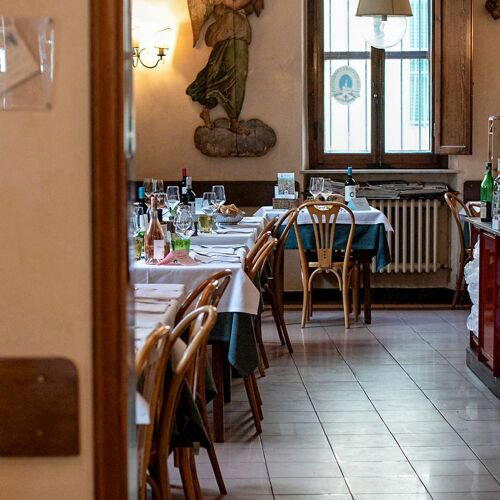
Small, cosy with light, bright space and warm, relaxed atmosphere.