Our verdict
The address places it within walking distance of the Long Market, making it a practical option for visitors already in the old town. Expect an American-leaning menu in a city whose restaurant scene skews heavily toward local and Polish traditions.

Pearl is the En Primeur Club membership app, where members save venues, book tables and use the concierge.
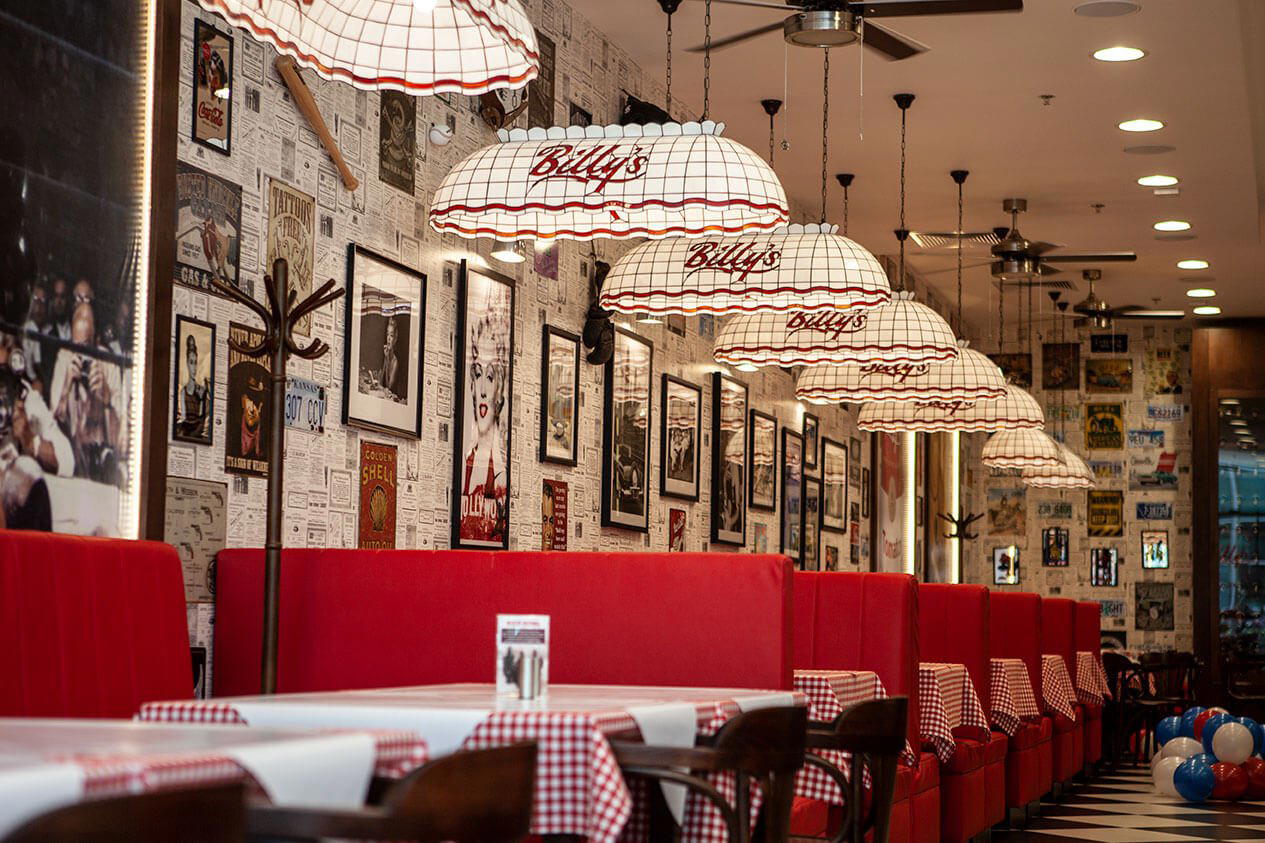
How American Dining Formats Travel
The export of American casual dining to European cities follows a recognisable pattern. Burgers, grilled proteins, loaded sides, and long drinks lists arrived in Polish cities alongside the broader westernisation of urban food culture in the 1990s and early 2000s. By the 2010s, the format had stratified: fast-casual burger chains on one end, and more considered American-inspired restaurants attempting to bring craft-beer pairings and proper sourcing to the format on the other. Warsaw saw this shift early; Kraków followed; Gdańsk, with its smaller population and more tourist-dependent hospitality economy, developed its American dining tier more gradually.
Distinction worth making is between American restaurants that treat the cuisine as a delivery mechanism for volume, high throughput, predictable execution, and those that engage with the format as a culinary tradition with regional specificity. Barbecue regions, steakhouse cuts, diner-counter rituals, and the American approach to sides as fully developed dishes in their own right all represent genuine culinary depth. Whether any individual restaurant leans into that depth or treats the American label as branding is the question a first visit tends to answer quickly. For reference points further afield, the approach taken at Le Bernardin in New York City and Lazy Bear in San Francisco illustrates the range of seriousness with which American culinary culture can be handled at the upper end of the market, a useful benchmark when assessing how any transatlantic-format venue situates itself within the tradition it claims.
The Dining Ritual at an American-Format Table
American restaurant format carries its own pacing logic. Meals tend to open with appetisers designed for sharing, wings, loaded skins, or something fried and portioned for a table, before moving to individual mains built around a central protein. The sides-as-equals philosophy means that what accompanies a burger or a grilled steak often defines the meal as much as the centrepiece. Sauces arrive early; refills are expected; the tempo runs faster than a European tasting format but slower than street food. This is dining as social event rather than ceremony, and the leading American-format venues understand that the ritual is as much about the energy at the table as the precision on the plate.
In a city like Gdańsk, where formal Polish dining traditions emphasise extended lunches and multi-course dinners with regional wine or beer, the American format offers a counterpoint: louder, more casual, better suited to groups with mixed appetite levels and a preference for flexibility over fixed menus. That contrast can work in a restaurant's favour when it's played consciously. Gdańsk's strongest restaurants tend to commit fully to their identity, Canis at the fine-dining end, Durga for its particular culinary positioning, Flisak '76 leaning into its own format, and Hashi Sushi representing the city's growing interest in Japanese formats. The American format competes against all of them for the same tourist and local dinner traffic. Group-format American restaurants in Polish cities typically benefit from operational consistency, procurement efficiencies, standardised training, familiar menus, while facing the challenge that differentiation between locations becomes harder to communicate. The sister site, Billy's American Restaurant, represents the broader footprint of the concept in the city.
For visitors whose Gdańsk itinerary extends to the coast, Bar Przystań in Sopot offers a different waterfront dining register.enprimeurclub.com/restaurants/bottiglieria-1881-restaurant-krakw-restaurant">Bottiglieria 1881 Restaurant in Kraków, Muga in Poznań, and Arco by Paco Pérez in Gdańsk illustrate the upper tier of Polish restaurant ambition, where chef credentials and culinary intent are more legible. Other regional references worth noting include Giewont in Kościelisko, hub.praga in Warsaw, Ariel in Krakow, OK Wine Bar in Wrocław, Nare Sushi in Skórzewo, and Luneta & Lorneta Bistro Club in Ciekocinko, each representing different corners of the country's evolving restaurant geography. The address is walkable from the main tourist corridor along Długa and the Motława riverbank, making it accessible without transport for most old-town visitors. Current hours, booking availability, and menu details are best confirmed directly with the venue, as specific operational information was not available at the time of writing. For visitors building a broader Gdańsk dining programme, cross-referencing with the full city guide will surface alternatives across cuisine types, price tiers, and neighbourhood locations. American-format restaurants in this tier typically anchor their menus around burgers and grilled proteins, with sides playing a meaningful supporting role. Checking the current menu directly with the venue will give you the most accurate picture of what's available on the day. If you're visiting between June and August, or during major events like the Dominic Fair, contacting the venue ahead of time is sensible. Outside peak season, walk-ins are more likely to be accommodated, though confirming with the restaurant directly is the safest approach given that real-time capacity data wasn't available for this listing.
Frequently asked questions
Where is Billy's American Restaurants Chmielna located?
Billy's American Restaurants Chmielna is located at Chmielna 3/8, 80-748 Gdańsk, Poland, Gdansk.
How does Billy's American Restaurants Chmielna fit into Gdańsk's dining scene as an American-format group concept?
Gdańsk's centre has a well-established tradition of Baltic and Polish cooking, which makes the Billy's format, operating under the same name at multiple Polish addresses, a distinct departure from the local default. For visitors based in the historic core near Chmielna 3/8, it offers a recognisable American casual template in a city where that category remains a minority of the total restaurant offer. The multi-site group structure means consistency across the network, though each address reflects its local setting.
What's the must-try dish at Billy's American Restaurants Chmielna?
The venue's menu data is not on file, but the American-format restaurants in Poland operating under the Billy's name typically anchor their offer around grilled proteins, burgers, and loaded sides. For the most current dish recommendations at Chmielna 3/8, Gdańsk, checking directly with the restaurant on arrival will give you the clearest picture of what's currently on the menu.
Should I book Billy's American Restaurants Chmielna in advance?
Billy's operates at Chmielna 3/8 in Gdańsk's historic centre, a pedestrian-friendly area that sees consistent foot traffic from both tourists and locals. The Billy's name runs across multiple Polish addresses as a group concept, which generally means systems are in place for walk-ins, though weekend evenings in the city centre warrant calling ahead. No booking policy details are on file for this specific location.
What has Billy's American Restaurants Chmielna built its reputation on?
The Billy's group format across Poland is built around American casual dining: a dependable menu of grilled meats, burgers, and shareable appetisers in a relaxed setting. At the Chmielna address in Gdańsk, the restaurant occupies a city-centre position in a dining scene historically dominated by Baltic and Polish cooking, giving it a clear niche as an alternative to the żurek and smoked-fish staples nearby. No awards or external ratings are currently on file for this location.
Can Billy's American Restaurants Chmielna adjust for dietary needs?
No menu or dietary information is documented for the Chmielna 3/8 location in Gdańsk. American-format restaurants in the Billy's group style typically carry enough menu breadth to accommodate some dietary requests, but specifics around vegetarian, gluten-free, or allergen options should be confirmed directly with the venue before visiting.
Is Billy's American Restaurants Chmielna good value for money?
No pricing data is on file for the Gdańsk Chmielna location. American casual dining groups operating in Polish cities generally position themselves in the mid-market range, accessible relative to fine dining but above fast-casual price points. For current pricing at Chmielna 3/8, visiting the restaurant directly will give the most accurate picture.
Cuisine and Credentials
| Venue | Cuisine | Price |
|---|---|---|
| Billy's American Restaurants ChmielnaThis venue (the venue you are viewing) | American Grill | $20–30 |
| La Cucina Ristorante | Traditional Italian Trattoria | Not listed |
| Pierogarnia Mandu Gdańsk Oliwa | Polish Pierogi House | $10–20 |
| Billy's American Restaurant. | American Grill & BBQ | $20–30 |
| Canis | Modern Polish Fine Dining | $30–50 |
| Durga | Authentic Royal Indian Fine Dining | $30–50 |
Continue exploring
More in Gdańsk
Restaurants in Gdańsk
All restaurants in Gdańsk →
Details
- Lively
- Energetic
- Family
- Group Dining
- Casual Hangout
- Brunch
- Terrace
- Craft Cocktails
- Beer Program
- A La Carte
- Cocktails
- Beer
- Vegetarian Friendly
- Gluten Free Options
Current opening hours
- Monday
- 9 AM–12 AM
- Tuesday
- 9 AM–12 AM
- Wednesday
- 9 AM–12 AM
- Thursday
- 9 AM–12 AM
- Friday
- 8 AM–2 AM
- Saturday
- 8 AM–2 AM
- Sunday
- 8 AM–12 AM
Hours can change for holidays and private events. Hours as of .
Family-friendly with distinctive interiors, featuring a year-round terrace and energetic vibe suitable for sports events.