Relais Blu

A Michelin-starred address on the Sorrento Peninsula, Relais Blu sits above the water at Termini with Capri's silhouette directly in view across the strait. Chef Fumiko Sakai, Japan-born but shaped by years of Campanian cooking, draws on the restaurant's kitchen garden and the surrounding coastline to produce Mediterranean food anchored in the produce traditions of southern Italy.
Pearl is the En Primeur Club membership app — saves, bookings, and concierge access live there. Same editors, same standards.
- Address
- Via Roncato, 60, 80061 Termini NA, Italy
- Phone
- +39 081 878 9552
- Website
- relaisblu.com
- Directions
- Get directions
 Saves & bookings on Pearl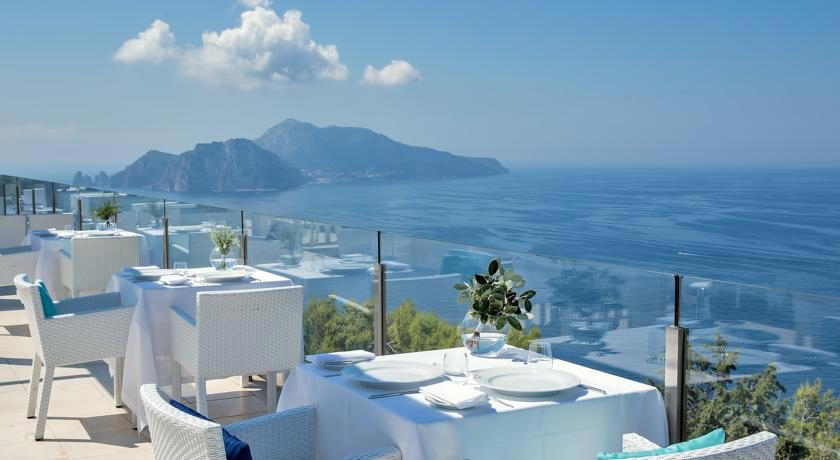
Where the Tyrrhenian Sets the Table
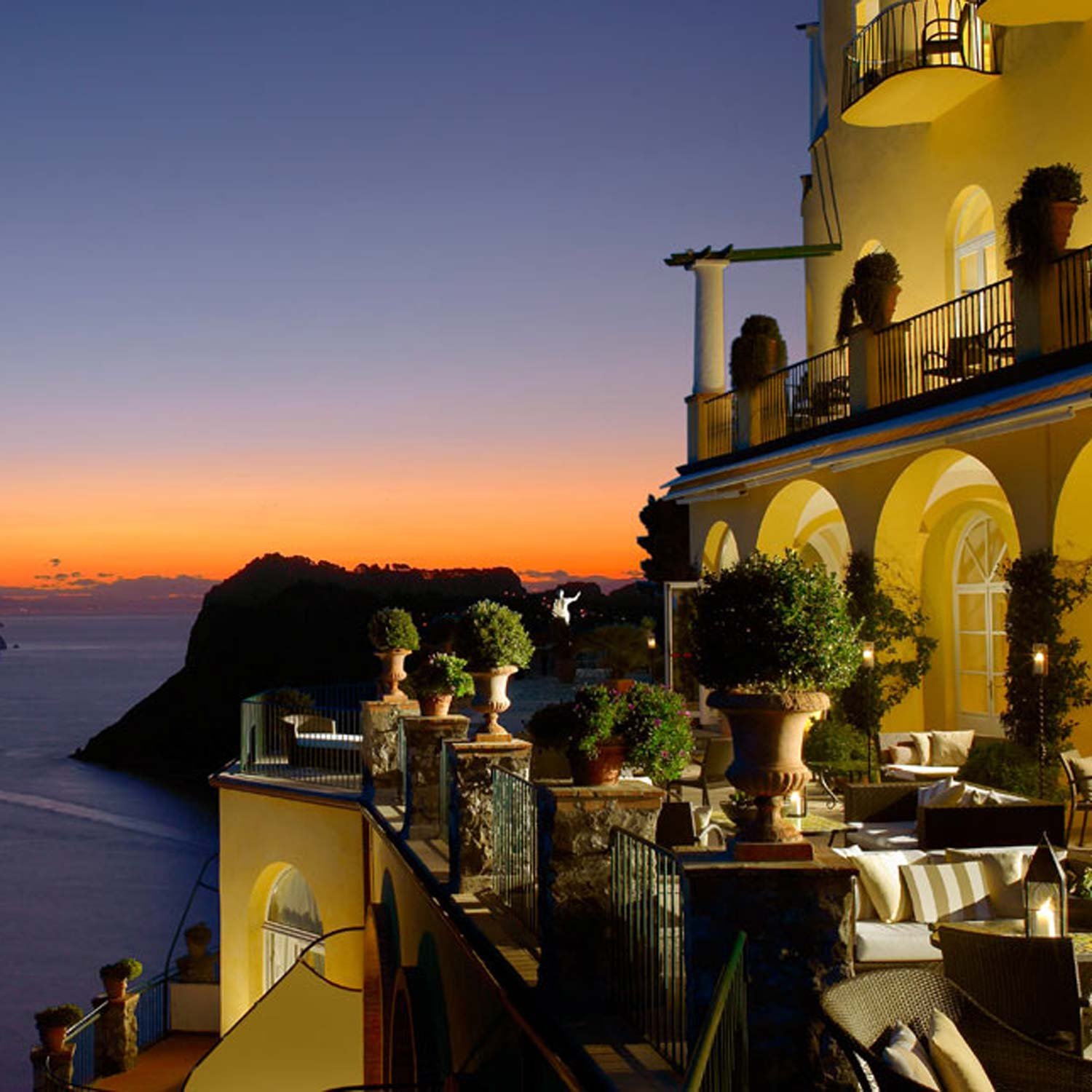
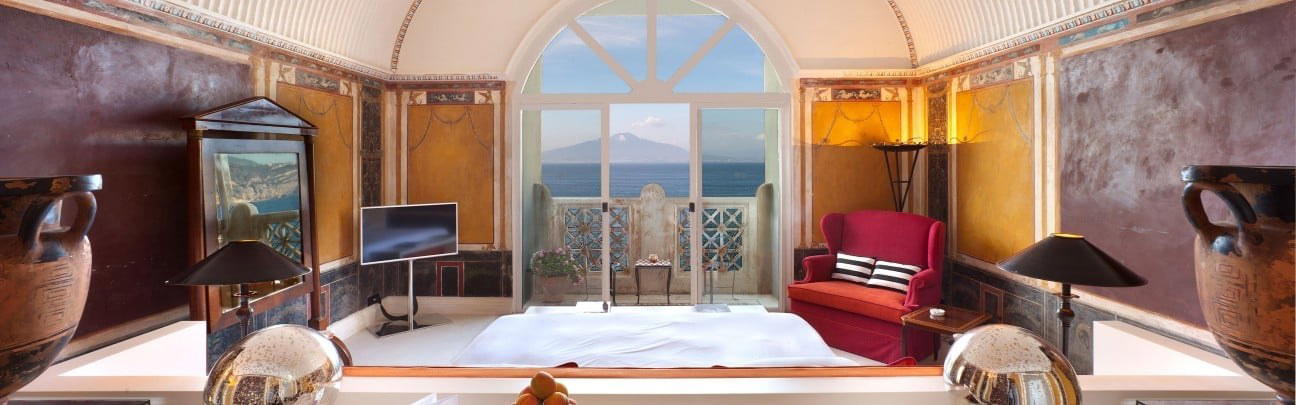
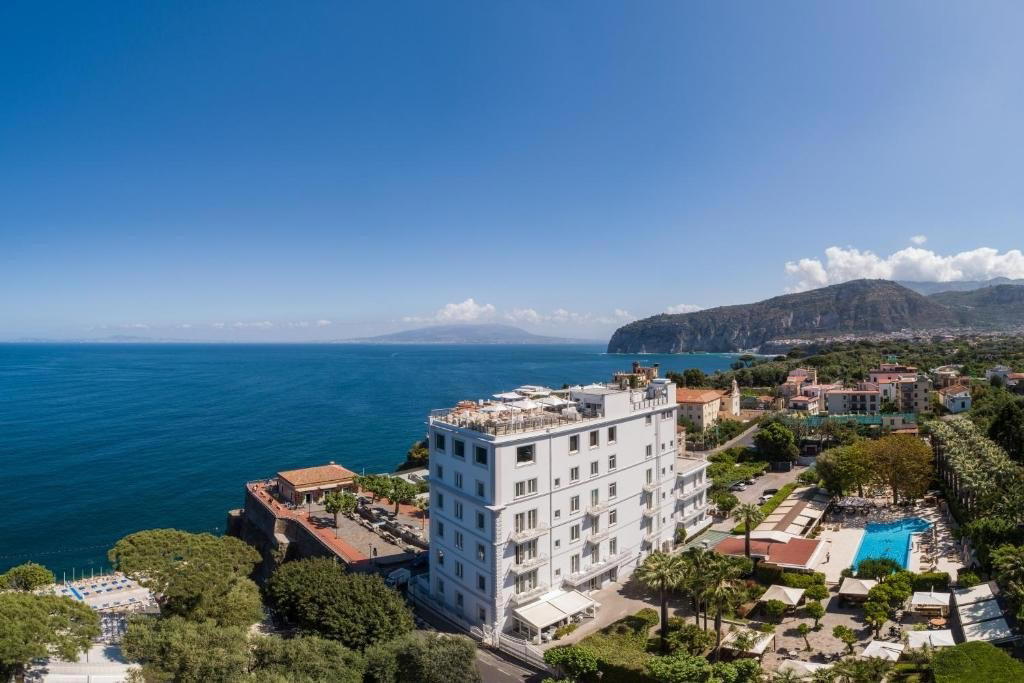
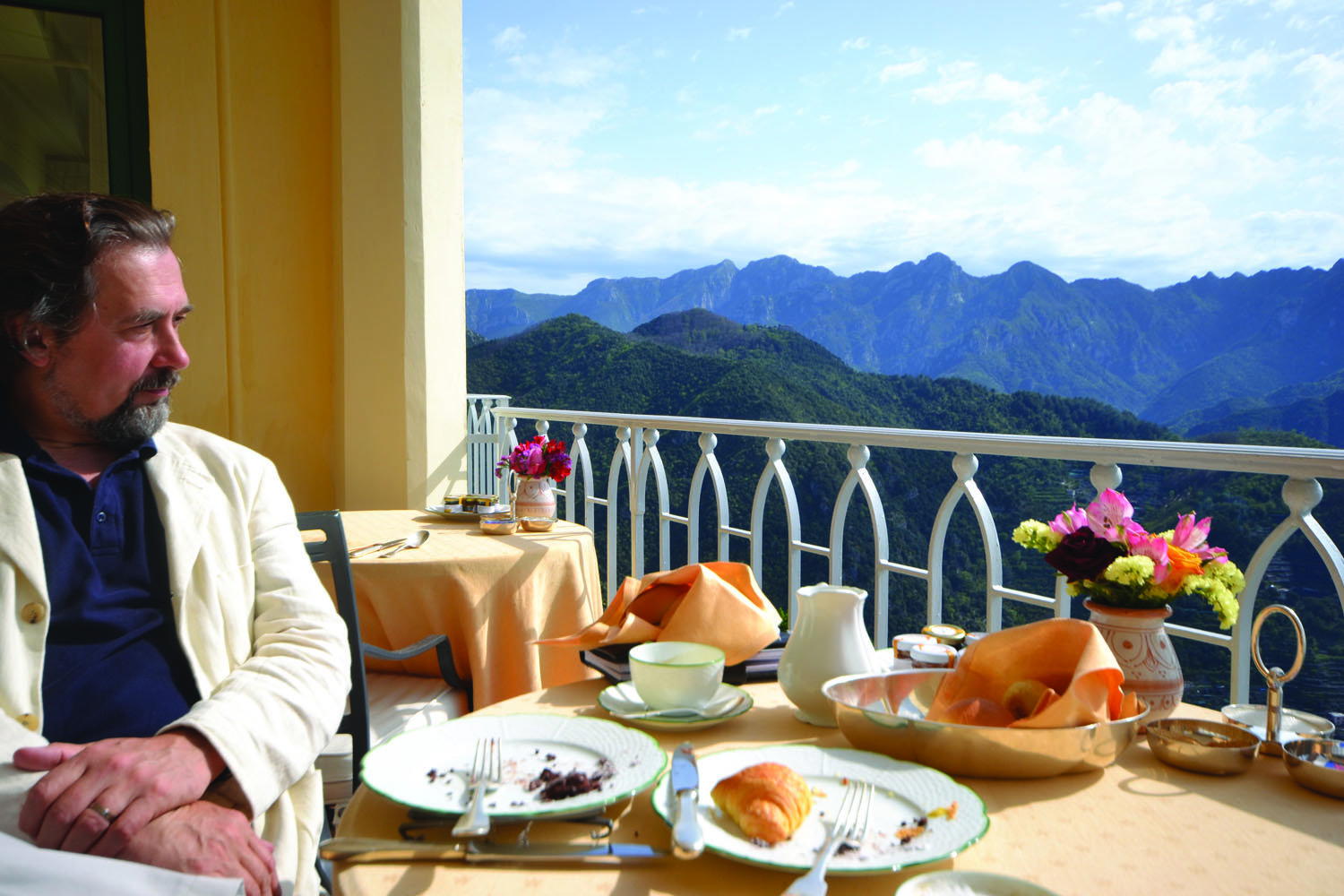
From the terrace at Termini, a small settlement on the southern flank of Massa Lubrense, the view across the water to Capri is not a backdrop, it is a constant, almost argumentative presence. The island's limestone profile sits at the horizon in a way that makes most restaurant views feel provisional by comparison. Arriving at Relais Blu, you encounter that view before you encounter the food, and the sequence feels deliberate: the terrain, the sea, the olive groves on the slopes above the village, these are not decoration but ingredient.
This part of the Sorrento Peninsula has long operated at a different register from the tourist circuits of Positano or Ravello. Massa Lubrense draws a more considered visitor, one willing to leave the coastal road for the higher, quieter promontories, and the dining scene here reflects that self-selection. Relais Blu occupies a specific tier within the scene: the only Michelin-starred address on this stretch, awarded a star in the 2024 guide, and one of the few restaurants along the entire peninsula where the kitchen's ambition matches the elevation of its setting.
The Olive Oil Foundation of Campanian Cooking
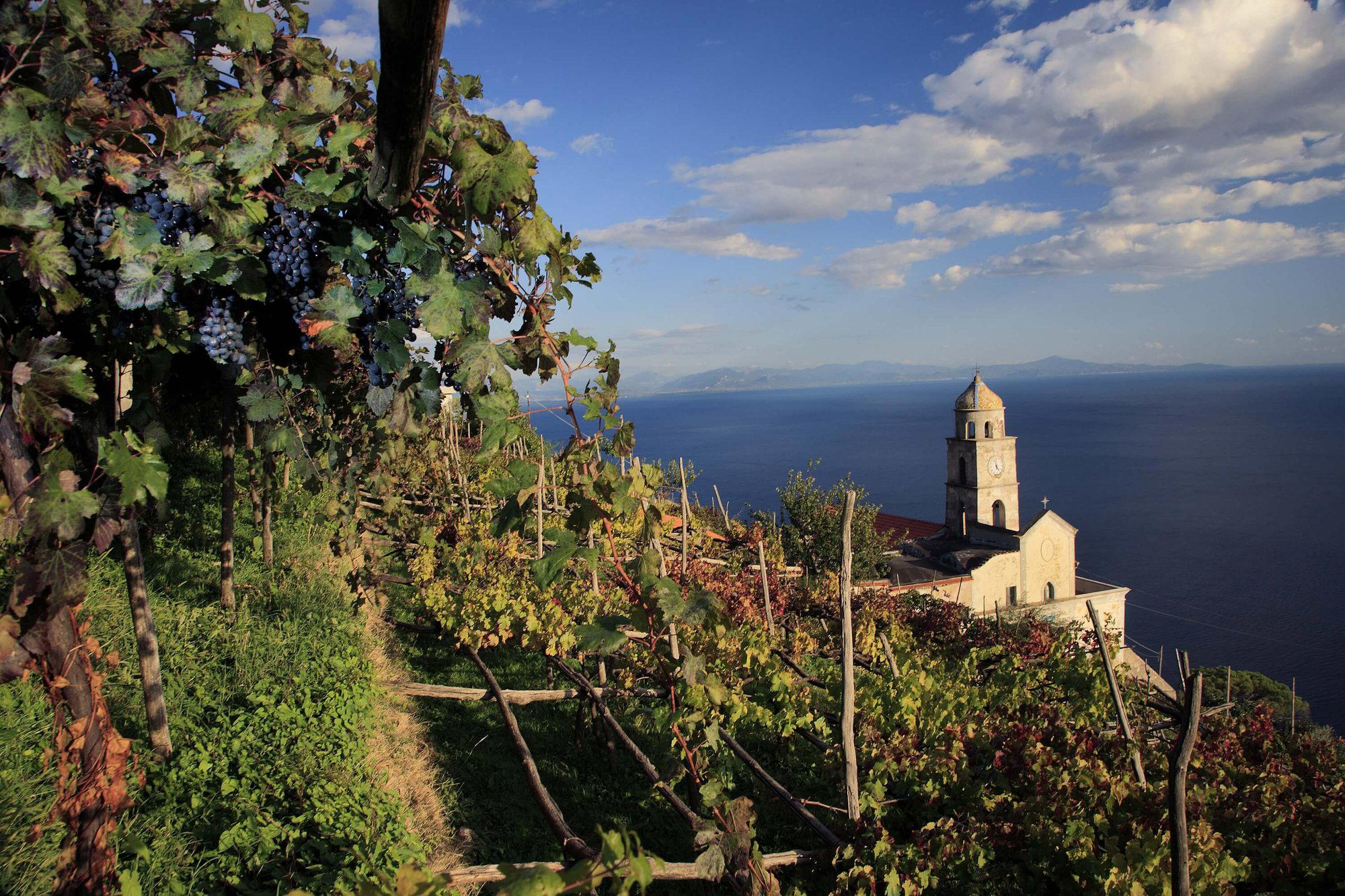
Understanding Relais Blu's food requires understanding the ingredient architecture of the region it sits in. The Sorrento Peninsula and the wider Campania region produce some of southern Italy's most characterful extra-virgin olive oils, pressed primarily from Minucciola, Rotondella, and Ogliarola cultivars grown on terraced hillsides that descend toward the sea. These oils are not interchangeable with Tuscan or Sicilian production: they tend toward a grassy, mid-weight profile with a clean peppery finish that suits seafood preparations, raw dressings, and the kind of vegetable-forward cooking that defines the Campanian table at its most honest.
That olive oil culture shapes a kitchen's logic before a single dish is composed. It dictates which cuts of fish suit raw or barely-warm treatments, how vegetables from a kitchen garden should be finished, and which proteins can carry a simple drizzle without competing flavour. At Relais Blu, where the restaurant maintains its own kitchen garden and sources the regional breeds that have defined Campanian land-based cooking for centuries, that logic is apparent in how the menu is structured: seafood as the primary axis, with Nero Casertano suckling pig and Laticauda lamb appearing as supporting references to the pastoral traditions of the surrounding countryside rather than as afterthoughts.
The Nero Casertano is worth noting in its own right. A native breed of black pig from the Terra di Lavoro area of Campania, it was near-extinct by the late twentieth century and has been steadily recovered by a small network of breeders maintaining traditional pasture methods. Its appearance on a restaurant menu of this category signals a specific commitment to the regional larder, one that goes beyond picking up whatever is locally fashionable. Similarly, Laticauda lamb, from the fat-tailed breed that has grazed Campanian hillsides for centuries, arrives at a table with a fat profile and herbaceous flavour distinct from the milder lamb more commonly found on Italian fine-dining menus further north.
A Kitchen Shaped by the Place, Not the Biography
Campania has a strong tradition of chefs who arrive from elsewhere and spend long enough in the region that their cooking eventually becomes indistinguishable from the local canon. The pattern is more common than the reverse, partly because the ingredient base here is so particular and so demanding that it tends to absorb influences rather than be reshaped by them. Chef Fumiko Sakai, Japan-born and working in this region for many years, fits that pattern: the kitchen at the restaurant produces authentically Campanian food, and the biographical detail functions as context for understanding how a precise technical sensibility from another culinary tradition can, over time, sharpen rather than dilute a regional expression.
The kitchen garden reinforces that rootedness. Restaurants with their own growing space in this part of Italy are working within an agrarian tradition that predates the modern fine-dining concept by several centuries: the orto, the kitchen garden, is a structural element of southern Italian domestic and monastic cooking, and its presence at a Michelin-starred address is less a contemporary gesture toward provenance than a continuity of regional practice.
The View as a Competitive Variable
Michelin-starred restaurants on the Italian coastline tend to cluster in two modes: those that treat the view as incidental to a serious kitchen program, and those where the setting and the food form a coherent argument together. The restaurants that sit in the second category are fewer, and they occupy a different position in a traveller's planning calculus. The restaurant belongs there, and the comparison with Quattro Passi in Marina del Cantone, the other Michelin-recognised address in close geographic proximity on the peninsula, is worth making explicitly: both kitchens work in the Campanian seafood tradition, but the settings and formats are distinct enough that they are not substitutes for each other.
At the broader Italian fine-dining level, the gap between a single Michelin star on a clifftop in Termini and the multi-starred rooms of northern Italy, Osteria Francescana in Modena, Dal Pescatore in Runate, Enoteca Pinchiorri in Florence, Enrico Bartolini in Milan, or Le Calandre in Rubano, is a difference of register and ambition, not simply of award level. The restaurant does not position itself against that tier. It occupies a specific niche: serious regional cooking at the upper end of the Sorrento Peninsula's offer, with a view that few dining rooms anywhere on the Mediterranean can match. For readers comparing across the wider Mediterranean category, La Brezza in Ascona and Arnaud Donckele and Maxime Frédéric at Louis Vuitton in Saint-Tropez operate in the same broad cuisine family but at substantially different price points and scale.
Within the Italian mountain and coastal Michelin tier, Atelier Moessmer Norbert Niederkofler in Brunico, Reale in Castel di Sangro, and Piazza Duomo in Alba each demonstrate how Italian regional kitchens can build a coherent identity around a specific geographic larder. The restaurant makes a similar argument from a southern Italian position, with the added variable that its terrace places the diner physically inside the landscape the food is drawing from. Uliassi in Senigallia offers another reference point for what coastal Italian fine dining looks like when a kitchen commits fully to a maritime ingredient base.
Nearby, Terrazza Fiorella represents the contemporary Italian direction in the same municipality, useful context for readers building a multi-meal itinerary across Massa Lubrense.
Planning a Visit
The restaurant sits at Via Roncato, 60 in Termini, the far south-western tip of the Sorrento Peninsula. Getting there by car from Sorrento takes roughly thirty to forty minutes along narrow road switchbacks; by water taxi from Capri, the crossing is considerably shorter and arrives at the base of the cliff below the village. The price range falls at the €€€ tier, placing it above most trattorie on the peninsula but below the multi-course tasting-menu pricing of the upper-end Amalfi addresses. Given the Michelin star and the limited number of tables with terrace access, advance reservation is advisable, particularly from April through October when the view across to Capri is at its clearest and demand is highest.
What Dish Is Relais Blu Famous For?
The restaurant holds a 2024 Michelin star and is noted for its Campanian seafood-led cooking under Chef Fumiko Sakai, who uses produce from the restaurant's own kitchen garden. The kitchen is particularly associated with its use of regional land breeds, Nero Casertano suckling pig and Laticauda lamb, alongside the fish preparations that anchor the menu. The kitchen's defining characteristic is the coherence between its terrace view across to Capri and a menu that reads as a direct expression of the surrounding Campanian landscape and sea.
Comparable Venues
Comparable venues nearby, for context on price, style, and recognition.
| Venue | Cuisine | Price | Awards | Notes |
|---|---|---|---|---|
| Relais BluThis venue — the venue you are viewing | Modern Italian Fine Dining | $$$$ | Michelin 1 Star | Not listed |
| Terrazza Fiorella | Modern Campania Fine Dining | $$$$ | Michelin Plate | Massa Lubrense |
| Scirocco Sunset Restaurant | Amalfi Coast Seafood | $$$ | Not listed | Massa Lubrense |
| Lo Scoglio | Traditional Neapolitan Seafood | $$ | Not listed | Marina del Cantone |
| La Torre | Authentic Campanian Seafood & Home Cooking | $$ | Not listed | Santa Maria Annunziata, Massa Lubrense |
| Essenza | Italian with Local Traditions | $$$ | Not listed | Massa Lubrense |
Recognition history
Dated appearances from independent guides and award organizations, with the underlying list record or original source where available.
Michelin 1 Star
Michelin
Michelin 1 Star
Michelin
Michelin 1 Star
Michelin
Continue exploring
More in Massa Lubrense
Restaurants in Massa Lubrense
Browse all →
Bars in Massa Lubrense
Browse all →
Hotels in Massa Lubrense
Browse all →

At a Glance
- Romantic
- Elegant
- Scenic
- Sophisticated
- Intimate
- Date Night
- Special Occasion
- Celebration
- Waterfront
- Terrace
- Panoramic View
- Hotel Restaurant
- Extensive Wine List
- Sommelier Led
- Waterfront
Luxurious and serene with dramatic sea views, stylish modern decor, and a calm, welcoming atmosphere highlighted in guest reviews.