Our verdict
Rasa occupies a compact address on West 8th Street in Greenwich Village, sitting within a New York dining scene where South Asian and Indian-derived cooking has moved steadily from neighbourhood staple to serious tasting-counter territory. The restaurant positions itself in that shift, drawing comparisons to the city's progressive multi-course formats without the volume of Midtown's established fine-dining corridors.

Pearl is the En Primeur Club membership app, where members save venues, book tables and use the concierge.
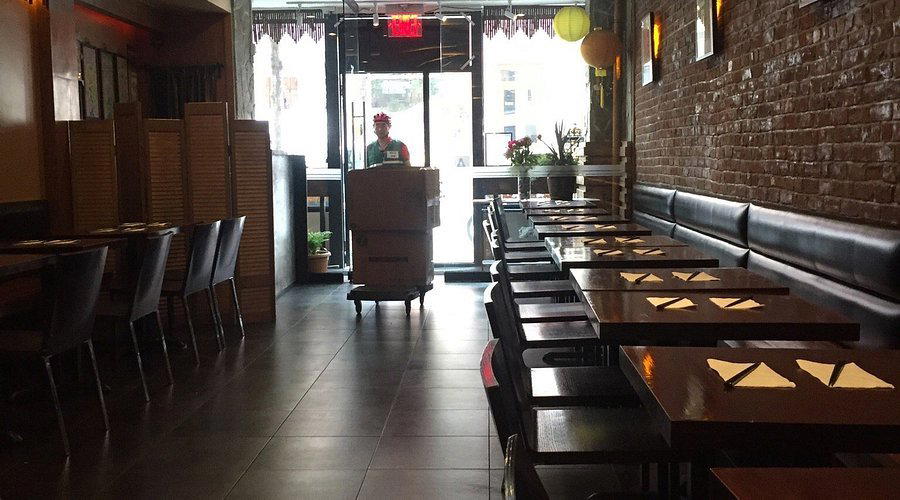
Greenwich Village and the Changing Register of Indian-Derived Cuisine in New York
West 8th Street in Greenwich Village has long occupied an in-between zone in Manhattan's dining geography: close enough to NYU's density to attract foot traffic, far enough from the Flatiron and Midtown corridors that rents and expectations diverge. That address has historically made it a place where restaurants operate with a different set of pressures than the city's more trophy-conscious blocks. In recent years, that pressure differential has made streets like this one more interesting, not less, as chefs working in Indian and South Asian culinary traditions have begun using them to launch formats that would have been harder to sustain in higher-volume neighbourhoods.
New York's relationship with Indian cuisine has undergone a structural realignment over the past decade. What was once a category dominated by large-format curry houses and lunch buffets along Lexington Avenue's Curry Hill corridor has fractured into distinct tiers. At one end, fast-casual and street-food concepts have proliferated. At the other, a smaller cohort of restaurants has pushed toward tasting menus, single-origin sourcing, and the kind of course-by-course progression that places them in direct comparison with the city's French and Japanese fine-dining establishments. Rasa, at 25 W 8th St, operates within that latter movement.
Where Rasa Sits in New York's Multi-Course Landscape
The broader context matters here. New York's tasting-menu tier is unusually crowded and unusually credentialed. Le Bernardin and Per Se represent the French-lineage anchor of that tier, while Atomix and Jungsik New York have demonstrated that Korean-derived cooking can hold its own against the city's most decorated counters. The question being asked more frequently now is whether Indian-rooted cuisine can make the same move at scale, and in a city where Masa commands over $1,000 per person for a Japanese omakase, the appetite for premium non-European formats is demonstrably present.
Rasa's positioning in Greenwich Village, rather than in Midtown or the West Village's more established restaurant rows, reflects a pattern visible across American cities where ambitious independent formats tend to root themselves in transitional neighbourhoods before the market catches up. The same dynamic has played out at Lazy Bear in San Francisco and, to a degree, at Alinea in Chicago, both of which built reputations before their neighbourhoods became dining destinations in their own right. It is also visible in the South, where Bacchanalia in Atlanta and Emeril's in New Orleans shaped their respective cities' fine-dining conversations from addresses that were not obvious at the time.
The Logic of a Tasting Progression in South Asian Cooking
The multi-course format is not a neutral vehicle. When applied to French technique, it carries a century of codified sequencing: amuse-bouche, cold starter, warm starter, fish, meat, cheese, dessert. When applied to South Asian cooking, the sequencing is less prescribed, and that opens both creative opportunity and structural risk. Cuisines from the subcontinent have traditionally organised meals around simultaneity rather than sequence: multiple dishes arriving together, flavours interacting across the table rather than following one another through time. Translating that logic into a linear tasting progression requires decisions about pacing, intensity, and contrast that do not have established templates.
The restaurants that have navigated this well tend to use the early courses to build spice familiarity without front-loading heat, allow aromatic complexity to accumulate across the middle of the meal, and then use the final savoury course or pre-dessert moment to resolve accumulated tension. This is closer to the structure used at Single Thread Farm in Healdsburg or Blue Hill at Stone Barns in Tarrytown, where the meal arc is designed around a kind of narrative resolution, than to the European classical model where protein hierarchy dictates sequence.
Whether Rasa executes this arc at the level of peers like Providence in Los Angeles, Addison in San Diego, or The French Laundry in Napa is a question that the limited available data on the venue does not yet fully answer. What the address and format signal, however, is an intention to be assessed in that company. For context on how similar ambitions have played out at internationally decorated addresses, 8½ Otto e Mezzo Bombana in Hong Kong and Alain Ducasse at Louis XV in Monte Carlo demonstrate how cuisine rooted in specific cultural traditions can hold rigorous fine-dining structure without losing its character.
The Village Address: What It Means for the Experience
Greenwich Village dining operates differently from Midtown in one practical respect that matters to first-time visitors: the pace. Midtown's tasting rooms, including Per Se in Columbus Circle, operate within a theatre-district rhythm where two seatings and firm finish times are structural necessities. The Village tends to allow more elastic timing, particularly on weeknights, which creates a different context for a long tasting progression. A meal designed around twelve or more courses benefits from a room that does not feel like it is managing turnover, and addresses in this part of Manhattan typically provide that. For a fuller map of where Rasa sits within New York's restaurant scene, see our full New York City restaurants guide. The broader American tasting-menu circuit, including The Inn at Little Washington, provides additional reference points for understanding the tier Rasa is reaching toward.
Planning Your Visit
Address: 25 W 8th St, New York, NY 10011, Greenwich Village. Reservations: Dress: No confirmed dress code is listed, though the multi-course format typically aligns with smart casual at minimum. Budget: Getting there: West 8th Street is walkable from the West 4th Street/Washington Square subway station, served by the A, C, E, B, D, F, and M lines.
Frequently asked questions
Can I bring kids to Rasa?
Rasa's multi-course tasting format, located at 25 W 8th St in Greenwich Village, runs at a deliberate pace that tends to suit older diners rather than young children. The sequenced progression and extended sitting time are better matched to adults or teenagers comfortable with that structure. Families with young children would likely find the format a mismatch with their needs.
What is the atmosphere like at Rasa?
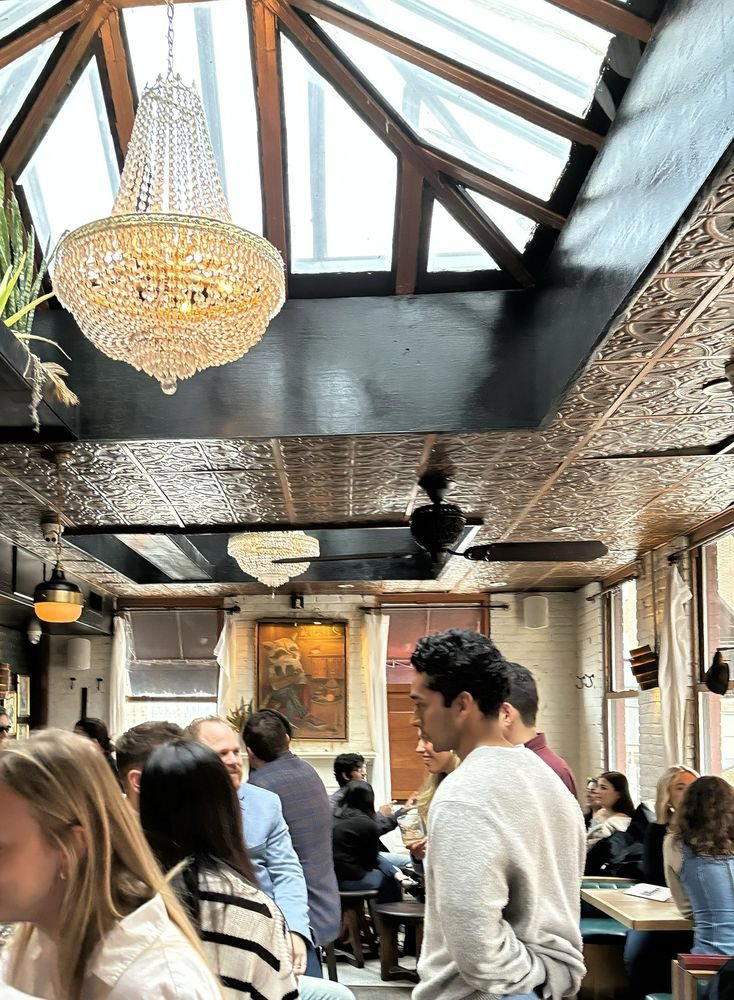
The West 8th Street address places Rasa in a stretch of Greenwich Village that operates at a slower, more considered pace than Midtown Manhattan. The tasting-menu format signals an unhurried room: longer sittings, lower ambient noise, and a focus on the progression of courses rather than the turnover energy of à la carte dining. It reads closer to a dedicated tasting-room register than a neighbourhood bistro.
How does Rasa approach South Asian cuisine differently from New York's typical Indian restaurants?
Rather than the à la carte format common across most of New York City's Indian restaurant tier, Rasa applies a multi-course tasting progression to South Asian cooking, a format that changes how individual dishes are sequenced, portioned, and contextualised. In a city where the tasting-menu field is anchored by French and Japanese traditions, this approach positions Greenwich Village's Rasa within a much smaller cohort of restaurants applying that structure to subcontinental culinary logic. It is a meaningful formal distinction, not just a presentation choice.
What should I order at Rasa?
Rasa operates on a structured tasting-menu format rather than à la carte, so the kitchen determines the sequence. Checking directly with the restaurant before your visit is the most reliable way to understand what the current progression covers.
Where exactly is Rasa?
Rasa is located at 25 W 8th St, New York, NY 10011, New York City.
Do I need a reservation for Rasa?
Given Rasa's tasting-menu format and Greenwich Village address, walk-in availability is unlikely on most nights, particularly on weekends. Tasting-counter and fixed-menu operations in New York at this level generally require advance booking, sometimes weeks out. Securing a reservation before planning your visit is advisable; current booking details should be confirmed directly with the restaurant at 25 W 8th St.
Accolades, Compared
Comparable venues nearby, for context on price, style, and recognition.
| Venue | Cuisine | Price | Notes |
|---|---|---|---|
| RasaThis venue (the venue you are viewing) | Malaysian | $30–50 | Not listed |
| Dar Lbahja | Traditional Moroccan Homestyle | $30–50 | Astoria |
| Pizza Studio Tamaki | Tokyo-Neapolitan Pizza | $20–30 | East Village |
| Mama Lee | Taiwanese comfort food | $20–30 | Williamsburg |
| Ivan Ramen Slurp Shop | Authentic Japanese Ramen | Not listed | Hell's Kitchen |
| Toné Cafe | Traditional Georgian cafe & bakery | $20–30 | Brighton Beach |
Continue exploring
More in New York City
Restaurants in New York City
All restaurants in New York City →
Bars in New York City
All bars in New York City →
Details
- Modern
- Trendy
- Casual Hangout
- Date Night
- Standalone
- A La Carte
- Vegetarian Friendly
- Vegan Options
- Gluten Free Options
- Halal
Current opening hours
- Monday
- 11:30 AM–9:30 PM
- Tuesday
- 11:30 AM–9:30 PM
- Wednesday
- 11:30 AM–9:30 PM
- Thursday
- 11:30 AM–9:30 PM
- Friday
- 11:30 AM–10 PM
- Saturday
- 11:30 AM–10 PM
- Sunday
- 11:30 AM–9:30 PM
Hours can change for holidays and private events. Hours as of .
Fishmonger chic with airy interiors and modern artwork.