Rangoon Ruby Burmese Cuisine
Our verdict
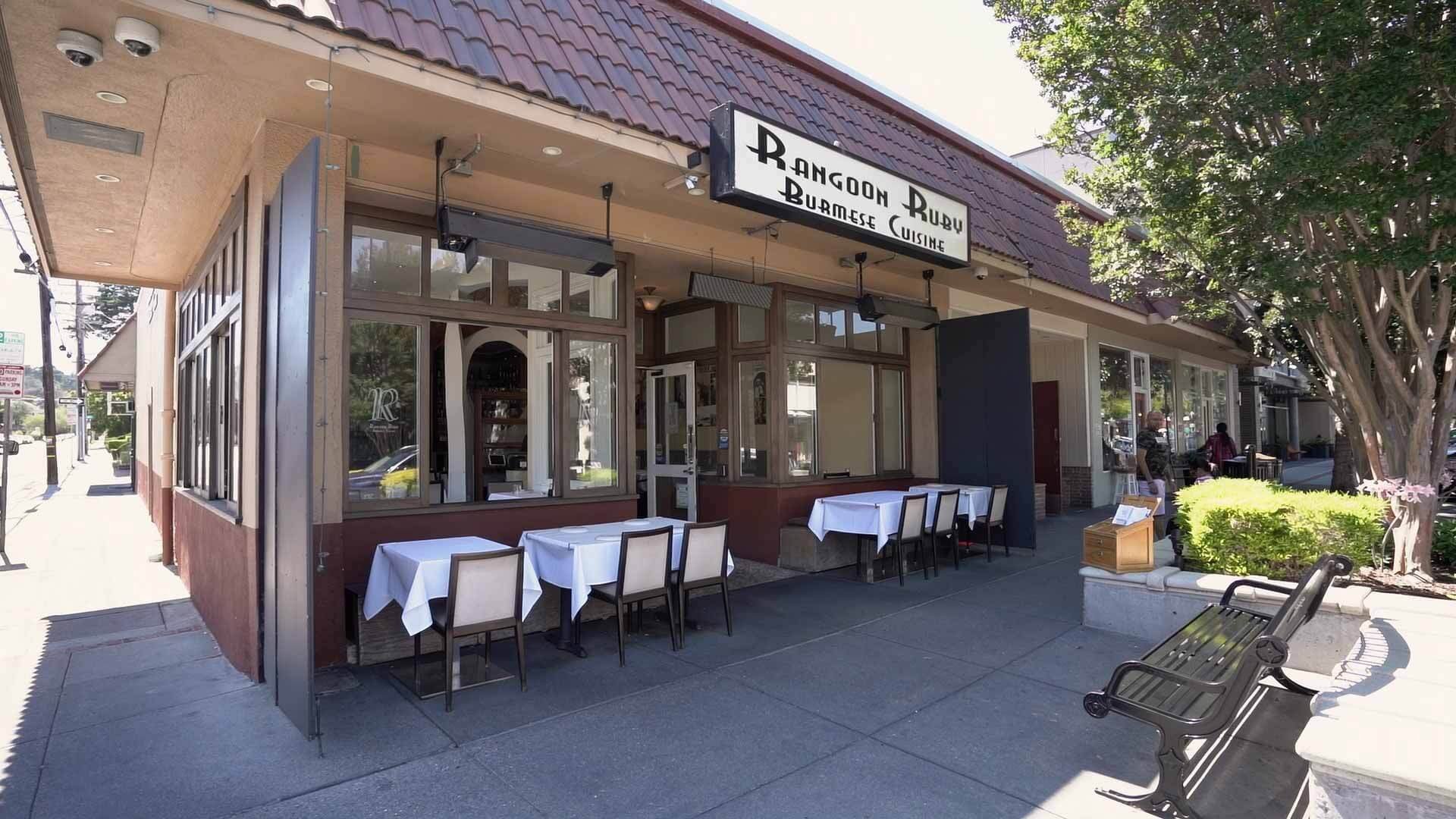
Rangoon Ruby brings Burmese cooking to downtown Palo Alto's Emerson Street corridor, a cuisine still scarce enough across the Bay Area that its presence alone makes it a reference point for the region. The kitchen draws on Myanmar's layered culinary tradition, where Indian, Chinese, and Southeast Asian influences converge into dishes that read as neither fusion nor derivative. A practical choice for both lunch breaks and evening meals in a neighbourhood built around working professionals.

Pearl is the En Primeur Club membership app — saves, bookings, and concierge access live there. Same editors, same standards.
- Address
- 445 Emerson St, Palo Alto, CA 94301
- Phone
- (650) 323-6543
- Hours
- Mon–Thu 11:30 AM–2:30 PM, 4:30–9:30 PMFri–Sat 11:30 AM–2:30 PM, 4:30–10 PMSun 11:30 AM–2:30 PM, 4:30–9 PM
- Website
- rangoonrubypa.com
- Directions
- Get directions
- Booking
- Book on OpenTable
The menu
What to order
- Tea Leaf Salad
- Burmese Pad Thai
- Garlic Noodle
Emerson Street and the Case for Burmese in Silicon Valley
Palo Alto's dining corridor along Emerson Street has long operated as a pressure-test for cuisines that travel well to a tech-professional clientele: quick enough for a working lunch, substantive enough for a client dinner. Burmese cooking sits at an interesting position within that calculus. It is one of Southeast Asia's most internally complex culinary traditions, drawing from Indian spice logic, Chinese noodle culture, and indigenous fermentation practices that produce flavours with no clean Western analogue. Yet it remains genuinely underrepresented across the Bay Area, which means that when a kitchen commits to it seriously, it tends to anchor the conversation for the entire sub-region. Rangoon Ruby Burmese Cuisine, at 445 Emerson St, occupies that position in Palo Alto.
The address places it squarely in the downtown core, walkable from the Caltrain station and within the gravitational pull of the University Avenue commercial strip. That location shapes the rhythm of the dining room as much as the menu does. The daytime crowd skews toward solo diners and two-tops from the surrounding offices; the evening service draws a different energy, with larger tables and more deliberate pacing. Understanding which service fits your purpose matters here, and the distinction is more than just timing.
The Lunch-Dinner Divide: Mood, Pace, and What It Means for Your Order
In Burmese restaurant culture broadly, lunch has historically been the more democratic meal. Tea leaf salad, mohinga, and rice-based plates are daytime staples across Yangon's street stalls and mid-range restaurants alike. The same logic tends to apply to Burmese kitchens transplanted to the American West Coast: the lunch hour allows for faster, more casual engagement with the cuisine's reference dishes, without the commitment of a longer evening format.
At Rangoon Ruby, the practical reality of Emerson Street reinforces this. A midday visit is a lower-stakes entry point for anyone unfamiliar with Burmese food. The neighbourhood moves quickly during lunch hours, and the kitchen's more approachable dishes, those built around noodles, salads, and rice combinations, read more intuitively in that context. Evening service shifts the frame. With more time at the table, the case for exploring less familiar territory strengthens: curries that require slower attention, dishes where the interplay between fermented and fresh components rewards deliberate eating.
This is the practical argument for visiting twice rather than once. The two services function as different lenses on the same kitchen.
What Burmese Cuisine Actually Is (and Why the Bay Area Needs More of It)
The context matters because Burmese cooking is routinely collapsed into a generic Southeast Asian category by diners who haven't encountered it before. It is not Thai, it is not Indian, and the Chinese influences embedded in it arrived through different trade routes than those that shaped Vietnamese or Cantonese cooking. The fermentation tradition alone, built around ngapi (a fermented fish or shrimp paste) and lahpet (fermented tea leaves used as both condiment and salad base), gives the cuisine a depth register that most Southeast Asian kitchens in California don't approach.
The Bay Area has a relatively small number of Burmese restaurants compared to its Vietnamese, Chinese, or Thai representation, which means the cuisines that do operate here carry an outsized responsibility for public literacy around Burmese food. Rangoon Ruby's Palo Alto location sits within that context. Compared to peer restaurants along the Emerson corridor, including Anatolian Kitchen and Arya Steakhouse, it occupies a distinct culinary niche with effectively no direct local competition.
For diners who rotate between fast-casual formats like Asian Box or Bare Bowls during the week and want a sit-down alternative with more culinary specificity, Rangoon Ruby provides that step up without requiring fine-dining commitment. It occupies a middle register that Palo Alto's restaurant mix genuinely needs.
Planning Your Visit
Rangoon Ruby is located at 445 Emerson St, Palo Alto, CA 94301, within walking distance of the University Avenue Caltrain stop. Given that venue-specific hours, booking policies, and current pricing are best confirmed directly with the restaurant before visiting, checking their current status ahead of time is worthwhile, particularly for evening reservations when demand from the local professional community tends to concentrate. Lunch visits on weekdays typically offer more flexibility for walk-in seating, consistent with how the neighbourhood's dining rhythm operates generally.
For those exploring Palo Alto's broader dining options, our full Palo Alto restaurants guide covers the full range of the city's current restaurant scene, from casual daytime spots like Birdie's at Stanford Golf to the wider context of where Burmese fits within the city's culinary map.
For reference, the standard of ambition at Rangoon Ruby's price tier differs substantially from what you find at destination-level American restaurants: Le Bernardin in New York City, The French Laundry in Napa, Alinea in Chicago, or Lazy Bear in San Francisco. But that comparison isn't the right frame. What Rangoon Ruby does, introducing a cuisine with real historical and culinary depth to a neighbourhood that has limited access to it, serves a different and equally valid function. The same could be said of how Single Thread Farm in Healdsburg or Blue Hill at Stone Barns in Tarrytown serve their local communities: the genre differs, but the principle of anchoring a cuisine to a place applies across tiers. Likewise, Atomix in New York City, Providence in Los Angeles, Addison in San Diego, Emeril's in New Orleans, The Inn at Little Washington in Washington, and 8 1/2 Otto e Mezzo Bombana in Hong Kong each anchor their respective cuisines and cities at a different scale, but with the same underlying logic of specificity over generalism.
Frequently asked questions
How do I find Rangoon Ruby Burmese Cuisine?
Rangoon Ruby Burmese Cuisine is located at 445 Emerson St, Palo Alto, CA 94301, Palo Alto.
Is Rangoon Ruby Burmese Cuisine a good option for groups unfamiliar with Burmese food?
Palo Alto's Emerson Street location makes Rangoon Ruby one of the more accessible entry points into Burmese cooking in Silicon Valley, a cuisine that remains underrepresented relative to Thai or Vietnamese across the Bay Area. The format of shared plates — tea leaf salad, curries, and rice dishes arriving at the table together — suits groups who want to sample across the menu rather than commit to a single dish.
What should I order at Rangoon Ruby Burmese Cuisine?
Tea leaf salad is the reference point for Burmese cooking in the Bay Area and the dish most diners use to gauge a kitchen's credentials at this address on Emerson St. Mohinga, the rice noodle fish broth that functions as Burma's national breakfast dish, is worth ordering if available at lunch. Rice-based plates round out the daytime menu and reflect the more democratic, everyday tradition of Burmese cooking.
Should I book Rangoon Ruby Burmese Cuisine in advance?
Rangoon Ruby sits on Emerson Street in downtown Palo Alto, a corridor that draws consistent foot traffic from the tech-professional population centered around University Avenue. Given the limited number of Burmese restaurants operating at this level in the Bay Area, demand tends to outpace casual walk-in availability, particularly at dinner. Checking ahead before visiting is advisable.
What's the signature at Rangoon Ruby Burmese Cuisine?
Tea leaf salad holds that position across Burmese restaurants in the United States, and Rangoon Ruby's version on Emerson Street is the dish most cited in the context of this Palo Alto address. The preparation combines fermented tea leaves with crunchy legumes, sesame, and dried shrimp — a flavor profile with no close parallel in other Southeast Asian traditions.
Can Rangoon Ruby Burmese Cuisine handle vegetarian requests?
Burmese cuisine includes a range of rice, noodle, and vegetable dishes that can accommodate plant-based diners, though traditional preparations like mohinga are anchored in fish-based broths.
Cuisine and Recognition
Comparable venues nearby, for context on price, style, and recognition.
| Venue | Cuisine | Price | Notes |
|---|---|---|---|
| Rangoon Ruby Burmese CuisineThis venue — the venue you are viewing | Authentic Burmese Cuisine | $30–50 | Not listed |
| Bare Bowls | Acai Bowls & Healthy Smoothies | $10–20 | Downtown Palo Alto |
| So Gong Dong Tofu House | Korean Tofu House | $20–30 | Not listed |
| Ramen Nagi | Japanese Ramen | $20–30 | Downtown Palo Alto |
| Lou & Herbert's | Tapas & Small Plates | $30–50 | Downtown Palo Alto |
| Cool Cafe | American Café | Not listed | Stanford |
Continue exploring
More in Palo Alto
Restaurants in Palo Alto
Browse all →
Bars in Palo Alto
Browse all →
Hotels in Palo Alto
Browse all →

Details
- Modern
- Elegant
- Sophisticated
- Date Night
- Group Dining
- Casual Hangout
- Craft Cocktails
- A La Carte
- Small Plates
- Vegetarian Friendly
- Gluten Free Options
Current opening hours
- Monday
- 11:30 AM–2:30 PM, 4:30–9:30 PM
- Tuesday
- 11:30 AM–2:30 PM, 4:30–9:30 PM
- Wednesday
- 11:30 AM–2:30 PM, 4:30–9:30 PM
- Thursday
- 11:30 AM–2:30 PM, 4:30–9:30 PM
- Friday
- 11:30 AM–2:30 PM, 4:30–10 PM
- Saturday
- 11:30 AM–2:30 PM, 4:30–10 PM
- Sunday
- 11:30 AM–2:30 PM, 4:30–9 PM
Hours can change for holidays and private events. Last verified .
Modern upscale ambiance with a fresh, clean approach to Burmese dining.