Asian Box
Our verdict
Asian Box on El Camino Real brings Southeast Asian-style box meals to Palo Alto's fast-casual corridor, where the format suits the peninsula's working lunch culture as well as a quick dinner between commitments. The concept sits in a category that prioritises flavour-forward assembly over tableside ceremony, making it a counterpoint to the sit-down Asian dining rooms clustered nearby.

Pearl is the En Primeur Club membership app — saves, bookings, and concierge access live there. Same editors, same standards.
- Address
- 855 El Camino Real, Palo Alto, CA 94301
- Phone
- (650) 391-9305
- Hours
- Mon–Sat 10:30 AM–9:30 PMSun 10:30 AM–8:30 PM
- Website
- widgets.resy.com
- Directions
- Get directions
- Booking
- Book on Resy
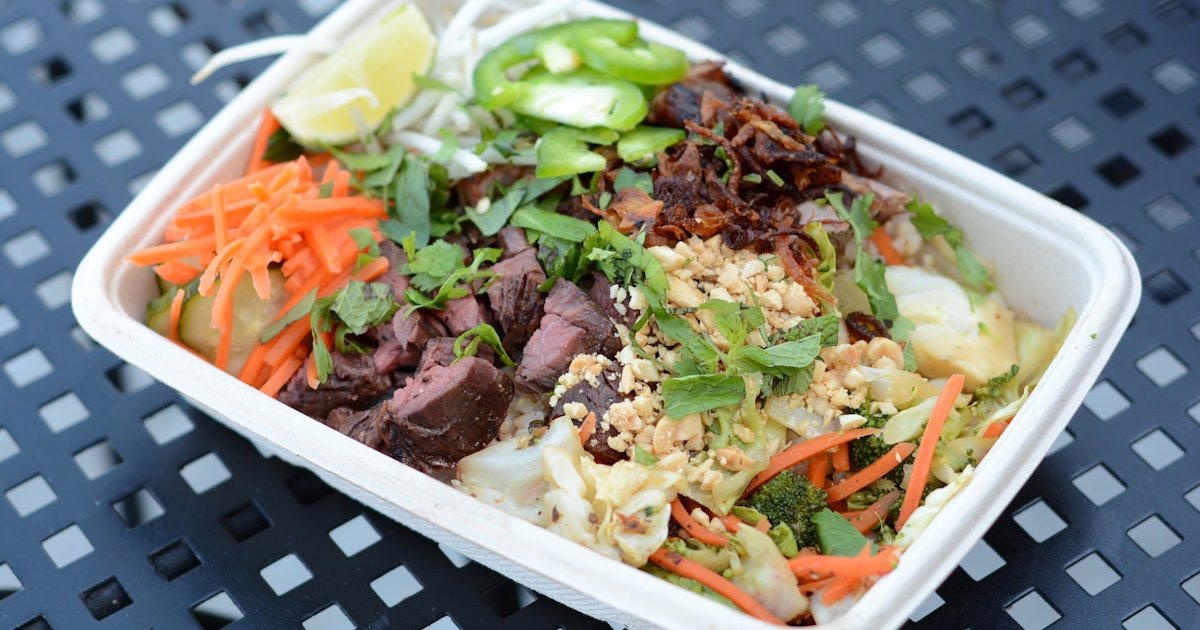
The menu
What to order
- The Workout
- Garden Box
- Six-Spice Chicken
El Camino Real and the Fast-Casual Asian Format
El Camino Real runs the length of the peninsula like a commercial spine, and the stretch passing through Palo Alto at address 855 carries a particular character: chain pharmacies and independent restaurants share the same low-rise retail strip, and at lunch the foot traffic is dense with Stanford affiliates, tech workers, and residents who treat the road as a daily artery rather than a destination. Asian Box occupies that context deliberately. The format it represents, a counter-service box-meal concept drawing on Southeast Asian flavour profiles, fits the rhythm of this corridor in a way that a sit-down room never quite would. You order at the front, the food arrives assembled, and the ritual of the meal is compressed into what you choose to build rather than how a kitchen chooses to pace you.
That compression is worth examining, because it reframes what dining ritual means in a fast-casual register. At the tasting-menu end of American dining, pacing is the kitchen's instrument: courses arrive when the team decides, and the diner's role is receptive. At venues like The French Laundry in Napa, Lazy Bear in San Francisco, or Smyth in Chicago, the guest surrenders control of sequence and timing as part of the contract. Asian Box inverts that relationship. The diner makes the decisions at the counter, and the meal's structure follows from those choices. Both are forms of ritual; they just distribute authority differently.
The Box Meal as a Dining Convention
The box-meal format that Asian Box embodies has a longer history than its American fast-casual iteration suggests. Across Southeast Asia and East Asia, the compartmentalised meal, rice or noodles with proteins and pickled or fresh accompaniments arranged together, is a daily convention rather than a restaurant invention. Thai khao man gai, Vietnamese com tam, and Japanese bento all operate on the same organisational logic: a base, a primary protein, a sauce, something acidic or crunchy to cut through. What the American fast-casual version does is allow the diner to specify each layer explicitly at the counter, turning a traditional cook's decision into a menu of choices.
Palo Alto's dining scene has seen that format multiply across several categories. Bare Bowls operates on similar assembly logic within a health-bowl framework, while the broader El Camino strip hosts formats ranging from Persian grills at Arya Steakhouse to the more formal Mediterranean approach at Anatolian Kitchen. Against that range, Asian Box positions itself specifically around Southeast Asian flavour registers: the interplay of fish sauce, lime, chilli, and fresh herb that defines the cuisines it draws on, delivered at counter speed without asking the diner to sit through a full table-service experience.
What the Format Asks of the Diner
Eating at a counter-service concept shaped by Southeast Asian cooking conventions involves a different set of decisions than a conventional restaurant visit. At the more ceremony-heavy end of dining, menus narrow your choices and the kitchen does interpretive work. The counter-service format at Asian Box requires the opposite: the diner is the assembler, and the quality of the meal depends partly on the choices made at the counter. That is not a diminishment of the format; it is the format's defining feature.
In Southeast Asian cooking traditions, the combination of components at the table, adding fish sauce, chilli flakes, sugar, and lime to a bowl of noodles, is itself part of the meal's ritual. The American fast-casual version translates that moment to the ordering stage. Choosing a base, a protein, a sauce, and toppings is not a shortcut around the food; it is the food's structural logic made explicit. Diners who approach it as a customisation exercise rather than a composition exercise tend to eat less coherently. Those who treat the counter choices as flavour decisions, thinking about acid balance, heat, and richness before confirming the order, tend to eat better.
This positions Asian Box within a broader dining shift across the peninsula and the Bay Area generally. Tech-adjacent communities have driven strong demand for counter-service formats that deliver genuine flavour complexity without table-service overhead. Concepts from the more refined end of California dining, including Single Thread Farm in Healdsburg and Providence in Los Angeles, operate at the opposite pole of that market, but both poles reflect the same underlying reality: diners in this region are food-literate and format-selective. The middle of the market is increasingly divided between those who want ceremony and those who want speed without flavour compromise.
Asian Box in the Palo Alto Casual Dining Context
Palo Alto's casual dining tier is more contested than the city's modest size might suggest. The proximity of Stanford, the density of venture capital offices, and a resident demographic that travels frequently and eats widely all compress the expectations attached to even an informal meal. A counter-service concept in this city is measured against what the same diner ate in Bangkok, Ho Chi Minh City, or Singapore, not against the generic fast-casual category nationally.
That is a higher bar, and it shapes how the box-meal format functions here differently than it might in a city with less food-travelled residents. The comparison is not to other fast-casual venues but to the source cuisines themselves. Formats like Bistro Elan in Palo Alto or the clubhouse dining at Birdie's at Stanford Golf occupy different niches entirely, serving a sit-down occasion rather than a working meal. Asian Box's niche is the diner who wants the flavour logic of Southeast Asian cooking without the reservation and the pacing of a full table-service room.
Further up the prestige register, venues like Atomix in New York City, Le Bernardin, Blue Hill at Stone Barns in Tarrytown, Addison in San Diego, Emeril's in New Orleans, The Inn at Little Washington, and Atelier Moessmer Norbert Niederkofler in Brunico are where the ceremony and the sourcing intensity are built into every element of the room. Asian Box is not competing with that tier; it is serving the same food-literate diner in a different mode and a different hour of their day.
Planning a Visit
Asian Box sits at 855 El Camino Real, accessible from the Palo Alto Caltrain station on foot or by short ride. The El Camino Real address means parking is available in the surrounding retail lots. Specific hours, pricing, and current menu composition are best confirmed directly with the venue. For a fuller picture of where Asian Box sits within the peninsula's dining offer, the EP Club Palo Alto restaurants guide maps the full range of options across formats and price points.
Frequently asked questions
What part of town is Asian Box in?
Asian Box is located at 855 El Camino Real, Palo Alto, CA 94301, Palo Alto.
How does Asian Box compare to other fast-casual options near Stanford University?
Asian Box sits at 855 El Camino Real, roughly in the corridor that serves both the Stanford campus edge and the central Palo Alto commercial strip, making it a practical option for the university crowd and peninsula commuters alike. Its Southeast Asian box-meal format is more format-specific than the broader pan-Asian or generalist fast-casual restaurants clustered in the same area.
What's the must-try dish at Asian Box?
The box-meal format at 855 El Camino Real is built around Southeast Asian flavors assembled to order at the counter, which means the meal is configured by the diner rather than anchored to one signature plate. Check the menu board on arrival for current options. Check the venue's official channels for the latest details.
Should I book Asian Box in advance?
Asian Box operates as a counter-service concept, which means walk-in ordering rather than reservations. No booking system is documented for this Palo Alto location. Expect higher foot traffic during Stanford-area lunch hours given the El Camino Real address.
What's Asian Box best at?
The format itself is the point: a structured, counter-service approach to Southeast Asian cooking that moves quickly and keeps decisions clear. In Palo Alto's casual dining tier, that combination of speed and a defined regional focus puts it in a distinct lane from the broader pan-Asian and California-fusion options on the peninsula.
Can Asian Box adjust for dietary needs?
Counter-service formats built around modular box meals typically allow component-level customization, which can accommodate common dietary preferences.
Is Asian Box worth it?
For a counter-service meal on El Camino Real in Palo Alto, where the casual dining tier skews toward higher price points relative to most California cities, a box-meal format priced for speed and volume represents a functional value proposition. Whether it fits your visit depends on what you are after: it is a workday lunch concept, not a weekend dinner destination.
Cuisine and Recognition
Comparable venues nearby, for context on price, style, and recognition.
| Venue | Cuisine | Price | Notes |
|---|---|---|---|
| Asian BoxThis venue — the venue you are viewing | Vietnamese Street Food Boxes | $10–20 | Not listed |
| Three Seasons | Modern Vietnamese | $20–30 | Downtown Palo Alto |
| Rara | Authentic Nepalese | $20–30 | California Avenue |
| Lotus Thai Bistro | Authentic Thai Cuisine | $20–30 | Palo Alto Business District |
| Scoop | Artisanal Microcreamery | $1–10 | downtown |
| Sancho's Taqueria | Mexican Taqueria | $10–20 | Downtown |
Continue exploring
More in Palo Alto
Restaurants in Palo Alto
Browse all →
Bars in Palo Alto
Browse all →
Hotels in Palo Alto
Browse all →
Details
- Trendy
- Modern
- Casual Hangout
- Open Kitchen
- A La Carte
- Vegetarian Friendly
- Vegan Options
- Gluten Free Options
Current opening hours
- Monday
- 10:30 AM–9:30 PM
- Tuesday
- 10:30 AM–9:30 PM
- Wednesday
- 10:30 AM–9:30 PM
- Thursday
- 10:30 AM–9:30 PM
- Friday
- 10:30 AM–9:30 PM
- Saturday
- 10:30 AM–9:30 PM
- Sunday
- 10:30 AM–8:30 PM
Hours can change for holidays and private events. Last verified .
Casual fast-casual atmosphere with quick service and seating for dine-in.