

Ramon Freixa Atelier sits on Calle Velázquez in Madrid's Salamanca district, positioning itself within Spain's most decorated tier of creative fine dining. The address alone signals a particular register: Salamanca is where the city's haute cuisine ambitions concentrate, and this kitchen operates at the level where Michelin recognition and culinary lineage function as the primary reference points rather than novelty or trend.
Pearl is the En Primeur Club membership app — saves, bookings, and concierge access live there. Same editors, same standards.
- Address
- Calle Velázquez, 24, Salamanca, 28001 Madrid, Spain
- Phone
- +34603961293
- Website
- ramonfreixaatelier.com
- Directions
- Get directions
 Saves & bookings on Pearl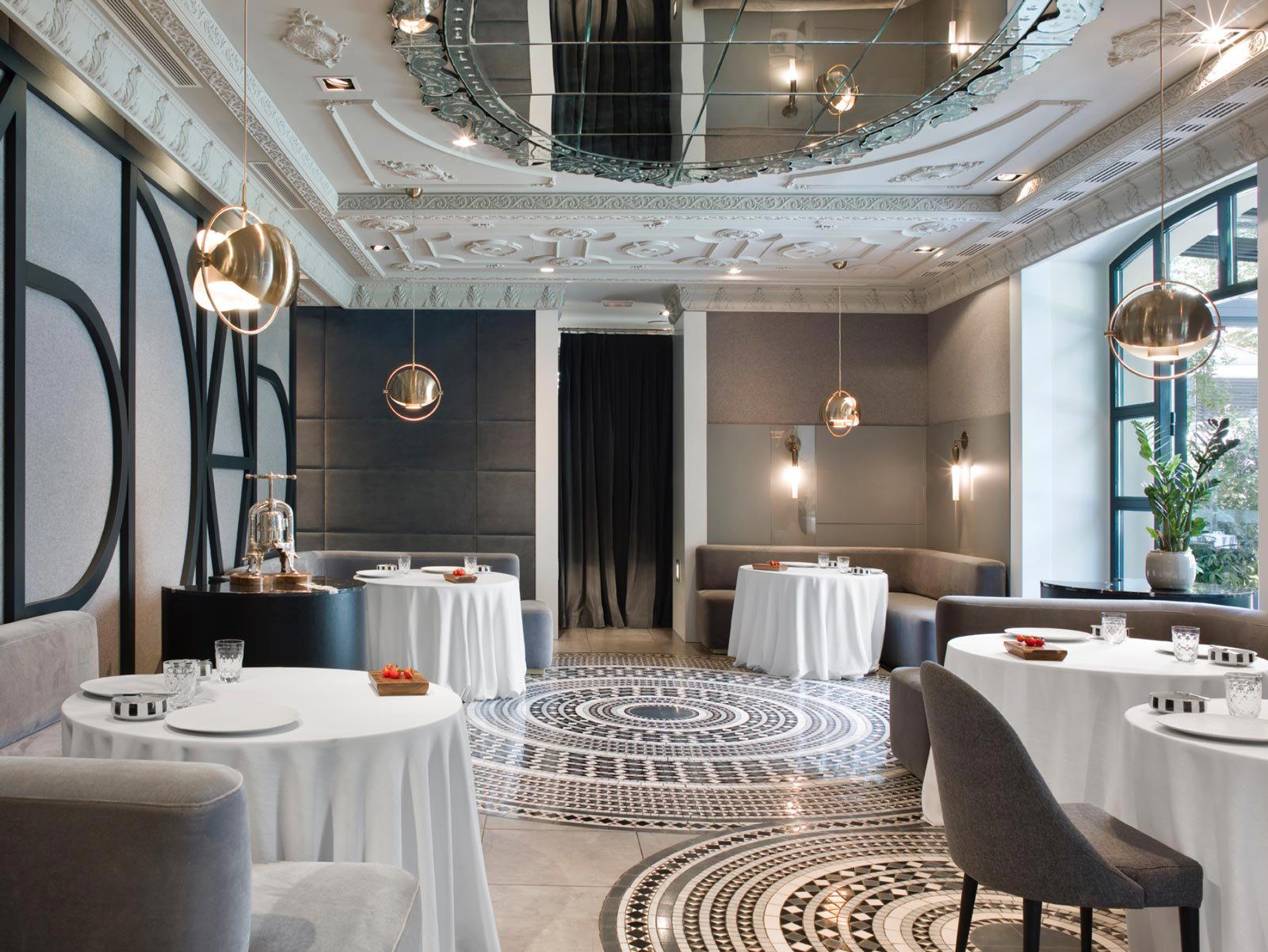
A Salamanca Address and What It Signals
Calle Velázquez runs through the geographic and social spine of Salamanca, Madrid's most formally composed barrio, where the apartment blocks are pre-war and the ground-floor tenants skew toward heritage brands and serious restaurants. Ramon Freixa Atelier is a contemporary Spanish avant-garde tasting menu restaurant at Calle Velázquez, 24, Salamanca, 28001 Madrid, Spain. In a city where fine dining has spread across multiple districts, Salamanca remains the neighbourhood most associated with precision, formality, and a certain continuity of ambition.
Madrid's upper tier of creative fine dining has grown more defined in the last decade. Alongside DiverXO, which operates in a different register of controlled provocation, and Coque, which anchors its creativity in deep Spanish product tradition, the Atelier occupies a position shaped by Catalan culinary roots transplanted into Madrid's capital ambition. That tension between regional origin and metropolitan setting is one of the more interesting structural facts about the city's upper-tier restaurants: few of them are rooted in Castilian tradition.
The Catalan Thread in Madrid's Fine Dining
Spain's most celebrated kitchens have historically been concentrated in the Basque Country and Catalonia, and the migration of Catalan culinary sensibility toward Madrid has been one of the quieter but more consequential movements in Spanish gastronomy over the past two decades. The tradition Ramon Freixa Atelier draws from is one with deep Mediterranean roots: an emphasis on technique as the servant of product, a respect for classical French structure filtered through Iberian ingredient logic, and a preference for courses that progress through contrast rather than repetition.
This matters in context. When you sit at a table in the upper bracket of Madrid's restaurant scene, you are rarely eating something that emerged from Castilian soil in either culinary or biographical terms. Deessa, the dining room at the Mandarin Oriental Ritz, operates with a similarly imported creative vocabulary. DSTAgE draws on global reference points. Paco Roncero came up through a kitchen most associated with avant-garde technique. Madrid's haute cuisine identity is, by design, pluralist. The Atelier fits that pattern and represents it with particular clarity given the explicit Catalan lineage embedded in its name and approach.
Compared to the concentrated clusters of multi-Michelin restaurants in San Sebastián, as represented by kitchens like Arzak or Martin Berasategui, or the Girona axis anchored by El Celler de Can Roca, Madrid's fine dining scene feels less geographically rooted in a single tradition. That is partly what makes it interesting as a destination for serious diners: you are not eating a place's terroir so much as eating that place's idea of what a capital city's restaurant should be capable of.
Creative Fine Dining at the Atelier Level
The format of a high-end creative atelier, the word itself suggesting workshop rather than showroom, implies a working approach to a menu rather than a fixed recital. In Spain's most ambitious kitchens, this typically means tasting menus that evolve across seasons, with courses structured to make an argument rather than simply to please. At this level, the cooking is in dialogue with peers across the country: with Quique Dacosta's Mediterranean intensity in Dénia, with the boundary-testing at Mugaritz in Errenteria, with the oceanic focus of Aponiente in El Puerto de Santa María. These kitchens share a vocabulary even when their conclusions differ.
What separates this tier from the next rung down is not the number of courses or the price of ingredients, but the degree to which each dish has been made to carry a specific intention. The risk of creative fine dining at this level is over-intellectualisation at the expense of pleasure; the leading rooms in Spain manage to avoid that trap by keeping product quality high enough that technique never has to substitute for flavour. On the evidence of its positioning and history, the Atelier operates with that balance as a governing principle.
For international reference, it is useful to compare the structural ambitions here with what rooms like Le Bernardin in New York achieve in French-rooted precision, or what Atomix does with tasting-menu formalism from a Korean framework. The Atelier belongs to a generation of European fine dining that has absorbed those conversations without being defined by them.
Madrid's Wider Fine Dining Context
A visit to Ramon Freixa Atelier makes most sense as part of a broader engagement with what Madrid's restaurant scene can do at its leading end. The city now sustains a cluster of seriously ambitious kitchens across multiple styles: Ricard Camarena in Valencia and Cocina Hermanos Torres in Barcelona represent the wider Iberian context the Atelier sits within. Azurmendi in Larrabetzu and Atrio in Cáceres show the geographic spread of Spain's creative ambition beyond its three major cities. Seen against that map, Salamanca as a home base for the Atelier makes particular sense: it is the part of Madrid most legible to diners arriving with that wider Spanish context already loaded.
Planning Your Visit
The Atelier is located at Calle Velázquez, 24, in the Salamanca district, 28001 Madrid. Reservations are appointment only. Dress: formal. Budget: approximately $500 per person. Access: the Salamanca district is served by metro.
Reputation First
Comparable venues nearby, for context on price, style, and recognition.
| Venue | Cuisine | Price | Notes |
|---|---|---|---|
| Ramon Freixa AtelierThis venue — the venue you are viewing | Contemporary Spanish Avant-Garde Tasting Menu | $$$$ | Not listed |
| Yantar Sidrería Gastronómica | Traditional Asturian Cuisine | $$$$ | Barrio de las Letras |
| Ramon Freixa | Avant-garde Spanish Fine Dining | $$$$ | Recoletos |
| Tatel | Modern Spanish Haute Cuisine | $$$$ | Castellana |
| Florida Retiro | Modern Spanish Mediterranean | $$$ | Parque del Retiro |
| Qüenco De Pepa | Seasonal Spanish market cuisine with vegetables from its own garden | $$$ | Chamartín |
Recognition history
Dated appearances from independent guides and award organizations, with the underlying list record or original source where available.
Guía Repsol 3 Soles
Guía Repsol
Macarfi 8.2 Food Rating
Macarfi
At a Glance
- Intimate
- Elegant
- Sophisticated
- Modern
- Date Night
- Special Occasion
- Solo
- Open Kitchen
- Chefs Counter
- Design Destination
- Sommelier Led
- Extensive Wine List
- Local Sourcing
Current opening hours
- Monday
- Closed
- Tuesday
- Closed
- Wednesday
- 8:30 PM–12:30 AM
- Thursday
- 8:30 PM–12:30 AM
- Friday
- 8:30 PM–12:30 AM
- Saturday
- 8:30 PM–12:30 AM
- Sunday
- Closed
Hours can change for holidays and private events. Last verified .
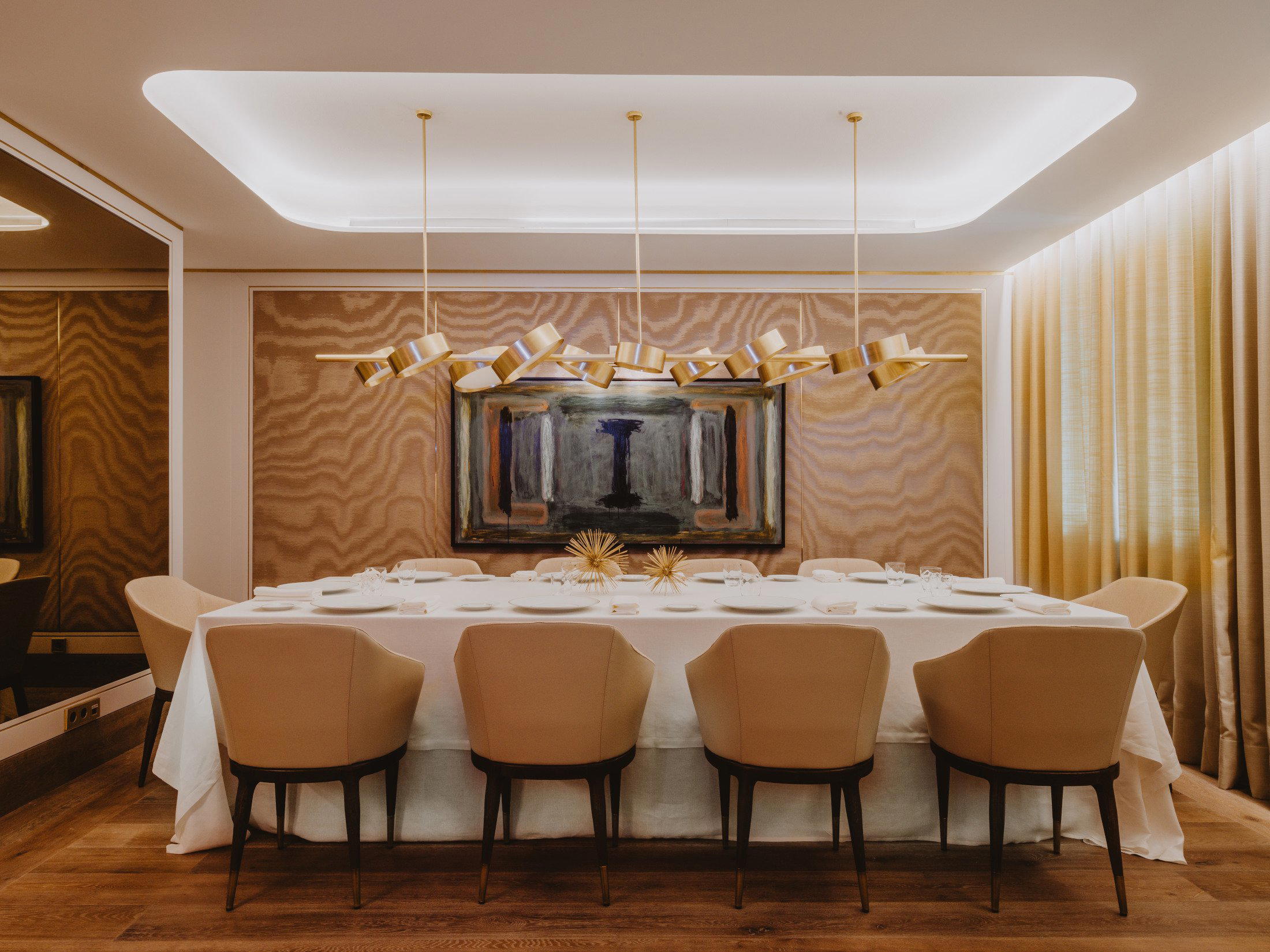
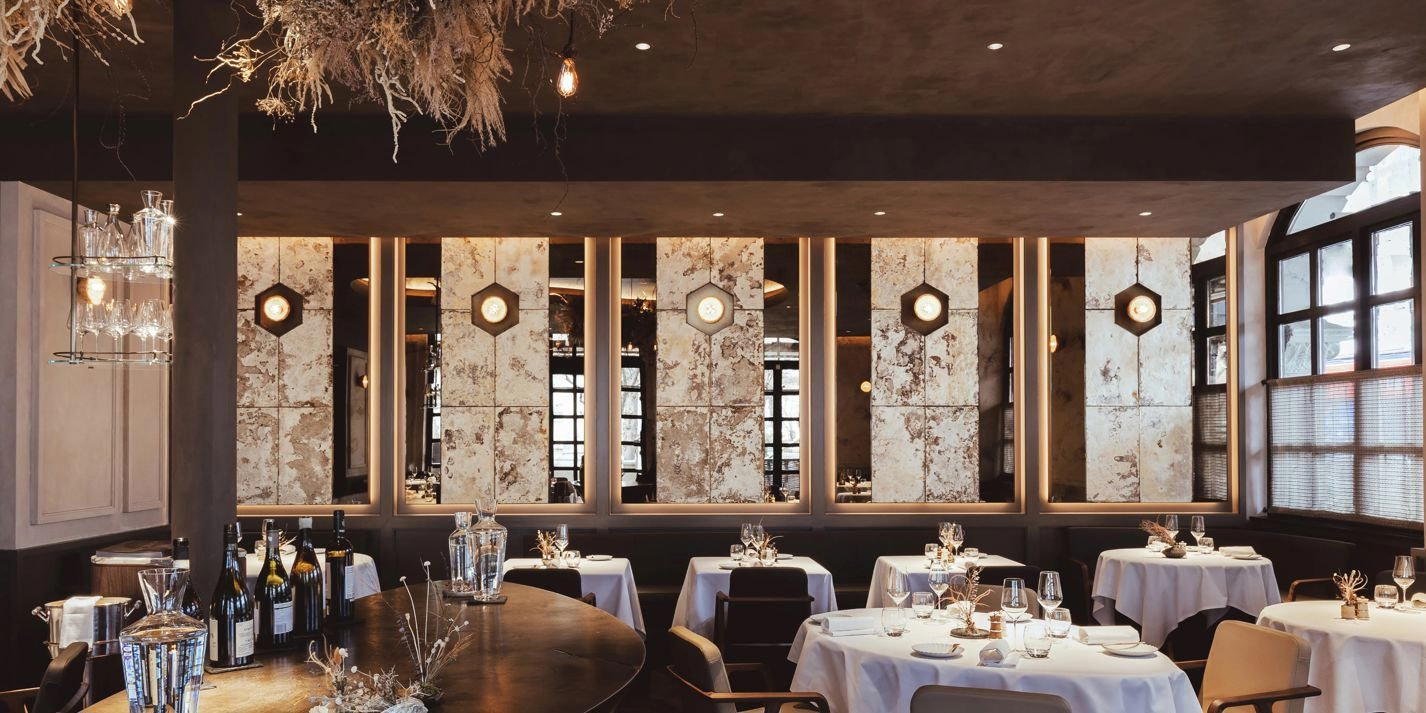
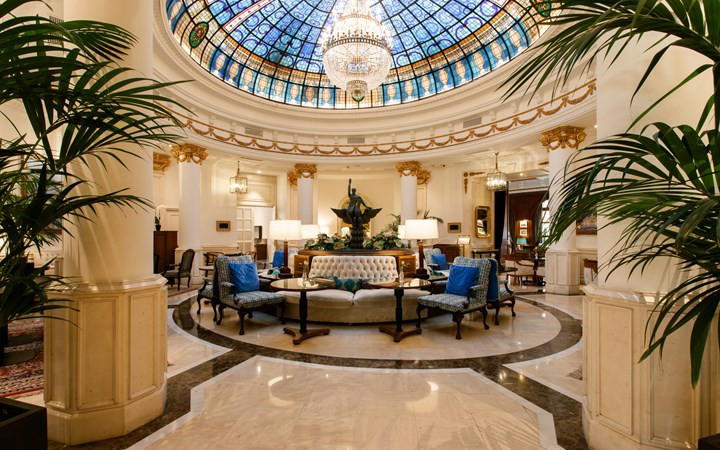
Intimate and immersive with carefully orchestrated lighting and an open kitchen design that creates a direct connection between chef and diner; minimalist and refined with focus on the culinary performance.