

Guía Repsol 1 Sol · Macarfi 8.5 Food Rating
Our verdict
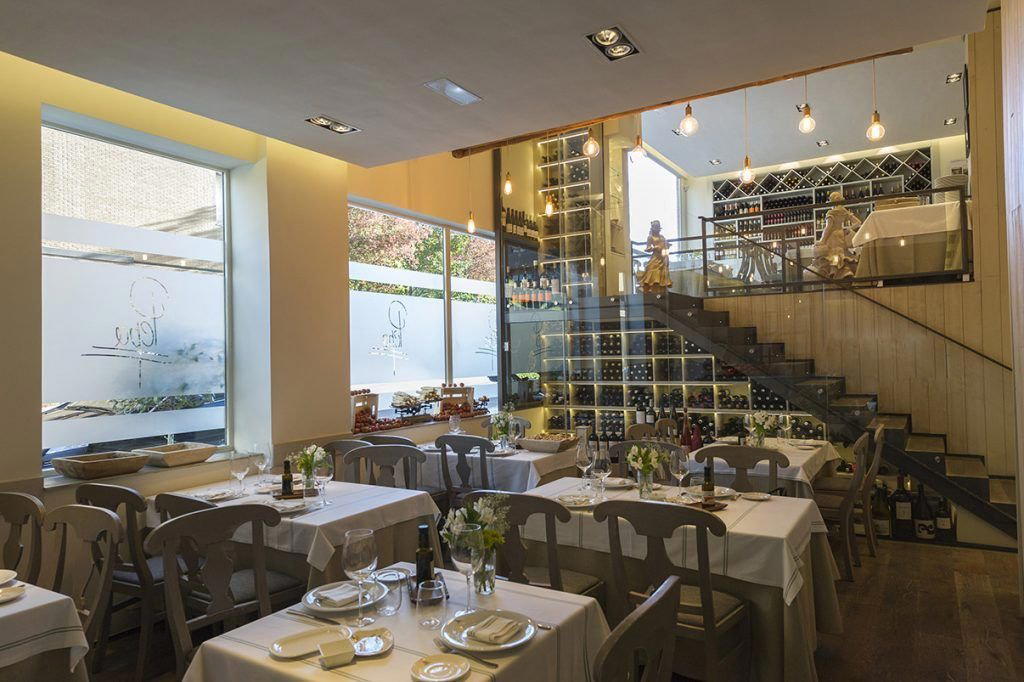
Chamartín gives Madrid dining a different register from the Centro crawl: calmer streets, residential rhythm, and rooms built for return meals rather than spectacle. Qüenco De Pepa belongs to that northern Madrid tradition of produce-led Spanish cooking, with a 1 Sol distinction in the Guía Repsol Soles 2026 placing it in a nationally recognized tier without pushing it into formal tasting-menu theatre.

Pearl is the En Primeur Club membership app — saves, bookings, and concierge access live there. Same editors, same standards.
- Address
- C. de Henri Dunant, 21, Chamartín, 28036 Madrid, Spain
- Hours
- Mon–Sat 1:30–4:30 PM, 8:30–11:30 PMSun Closed
- Directions
- Get directions
The menu
What to order
- Tomatoes from Pepa’s garden
- Artichokes
- Octopus (creamy style)
- Scallops with rice in their ink
- Fresh seasonal fish from the market
Madrid changes the sound of a meal before the first plate: less reliance on tourist spillover, more composed dining rooms, regulars, and confidence that does not perform for passers-by. Here, Qüenco De Pepa joins a broader Madrid argument: a restaurant can feel current without needing to turn the evening into a display of novelty, spectacle, or checklist luxury.
Madrid’s restaurant map is often reduced to old taverns around the centre and polished tasting-menu rooms with international ambitions. The more useful middle ground sits between them: restaurants serious about the experience of eating well without asking the table to surrender the evening to a rigid sequence. Madrid has many versions of that tier, from bistro-coded dining at Sacha Botilleria y Fogon to traditional cooking at Casa de Comidas and meat-led formality at Rubaiyat Madrid. Qüenco De Pepa sits within that broader premium landscape, where pleasure depends on steadiness, pacing, and a room that feels built for conversation.
Madrid's quieter register for recognised dining
Away from the city’s loudest dining corridors, Madrid rewards restaurants that understand repetition. The clientele is less dependent on one celebratory booking and more likely to judge consistency: how the kitchen holds its line, how the dining room manages tempo, and whether the meal has enough clarity to justify returning. That makes the restaurant a counterpoint to rooms where atmosphere can sometimes outweigh the plate.
Qüenco De Pepa’s 1 Sol in the Guía Repsol Soles 2026 matters because Repsol recognition places a restaurant inside a national conversation about craft and reliability, not just local popularity. In Madrid, a Sol gives the address a credential that Spanish diners recognise as part of the country’s own critical vocabulary. It also signals a benchmark beyond imported luxury: a restaurant can be important without needing to announce itself through excess.
That distinction separates this address from flashier parts of the Madrid scene. A diner weighing it against 99 Sushi Bar Nh Eurobuilding is choosing register, not better or worse. One side of Madrid dining leans toward internationalized luxury formats; the other gives priority to the pace and substance of the meal. For a broader sweep of the city’s dining rooms, Our full Madrid restaurants guide maps that split more clearly than a simple ranking could.
The pleasure is in the table rhythm, not a scripted performance
Madrid remains a lunch city, and restaurants in this category make most sense through that culture. The meal does not need to be built around one reveal. It moves by appetite: an opening, a stretch of conversation, dishes chosen for the table, then coffee and the long tail of the afternoon or evening. The sensory memory is cumulative rather than theatrical: a room settling into service, a table finding its tempo, and the sense that the restaurant is more interested in confidence than in stagecraft.
That is where Madrid’s mature restaurants separate themselves from the trend cycle. More experimental rooms and cross-cultural counters may test technique, sequence, and reference points. A room like this is judged by an older standard. Does the restaurant make the meal feel coherent rather than decorative? Does the room support conversation rather than compete with it? Does the experience carry enough substance for a Madrid lunch or dinner, not just enough styling for a photograph?
The answer is why the restaurant fits the Repsol frame. A 1 Sol is not shorthand for luxury; it marks a restaurant that has cleared a recognized bar for cooking and hospitality within Spain’s own critical vocabulary. In a city where international visitors often arrive looking for Michelin shorthand and miss the guides many Spanish diners use, Repsol’s 2026 citation gives this dining room an objective credential while keeping its identity in a grounded Madrid table tradition.
Madrid’s premium dining scene is unusually broad. International hybrids, tavern descendants, grill rooms, tasting-menu restaurants, and other serious dining rooms compete for the same high-intent diner. Other Madrid dining rooms point to different facets of that spread, while Aurora and Sacha Botilleria y Fogon show how different registers can occupy the same city without collapsing into one style. The useful question is not which room is superior in the abstract, but what kind of Madrid meal the evening requires.
How to place it in a Madrid itinerary
This is a stronger fit for travellers who want Madrid beyond the checklist meal. Pairing it with a Madrid day not centred only on the most obvious first-trip circuit suits the restaurant’s quieter register. The distance from the usual script is part of the point: it changes the pace, and the meal benefits from that slower approach. Visitors building a fuller city plan can cross-reference Our full Madrid hotels guide, Our full Madrid bars guide, Our full Madrid wineries guide, and Our full Madrid experiences guide rather than treating dinner as an isolated reservation.
The broader Spanish comparison is useful. Regional dining in Spain shifts quickly across local customs, coastal traditions, inland formality, island rooms, wine-country restaurants, and metropolitan dining rooms. A Madrid address like Qüenco De Pepa sits in the capital’s role as collector and interpreter: less tied to one single regional identity, more part of the city’s wide dining field. To see how different that can look elsewhere, compare the register with other dining rooms around Spain rather than assuming one national template.
That wider frame prevents the mistake of reading every serious Madrid restaurant through the same luxury lens. Some meals are about ceremony, some about technical progression, and some about the confidence of a room that lets pacing and hospitality work. This one belongs in the last group. For diners also tracking serious formats beyond Madrid, other cities show how different the idea becomes when filtered through another local tradition. In Madrid, the setting is Madrid, the recognition is clear, and the signal is straightforward: choose it when the meal should feel composed rather than performative.
Frequently asked questions
Where exactly is Qüenco De Pepa?
Madrid.
When is Qüenco De Pepa open?
Check Qüenco De Pepa’s current opening hours directly before booking, as schedules can change.
What's the defining dish or idea at Qüenco De Pepa?
The defining idea is the room itself: a Madrid restaurant with a 2026 Guía Repsol 1 Sol, suggesting recognised execution rather than a single headline dish.
What is Qüenco De Pepa known for?
Qüenco De Pepa is known for its recognition in the Guía Repsol Soles 2026 and for its place in Madrid dining.
Same-City Peers
Comparable venues for orientation by cuisine and category.
| Venue | Cuisine | Price | Awards | Notes |
|---|---|---|---|---|
| Qüenco De PepaThis venue — the venue you are viewing | Seasonal Spanish market cuisine with vegetables from its own garden | $50–100 | Guía Repsol 1 Sol · Macarfi 8.5 Food Rating | Not listed |
| 99 Sushi Bar Nh Eurobuilding | Modern Japanese & Sushi with Mediterranean Fusion | $50–100 | Macarfi 7.7 Food Rating · Guía Repsol 2 Soles | Not listed |
| Aurora | Creative Modern Dining | $30–50 | Not listed | Not listed |
| Casa de Comidas | Traditional Spanish Home Cooking | $20–30 | Michelin Plate | Traditional Cuisine |
| Rubaiyat Madrid | Brazilian Steakhouse | Not listed | Michelin Plate · Macarfi 7.3 Food Rating | Meats and Grills |
| Sacha Botilleria y Fogon | Bistro | Not listed | Not listed | Not listed |
Recognition history
Dated appearances from independent guides and award organizations, with the underlying list record or original source where available.
Guía Repsol 1 Sol
Guía Repsol
Macarfi 8.5 Food Rating
Macarfi
Continue exploring
More in Madrid
Restaurants in Madrid
Browse all →
Bars in Madrid
Browse all →
Hotels in Madrid
Browse all →


Details
- Cozy
- Elegant
- Classic
- Sophisticated
- Business Dinner
- Date Night
- Group Dining
- Special Occasion
- Celebration
- Wine Cellar
- Standalone
- Extensive Wine List
- Farm To Table
- Local Sourcing
- Sustainable Seafood
- A La Carte
- Wine
- Vegetarian Friendly
- Pescatarian Friendly
- Organic Focus
Current opening hours
- Monday
- 1:30–4:30 PM, 8:30–11:30 PM
- Tuesday
- 1:30–4:30 PM, 8:30–11:30 PM
- Wednesday
- 1:30–4:30 PM, 8:30–11:30 PM
- Thursday
- 1:30–4:30 PM, 8:30–11:30 PM
- Friday
- 1:30–4:30 PM, 8:30–11:30 PM
- Saturday
- 1:30–4:30 PM, 8:30–11:30 PM
- Sunday
- Closed
Hours can change for holidays and private events. Last verified .