
Ramen Kanade belongs to Nagoya’s compact, craft-driven ramen tier, where sourcing, broth discipline, and counter turnover matter more than ceremony. The Fukiage shop has Tabelog 100 Ramen AICHI 2025 recognition, a 3.73 Tabelog score, seven seats, and a no-reservations format, placing it in the city’s serious everyday ramen conversation rather than its luxury dining lane.
Pearl is the En Primeur Club membership app — saves, bookings, and concierge access live there. Same editors, same standards.
- Address
- 愛知県名古屋市昭和区阿由知通1-9
- Website
- tabelog.com
 Saves & bookings on Pearl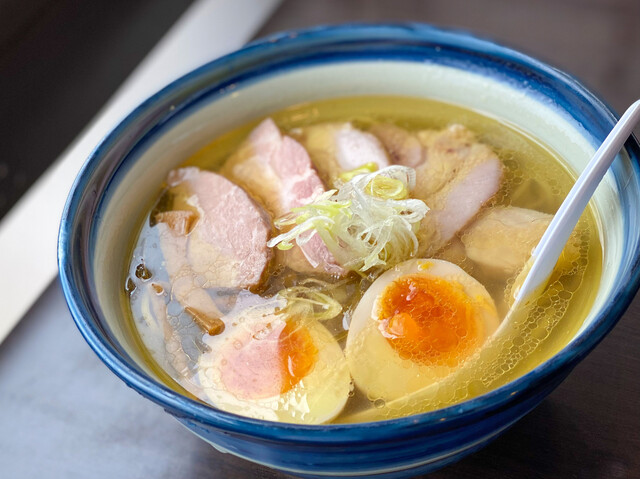
Fukiage is not the Nagoya of skyline hotels or station-complex dining. It is quieter, lower to the ground, and better suited to ramen without theatre: a short counter, a small table, and people eating with purpose. Here, ramen is judged less by ceremony than by decisions made before the bowl arrives: how the broth is built, how the noodles carry it, and how tightly the shop controls a compact service.
Nagoya’s ramen culture sits between commuter utility and obsessive specialization. The city has regional noodle habits, yet its strongest contemporary shops compete on signals seen across Japan’s serious ramen scene: repeat recognition, narrow seating, limited service windows, and menus that reward focus over breadth. Ramen Kanade fits that pattern. Its Tabelog 100 Ramen AICHI 2025 selection and 3.73 score place it inside a documented local bracket, while the seven-seat layout makes the experience closer to precise production than casual drop-in dining.
Ingredient discipline matters more than ornament in Nagoya's ramen tier
Ramen’s ingredient story is often flattened into broth style, but the better question is where the shop spends its attention. In a small ramen room, sourcing shows through consistency: stock that holds shape across service, noodles selected for the broth rather than generic chew, and toppings used as structure rather than decoration. Without a published chef biography or official menu narrative, the safer reading is format-led. This shop’s reputation rests on the ramen category itself, not personality-driven dining.
That matters in Nagoya. The city runs from quick, sub-1,000-yen counters to formal sushi and multi-course rooms, and those categories should not share one grammar. Hama Gen operates in a sushi bracket around JPY 30,000 to JPY 39,999, while China Hime Hana sits in a higher restaurant price band than a ramen counter. Kourai Dojo and PIERRE PRECIEUSE Honten occupy lower-price casual territory, but ramen’s pressure is different: a bowl must justify the trip in minutes, not over a long meal. Ramen Kanade’s place in Tabelog’s Aichi ramen selection is useful because it compares the shop within its own category, not against unrelated formats.
The sourcing angle also explains why small ramen shops attract serious diners who might otherwise chase tasting menus. The spend is modest, but the margin for error is narrow. A large dining room can soften a weak course with service and pacing; a ramen counter has fewer hiding places. The bowl is the argument. For a Nagoya itinerary, a recognized ramen shop can be a sharper cultural read than another hotel dining room, especially alongside Our full Nagoya restaurants guide.
A seven-seat counter changes the way the meal behaves
Capacity is part of the editorial story, not just a planning detail. Seven seats, split between counter seating and a small table, create a different meal from larger station-area ramen chains. The pace is tighter, the room less forgiving of lingering, and the kitchen-counter relationship becomes part of the format. Solo diners and small groups are the natural fit; large parties belong elsewhere.
The no-reservations model also changes expectations. This is not a concierge-managed table with a tasting-menu deposit; it is a queue-and-eat ramen format. That makes it democratic, but not necessarily easy. In Japan, low price and high recognition often create lunch pressure, especially with short hours and limited seats. Treat the meal as a focused stop, not a flexible backup plan.
For Nagoya visitors, Fukiage usefully counters the city’s polished hospitality circuits. A stay planned through Our full Nagoya hotels guide can skew toward Nagoya Station or Sakae; a ramen stop in Showa-ku pulls the itinerary into a more local register. The same logic applies after dark: Our full Nagoya bars guide and Our full Nagoya experiences guide frame the city beyond one meal, while Our full Nagoya wineries guide is better as a regional planning layer than a direct ramen pairing.
How to place it among Japan's casual specialists
The useful comparison is not luxury versus cheap eats; it is specialization versus sprawl. Japan’s casual dining rewards narrow competence, from curry counters to onigiri shops, cafés, izakaya formats, and sake bars abroad that translate Japanese habits into other cities. Readers mapping that field can compare the category logic behind [Curry Senmon Ten] Maruyama Kyoju. in Sapporo, Onigiri Time in Pasadena, Jōdo Saké Bar in Los Angeles, .cafe in Osaka, and .know in Kumamoto. The common thread is not cuisine type, but confidence to keep the offer narrow.
Within Nagoya, that narrowness has value because the city can overwhelm visitors with breadth rather than obvious hierarchy. Its restaurant field stretches across anonymous lunch rooms, specialist counters, department-store dining, and expensive destination meals. The better itinerary mixes registers: one disciplined ramen counter, one formal reservation, and one neighborhood meal with no ceremony. For nearby context, compare 1022, 451, Aaron, Alan. and All Day Dining Montmartre as different expressions of the city’s dining spread, not direct substitutes.
Outside Nagoya, Japanese dining formats show the same lesson elsewhere: -Grilled beef Sukiyaki- KAMAKURA TANUKIAN 鎌倉 たぬき庵 in Kamakura expresses a different tradition around beef and set-piece cooking. 鮪と炭火焼き うお炭 秋葉原店 in Tokyo points toward tuna and charcoal-led casual dining, and (Shoku) Vietnam in Kawasaki shows how non-Japanese cuisines occupy the same everyday restaurant network. Ramen Kanade belongs to the tighter end of that spectrum: low spend, limited seats, category recognition, and a format where ingredient judgment is exposed quickly.
The editorial case is clear. This is not a long, luxurious meal to build an evening around. It is a focused ramen stop with enough recognition to merit planning and enough constraint to punish vague timing. In a city where premium dining can become a parade of reservations, a small Fukiage counter keeps the itinerary honest.
Budget and Context
Comparable venues for cuisine and category context.
| Venue | Cuisine | Price | Notes |
|---|---|---|---|
| Ramen KanadeThis venue — the venue you are viewing | Not listed | $ | Not listed |
| Takumi Mitsukoshi ten | Not listed | $ | Naka, Japanese Curry Counter by Nagoya Takumi |
| Kawaguchi Ya | Naka, Japanese confectionery shop | $ | Not listed |
| Chuka Soba Ueda Seimen Ten | Naka, Japanese Ramen | $ | Not listed |
| Chuka Soba Raian | Nakamura, Ramen shop near Nagoya Station | $ | Not listed |
| Kourai Dojo | Chikusa, Nagoya Kourai-kei ramen | $ | Not listed |
Recognition history
Dated appearances from independent guides and award organizations, with the underlying list record or original source where available.
Tabelog 100 #95 · No. 95
Tabelog · Tabelog 100 - Ramen - AICHI - 2025
Continue exploring
More in Nagoya
Restaurants in Nagoya
Browse all →
At a Glance
- Cozy
- Intimate
- Solo
- Family
- Casual Hangout
- Standalone
A small, non‑smoking neighborhood ramen shop with just seven seats, counter‑focused and relaxed, giving a cozy hideout feel suited to solo diners and small parties at lunchtime.