
Ramen Atsugiya belongs to Atsugi’s serious ramen circuit rather than the polished destination-dining lane. Its 22-seat counter format, Yoshimuraya direct-branch lineage, cash-only rhythm, and Tabelog Ramen KANAGAWA 100 selection in 2025 place it in the city’s practical, ingredient-led ramen culture, where sourcing and broth discipline matter more than ceremony.
Pearl is the En Primeur Club membership app — saves, bookings, and concierge access live there. Same editors, same standards.
- Address
- 神奈川県厚木市妻田東2-25-11
- Phone
- +81462223888
- Website
- ieke1.com
 Saves & bookings on Pearl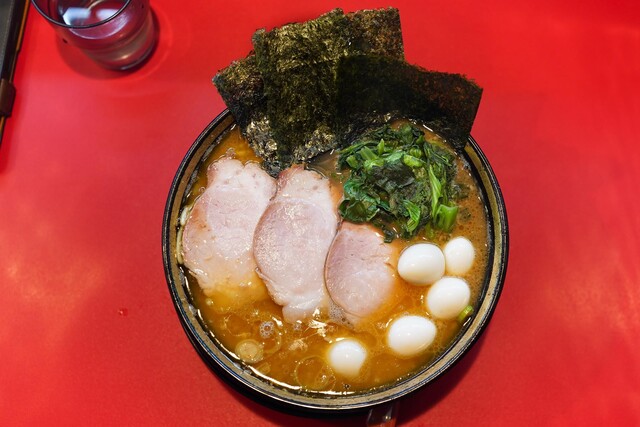
Approach here is not about theatre. The setting is a house-style ramen shop in Tsumadahigashi, with counter seating and a no-photography rule that shifts attention back to the bowl rather than the phone. Atsugi’s ramen culture rewards that kind of directness: short formats, repeat local custom, and a narrow gap between everyday pricing and serious craft.
That matters because Kanagawa ramen is not a single style. The prefecture sits between Yokohama’s heavy influence, suburban commuter towns, and inland neighborhoods where car access and local routines shape how people eat. In that context, Ramen Atsugiya reads less as a casual stop and more as a branch in a lineage-conscious tradition. Its direct connection to Yoshimuraya, the family head temple of the Iekei school, is the key credential, especially in a category where broth density, tare balance, noodles, and rice-counter logic define the experience.
Iekei ramen, read through sourcing rather than ceremony
Iekei ramen depends on ingredients that behave under pressure: pork bone and chicken elements for body, soy-based tare for structure, spinach, nori, and noodles firm enough to carry a heavier broth. The style came out of Yokohama and became one of Kanagawa’s defining ramen dialects, partly because it suits commuters, students, workers, and families without requiring a long tasting-menu commitment. The format is democratic, but the better shops are not casual about technique.
The sourcing angle is practical rather than decorative. In this ramen idiom, provenance is usually expressed through lineage and production discipline, not a poetic list of farms. A direct Yoshimuraya branch signals adherence to a house style with strict expectations around soup concentration, noodle handling, and the bowl’s supporting elements. That is why the connection carries more weight than a chef biography would here. The tradition is the credential.
Recognition by Tabelog Ramen KANAGAWA 100 in 2025 adds another signal. Tabelog’s ramen lists are not luxury awards; they function more like a map of specialist demand and local consensus. A score of 3.76 places the shop in a competitive band where the audience is not simply looking for lunch, but for a specific version of a well-known style. In a city with accessible ramen counters such as Atsugi Honmaru Tei and Chuka Soba Menya Shokudo Honten, the distinction is lineage and format rather than luxury.
Where Atsugi's everyday restaurants get serious
Atsugi is not a city built around destination gastronomy in the Tokyo sense. Its stronger pattern is specialist repetition: ramen shops, yakiniku rooms, cafés, and neighborhood restaurants that serve local demand at sharply different price points. Yakiniku Waganse occupies a higher-spend meat lane, while Cafe Suzuki sits in the café register. Ramen Atsugiya belongs to the opposite end of that spectrum, where a low-ticket meal can carry serious regional meaning.
The room reinforces that argument. Twenty-two counter seats keep the format focused, and the absence of private rooms or private-use options puts the meal in the public grammar of ramen: quick turnover, visible preparation, and individual bowls taken seriously. Children are welcomed and children’s chairs are listed, which says something useful about the city’s dining culture. This is specialist food without the exclusionary codes that often accompany specialist dining elsewhere.
For travelers using Atsugi as more than a transit point, the ramen scene makes a stronger case than a single address. Our full Atsugi restaurants guide is the natural starting point, with nearby context extending to Our full Atsugi hotels guide, Our full Atsugi bars guide, Our full Atsugi wineries guide, and Our full Atsugi experiences guide. The useful comparison inside the city is not formal versus informal; it is how much specialization a room can carry at a given price.
How to place it in a Kanagawa ramen day
Kanagawa rewards focused food planning. A ramen counter like this pairs better with a narrow itinerary than a broad checklist, because the value is in reading the local style against nearby alternatives. ZUND-BAR shows another side of the regional ramen conversation, while the Atsugi cluster gives enough contrast without turning lunch into a train-and-taxi exercise.
The practical rhythm is simple: no reservations, counter seating, parking available, and access by bus from the north exit of Hon-Atsugi Station to the Tsumada stop, followed by a short walk. Payment is cash-only, with credit cards, electronic money, and QR code payments not accepted. Sunday closure also shapes planning. Those details are not incidental in Japan’s ramen culture; they define who the shop serves and how the meal moves.
For broader Japan eating routes, use these as context rather than direct peers: -Grilled beef Sukiyaki- KAMAKURA TANUKIAN 鎌倉 たぬき庵 in Kamakura. 鮪と炭火焼き うお炭 秋葉原店 in Tokyo.cafe in Osaka.know in Kumamoto, (Shoku) Vietnam in Kawasaki, and [Curry Senmon Ten] Maruyama Kyoju. in Sapporo. For Japanese food culture abroad, Jōdo Saké Bar in Los Angeles and Onigiri Time in Pasadena show how focused formats travel differently outside Japan.
The editorial case is clear: Ramen Atsugiya is for readers who want Kanagawa ramen at its source-driven, lineage-conscious end, not a dressed-up interpretation. The bowl is the point, the counter is the frame, and the city around it explains why a low-cost ramen shop can carry more cultural information than many longer meals.
In Context: Similar Options
Comparable venues by cuisine and price in the same metro.
| Venue | Cuisine | Price | Notes |
|---|---|---|---|
| Ramen AtsugiyaThis venue — the venue you are viewing | Iekei-style Japanese Ramen | $ | Not listed |
| Chuka Soba Menya Shokudo Honten | Classic Japanese ramen (chuka soba) shop | $ | Hon-Atsugi |
| Cafe Suzuki | Japanese kissaten-style coffee shop | $$ | Hon Atsugi |
| ZUND-BAR | Japanese Ramen | $$ | Nanasawa, Atsugi |
| Atsugi Honmaru Tei | Traditional shio ramen shop | $ | Saiwaicho |
| Yakiniku Waganse | Japanese Yakiniku / BBQ | $$$ | Naka-cho, Atsugi |
Recognition history
Dated appearances from independent guides and award organizations, with the underlying list record or original source where available.
Tabelog 100 #30 · No. 30
Tabelog · Tabelog 100 - Ramen - KANAGAWA - 2025











At a Glance
- Lively
- Cozy
- Classic
- Solo
- Casual Hangout
- After Work
- Late Night
- Standalone