

New York Times Best Restaurants in New York City
Our verdict
In New York's East Village, Raku has built a quiet counter-argument to the city's ramen dominance, four locations strong, with handmade udon at the center of every bowl. Chef Norihiro Ishizuka's springy, hand-pulled noodles land in deeply built dashi broths alongside tempura, nameko mushrooms, and duck, earning a 2025 Opinionated About Dining ranking among North America's top restaurants.

Pearl is the En Primeur Club membership app, where members save venues, book tables and use the concierge.
The menu
What to order
- Niku Udon
- Sansai Udon
- Chicken Tatsuta-age
- Zaru Udon
East Village and the Noodle That Didn't Follow the Crowd
New York's Japanese noodle culture has long organised itself around ramen. The city's appetite for tonkotsu, shoyu, and miso broth formats drove a decade of openings, media coverage, and queue culture that effectively squeezed other noodle traditions into the margins. Soba maintained a small foothold in certain neighbourhoods, but udon, the thick, chewy wheat noodle that anchors everyday eating across much of western Japan, remained conspicuously underrepresented at the premium end of the market. Raku, on East 6th Street in the East Village, arrived into that gap and has been filling it deliberately ever since.
The East Village is a useful address for this kind of project. It sits between the high-rent Japanese dining concentrations of Midtown and the denser residential clusters further east, drawing a crowd that skews local and repeat rather than tourist and occasion-driven. The neighbourhood has historically absorbed independent Japanese operations that don't fit neatly into the omakase-or-nothing binary that defines places like Sushi Sho, Joji, or Shion 69 Leonard Street. Raku belongs to that tradition of focused, daily-use restaurants where craft is present but the format doesn't require a months-long booking window.
What Udon Actually Demands
The case for udon's complexity is often undersold. The noodle's simplicity of ingredients, wheat flour, salt, water, places nearly all the expressive weight on technique. Strand thickness, hydration ratio, resting time, and the kneading process collectively determine whether the result is elastic and al dente or thick and flabby. In Japan, regional udon traditions diverge sharply: Sanuki udon from Kagawa Prefecture is firm and angular; Inaniwa from Akita is thin and silky; Mizusawa from Gunma runs closer to the middle. What they share is an expectation that the noodle itself carries meaning, not just the broth.
Dashi beneath the noodle is an equally demanding preparation. A well-constructed dashi, whether built from kombu and katsuobushi, from niboshi (dried sardines), or from a more complex combination, requires time and restraint. Overcooking destroys the delicate umami compounds that give a good dashi its depth. The layering of garnishes on leading introduces textural and flavour variables that either cohere with the broth or work against it. This is, in short, a cuisine where shortcuts register immediately.
Chef Norihiro Ishizuka's Approach
According to Opinionated About Dining, which ranked Raku at position 391 in its 2025 North America list, Ishizuka makes his udon noodles with uncommon care: each strand arrives springy and al dente, with a characteristic pinched end that signals hand production. The noodles go into bowls of deeply flavoured dashi and harmonise with a rotating range of garnishes, delicate tempura, plump nameko mushrooms, pink crab, and shreds of duck among them. That OAD citation places Raku in peer company that includes some of the more formally structured Japanese restaurants in North America, a notable position for an operation centred on a noodle format that rarely gets that level of critical attention.
For context on where Raku sits within the broader New York Japanese dining spectrum: at the far end of that spectrum sit Midtown counters like Bar Masa and the multi-course omakase operations, while restaurants like Blue Ribbon Sushi occupy the accessible, late-night middle ground. Raku's position is distinct from both: it operates as a daily-use specialist with a clear technical focus, more analogous to the counter-led noodle houses that anchor certain Tokyo neighbourhoods than to anything in the omakase tier. Internationally, the closest conceptual parallels sit in cities with longer udon cultures, see Harutaka in Tokyo or the precision-focused Japanese operations in Hong Kong such as Sushi Shikon, though those address different formats entirely.
Four Locations, One Through-Line
Raku now operates three locations across New York City and a fourth in Toronto. That expansion is worth noting in the context of what it usually signals: a ramen brand at four locations often implies systemisation, central production, and the gradual erosion of the handmade qualities that drove the original following.
The multi-city footprint also positions Raku differently from the tightly contained, single-location specialists that dominate the top tier of New York Japanese dining. Restaurants like Alinea in Chicago, The French Laundry in Napa, or Lazy Bear in San Francisco operate as deliberate one-off experiences. Raku's model is different: the goal is a repeatable format at a neighbourhood price point, which makes the OAD recognition more unusual, not less. Recognition in that list tends to cluster around the high-ceremony end; a handmade udon house appearing at 391 says something about how the critical community has come to read craft outside the tasting-menu format.
Planning a Visit
The East Village address at 342 E 6th St puts Raku on a block that sees consistent foot traffic from the surrounding residential streets. The neighbourhood is accessible from multiple subway lines, and the surrounding block is walkable to a range of bars and wine spots covered in. For overnight stays in the area maps options across price tiers.
| Venue | Cuisine | Format | Price Tier | Booking Lead Time |
|---|---|---|---|---|
| Raku | Udon / Japanese | Neighbourhood specialist | Accessible | Walk-in / short notice |
| Bar Masa | Sushi / Japanese | À la carte counter | $$$$ | Days to weeks |
| Joji | Sushi / Omakase | Counter omakase | $$$$ | Weeks to months |
| Blue Ribbon Sushi | Sushi / Japanese | Full-service, late-night | $$$ | Same week |
For broader context on where Raku sits within the city's full dining range, which covers everything from high-ceremony tasting menus to the kind of focused, repeatable neighbourhood operations that Raku represents. If you're building a broader itinerary, our full New York City experiences guide and wineries guide are also worth consulting alongside options at Providence in Los Angeles, Emeril's in New Orleans, or Single Thread Farm in Healdsburg if the trip extends beyond the city.
What Regulars Order at Raku
Opinionated About Dining's citation singles out the udon bowls as the anchor of the menu, with the dashi-based broths providing the scaffolding for garnish combinations that include tempura, nameko mushrooms, crab, and duck. The handmade noodle with its characteristic pinched end is the consistent thread across those variations, it's the element that distinguishes Raku from the mass-produced udon available elsewhere in the city, and it's what regulars return for. The garnish combinations shift, but the noodle itself is the reason to come back. For first-timers, the most direct way into the menu is through whichever broth-and-garnish pairing sits closest to classic Sanuki-style preparation: deeply flavoured dashi, firm noodle, and a single focused topping rather than a combination plate.
Frequently asked questions
Who's behind the kitchen at Raku?
The chef associated with Raku is Norihiro Ishizuka.
What do regulars order at Raku?
The udon bowls are the core of the menu. Opinionated About Dining's 2025 ranking citation specifically highlights the dashi-based broths as the foundation, with garnishes that include delicate tempura, nameko mushrooms, pink crab, and duck. The handmade noodles, each strand finished with a characteristic pinched end, are the reason regulars return across all three New York City locations.
What's Raku's location?
Raku is located at 342 E 6th St, New York, NY 10003, New York City.
Nearby-ish Comparables
| Venue | Cuisine | Price | Awards | Notes |
|---|---|---|---|---|
| RakuThis venue (the venue you are viewing) | Authentic Japanese Udon | $20–30 | New York Times Best Restaurants in New York City | Not listed |
| Le Bernardin | French Seafood Fine Dining | $300–500 | 3 Michelin Stars · World's 50 Best #13 | French, Seafood |
| Atomix | Modern Korean Tasting Menu | $300–500 | 2 Michelin Stars · World's 50 Best #7 | Modern Korean, Korean |
| Masa | Seasonal Hokkaido Tempura Omakase | $150–200 | Tabelog 100 #34 | Sushi, Japanese |
| Per Se | French Fine Dining Tasting Menu | $300–500 | 3 Michelin Stars · World's 50 Best #40 | French, Contemporary |
| Eleven Madison Park | Contemporary Plant-Based Fine Dining | $300–500 | 3 Michelin Stars · World's 50 Best #4 | French, Vegan |
Recognition history
Dated appearances from independent guides and award organizations, with the underlying list record or original source where available.
New York Times Best Restaurants in New York City
New York Times
Opinionated About Dining Top Restaurants in North America Ranked #391
Opinionated About Dining
Continue exploring
More in New York City
More from Chef Norihiro Ishizuka
Browse all →
Restaurants in New York City
All restaurants in New York City →
Bars in New York City
All bars in New York City →




Details
- Cozy
- Classic
- Minimalist
- Solo
- Casual Hangout
- After Work
- Open Kitchen
- Standalone
- Sake Program
- A La Carte
- Counter Dining
- Sake
- Yuzu Sparkling Juice
- Vegetarian Friendly
Current opening hours
- Monday
- 5–9 PM
- Tuesday
- 12–9 PM
- Wednesday
- 12–9 PM
- Thursday
- 12–9 PM
- Friday
- 12–9:30 PM
- Saturday
- 12–9:30 PM
- Sunday
- 12–9 PM
Hours can change for holidays and private events. Hours as of .
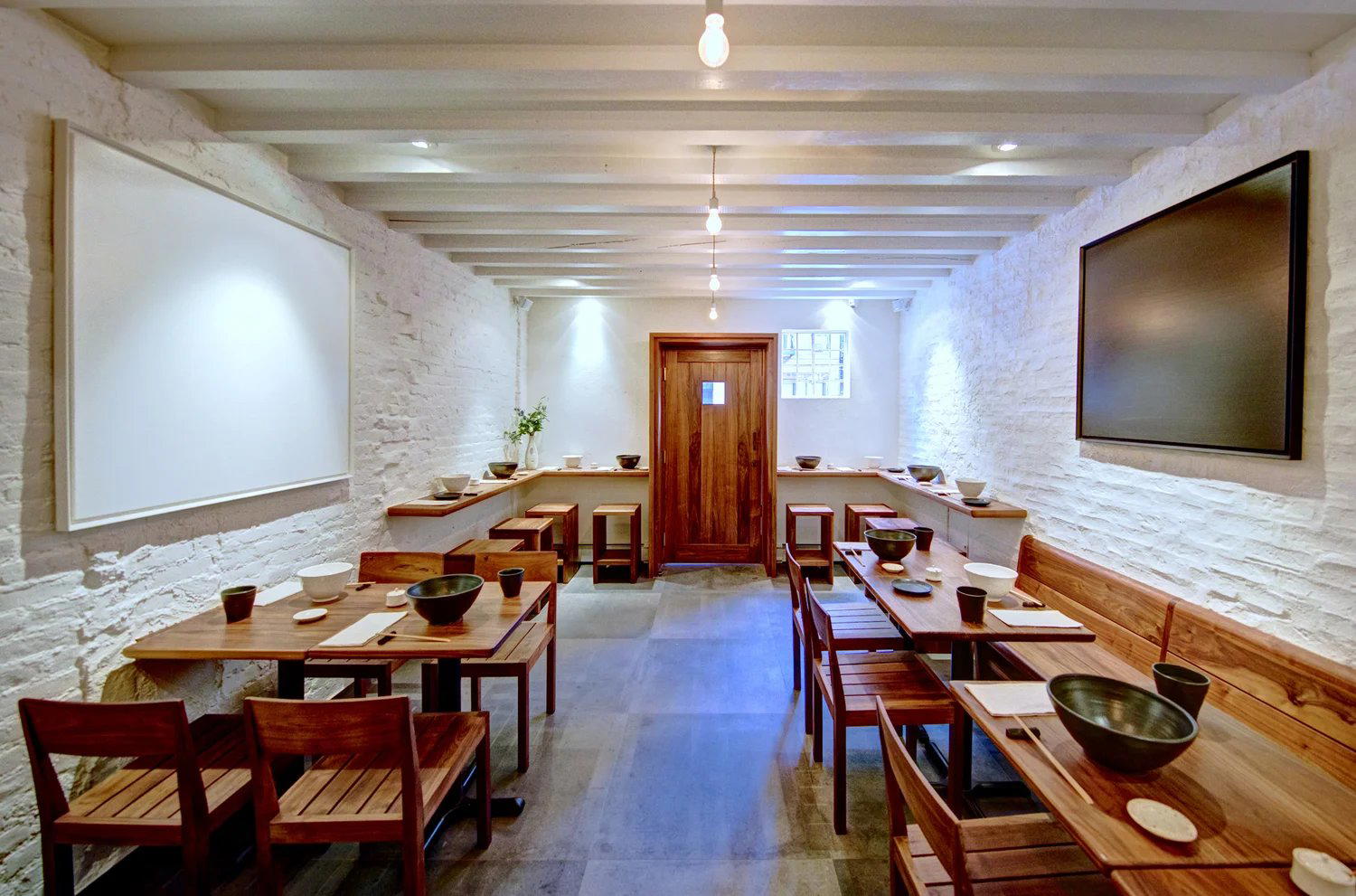
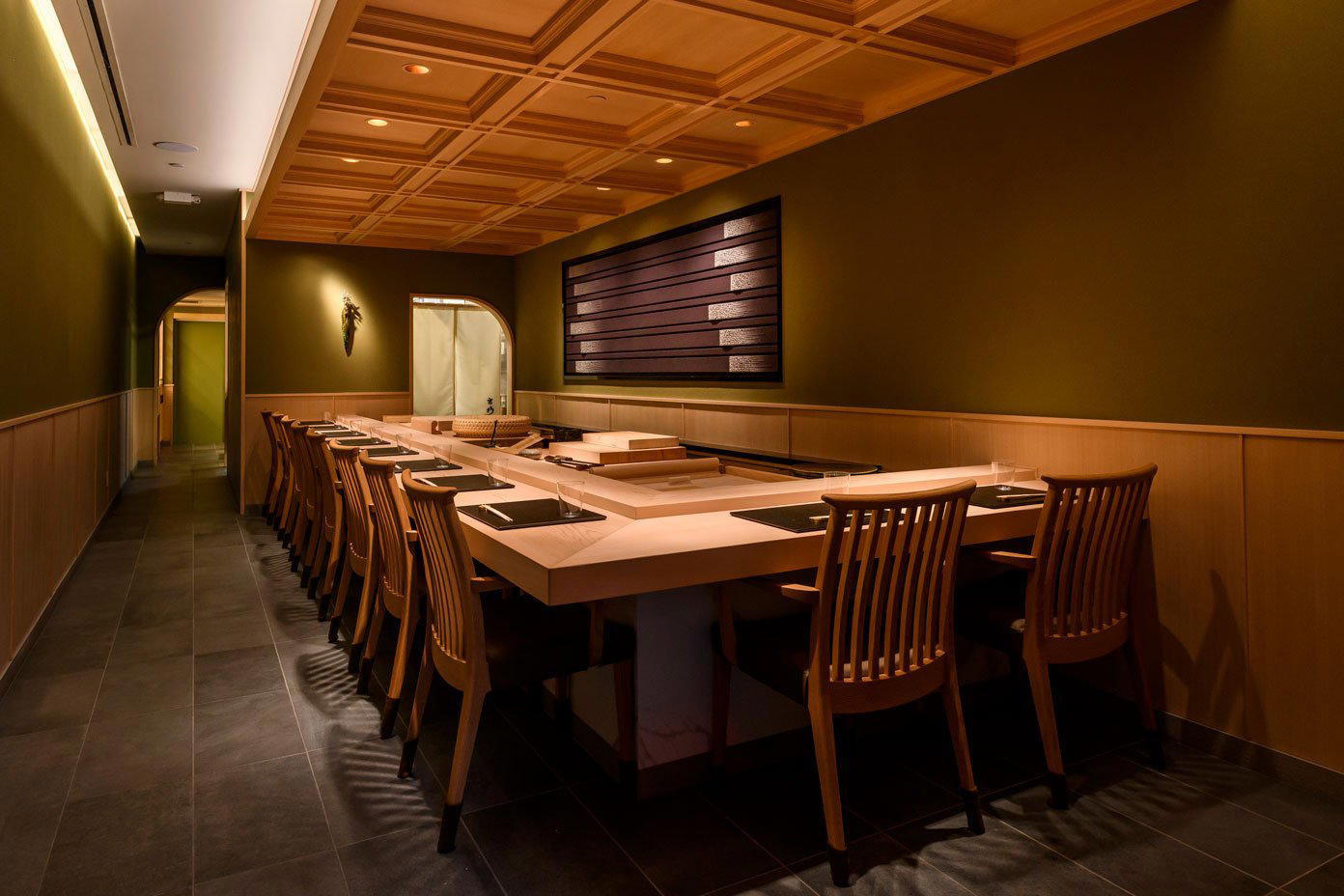
Warm, intimate Japanese dining space with extensive wood accents and minimal decor; described as cozy and authentic with a hole-in-the-wall aesthetic that feels authentically Japanese.